All content

1

Glass and Ceramics Museum

Iran

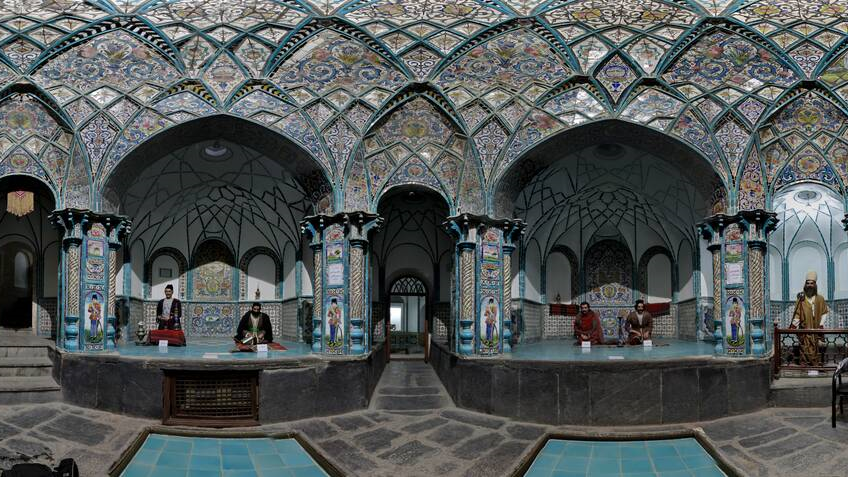
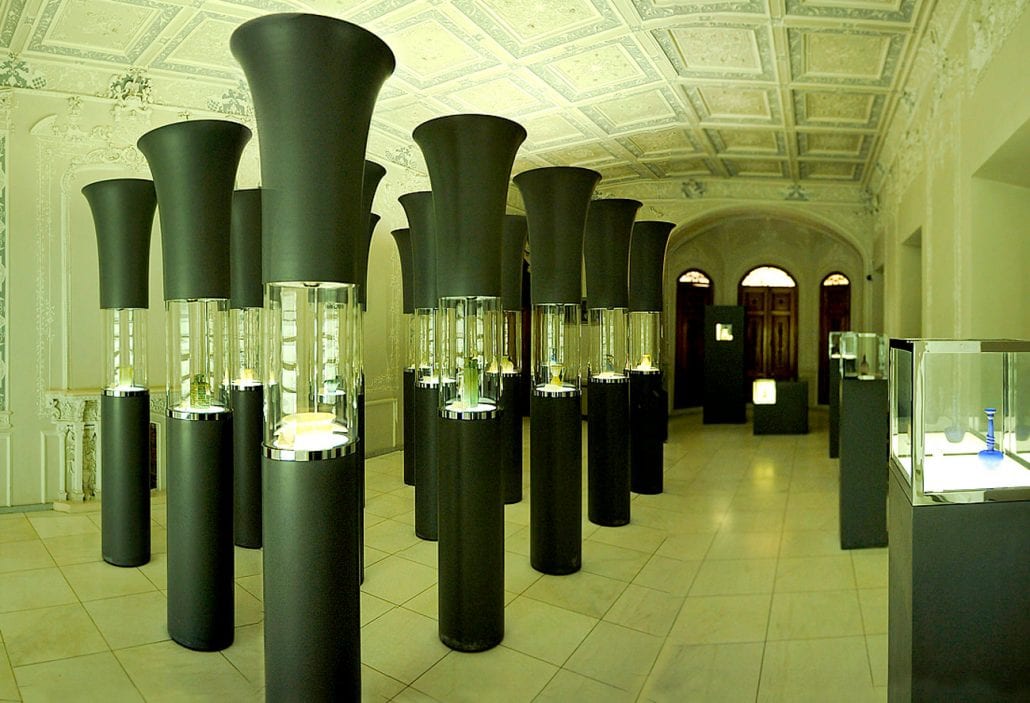
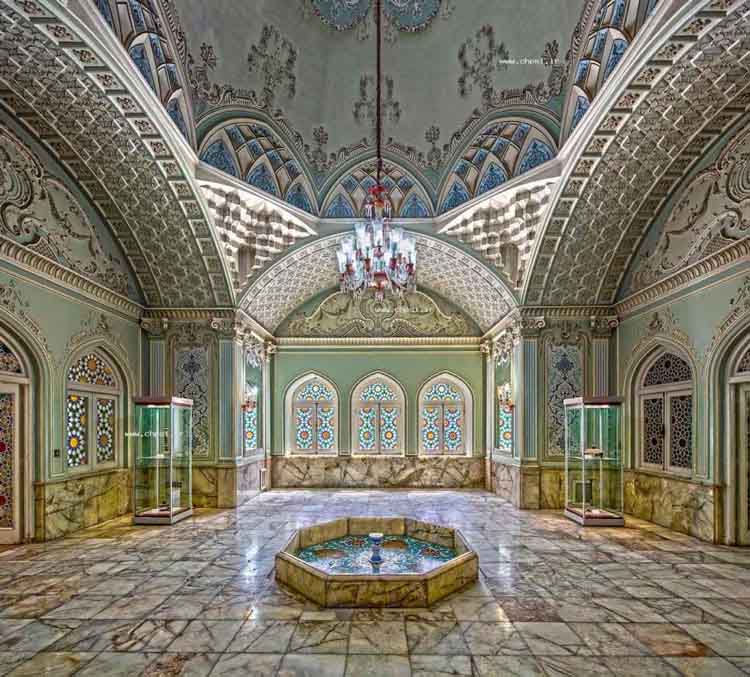
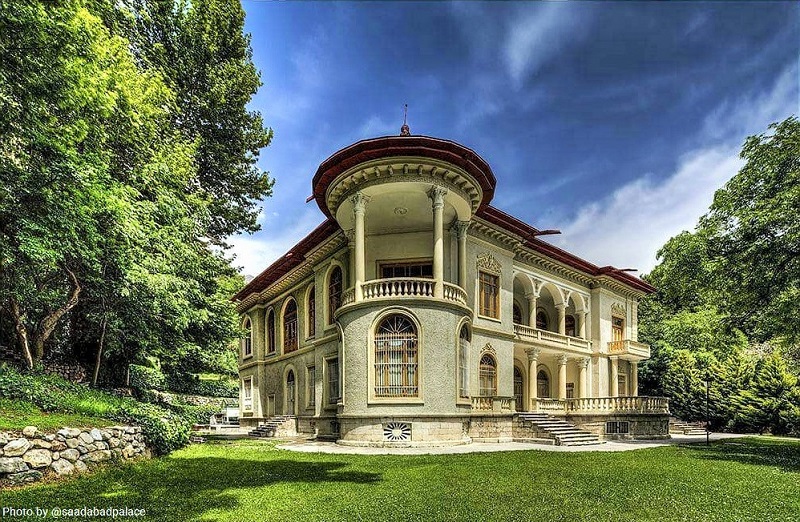
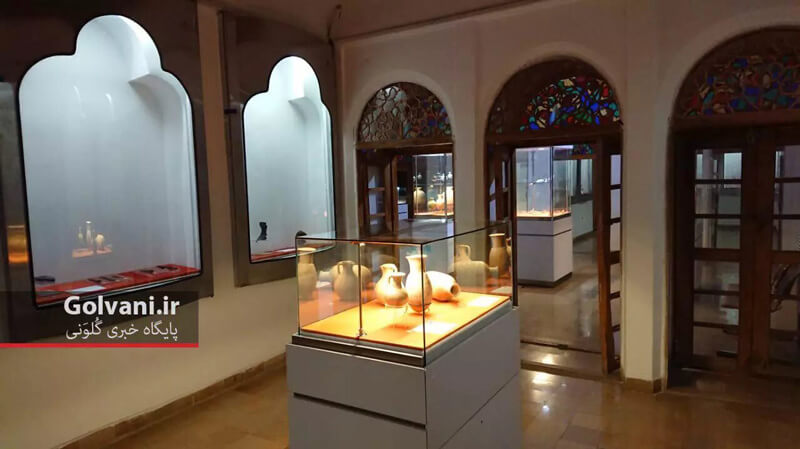
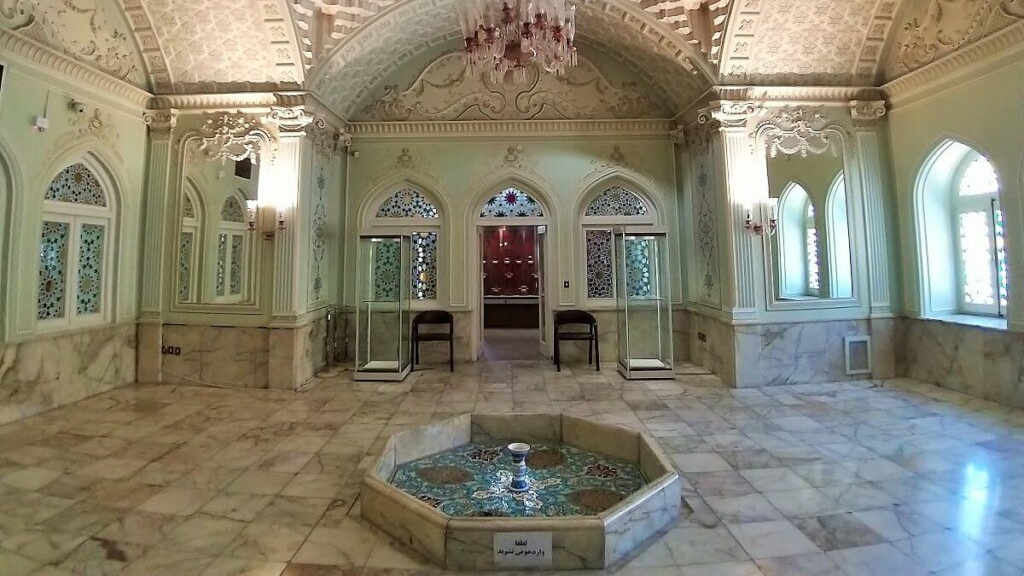
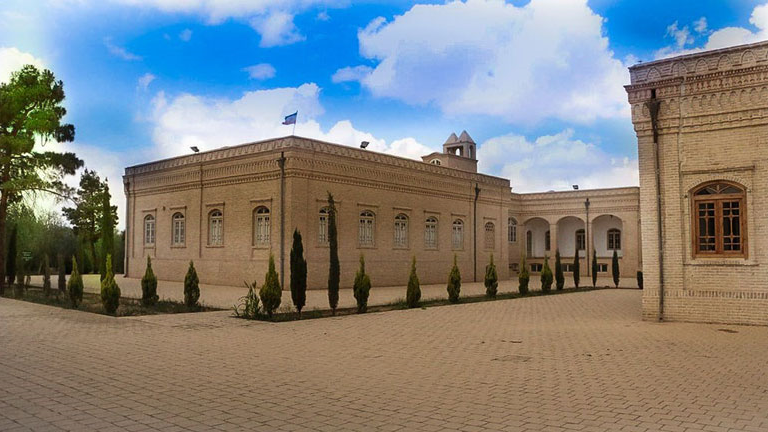
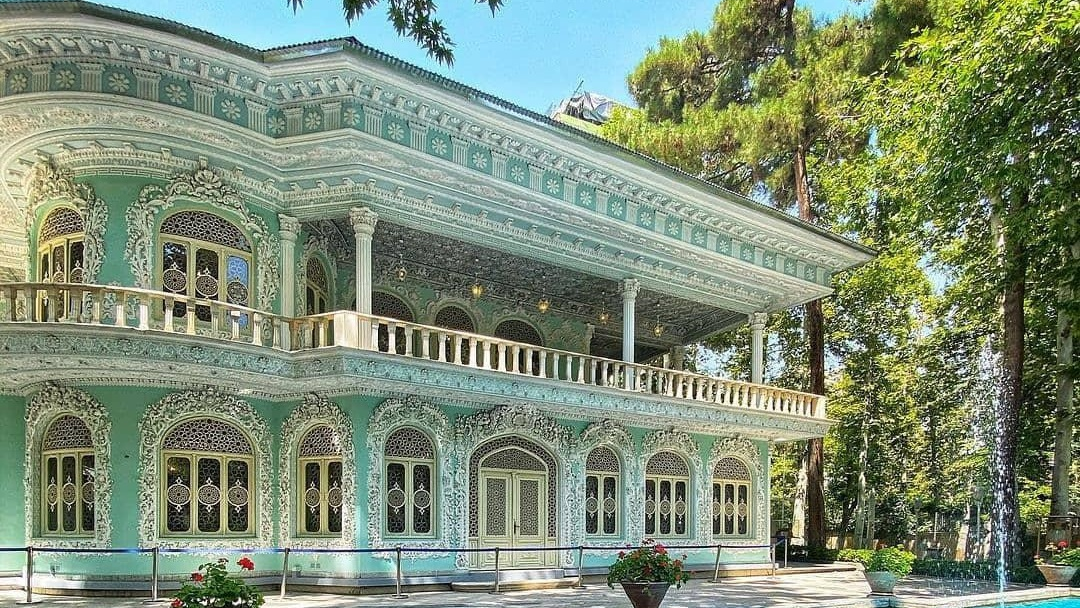
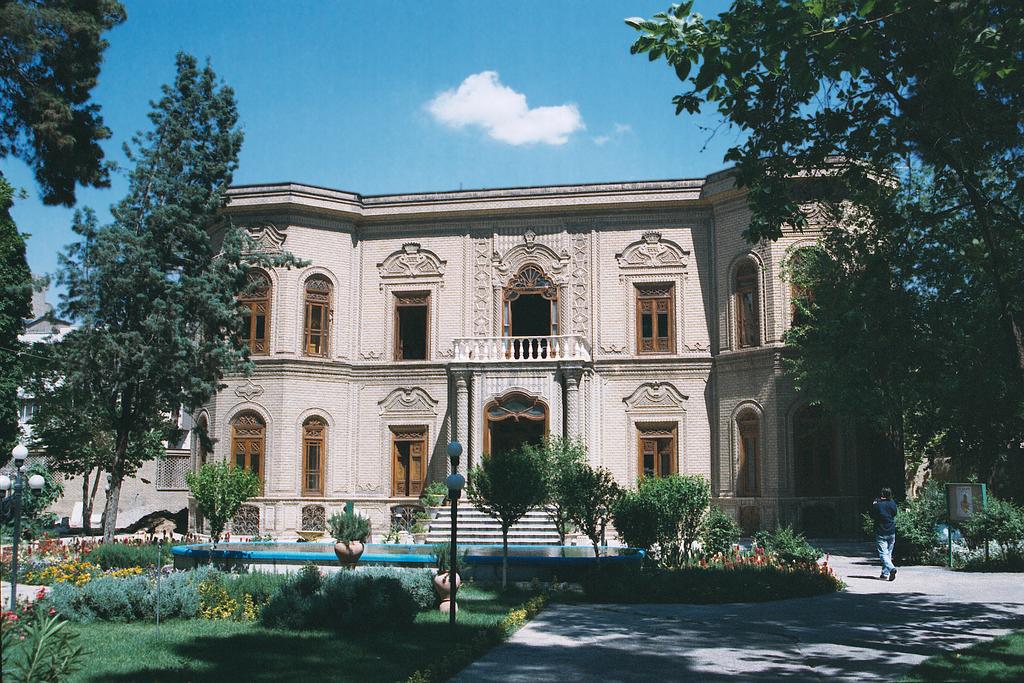
The Glass and Ceramics Museum of Iran is one of the museums in Tehran. The building housing the museum is a historic Qajar-era residence located on Si Tir Street in Tehran. This site was registered as a national heritage monument of Iran on April 27, 1998, under registration number 2014. The museum specializes in glass and ceramics. It is one of the most visited museums in Tehran, with the majority of its visitors being foreign tourists. On average, more than 2 million people visit the museum annually.

2

National Jewelry Museum

Iran

National Jewelry Museum

The unparalleled “National Jewels Treasury” is a collection of some of the world’s most precious jewels, amassed over the course of centuries.

Each piece of these jewels reflects a part of the tumultuous history of the great nation of Iran and showcases the artistic taste and creativity of its people. They evoke memories of the bitter and sweet moments of defeats and victories, as well as the pride, ostentation, and authoritative rule of past rulers.

Each piece of these jewels reflects a part of the tumultuous history of the great nation of Iran and showcases the artistic taste and creativity of its people. They evoke memories of the bitter and sweet moments of defeats and victories, as well as the pride, ostentation, and authoritative rule of past rulers.

This treasury, on one hand, reflects the ancient and tumultuous culture and history of the Iranian nation, narrating the adventurous stories of past generations. On the other hand, it tells the tale of the silent tears of oppressed and suffering people, the outcome of the pride and ostentation of the powerful and the tyrants of bygone eras. 
Our purpose in presenting these jewels is to foster a deeper understanding of Iran’s culture and history, and to reflect on the fate of tyrants and hoarders of the past. With this aim, the collection entrusted to us is placed before you for observation and judgment. 
The significance of the jewels in the National Jewels Treasury is not limited to their economic value. They also reflect the taste and skill of Iranian craftsmen and artists throughout various historical periods and, as a historical and artistic heritage, represent the refined arts of our vast country. 
Throughout history, these jewels and rarities have served as ornaments and adornments for rulers and sovereigns, often symbolizing the splendor and grandeur of the court. At the same time, they have also represented a source of power and a reserve for the state treasury. 

Precise information regarding the quality and quantity of the National Jewels prior to the Safavid era is not available, and it can be said that the documented history of Iranian jewels begins with the Safavid rulers. The process of collecting and assembling the current collection can be briefly summarized as follows: 
Before the Safavid era, some jewels were already kept in the royal treasury. According to accounts by foreign travelers—such as Jean-Baptiste Tavernier, Chardin, the Shirley brothers, Warnecke, and others—the Safavid rulers, around the 16th to 17th centuries (907–1148 AH), began systematically collecting precious gems and jewels. Safavid government experts even purchased jewels from markets in India, the Ottoman Empire, and European countries such as France and Italy, bringing them to Isfahan, the capital of their empire. 
Therefore, at the end of the reign of Shah Sultan Hossein and with the invasion of Iran by Mahmud Afghan, the royal treasuries were plundered and dispersed by the Afghan invaders. A portion of these treasures, which Mahmud Afghan had transferred to Ashraf Afghan, was later seized by Nader (Nader Shah) after he entered Isfahan alongside Shah Tahmasp II, thus preventing their removal from Iran. 

Later, Nader sent several letters to the Mughal court in India to reclaim the portion of the Iranian jewels that had been taken there, but his requests were rejected. Following his military campaign in India in 1158 AH (1745 CE), Mohammad Shah of India surrendered large amounts of cash, jewels, and weapons to Nader. However, part of the treasures and wealth that Nader had obtained from India never reached Iran, as some of it was lost on the way back.

After returning to Iran, Nader distributed a considerable portion of the jewels and precious items as gifts to the emirs, governors, and rulers of neighboring countries. He also donated a number of valuable and bejeweled objects to the Holy Shrine of Imam Reza (peace be upon him) and divided part of the remaining treasures among his army.

In 1160 AH (1747 CE), following Nader Shah’s assassination, Ahmad Beg Abdali, one of Nader’s Afghan commanders, plundered the royal treasury. Among the jewels taken from Iran—and never returned—was the famous diamond known as the Koh-i-Noor (“Mountain of Light”). This diamond first came into the possession of Ahmad Shah Durrani and later Ranjit Singh of Punjab. After Ranjit Singh’s defeat by the British, the Koh-i-Noor fell into the hands of the British East India Company and was eventually presented to Queen Victoria in 1266 AH / 1849 CE. 

ChatGPT said:

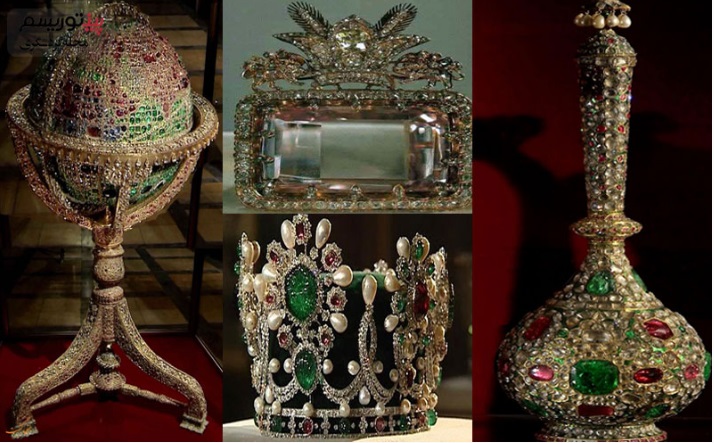
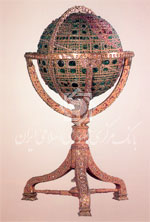
From that time until the Qajar era, the remaining treasures underwent little change. During the Qajar period, the collection of jewels was gathered and consolidated, and several of them were mounted on the Kiani Crown, the Naderi Throne, the Jeweled Globe, and the Peacock Throne (also known as the Sun Throne).

Two other gems were gradually added to the collection: turquoise, a precious Iranian stone extracted from the Neyshabur mines, and pearls, which were harvested from the Persian Gulf.

 According to the law enacted on November 16, 1937 (25 Aban 1316 SH), a major portion of the jewels was transferred to the Bank Melli Iran. They were then considered part of the backing for the national currency and later served as collateral for the government’s debt securities to the bank in support of the currency. 
The current Jewelry Treasury was constructed in 1955 (1334 SH) and officially inaugurated in 1960 (1339 SH) with the establishment of the Central Bank of Iran. Since then, it has been entrusted to and remains under the protection of the Central Bank of the Islamic Republic of Iran. 

During the glorious Islamic Revolution of Iran and the imposed war, this priceless and unique treasure was preserved through the dedication and commitment of the loyal and revolutionary staff of the Central Bank of the Islamic Republic of Iran.

 Now before you lies a treasury of precious jewels and gemstones, formed and transformed through the turbulent course of time. It is hoped that, in beholding this collection, we remember that in the divine order, crowns and diadems belong only in museums — a solemn reminder of a painful and blood-stained history that must never, under any circumstances, be repeated. 

How much is this collection worth?

Much can be said about this precious collection, but there is one question that cannot be answered definitively:

How much is this collection worth?

No one knows the answer to this question, because this collection contains gems that have no equal anywhere in the world. The only possible answer is that the Iranian National Jewels are so unique, both artistically and historically, that even the most expert appraisers and evaluators in the world have been unable to determine their true or approximate value.

 Treasures and Some Famous Pieces

The jewels and pieces in the National Jewelry Treasury are categorized into 36 cabinets. The contents of these cabinets are highly diverse and primarily include various decorative jewelry, different types of crowns and half-crowns, jeweled headpieces (Jiqah), vases, food covers, hookahs, mirrors, enamel jugs, candlesticks, turquoise items, swords, daggers, shields, clocks, inkwells, snuff boxes, ruby- and garnet-adorned objects, rifles, canes, medals, thrones, pins and brooches, pearls, and more.

Below are some of the famous pieces, accompanied by images and brief descriptions of each.

Darya-ye Noor Diamond (Sea of Light Diamond)


DariaNour.jpg

ChatGPT said:

This diamond may hold the highest rank among the jewels of Iran’s National Treasury. This famous diamond and the Koh-i-Noor diamond, due to the similarity in their names, have often been regarded as a pair, even though they have no similarities in cut or color. Both gems originally belonged to Nader Shah, but the Koh-i-Noor diamond was taken to Afghanistan by Ahmad Shah Durrani after Nader Shah’s death. Later, it passed to Shah Shuja, and following his defeat, it was captured by an Indian commander known as Sher Punjab. The gem eventually came into the possession of the East India Company and was subsequently sent to the British court as a gift to Queen Victoria. Today, this diamond is set in the crown of Queen Elizabeth, the mother of the current queen of England.


The Darya-ye Noor diamond, after the assassination of Nader Shah, passed to his grandson, Shahrokh Mirza. It later came into the possession of Amir Alam Khan Khezimeh and subsequently to Lotf Ali Khan Zand. When Lotf Ali Khan was defeated by Agha Mohammad Khan Qajar, the diamond was transferred to the Qajar treasury.


Naser al-Din Shah believed that this gem was one of the jewels from Cyrus the Great’s crown. He held a great fondness for this precious stone, at times adorning his hat with it and at other times wearing it on his chest. He even established a special office for the custody of the Darya-ye Noor and entrusted this important honor to the nobles and dignitaries of the country.

The Darya-ye Noor later became part of a state museum and is now one of the highlights of the National Jewels Treasury. It weighs 182 carats and has a pink color, one of the rarest hues for a diamond.

In 1965 (1344 SH), during an examination of the National Jewels by Canadian experts, a very interesting detail about this gem was discovered:

Tavernier, the famous French traveler and gemologist, mentioned a 242-carat pink diamond in his book, noting that he saw it in the East in 1642 CE. He also included a diagram and measurements of the diamond, referring to it as the Grand Table Diamante (the Large Table Diamond).

The color and shape of this diamond caught the attention of the Canadian experts, who concluded that the Darya-ye Noor and Nur al-Ain were originally a single diamond that was later split into two pieces. The larger piece became known as Darya-ye Noor, while the smaller piece, weighing 60 carats, is called Nur al-Ain and is currently set in the center of Tiara No. 2, located in Treasury Chest 26.

Pahlavi Crown

PahlaviCrown.jpg

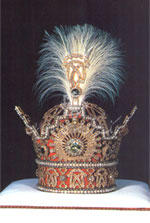
The crown used by Reza Shah and Mohammad Reza Pahlavi was crafted from gold and silver and adorned with exquisite diamonds, large emeralds, sapphires, and pearls. The cap of the crown is covered with red velvet, and atop its dome sits a cabochon emerald set in a claw mount.

The crown features four stepped crenellations on each side, inspired by the crowns of Sassanid emperors. At the center, beneath the front crenellation, is a golden sun with diamond-studded rays and a large yellow diamond at its center. Behind this crenellation is a base-mounted jqqeh in the eslimi design, and behind that, a plume of ostrich feathers.

The number of gemstones set on the crown is as follows: 3,380 diamonds weighing 1,144 carats, 5 emeralds totaling 199 carats, 2 sapphires weighing 19 carats, and 368 pearls. The combined weight of the gold, gemstones, and velvet amounts to 444 mesghal, approximately 2.8 kilograms.

Previously, the Kiani Crown was used in coronations during the Qajar era. However, Reza Shah preferred not to use it for his own coronation. Therefore, in 1304 SH (1925 CE), a team of Iranian jewelers under the supervision of Serajeddin Javaheri—a renowned Caucasian jeweler who had migrated from Russia to Iran and was also the jeweler of the Emir of Bukhara—crafted a new crown using selected gemstones. This crown was subsequently used by Reza Shah and Mohammad Reza Pahlavi in their coronation ceremonies.

Naderi Jiqah

NadirAigrette.jpg

ChatGPT said:

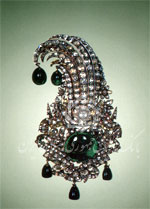
The Naderi Jiqah is adorned with diamonds and emeralds, featuring a large, beautifully colored cabochon emerald set at its center. Beneath the jiqah, three pendants of vivid emeralds hang gracefully. The upper part of the jiqah consists of seven segments, with two garlands of diamond-studded leaves and flowers on each side. From the tips of the segments, two high-quality Saidi emerald pendants are suspended. Above the central emerald sits a diamond-encrusted crescent, while at the bottom on either side, miniature representations of a banner, drum, cannon tube, and spear are attached to the band. The fabric of the banner is divided into three rows of rubies, diamonds, and light emeralds. The entire jiqah is decorated with fine and large, high-quality diamonds. Reza Shah Pahlavi occasionally wore this jiqah. Its weight is 33 mithqals and 16 nokods.
(Produced in Iran, 12th century AH)


Kiani Crown

KianiCrown.jpg

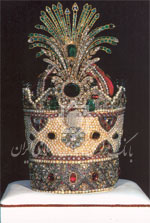
The Fath-Ali Shah Crown, also known as the Kiani Crown, is adorned with diamonds, emeralds, rubies, and pearls. It was crafted during the reign of Fath-Ali Shah and was used by the Qajar monarchs. This crown is notable as the first crown made in this style since the Sassanian era.

(Made in Iran, 1212 AH / early 19th century CE)


Jeweled Globe

GoldenGlobe.jpg

This globe (ornamental sphere) was crafted in 1291 AH (1874–1875 CE) by order of Naser al-Din Shah, executed by a group of Iranian jewelers led by Ebrahim Masihi, using jewels from the treasury. The pure gold used in the globe weighs 34 kilograms, and the weight of the embedded gemstones totals 3,656 grams. The globe is adorned with 51,366 individual gemstones.

Identifying the countries amid the sparkling jewels is challenging, as the jeweler’s skill in craftsmanship seems to have outweighed strict adherence to cartographic accuracy. The seas are represented with emeralds, and the landmasses with rubies. Southeast Asia, Iran, and England are highlighted with diamonds; India with light-colored rubies; and Central and South Africa with sapphires. The equator and other geographic lines are also marked with diamonds. The diameter of the globe is approximately two feet (66 centimeters), and it rests on a base entirely made of gold and adorned with gemstones.


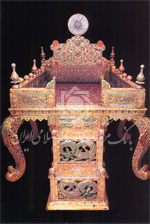
SunThrone.jpg

Peacock Throne (Takhte Tavous / Takht-e Khorshid)

By order of Fath-Ali Shah in 1216 AH (1801–1802 CE), a grand and magnificent throne was constructed under the supervision of Nezam al-Dowleh, Mohammad Hossein Khan Sadr Esfahani, the governor of Isfahan, using the jewels and gold from the royal treasury. Originally named Takht-e Khorshid (Throne of the Sun) due to the jeweled sun motif at its top, it retained this name for several years.

After Fath-Ali Shah married Taj al-Dowleh (nicknamed Tavous Khanum), the throne became popularly known as Takht-e Tavous (Peacock Throne) in her honor. Some Iranians mistakenly believed this throne was the same as the famed Peacock Throne of India. However, by comparing descriptions by the French traveler Jean-Baptiste Tavernier with the existing throne, and consulting Naser al-Din Shah, it was confirmed that this throne had indeed been made by Fath-Ali Shah and named after his wife.

Years later, during Naser al-Din Shah’s reign, who paid special attention to royal jewels and treasures, the throne underwent repairs and minor modifications. Inscriptions recording the restoration, written in beautiful Nasta’liq script on a gold background with lapis lazuli enamel, were added around the throne in separate couplets. These inscriptions are now installed in sequence, reflecting the later restoration.

The throne remained in the Golestan Palace Hall until 1360 SH (1981–1982 CE) when it was transferred to the National Jewels Treasury of the Central Bank of the Islamic Republic of Iran, ensuring its preservation alongside other treasury jewels, in accordance with the 1316 SH law.


3

Reza Abbasi Museum

Iran

Reza Abbasi Museum

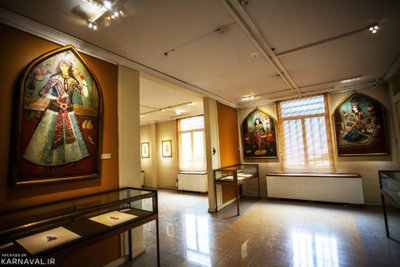
The Reza Abbasi Museum is one of Iran’s most significant and comprehensive museums. Inaugurated on September 16, 1977, it is named in honor of Reza Abbasi, the renowned painter of the Safavid era.

History

The museum building originally housed a furniture and home décor exhibition. Its architectural features and prime location drew the attention of authorities, leading to its purchase. The museum was officially inaugurated in October 1977 by Farah Pahlavi to preserve valuable artifacts and royal gifts, but it closed a year later in November 1978. During this period (1976–1979), Aydin Aghdashloo managed the museum.

The museum’s emblem was designed in 1976 by Morteza Momayez, known as the father of Iranian graphic design. He collaborated with Mohammad Ehsai and received guidance from Aydin Aghdashloo on floral motifs.

After interior modifications and the expansion of exhibition spaces, the museum reopened at the end of 1979. It experienced intermittent closures due to operational issues, reopening finally on February 4, 2001, after extensive renovations. Today, the museum is managed by the Cultural Heritage, Tourism, and Handicrafts Organization, with Shahram Heydarabadian as its director.

Halls

The museum displays artworks spanning from the prehistoric era to the 13th century AH across three main halls:

  • Pre-Islamic Hall

  • Islamic Arts Hall

  • Painting and Calligraphy Hall

Collections

The museum’s collection is highly diverse, covering works from the 2nd millennium BCE to the early 20th century (end of the Qajar period). Artifacts are arranged chronologically, allowing visitors to trace the evolution of art, culture, and civilization in Iran. Highlights include:

  • Bust of a Nobleman – Lapis Lazuli – Sassanian Period

  • The Luristan Goat Statue

The museum also houses an advanced restoration and conservation department, equipped with two laboratories and a workshop, specializing in paintings, metal objects, and manuscripts. This workshop restores both in-house artifacts and items sent from other museums in Iran.

Library

The museum library contains over 10,000 books in Persian, English, French, and German, alongside subscriptions to more than 50 domestic and 60 foreign journals. It is accessible to museum staff, Cultural Heritage Organization employees, professors, students, and cultural researchers.

Publications

The museum’s publications department has released numerous reference works on Iranian art and history.

Museum Floors

  • First Floor: Dedicated to painting and calligraphy, featuring the oldest surviving leaf from the Shahnameh-ye Demut (mid-8th century AH).

  • Second Floor: Showcases Islamic-era artifacts across two halls.

  • Third Floor: Houses the library and the Pre-Islamic Hall, displaying golden rhytons from the Achaemenid period and silver vessels from the Sassanian era.

4

National Museum of Iran

Iran

National Museum of Iran
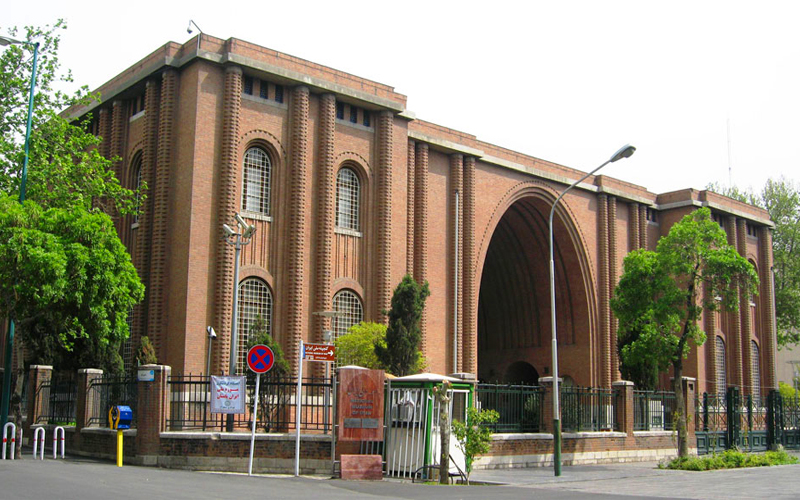
The main entrance of the Museum of Ancient Iran, designed by André Godard, a French architect, in the Sassanian vault style, especially inspired by the Tisfouni iwan.
The National Museum of Iran is a collection of historical and prehistoric Iranian artifacts located in Tehran. The museum consists of two separate buildings: the Museum of Ancient Iran, housing artifacts from the Paleolithic era up to the pre-Islamic period, opened in 1937 (1316 in the Iranian calendar), and the Museum of the Islamic Era, dedicated to archaeological and artistic works from Iran’s Islamic period, opened in 1996 (1375 in the Iranian calendar).
The National Museum of Iran is the country’s most important museum for the preservation, display, and study of Iran’s archaeological collections. The breadth and diversity of its artifacts reflect the country’s vast geography and the multiple prehistoric, historical, and Islamic periods during which humans lived in this land and left their mark. Today, the museum exhibits works that showcase the richness of Iranian culture and civilization, its art, economic development, and technological achievements.
With a history of about eighty years, the National Museum of Iran is not only the largest archaeology and history museum in the country but is also considered the “mother museum” in Iranian museology. Currently, Jebrail Nokandeh serves as its Director General.
Background 
For the first time, the idea of establishing a place called a museum was proposed by Morteza Gholi Hedayat, also known as Morteza Gholi Sanie-doleh. He intended to create a museum and an office called the Department of Antiquities to organize and manage archaeological excavations, but he did not achieve this goal.
The first museum was established in 1916 (1295 AH) under the name “National Museum” or “Museum of Knowledge” in one of the large rooms of the Ministry of Education, located on the northern side of the Dar al-Fonun school building. This museum contained 270 items, including bronze, pottery, glassware, coins, ancient weapons, seals, wooden objects, manuscripts, books, and textiles, which had been collected by the employees of the Department of Antiquities or donated by the public.
In 1925 (1304 AH), the museum’s objects were transferred to the Mirror Hall of the Masoudieh Palace. Meanwhile, with the start of archaeological excavations by European archaeologists—particularly the French Archaeological Delegation led by Jacques de Morgan in 1897 (1276 AH) in Susa—the Iranian public became more aware of the importance of their cultural heritage. In 1927 (1306 AH), Iran revoked the unconditional privileges previously granted to the French archaeologists, allowing them to excavate only in Susa. Additionally, as Iran decided to establish a national museum and library, the task of designing and implementing these institutions was given to the French. Accordingly, in 1929 (1308 AH), the French engineer André Godard came to Iran to establish the museum and library and officially began his work.
Construction of the Museum of Islamic Era, aimed at carrying out various cultural activities, began in 1944 (1323 AH) within the grounds of the National Museum of Iran and, after several interruptions, its architecture was completed in 1950 (1329 AH), although finishing touches were postponed to later years. Considering the importance of Islamic-era artifacts, the interior design and execution of the Museum of Islamic Era began in 1991 (1370 AH) with attention to Islamic art and philosophy, and its floor plan was inspired by the Sassanian cross-shaped design. Finally, this museum, covering approximately 10,000 square meters over four floors, was inaugurated in 1996 (1375 AH), with two floors dedicated to exhibiting Islamic art and the other two floors facilitating ancillary activities.
Currently, the National Museum of Iran encompasses both the Museum of Ancient Iran and the Museum of the Islamic Era. Covering a total floor area of approximately 200,000 square meters on an 18,000-square-meter site and housing around 300,000 historical artifacts, it is considered the most important museum in the country and among the richest museums in the world in terms of Iranian culture and art.
The National Museum of Iran houses artifacts from Iran’s prehistoric, historical, and Islamic periods, with the oldest pieces dating back approximately 800,000 years.
Features
The Museum of Ancient Iran (Iran Bastan) has a rich collection of archaeological artifacts, with the oldest dating back to the Paleolithic period (between one million and about 12,000 years ago) and the newest from the Sassanian era, over 1,700 years old. This hall displays unique items from various prehistoric and historical periods.
The oldest hand-made artifacts in the Paleolithic section of the Iran Bastan Hall, made from quartz or mountain stone, come from the Keshf Rud River area east of Mashhad and are over one million years old. Other ancient collections in this section include items from Darband and Ganj Par in Gilan Province and Shiveh To near Mahabad, dating back approximately 700,000 to 200,000 years.
In the museum hall, remarkable artifacts from the Middle and Upper Paleolithic periods, dating between 200,000 and about 12,000 years ago, are also on display. From the Middle Paleolithic, coinciding with the presence of Neanderthals in Iran, tools made of flint and fossilized animal remains from caves in the Zagros region and the Central Plateau—such as Bisotun and Khorramabad caves—are exhibited. The oldest human remains found in Iran, a small molar tooth of a Neanderthal, discovered in Wezmeh Cave, are displayed in the Middle Paleolithic section of the museum.
In the Upper Paleolithic period, which coincides with the spread of modern Homo sapiens in Iran, the production of blade tools became widespread. Bone tools were also made, and personal ornaments such as shell pendants, animal teeth, and ochre were commonly used. One important site from this period is Yafteh Cave in Lorestan, examples of which are displayed in the museum hall. From the subsequent Epipaleolithic period, characterized by the invention of composite tools, the use of grinding stones, and food storage, artifacts from Ali Tappeh Cave (Mazandaran), Shalam Cave (Ilam), and several other sites are exhibited.
From the Neolithic and early village periods, artifacts such as the oldest brick in Iran from Ganj Dareh, the earliest clay figurines of humans and animals from Sarab Hill, and stone tools are displayed in the hall. Important sites from the 5th and 4th millennia BCE (the Chalcolithic or Copper-Stone Age) in Iran include Susa (Khuzestan), Esmailabad and Cheshmeh Ali (Tehran), and Tal-e Bakun (Fars), with examples of their decorated pottery on display. Among the notable motifs from this period is the simplified depiction of a wild goat, seen on the surface of pottery from Esmailabad and Cheshmeh Ali.
Stone vessels from Jiroft and Shahdad, decorated with diverse motifs such as humans battling mythical animals and geometric, animal, and plant designs, are among the prominent examples displayed in the showcases. Another significant artifact from this period in the museum hall is a clay figurine from Shahdad, depicting the upper torso of a nude man with his hands folded over his chest, likely shown in a posture of prayer.
Metal objects from the late Bronze Age and early Iron Age—including vessels, weapons, decorative items, and human and animal figurines—are on display in the hall. Also exhibited are gray, polished, and burnished pottery, vessels with spouted tubes, vessels shaped like humans and animals, rhytons (animal-shaped drinking vessels), and various iron objects.
Some of the objects displayed in the prehistoric section of the hall belong to the Elamite civilization. Numerous artworks have survived from all Elamite periods, particularly from the Middle Elamite period, which is considered one of the most magnificent of the three Elamite eras. The Chogha Zanbil temple is one of the most significant architectural remains from this period, yielding numerous artifacts, including a cow figurine with an inscription, glass tubes, inscribed bricks, and a clay door socket, all of which are exhibited in the hall. The glass tubes from Chogha Zanbil are among the oldest examples of glass in Iran. Other aspects of Elamite art represented in the hall of Ancient Iran include sculpture, decorative vessels made from natural bitumen, relief carvings, cylinder seals, molded relief figurines, glazed bricks, imitation Chinese objects, bronze items, and funerary busts.
Artifacts attributable to the Median period displayed in the museum hall have been obtained from ancient sites such as Nushijan, Hasanlu, Godin, and Babajan. During this period, the production of iron objects expanded, with notable examples being the items from Hasanlu displayed in the hall. Additionally, beautifully glazed ceramics were crafted, a remarkable example of which is the glazed jug from Ziwiyeh, featuring the depiction of two goats on either side of a lotus flower.
The magnificent artifacts of the Achaemenid period are among the outstanding examples in the Museum of Ancient Iran, reflecting the rich art of this era.
The National Museum of Iran includes 10 research departments, a library, and a documentation center:
Paleolithic Department
Prehistoric Department
Historic Department
Islamic Department
Seals and Coins Department
Conservation and Restoration Department
Inscriptions Department
Ceramics Department
Osteology Department
Library and Documentation Center
Goals
The purpose of establishing the National Museum of Iran is to preserve and study the heritage of past generations, present, and transmit it to the future, foster understanding among nations and ethnic groups, highlight their contributions to global culture and civilization, and enhance public knowledge—especially among students, scholars, and researchers. During the 2000s and 2010s, after more than 70 years, the museum underwent major renovations in the Ancient Iran Hall, unveiling many previously unseen artifacts, updating all display cases, and refreshing the accompanying information panels.

5

Iran Carpet Museum

Iran
National Carpet Museum of Iran

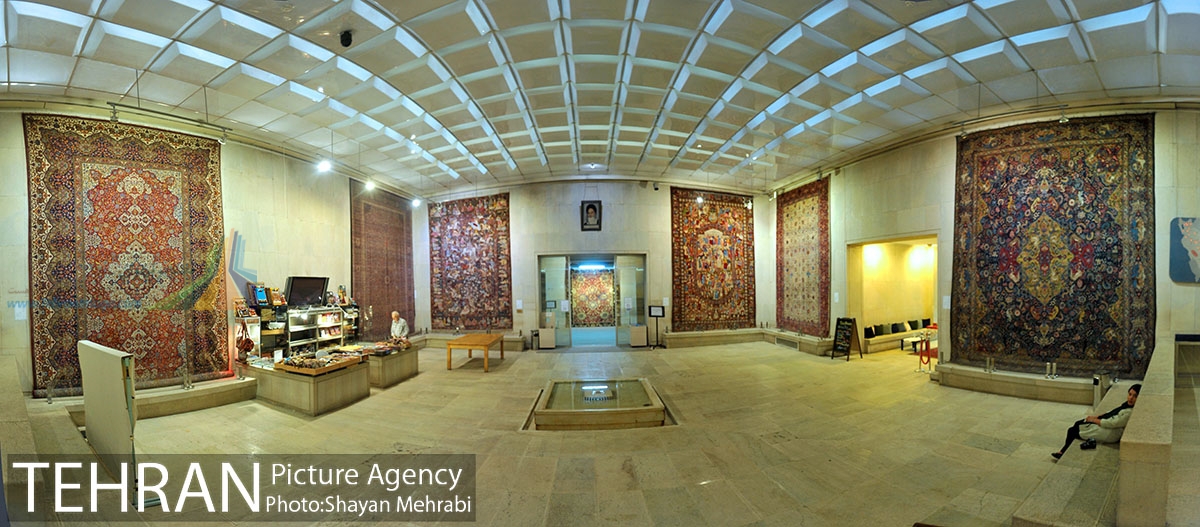
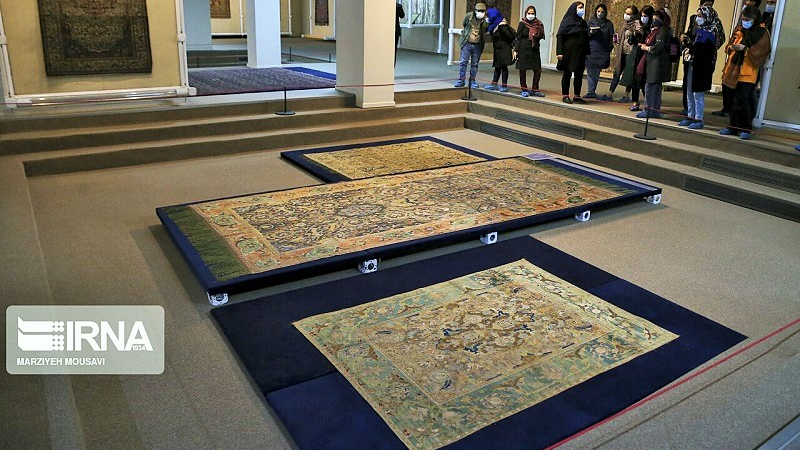
The National Carpet Museum of Iran was inaugurated on 11 February 1978 (22 Bahman 1356 in the Iranian calendar). The museum showcases highly valuable carpets from all over Iran, crafted by renowned Iranian artists. Its establishment aims to research the history, techniques, and historical quality of Iranian carpet art and craftsmanship. The museum also features other related products, such as kilims.

The museum building covers an area of 3,400 square meters, and its exterior decorations resemble a carpet loom. The building contains two halls and is used to display various handwoven carpets and kilims. The ground floor is dedicated to the permanent exhibition of 150 carpets, while the second floor is reserved for temporary and seasonal exhibitions.

The museum building covers an area of 3,400 square meters, and its exterior decorations resemble a carpet loom. The building contains two halls and is used to display various handwoven carpets and kilims. The ground floor is dedicated to the permanent exhibition of 150 carpets, while the second floor is reserved for temporary and seasonal exhibitions.

The museum's library houses approximately 3,500 books in Persian, Arabic, French, English, and German, available to art enthusiasts and researchers.

The collections of the Iran National Carpet Museum 

In the Iran Carpet Museum, various kilims and handwoven carpets are preserved and maintained according to their quality and age, considering the characteristics of Iranian carpets in terms of coloring, design, pattern, weaving, and regional diversity. The museum’s collection includes the most valuable examples of Iranian carpets from the 9th century AH to the contemporary period and serves as a rich research resource for scholars and art enthusiasts. Around 135 masterpieces of Iranian carpets, woven in major carpet-weaving centers such as Kashan, Kerman, Isfahan, Tabriz, Khorasan, Kurdistan, and others, are exhibited in the ground-floor hall.

The Iran Carpet Museum consists of two sections: a permanent museum and an exhibition hall. The permanent museum houses 150 valuable and historical carpets.

One of the notable features of the Iran Carpet Museum is a unique and valuable handwoven carpet from Kashan, measuring 130 × 220 cm, known as the Mirza Kuchak Khan Jangali carpet, which depicts this national clerical figure in military attire, armed with a rifle and a pistol, with an ammunition belt. In the medallion above Mirza’s image, an inscription bearing the name of the Melamohammad workshop can be seen, indicating that the carpet was likely woven in the final years of the Qajar period.

The finest knotted carpet in the museum belongs to the Omou Oghli workshop, which was active during the Pahlavi court era. Many carpets produced in Omou Oghli’s workshops are currently housed in the Sa’dabad and Niavaran Palaces. The museum’s most finely knotted carpet, featuring 120 knots per inch and an all-over floral (Afshan) design, is on display in the museum’s permanent exhibition.

The kilim titled “Mihrab Design Depicting Jesus (PBUH) with the Apostles,” woven in Kurdistan, is another exceptional piece in the Carpet Museum of Tehran. Its main golden background features Jesus (PBUH) alongside three of his apostles, surrounded by other decorative motifs.

Iranian carpets have long been regarded as one of the most authentic art forms, encompassing a wide range of beautiful designs and motifs. Among these varied patterns, pictorial carpets hold a special place. The weaving of such carpets resumed in the late 9th century AH and continues to this day. This exhibition features examples of pictorial carpets from the Bāysanghori Shahnameh, which depict elements of Iran’s rich literature, mythology, religion, culture, and art. All of these works were created in Master Mousavi Seerat’s workshop, with the collaboration of young Iranian artists, the master’s refined taste, and computer-assisted technology.

The carpets and kilims from the five regions of Kurdistan—including the cities of Sanandaj, Bijar, Kakaber, and Sonqor—are renowned for their beautiful and high-quality weaving, heavy textures, and highly attractive double-weft woolen carpets. The Carpet Museum houses many pieces from this region, among which the “Toranjdār Tūsbagh” design, woven in Seneh in the late 13th century AH, is particularly notable.

The “Herati” or “intertwined fish” pattern is another unique carpet in the Carpet Museum. This carpet is the only one in the museum that depicts a realistic image of fish. In Herati carpets, fish motifs are usually small, curved, and shaped like an artichoke leaf. This design has roots in Iranian culture and beliefs, dating back to the era of pre-Zoroastrian Mithraism. At that time, before Zoroaster became the prophet of the Iranians, Mithraists believed that Zoroaster, seated on a lotus, was guided to the water’s surface by four fish. This is why fish motifs are frequently seen in the designs of carpet weavers from that period.


6

Tehran Museum of Contemporary Art

Iran

Tehran Museum of Contemporary Art

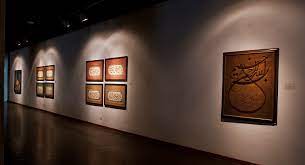
The Tehran Museum of Contemporary Art is one of the most renowned museums in Iran. It was established in 1977 (22 Mehr 1356 in the Iranian calendar) in the northwestern corner of today’s Laleh Park on North Kargar Street in Tehran. The building was designed by Kamran Diba in a modern architectural style, inspired by the windcatchers of Iran’s desert regions.

The museum houses one of the most comprehensive and important collections of modern art outside Europe and North America, and is considered among the top 5 to 10 neo-modern art collections in the world. Its collection includes major works from movements such as Abstract Expressionism, Pop Art, Minimalism, Conceptual Art, and Photorealism. The permanent collection of the museum contains over 3,000 valuable works by masters of visual arts, with nearly 400 considered of exceptional value. Some of the museum’s highlighted works include masterpieces by Gauguin, Renoir, Picasso, Magritte, Ernst, Pollock, Warhol, Léger, and Giacometti. Additionally, the museum possesses a very important and comprehensive collection of modern and contemporary Iranian art, making it a central hub for Iran’s visual arts heritage.

The collection of the Tehran Museum of Contemporary Art is considered part of Iran’s public assets, with the total estimated value of its works ranging between $5 to $10 billion. The museum currently operates as one of the units under the Deputy of Artistic Affairs of the Ministry of Culture and Islamic Guidance.

The modern and contemporary art movement in Iran began around the 1940s (1320s in the Iranian calendar), following the death of Kamāl-ol-Molk and the opening of the Faculty of Fine Arts at the University of Tehran. With the arrival of Western instructors, such as André Godard, and Iranian art students traveling to Europe to study, Iranian artists gradually became familiar with modern art ideas, including movements like Perceptionism and other contemporary international trends.

The 1320s (1940s in the Gregorian calendar) also witnessed the first modern art exhibitions in Iran, a growing interest in new artistic styles, and the encounter of modernist artists with traditionalists. Pioneering figures such as Mahmoud Javadi-Pour, Hossein Kazemi, and Jalil Zia-Pour played key roles in opening the way for the acceptance of modern art in Iran. Artistic interactions among these artists increased alongside the growth of galleries in Tehran, and the first Iranian art circles—notably the “Rooster” Association (Anjoman-e Khorus-e Jangi)—began their activities, fostering a new cultural and artistic community.

The 1330s (1950s in the Gregorian calendar) saw increased travel of Iranian artists abroad and their exposure to the Minimalist and New York School of Visual Arts. The gradual return of Iranian students from overseas during this decade brought modern artistic ideas to Iran, prompting the first generation of young, prominent artists—including Parviz Tanavoli, Hossein Zenderoudi, and Siah Armajani—to seek a venue to exhibit Iranian artworks. Although the Iranian Biennale took place for five pre-revolution cycles, it was later suspended, and modernist artists began frequenting venues like the Artists’ Club (Bashgah-e Honarmandan). During this period, the government primarily supported traditional Iranian art and works by graduates of the Faculty of Fine Arts. However, with Farah Diba’s marriage to Mohammad Reza Shah Pahlavi, a new faction emerged within the government that backed modernism and contemporary global art. By the mid-1350s (1970s), the activities of the Special Office of the Empress (Farah Pahlavi) had expanded Iran’s cultural connections with international institutions such as UNESCO and the International Council of Museums (ICOM), and led to large-scale acquisitions of contemporary art by government agencies.

History of the Tehran Museum of Contemporary Art

After the 1979 Iranian Revolution (1357 Iranian calendar), revolutionaries initially intended to convert the unique building of the museum into a Hosseinieh (religious center), but this plan was not carried out. Nevertheless, unlike many other museums in Iran, the Tehran Museum of Contemporary Art experienced only a short closure. According to experts, what happened to the museum during the events leading up to and following the revolution—which coincided with the new Islamic government’s efforts to remove the remnants of the Pahlavi dynasty—was exceptional compared to other similar institutions. Following the February 1979 events, which led to the overthrow of the monarchy, the museum was closed for two weeks. It then continued operating behind closed doors for six months with its main staff, until new artistic institutions were established and management changed, after which the museum reopened to the public. From that point onward, many Western artworks in the museum were labeled “not for display” and hidden from public view. Some works, particularly those depicting nudity, provoked reactions from the officials of the Islamic Republic government. However, in the 1990s (1370s Iranian calendar), a number of these artworks were sent to Western museums for exhibition.

In the early years after the revolution, various exhibitions were held at the museum to commemorate the anniversary of the revolution. These exhibitions featured works by revolutionary artists as well as traditional arts, such as calligraphy and miniature painting. This practice continued for several years until the Tehran Museum of Contemporary Art began organizing regular biennial and triennial exhibitions. The first Iranian Painting Biennale was held in autumn 1991 (1370 Iranian calendar, 12 years after the revolution), organized by the Ministry of Culture and Islamic Guidance at the museum. According to its catalogs, the aim of the exhibition was to improve the quantity and quality of painting, create a competitive space for artists, and discover and support young talent. Most of the selected works reflected Iranian–Islamic themes, and a section of the exhibition was even titled “Palestine”. During the first biennale, the museum also held a conference focused on “cultural and artistic identity”. Although cultural and artistic identity had been discussed before the revolution, this conference emphasized the revolutionary, Islamic, and traditional aspects of culture, with officials hoping to promote Islamic art. In 1993 (1372 Iranian calendar), the second biennale was held with a slightly less strict focus on purely Islamic art. From that point onward, a separate biennale was dedicated to miniature painting, highlighting this traditional art form.

 Up to 15 years after the revolution, the museum had seen nearly 15 different directors, and its focus shifted toward exhibiting modern art serving ideological or political propaganda purposes. According to experts, during this period, the museum had effectively become a gallery for war-related artworks, particularly pieces depicting the Iran–Iraq War, images of the war dead, and works by revolutionary Palestinian and Mexican artists. This era in the history of the Tehran Museum of Contemporary Art is often referred to as the “Revolutionary Values Period.” Directors during this time were appointed by the Ministry of Culture and Islamic Guidance, and most lacked formal artistic education or experience.

After the 1997 elections (1376 Iranian calendar), the Tehran Museum of Contemporary Art became the most important center for visual arts under the Ministry of Culture and Islamic Guidance. From that time, the museum actively and systematically organized seminars, exhibitions, and biennials. Neo-traditionalist artists and some of the key figures of the Saqqakhaneh movement, including Hossein Zenderoudi, Masoud Arabshahi, Mohsen Vaziri-Moghaddam, Mansoureh Hosseini, Behjat Sadr, and Parviz Tanavoli—some of whom had distanced themselves from Iran’s artistic community after the revolution—were now invited to hold exhibitions or participate in seminars, and their works were showcased in the “Pioneers of Modern Iranian Art” series. During this period, the museum also expanded its international activities, organizing exhibitions in Europe, the U.S., and Asia. By exhibiting works in painting, graphic design, and sculpture, the museum broadened its audience, and renowned international Iranian artists such as Abbas Kiarostami, Aydin Aghdashloo, and Farah Osuli held exhibitions alongside younger artists.

Twenty-two years after the revolution, a significant portion of the museum’s Western collection was displayed in several exhibitions over five years, focusing on Pop Art, Impressionism, and Minimalism. In 2005 (approximately 27 years after the revolution), a major exhibition of previously restricted works from the collection was organized exclusively for art specialists. However, some famous pieces—such as Renoir’s Gabriel with Open Shirt and Jasper Johns’ Passage 2—were not included. Additionally, when authorities deemed the middle panel of Francis Bacon’s triptych, Two Figures Lying in Bed in the Presence of Others, as potentially depicting homosexual themes, a formal request was sent to the museum organizer to remove that panel from the display. This exhibition, titled “The Modern Art Movement,” was realized through the efforts of museum officials and with direct support from President Khatami, marking the first time since the revolution that works by Andy Warhol, Vincent van Gogh, Toulouse-Lautrec, and Salvador Dalí were shown publicly. Sami’ Azar succeeded in convincing government officials to allow the full display of the collection to domestic and international art specialists. The exhibition lasted five months and was very well received. However, after Mahmoud Ahmadinejad came to power, Sami’ Azar resigned, and the artworks were once again stored in the museum’s basement.

With the end of Sami’ Azar’s tenure and a shift in cultural policies, Habibollah Sadeghi, a revolutionary painter, was appointed director of the museum, and ideological trends aligned with the early revolution dominated its programming. After him, Mahmoud Shalouei assumed leadership of the museum. Simultaneously serving as Director General of Visual Arts at the Ministry of Culture and Islamic Guidance, he enforced strict regulatory policies on artistic activities. This period was marked by weak and sometimes irrelevant exhibitions in contemporary art, leading to a decline in museum visitors.

In December 2015, the United States returned 14 artworks to Iran by artists such as Peter Eisenman, Michael Graves, and Robert Stern, which had been purchased by the Tehran Museum of Contemporary Art in 1978, one year before the 1979 Revolution.

Architecture
The building of the Tehran Museum of Contemporary Art is considered a notable example of modern architecture in Iran. The design incorporates traditional Iranian architectural elements and philosophical concepts alongside modern features. The architect, Kamran Diba, integrated traditional Iranian elements such as hashti (entrance vestibule), chaharsu (cross-shaped central hall), and passageways into the design. According to Diba, there is no comparable museum architecture in any Arab or Muslim country, including Egypt and Turkey. Diba drew inspiration from Le Corbusier and Frank Lloyd Wright for the overall design and also looked at the Museum of Modern Art in New York when planning its interior and exhibition spaces. He additionally employed ideas from Josep Lluís Sert, such as the Fondation Maeght, and Louis Kahn, whose works embody a deep sense of mysticism. A number of bronze sculptures by Parviz Tanavoli were commissioned by Diba specifically for the museum and installed around its exterior. Diba designed the museum’s interior spaces to enhance interactions among people and their activities. The open areas and gently curving corridors leading to the galleries effectively create this intended sense of connection.

The museum building is constructed of stone and concrete, and overall—including its surrounding gardens—it covers an area of 8,500 square meters. The total wall surface of the museum measures approximately 2,500 square meters. The museum itself spans more than 5,000 square meters, and its construction took nine years to complete. The museum grounds have two entrances: one, considered a service entrance, opens toward Laleh Park, and the other, the main entrance, faces Kargar Street to the west. The museum building is located at the southern part of the site, while the sculpture garden, a large grassed area, extends to the north of the building. 

The exterior of the building is inspired by the windcatchers of the desert-edge regions of Iran. According to Dibā, since he did not have the budget to visit museums around the world, his attention gradually turned to finding a style in local Iranian architecture, and he found the best examples in the mud rooftops and domes of desert cities. The traditional village arches and light wells derived from desert windcatchers act as guides, channeling exterior light into the interior spaces. Although in the past, the windows at the end of these “windcatcher” arches functioned for air circulation and ventilation, today they no longer open and only serve to illuminate the interior. The building is rotated 45 degrees relative to the main street, and apart from four skylights above the entrance, all other light wells face northeast.

The museum building consists of two main parts: a series of enclosed spaces and a central courtyard. Inside the enclosed area, a spiral pathway is designed, gently sloping downward to guide visitors. This internal spiral contrasts with the exterior facade, giving it a completely modern appearance. The spiral includes seven main spaces or galleries. The first space is the main hall of the building, called Gallery One. This gallery gradually connects to the next gallery, leading visitors downward into the interior. The galleries generally follow similar designs, but Galleries One and Five, which form the main axis of the museum, differ from the others. Each gallery connects to the next via a gentle sloped passage, harmoniously integrated with the gallery layout. 

The enclosed spaces are designed so that Gallery One, or the main hall, serves as both the starting and ending point for visitors. This hall is based on a semi-regular octagon with a high vaulted ceiling, and above it sits a large skylight with four windcatchers. In designing this hall, Dība placed great emphasis on the central space and its connections—to the entrance, to the chain of other galleries, and also to the museum’s bookstore and restaurant. The connection between the main hall and the lowest level of the museum is formed through the central void and the slope of the spiral pathway. At the bottom of the spiral, within the hastī (entry vestibule), there is a modern artwork by the Japanese artist Noriyuki Haraguchi titled Matter and Thought. Made in Iran, this piece combines oil and steel and evokes the feeling of traditional Iranian waterhouses (ḥowzkhāneh). Due to the reflective quality of the materials, visitors see it as a large mirror-like surface.

The open spaces and central courtyard of the museum have an irregular shape. The central courtyard stretches along a north–south axis, perpendicular to the museum’s entrance, and its form reflects the protrusions and recesses of the gallery volumes. Galleries One and Five each have a glass door opening onto this courtyard. Since the galleries gradually descend, the courtyard itself has multiple levels, with uneven platforms connected by stairs. At the center of the platforms and stairs lies a square pool, aligned with the main axis of the courtyard.

The walls of the museum building are mostly solid with few openings, creating a fortress-like appearance composed of heavy, compact volumes. The materials used for the façade include orange wind-cut stone and concrete. These wind-cut stones were chosen to give the exterior a solid, traditional, and historical look. The circular sections of the skylights are covered with copper sheets, and the glass at the ends of these skylights is dark-colored. The stone walls are framed with concrete, and the cream-toned concrete combined with the rubble stones gives the building a color and ambiance reminiscent of the mud-brick architecture of Iran’s desert regions.

 Dariush Borbor, an architect, urban planner, and designer, believes that the architecture of this building is derivative. He states:

"The curved towers present in the Tehran Museum of Contemporary Art have absolutely no connection to traditional windcatchers. Unfortunately, the museum is a copy; some parts are taken from the Miró Museum in Spain. In my opinion, the curved shape of the building is only for lighting purposes and has nothing to do with wind. Fundamentally, this architecture lacks original innovation to be truly considered Iranian. Even the curved connecting space in the center of the building is copied from Frank Lloyd Wright’s Guggenheim Museum in New York."

Renovation
On April 29, 2018 (9 Ordibehesht 1397), the Tehran Museum of Contemporary Art was closed for major renovation works, with a promised reopening in the summer of the same year. However, due to complexities that emerged after the start of the project, issues related to the security and preservation of the collection, and the COVID-19 pandemic, the renovation process lasted 30 months. The museum reopened to the public in mid-February 2021 (Baham 1399) with a display of part of its collection. The renovation was carried out in two phases: In the first phase, a temporary collection space was created and the collection was moved there. Renovation work included insulating the roof and floor, cleaning sewage wells, upgrading the ventilation system, insulating windows, laminating glass, installing new lighting, and enhancing security systems. In the second phase, infrastructure systems and fire-fighting systems (manual and automated) were updated, and some changes in use increased the collection storage space by 20%. The budget for the renovation was reported as 16.5 billion Iranian Tomans.

Visual Identity Controversy

In the final stages of renovation and restoration, a new visual identity and logo for the Tehran Museum of Contemporary Art was designed and introduced by Reza Abedini. The unveiling of this new identity sparked negative reactions from many artists and graphic designers, with many defending the original logo designed by Javad Pouyan, which had both a strong connection to the museum’s architecture and had become an integral part of the museum’s identity over the years. Some critics also pointed out weaknesses in Abedini’s design. Ultimately, after several days of debate, the museum authorities announced that the logo would not change, and the new design was discarded.

Museum Facilities

The Tehran Museum of Contemporary Art has nine galleries. Three of these galleries are dedicated to exhibiting works by international painters and artists from the museum’s permanent collection, which includes highly valuable pieces by Claude Monet, Vincent van Gogh, Pablo Picasso, René Magritte, Andy Warhol, and others. The remaining six galleries host temporary and seasonal exhibitions, allowing for a dynamic presentation of artworks. The galleries are arranged sequentially along the visitor pathways, making it easy for visitors to view all the artworks in a smooth and organized manner.

Specialized Library

The specialized library of the museum is located at the end of the sloped pathway leading to the administrative and artistic sections. Its collection includes nearly 5,000 books in Persian and other languages, covering a wide range of art-related topics such as architecture, painting, design, visual communication, photography, cinema, and more. The library uses the Library of Congress (LC) classification system, and access is restricted to registered members. Membership is specifically for art students and researchers. The periodicals section holds domestic and selected foreign cultural and artistic journals related to the museum’s fields of interest. Other specialized facilities of the museum include architecture centers and new media hubs, providing additional resources for research and creative activities.

Ancillary Sections

The Tehran Museum of Contemporary Art also includes several ancillary sections, notably a cinematheque, a specialized bookstore, and a restaurant. The cinematheque began operations in Mehr 1377 (September–October 1998). Its primary goal is to screen significant works of Iranian and world cinema and to provide critical analysis of the films to enhance the audience’s appreciation and understanding. The cinematheque also hosts discussion sessions, seminars, and opening/closing events for exhibitions. The cinematheque has a fixed seating capacity of 200, and its screen measures 6 × 8 meters, allowing the display of both films and slides. Membership is limited, with new members accepted at the beginning of each year. Members enjoy a one-year access to cinematheque programs, as well as other programs offered by the museum and its specialized library.

Art Collection

The museum’s art collection is divided into three main groups: works in the repository (permanent collection), works displayed in the indoor galleries, and sculptures in the outdoor areas.

Sculpture Garden

The Sculpture Garden is a green space located north of the museum building. It features works by Max Ernst, Parviz Tanavoli, Henry Moore, Max Bill, and others. During the museum’s construction, Dibā commissioned Tanavoli to create a sculpture called The Passerby for the front entrance. The sculpture depicts a weary man sitting on a bench amidst the outside crowd. Dibā intended the sculpture to connect the people outside with the museum’s interior. Tanavoli based the sculpture’s clothing and face on Dibā himself. The sculpture was confiscated during the revolution and later disappeared.

Some of the sculptures located in the museum grounds include:

Collection
The permanent collection of the museum houses over 3,000 valuable and unique works by leading visual artists from Iran and around the world, nearly 400 of which are considered exceptionally important. In 2004 and 2005, this collection was fully exhibited in a show called The Modern Art Movement. According to the museum director in 2014, most of the works stored in the museum’s basement have not been exposed to outdoor air due to being kept from display, so they have suffered little damage, and none have been seriously harmed. Some art experts consider the works in this collection “unparalleled,” noting that their acquisition reflects the Pahlavi government’s extensive efforts to purchase modern art from the U.S. and Europe to present a progressive image of the regime. Empress Farah Pahlavi, in a 2012 interview with The Guardian, referred to the museum’s works as a “national treasure” and expressed hope that the Iranian people would take good care of the collection.

The Museum of Contemporary Art houses one of the most complete collections of Abstract Expressionism in the world; among the major modern artists, perhaps only Manet, Cézanne, and Mondrian are not represented. According to former museum director Ali-Reza Sami Azar, the museum’s collection is exceptional globally because it encompasses all the artistic movements of the 19th and 20th centuries in one place—a feat unmatched in Japan, the Far East, Eastern Europe, Scandinavia, South America, Asia, or anywhere else. The monetary value of some of these works is so high that they “serve as a backing for Iran’s currency, much like royal jewels.”

In a 2012 report, Fars News Agency assessed the current value of the museum’s artworks. Although these works have never been officially appraised by recognized international experts, their estimated total value exceeds $2.5 billion. Specifically, three pieces that were recently loaned out and required professional appraisal for insurance purposes were valued as follows:

  • Mural on Red Ground, Jackson Pollock – $250 million (estimate by Christie's Foundation)

  • Painter and His Model, Pablo Picasso – $100 million (estimate by foreign official institutions and a group of Iranian experts)

  • Trinidad Fernandez, Kees van Dongen – $60 million (estimate by Dutch experts)

  • No. 2 (Yellow Center) (1954), Mark Rothko – $60–70 million

  • Still Life and Japanese Print, Paul Gauguin – $55 million

Among other works in this museum is the painting Woman III by Willem de Kooning, which in 1994 (1373 SH) was quietly taken out of Iran and swapped with the remaining pages of the Shahnameh of Tahmasbi — which were in the possession of David Geffen, an American billionaire — a trade carried out because the painting was considered “not displayable” in Iran. In 2006 (1385 SH), this painting was sold for $137.5 million, becoming the second most expensive painting sold worldwide at that time. Painter and His Model by Picasso is among the most famous works of this artist and, according to The Guardian, is valued between £25–30 million. The Wall Street Journal also considers it one of Picasso’s finest works. This painting is not displayed publicly in Iran and is kept in the museum’s underground storage opposite a painting of Ruhollah Khomeini.

Sleeping Two Figures on a Bed in the Presence of Others is a triptych by Francis Bacon and is considered one of his most important works. This piece, due to its homosexual theme, was displayed publicly only once after the Iranian Revolution. However, in 2004 (1383 SH), it was loaned to the Tate Museum in London for exhibition.


The works of Andy Warhol in this museum are among his most renowned pieces. Warhol had a good relationship with the royal family and painted portraits of them, including Farah and Ashraf Pahlavi. His painting Suicide (Purple Jumping Man) (1963) was purchased in 1975. Tony Shafrazi, a New York-based art dealer, estimates the current value of the painting at $70 million. Other Warhol works in the museum include paintings of Mao Zedong and portraits of a Native American, Mick Jagger, and Marilyn Monroe.

Among other notable pop art works in the museum is Bratatat (1962), one of Roy Lichtenstein’s most prominent pieces. The museum’s collection also includes more than 10 acrylic and oil works by the Israeli artist Yaacov Agam, which, according to Agam’s son, are among his most valuable pieces. These works were purchased during Farah Pahlavi’s visit to Paris, selected by her personally. Agam, along with his son, traveled to Iran in the summer of 1977, shortly before the museum’s opening, at Farah Pahlavi’s invitation.

Among the works of conceptual sculptors, the museum holds pieces by Donald Judd (Untitled, 1965), Eduardo Chillida (Homage to Pablo Neruda, 1974), Dan Flavin (Untitled, 1966–1971), Sol LeWitt (Cubic Structure, 1976), and Henry Moore (Oval with Points).

Some of the other prominent works in the museum include:

  • Claude Monet; Suburbs of Giverny (1883)

  • Vincent van Gogh; At the Gate of Eternity (lithograph, 1882)

  • Camille Pissarro; Houses at Cernouillet

  • Henri de Toulouse-Lautrec; Girl with Accroche-Coeur Hairstyle (1889)

  • James Ensor; Entry of Christ into Brussels in 1889 (etching & watercolor, 1888), The Cathedral, The Marriage of Masks

  • Edvard Munch; Self-Portrait (lithograph)

  • Francis Bacon; Reclining Man with Sculpture (1960–1961)

  • Henri Matisse; The Return from Tahiti (lithograph, 1930)

  • Pablo Picasso; Woman’s Head II, Weeping Woman, Open Window onto Pantheon Street (1920), Monkey and Baby Monkey (sculpture), Jacqueline Reading

  • Marcel Duchamp; For the Large Glass

  • René Magritte; Path of the Sky (1957)

  • Max Ernst; Natural History (1923), Moon Madness (sculpture)

  • Georges Braque; Guitar, Fruit and Pitcher (1927), Five Bronze Pieces (sculpture)

  • Joan Miró; Cave Birds, Bullfighter (color etching, 1969)

  • Alexander Calder; Orange Fish (mobile sculpture, painted metal)

  • David Alfaro Siqueiros; Zapata (lithograph, 1930)

  • Wassily Kandinsky; Bright Extensions (1937)

  • Willem de Kooning; Light in August (formerly with Woman III)

  • Mark Rothko; Orange-Red on Brown, No. 2 (Yellow Center) (1954)

  • Hans Hartung; T973 E13 (1973)

  • Roy Lichtenstein; Melody, Still Life

  • Robert Rauschenberg; Sealing, Framework, Farewell

  • Jasper Johns; Trap, Passage 1, Passage 2 (1966), Gear (lithograph)

IRANIAN PAINTINGS

The Iranian modern and contemporary art collection of the museum includes a rare compilation of works by pioneers of modern and contemporary Iranian art, which began to be assembled before the revolution and continued afterward, comprising most of the museum’s acquisitions; according to Habibollah Sadeghi—the first director of the museum after the revolution—many of these works were formerly owned by relatives of the previous regime and were confiscated, now making up nearly one-third of the museum’s collection. Among these works are the following:

  • Hossein Zenderoudi; Untitled (Acrylic on Paper, 1962), Untitled (Oil on Canvas, 1967)

  • Sadegh Tabrizi; Two Lovers (1977)

  • Aydin Aghdashloo; Identity: In Praise of Sandro Botticelli (1975)

  • Mansour Qandriz; Untitled (1964)

  • Parviz Tanavoli; Poet and the Nightingale’s Cage (1975)

  • Mohammad Ehsai; Calligraphic Painting (1974)

  • Faramarz Pilaram; Calligraphy (1969)

  • Lili Matin-Daftari; Portrait of Nasrin (1966)

  • Mohsen Vaziri-Moghaddam; Scratches on the Earth (1963)

  • Sohrab Sepehri; Trees (1971)

  • Marko Grigorian; Untitled (1976)

The Museum of Contemporary Art also holds 118 folios from the Shahnameh of Tahmasb, which, although not considered contemporary, came into the museum’s possession due to an exchange in 1994 with one of the museum’s modern works. Some of the illustrations in this collection include:

  • In Praise of God and Wisdom (the opening of the Shahnameh)

  • The snakes of King Zahhak

  • Kaveh casts Zahhak’s court underfoot

  • The sons of Fereydun with the daughters of King Sarv

  • Fereydun receives a letter from Salm and Tur

  • Tur reprimands Qobad

  • Manuchehr kills Salm

  • The birth of Zal

photo collection

The photo collection of the Tehran Museum of Contemporary Art includes at least 120 works by foreign photographers such as Henry Fox Talbot, Nadar, August Sander, Alfred Stieglitz, Ansel Adams, Julia Margaret Cameron, Edward Steichen, Lewis Hine, Man Ray, Margaret Bourke-White, and Walker Evans.

The photographs were acquired during Kamran Diba’s management and were exhibited before the revolution in a show called “Creative Photography.” After the revolution, they were not displayed for thirty years until February 2008, when they were shown in an exhibition titled “The Inner Eye.” The oldest photograph in the collection dates back to 1835.

Donated Collections

In 2020 (1399 SH), Jamshid Naseri, following the will of his wife Monir Mir’Amadi, donated their art collection—comprising 705 works by contemporary Iranian artists—to the Tehran Museum of Contemporary Art. This collection includes works by Hossein Zenderoudi, Jazeh Tabatabai, Ghasem Hajizadeh, Ali-Akbar Sadeghi, Mohammad Ehsai, Reza Mafi, Farideh Lashai, and Abbas Kiarostami.

collaborates with other cultural foundations

The Tehran Museum of Contemporary Art collaborates with artists and other contemporary art museums worldwide, engaging in cultural exchanges. These collaborations include organizing periodic exhibitions of foreign artists’ works or lending the museum’s valuable pieces to other cultural institutions. According to Majid Melanorouzi, Director General of the Visual Arts Office at Iran’s Ministry of Culture and Islamic Guidance, the museum seeks, through such lending programs, to showcase Iranian contemporary art abroad, while ensuring that part of the revenue from ticket sales of these exhibitions overseas returns to the museum. After lending the famous Jackson Pollock painting to Japan, the museum announced its intention to permanently retain that painting and several other unique works in its collection, avoiding future loans of these pieces.

Other collaborations of the museum include lending Trinidad Fernandez’s painting to the Museum Boijmans Van Beuningen in Rotterdam, Netherlands, in 2010, and lending Picasso’s Painter and Model to the Kunsthaus Zürich in October 2010, following a visit and request by Livia Levi-Augusti, the former Swiss ambassador to Iran.

Reflection 

The opening of the museum and the acquisition of valuable Western artworks initially drew criticism from some Iranian activists. Leftist groups, such as the Tudeh Party, condemned the purchase of “lowbrow” Western, especially American, art, arguing that during the Cold War, a Picasso painting could not “hold meaning for an Iranian child in the street.” A few Western critics also voiced concerns: for instance, the Herald Tribune criticized the Iranian government’s collection of Western art and suggested focusing on native Iranian art instead. Additionally, Kosie van Brouchen, wife of American sculptor Claes Oldenburg, launched a campaign urging artists not to sell their works to the Iranian monarchy. In 1981 (1360 SH), when many art dealers sought to trade pieces from the museum, Art magazine published an article implying that Iranians were not capable of fully appreciating such a collection, describing it as “an imported device that Iranians do not know how to utilize.”

Most of the criticism of the Tehran Museum of Contemporary Art, however, has occurred after the revolution and has focused on the lack of public display of its valuable artworks. These criticisms have come both from art enthusiasts and activists within Iran and from art experts abroad, who have seen the non-exhibition of the works as a sign of Iran’s cultural isolation and of “burying” its artistic heritage. Museum officials, however, have repeatedly explained that the works are not displayed due to limited space for permanent exhibitions and in anticipation of the completion of a building called the “National Museum of Art,” to which the artworks are eventually intended to be transferred.

After the Iranian Revolution, some of the museum’s artworks were not exhibited, and access to the museum’s underground collection was allowed only for a limited number of visits by art experts and students. Following the “Modern Art Movement” exhibition in 2005 (1384), when the full collection was shown to art specialists, some critics questioned the objections of certain government officials regarding the incompatibility of the museum’s works with Islamic norms, noting that only two or three pieces from the entire collection were deemed unexhibitable.

After the revolution, the official museum catalogs also did not mention its founders or its architect, Kamran Diba. Although printed guides refer to the building’s architecture as “unique and excellent,” the omission of Diba’s name in the museum may be due to his familial connection to Iran’s former royal family.

The Tehran Museum of Contemporary Art has also been criticized for not acquiring notable contemporary works beyond those in its original collection over past decades. Although the museum purchased works by Iranian artists—including miniature painters—after the revolution, some experts believe that these newly acquired works, as presented in exhibitions, have largely lost their “contemporary” character. While a number of foreign artworks were donated to the museum through cultural exchanges, none were purchased, limiting the museum’s connection to global contemporary art. The significant changes in contemporary art worldwide since the post-revolution period, and their absence in displayed or stored works, have led some to argue that the museum has lost the justification for its name, “Museum of Contemporary Art.”

The exchange of Willem de Kooning’s painting Woman III in 1994 (1373 SH) sparked a wave of criticism in Iran. The swap was carried out secretly, without prior announcement, and the news agencies only learned of it after it had taken place. That same year, the Iranian Parliament passed a bill legalizing the sale of artworks from Iranian museums—including the Museum of Contemporary Art—that could not be exhibited domestically. Although this bill was later rejected by the Guardian Council, its timing alongside the Woman III exchange fueled criticism in Iran. Kamran Diba strongly protested the exchange through an article in Kayhan International, warning against the beginning of the museum’s collection being sold. He also objected to the criteria used in the swap between a Western painting and pages from the Iranian Shahnameh, arguing that the assigned values for the two were disproportionate. However, some Iranian art experts supported the exchange; for instance, Aydin Aghdashloo published an article praising the swap, noting that acquiring 118 pages of the valuable Shahnameh of Tahmasp was an achievement that secured “the title deed of Iranian book arts and painting.”

In 2015 (1394 SH), several artworks that had previously been removed from the Museum of Contemporary Art and stored in the warehouse of the Ministry of Culture and Islamic Guidance’s Art Department were sold by a property custodian. Following an investigation by the Iranian police, it was revealed that since winter 2014 (1393 SH), he had gradually removed 27 works from the Iranian contemporary art collection, including pieces by Bahman Mohasses, Reza Mafi, Fereydeh Lashai, Hossein Zenderoudi, and Ardeshir Mohasses. However, once the sales were discovered, all the artworks were recovered and returned to the museum’s collection.

Social Impacts

Management changes and the orientation of the Tehran Museum of Contemporary Art, especially after the election of the Khatami government, gave Iranian artists more space to present works inclined toward “the West.” At the 6th Iranian Contemporary Art Biennale in 2002, many works reflected the gap between Iran’s religious government and its artistic community: Unveiled women, a reworked image of the Mona Lisa, and increasing references to Western art in this biennale indicated a striking shift in Iranian society’s post-revolutionary perspective on revolutionary ideals. With the start of the reform era, museum officials made delicate efforts to open up space while not displeasing conservative groups in Iran. Alongside exhibiting works by Western artists and inviting them to Iran, exhibitions of modern Iranian art were also held to prevent criticism from traditionalists that Western artworks were being excessively displayed.

The Tehran Museum of Contemporary Art was able to reintroduce Iranian artists, whose opportunities had been limited due to their affiliations or connections with the previous government, back into society. Among these artists was Parviz Tanavoli, who had been resented by some factions within the Islamic Republic due to his close ties with the Pahlavi court. However, his works were for the first time widely and publicly exhibited after the revolution in the winter of 2003 (1382), as part of a series of exhibitions titled “Pioneers of Modern Iranian Art.” The enthusiastic reception of young people to the Tanavoli exhibition can be seen as the result of the museum’s efforts to reconnect the fragmented generations of Iranian artists.

 

  • State:Tehran
  • City: Tehran
  • Type: Artistic
  • Email: https://www.instagram.com/tehran.moca/

7

Isfahan Contemporary Art Museum

Iran

About Isfahan Contemporary Museum of Art

The Isfahan Contemporary Museum of Art building itself is an old, beautiful structure from the Safavid era, and many changes have been made during the Qajar era to make it more practical and useful.  As a result of Qajar maintenance and decoration, you can see well-designed stucco works throughout the building. The former governor of Isfahan, Masoud Mirza, was the resident of this mansion-like house. After that, the place was used as the municipal building in the Pahlavi era, and finally, in 1995, it became the home of the Contemporary Art Museum.

This charming building has two floors and six exhibition halls, a library, administrative affairs, and a meeting hall. In the exhibition halls, you have the chance to visit interesting artworks by Isfahanian artists. Most of the temporary exhibitions that are held in this museum are about Islamic art and calligraphy.

With more than 36000 m², the museum has seven main halls that hold treasures like the Line and book writing section, lacquered and oily works, handcuffs and traditional swaddling, miniature, metal works, glassware, pottery and china, and wooden works. The exquisite panel named Chogan is one of the iconic items in the miniature section of the museum.

As you are in the heart of the city, you are very close to the main tourist attractions of Isfahan. Chehel Sotoun Palace, UNESCO World Heritage Naghsh-e Jahan Square, and Hasht Behesht Palace are in close proximity to the museum. Also, the Natural History Museum of Isfahan is next to this museum. If you go a little more southward, you will reach the historical Si-o-Se Pol and Khaju Bridge on the Zayandeh-rud River.

Where to Eat near Isfahan Contemporary Museum of Art

If you get hungry after visiting the Isfahan Contemporary Museum of Art, there are several options for eating around the museum which you can consider. Azam Beryani, Shad Beryani, Grilled Golestan, Messo Qali Café, Maral Restaurant, Top Strips Food, and Toop Food are some of your choices.

Where to Stay near Isfahan Contemporary Museum of Art

You are in the city centre, so there are several options for your accommodation. Partikan Hotel, Venus Hotel, Safir Hotel, Safavi Hotel, Hasht Behesht Hotel, Piroozi Hotel, Abbasi Hotel, and Setareh Hotel are some places that you can take into consideration.


8

National Museum of Holy Quran in Irans Tehran

Iran


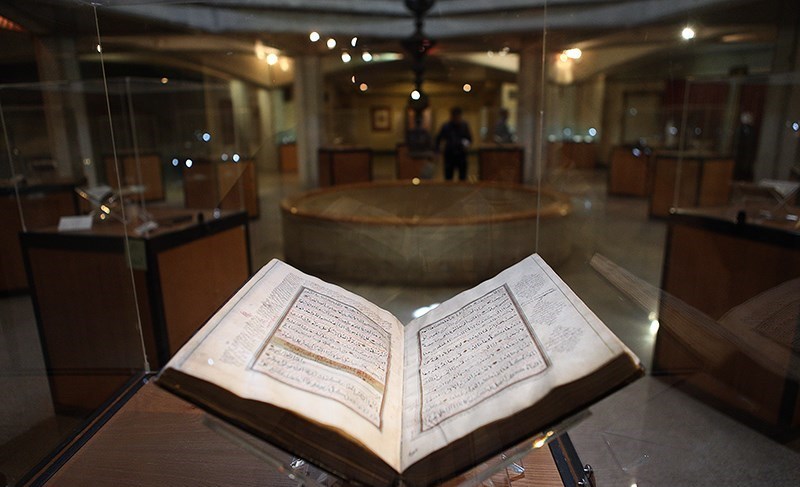
Located in the northwest of the intersection of Imam Khomeini Street and Valiasr Street, the National Museum of the Holy Quran is the only specific museum of Iran dedicated to the Quranic arts.

This museum has been built in a space with a 10000 square meter area in which three main sectors of the Museum, administration and a specific library are recognisable.

All the construction is placed underground at 14meters depth. In addition to the Quran manuscripts related to a vast time span, from the 4th century AH to the late Qajar period, this museum is also narrating the development process of other related arts to the writing of the Quran, including gilding, book binding, calligraphy, etc.

The museum exhibits are displayed in three parts as follows: 1. the cultural-historical section; 2. the section of Quranic objects; and 3. the section of contemporary works of art. A collection of manuscripts and lithographic Qurans, the poets’ book, scrolls, prayer books and Quranic pieces are on display in the first sector of the museum.

Works of the famous artists such as Mir Ali Heravi, Mohammad Ibrahim Qomi, Abdol Gader Hosseini and Om-e Salameh are also here. The second part contains objects like the wares, vases, boxes, pencil cases and coins in which the Quranic verses or prayers are somehow included.

The third part has been devoted to the works of the contemporary artists, especially the painters and calligraphers whose paintings, calligraphy and calligram works are kept in the museum. At present, the museum embraces 650 granted Quranic works.

Besides the objects, the internal architecture of the museum and its decorations cannot be overlooked; it is inspired by the Iranian-Islamic style of architecture, where a part of the motif of Shamseh (the sun) has been depicted in each of the three stories of the museum.

9

The National Museum of Iran

Iran

In the collection of the National Museum of Iran, as the largest, most important and oldest museum in the country, the most archaeological findings from scientific excavations from the Paleolithic to the Islamic period are displayed in the form of two museums, "Ancient Iran" and "Archeology and Islamic Art of Iran". The National Museum of Iran was opened in 1937 in the first building of the country's museums. The building was designed by Andre Godard, a French architect, inspired by the Kasra arch, and was designed by two Iranian architects, Abbas Ali Memar and Professor Morad Tabrizi."Museum of Ancient Iran" includes two museums "Prehistory of Iran" with works from the Paleolithic period to the end of the fourth millennium BC (ie from the earliest period to the invention of writing) and the "Museum of Historical period" with works from the late fourth millennium BC (ie the beginning) The use of writing) has been exhibited until the end of the Sassanid era.

 The Museum of Archeology and Islamic Art of Iran was built based on a plan inspired by the Sassanid palace of Bishabour, in the form of an octagonal cross, with an area of about 4,000 square meters and three floors. This building was equipped to establish the Museum of Archeology and Islamic Art of Iran and was inaugurated in 1996.

 The ground floor of this building is dedicated to the meeting hall and the temporary exhibition hall. The works of the Museum of Archeology and Islamic Art of Iran are arranged on the first and second floors according to the historical schedule.

 The visit begins on the second floor and ends on the first floor. The current museum consists of 6 halls on two floors: the second floor includes the halls of early Islam, Seljuk and Ilkhanid, and the first floor includes the halls of the Quran, Timurids, Safavids, Afshar, Zand and Qajar. Most of the objects in this museum are selected works from scientific excavations or prestigious collections such as Astan Sheikh Safiuddin Ardabili.

10

Carpet Museum

Iran

Given the antiquity of carpet weaving in Iran, which dates back to the Achaemenid dynasty, the necessity of establishing a museum has been highly apparent. The Carpet Museum of Tehran was constructed in 1356 SH, Bahman 22, representing a collection of the most noble and invaluable hand-woven carpets. The architecture of the museum is highly spectacular and glorious. The decorations on the external facade of the museum are exactly similar to a carpet loom. The exhibition ground of the museum includes two halls, the first one has been designed for permanent exhibitions, and the second floor’s hall has been dedicated to the temporary exhibitions of carpet and Kilim.

The most valuable samples of Persian carpets and Kilims related to a period between the 9th century and the contemporary time are kept here, categorised based upon their quality, antiquity, and given to the other features of Persian carpets in terms of dying, design, pattern, weaving and the variety of carpet weaving centers. There are about 135 masterpieces of Persian carpets woven in the main centers such as Kashan, Kerman, Isfahan, Tabriz, Khorasan, Kurdistan and other regions exhibited in the hall on the first floor. A library including different books in Farsi, Arabic, French, English and German languages and a bookstore are the other. 

  • State:East Azerbaijan
  • City: Azarshahr

11

Four-Season Museum

Iran

Arak Four-Season Museum (four-season bath) is one of the most beautiful monuments in terms of architecture and tiling in contemporary Iran, which can be considered to be the greatest historical bath in Iran; the elegance of this place is such that we can claim it has remained unrivalled among all Islamic countries. The existence of painting works depicting four seasons inside the bath has been the cause of its naming.  This building was built by Haj Mohammad Ibrahim Khansari (born in 1232 A.H., died in 1297 A.H.) during the time of Ahmad Shah Qajar. This is the only bath in Iran where a special section has been considered for religious minorities.

  This unique complex is located in the eastern side of the previous Shapour Street and the current Dr. Beheshti Street (Abbas Abad). construction of this monument was coincided with the establishment of Arak city approximately 100 years ago, during Qajar period. The bath with approximately 16000 m² area has been constructed in such a way that its required water supplied through the flowing water of Qanat; therefore, in order to easily supply water and maintain the heat, the bath floor was constructed 3 to 3.5 meters below the street level. One of the main architectural characteristics of the building is using eight columns and a high dome made of brick, gypsum and lime mortar. In addition to the mirroring and  Rasmi Bandi, other interesting architectural decorations in all internal parts of men’s Sarbineh include the special method of piling, molded and spiral tiling, picturesque stucco, historical paintings and arabesque patterns.

Today, out of 16000 m² area of the building, approximately 5000 m² area including men’s Sarbineh, hothouse, and the vestibule between the hothouse and dressing room has been dedicated to the museum where lots of invaluable objects related to pre Islamic and Islamic periods are kept there. Historical objects like ceramic wares and bowls, different coins, Qajar marriage certificates, books and handwritten manuscripts, copper and etching wares, old bathroom utensils, clay jars, spinning tools, a part of the historical and valuable Mihrab of Saveh Central Mosque, carpet weaving tools and the objects discovered from excavations in Zolfabad ancient site in Farahan are now kept in this museum

12

Glassware and Ceramic Museum of Iran (Abgineh Museum)

Iran

Glassware and Ceramic Museum, formerly known as Abgineh, opened in 1980. The museum is housed in the 1915 mansion of a former prime minister in Reza Shah’s government, and from 1953—60 it functioned as the Egyptian Embassy, so the building itself has architectural merit.

There are two floors of displays in the Abgineh Museum that include dramatic ‘Nishapur’ slip-painted ceramics of the early medieval period, glass works from the 12th—13th century, known as the Golden Age of glass-making in Iran, lustreware from the Gorgan and other excavations, 14th-century pottery from Takht-e Soleyman and some later Safavid and Qajar ceramics.

Most of the glass, however, some 260 pieces, is exhibited on the ground floor of the Glassware and Ceramic Museum.

Different Sections of the Abgineh Museum

The first floor of the Ceramic Museum of Iran is connected to the second by wooden steps in Russian style. Prior to the building’s transformation into the Egyptian Embassy, the entrance of the museum was dome-shaped but was later flattened.

Objects exhibited in the Abgineh Museum belong to a span of time beginning from the pre-Islamic period up to contemporary Iran. There is plenty of exquisite plasterwork performed by Iranian masters on the interior walls of the building. On the first floor, at the entrance of the museum, the hall showcases the location of archaeological sites under excavation. On the walls are maps showing ancient regions on the Iranian plateau, as well as a useful timetable of ancient civilizations.

The Glassware and Ceramic Museum objects, in general, can be divided into five categories, which are displayed in different halls.

13

Pars Museum

Iran

  If you have visited Golestan Palace, you may know that the remains of Karim Khan Zand have been buried under Karim Khani Nook and were later moved to Shiraz during the Pahlavi dynasty. The question is what happened to them after that?

 Nazar Garden is one of the beautiful gardens of Shiraz. It is an octagonal mansion that was initially built as a greeting room for guests and had ceremonial arrangements. The mansion has a central hall with four alcoves or Shahneshin on the ground. It was built in 1315 SH by the efforts of the Society for the National Heritage of Iran, as well as Ali Asghar Hemmat. After the change of its function, it was opened as a museum outside Tehran and is known as the Pars Museum of Shiraz. Pars Museum is where the remaining of Karim Khan Zand was moved to, and today it is also called the Karim Khan Tomb. An interesting point is that the mansion that is now the museum was built by Karim Khan himself. Relics and artifacts from the pre-Islamic and Islamic eras are exhibited in this museum.

 Pars Museum has in its collection valuable artifacts such as metals and coins that belong to the fourth millennium B.C to contemporary history. In addition to pre-Islamic objects, many of the covers of the holy Quran are accompanied by elegant collections of watercolour paintings. Papier-mâché works of artists from the Zand era can be seen, too. However, it is a sword known to belong to Karim Khan Zand that attracts the attention of the visitors. Another unique object of the museum is the Haftadman Quran. It was handwritten in Muhaqqaq calligraphy by Ibrahim Sultan, the Timurid prince, in the ninth century AH. This is the same Quran that was at first kept on the portal of Darwazeh Ghor’an and was later moved to the Pars Museum in 1316 SH.

However, it feels like the Karim Khan Zand Tomb is in the center of this complex. Following his will, he was buried in the eastern alcove of the mansion in 1193 AH. His remains were later moved to Tehran by Agha Mohammad Khan Qajar. He despised Karim Khan Zand so much that he buried his remains in Golestan Palace so that he would disgrace them under his feet every day. Eventually, they were moved back to Nazar Garden, where they were buried for the final time.

14

International Dolls Museum

Iran

International Dolls Museum

International Dolls Museum is a private museum which was launched in Tehran on Mehr Sep2014. on the International Day of Peace, with the efforts of Masoud Naseri Daryaii, Ali Golshan and with the support of Faride Naseri Daryaii. The collection houses 700 dolls related to 54 countries from around the world, especially Europe, Latin America and Asia. After being temporarily closed, the museum was moved to the current location in South Naft St., Mir Damad St., Tehran, occupying an 80-year-old house, and continued its activity seriously in the new place. This displacement was sponsored by “the group of International Doll Museums’ supporters”, “cultural forum of the close friends” and “Global Environment Facility GEF Small Grants Programme (SGP)” in 2016.  

Today the museum houses more than 2000 items of dolls from 80 countries and cultures; Afghan dolls, Russian Matryoshka dolls, Worry dolls of Guatemala, Chinese dolls, Akua’ba dolls of Ghana, Polish Laconic dolls, Arabian dolls, Japanese Daruma dolls, Ottoman dolls such as Hurrem Sultan, dolls of Indian gods and goddess like Shiva and Parvati, Tajik faceless dolls, friendly Swedish witch dolls, Austrian dolls, Armenian dolls, water seller dolls, corn dolls which are among the main dolls of South America, Khorasan dolls made of apple, Gilan dolls made of rice stem, Mobarak and Tabarak dolls, Mazandaran rain prayer dolls are just a small part of the collection which has been gathered from different regions of Iran and world by the children psychologist, Masoud Naseri Daryaii, in partnership with Ali Golshani, during 25 years. Exhibited based on the continent, the dolls of this museum show the customs, rituals, clothing, music, handicrafts, life, stories, legends and other Iranian and world cultural elements to the visitor. 

The museum wined the prize of top curators in 2015 from the Cultural Heritage Organization. It received the prize of top museum from ICOM in terms of education, children, innovation, preservation, conservation and collecting from 2015 to 2017. the museum received more than 14000 visit in two years only from the schools, preschools and kindergartens. It shows that the museum activities and strategies have been mostly successful.


15

The Qajar Museum of Tabriz

Iran

The Qajar Museum of Tabriz is housed in one of the city’s historic residences. This mansion once belonged to Amir Nezam Garousi, a prominent statesman and writer, and was regarded as one of the most beautiful houses in Tabriz. After being appointed Minister, Garousi served for a time as Iran’s ambassador to England, France, and the Ottoman Empire. Upon his return and appointment as Minister of Foreign Affairs, he imported advanced machinery to Iran — some of the most modern equipment of its time — which was used for minting coins and printing. He also played a key role in the establishment of Mozafariyeh and Roshdieh schools, two of Tabriz’s oldest educational institutions, significantly contributing to the city’s scientific and academic development. The Mozafariyeh School, also known as the Dar al-Fonoon of Tabriz, was considered one of the most important schools of its era in Azerbaijan.

History of the Qajar Museum of Tabriz

The Qajar Museum of Tabriz is located in the Amir Nezam Garousi House, near the Maqbarat-o-Shoara (Tomb of Poets) — one of the city’s oldest and most famous cemeteries. Around 400 poets who lived in different historical periods are buried there, among whom Shahriar, the renowned contemporary Iranian poet, is one of the most famous. The construction of this building dates back to the reign of Naser al-Din Shah Qajar (1848–1896 CE / 1227–1275 SH). Amir Nezam Garousi built the house for his residence during the time he held an administrative position in Azerbaijan. After his death, the governors of Azerbaijan resided in the mansion. However, following the fall of the Qajar dynasty in 1925 (1304 SH) and the rise of the Pahlavi government, the house was taken over by the state. In the years that followed, due to neglect and lack of maintenance, large parts of the building were damaged and deteriorated. In 1991 (1370 SH), the ownership of the house changed. After a comprehensive restoration project in 2006 (1385 SH), it was repurposed as the Qajar Museum of Tabriz thanks to its traditional features and unique architectural characteristics. The Amir Nezam Garousi House (Qajar Museum) was officially registered on Iran’s National Heritage List in 1996 (1375 SH).

Architecture of the Qajar Museum of Tabriz 

The total area of the land on which the Amir Nezam Garousi House was built is about 3,000 square meters, and the mansion itself has two floors with an infrastructure of nearly 1,500 square meters. The basement of the building features a large pool hall (Howz-khaneh), renowned as one of the most beautiful parts of the entire structure. The pool hall which is connected to the courtyard and rooms through several corridors, and the brickwork decorations on the ceiling add an indescribable charm to this section of the building. Opposite the museum’s main entrance, there is an inscribed genealogy of the Qajar dynasty, along with a section of the tribal history of the Qajars displayed on a stone plaque. The house has two courtyards — the inner (Andaruni) and the outer (Biruni) — each featuring gardens and multiple pools. A veranda supported by 16 beautifully decorated columns and capitals stands out as one of the architectural highlights of the mansion. The ornate sash windows (Orosi) with colored glass, alongside the stucco decorations on the northern and southern façades, and the mirrorwork and stucco ornaments inside the halls, make visiting this historical complex a delightful experience for every tourist.

Sections of the Qajar Museum of Tabriz

The museum consists of numerous halls. On the upper floor are the Hall of Coins, Hall of Textiles, Hall of Porcelain, Hall of Glassware, Hall of Metals, Hall of Music, and Hall of Inlay Work. The basement includes the Hall of Stone Artefacts, Hall of Weapons, Hall of Statesmen and Decrees, Hall of Architecture and Urban Planning, Hall of Locks, and Hall of Lanterns, each displaying a variety of historical objects. Among the most notable items in the museum are inlaid works, metal tools, musical instruments, glassware, and porcelain vessels. A section of the museum is also dedicated to displaying some of the earliest photographs taken in Iran after the arrival of the first cameras during the reign of Nasser al-Din Shah Qajar. Additionally, statues of prominent figures from the Qajar era—such as Mirza Isa Qa’em-Maqam Farahani, Mirza Abu’l-Qasem Qa’em-Maqam Farahani, Amir Nezam Zangeneh, Amir Nezam Garousi, and Amir Kabir—are displayed throughout the museum.

16

Ferdows Garden (Cinema Museum of Iran)

Iran

Ferdows Garden (Bagh-e Ferdows) is a historical complex located in the district of Tajrish in the northern part of the city of Tehran (Tehran Province). The construction of this complex (garden and the palace located in it) dates back to the reign of the Qajar dynasty.

The area of Ferdows Garden is 20,000 square meters and the area of its aristocratic mansion is 1,000 square meters. The mansion comprises three and a half floors, which have exquisite decorations and beautiful plasterworks. There are three halls with separate halls on the first floor while the second floor has four halls. The garden area of the complex houses a pond and bronze statues of Suhrawardi (the famous Iranian philosopher of the sixth century AH/13th century CE) and Ibn Haytham (an Iranian scientist and the first scientist of light physics in the world).

Ferdows Garden has changed several hands (owners) and has undergone changes and repairs, and its mansion has, at times, been used as a school, a center of artistic activities, a film producing training center, and was eventually converted into a cinema museum in the year 2002 with the aim of collecting, preserving, registration and presentation of the heritage of Iranian cinema.


Different parts of the Ferdows Garden (Cinema Museum) include:

- The Blue Hall, which depicts the history of Ferdows Garden, Cinema Museum, the emergence of cinema in the world and Iran, the pioneers of cinema in Iran, and the first filmmaking equipment used in Iran;


- The Middle Hall (contemporaries), which provides information on behind the scene of Iranian films along with portraits of directors, cinematographers, make-up artists, stage and costume designers, and some of the Iranian cinema accessories;


- The International Hall, introducing the visitors to international awards of the Iranian cinema and the Iranian film festivals;


- The Sacred Defense Exhibition, providing information on films made on this issue, their directors, and the main contributors to their making;


- An Exhibition hall introducing the first cinema theaters, the first cinema owners, and the best-selling films of Iranian cinema;


- The Child Exhibition Hall, which provides information on actors, filmmakers, etc. who engaged in child and adolescence cinema;


- Ali Hatami’s Exhibition Hall displaying mementos of Ali Hatami, sculptures of Ezzatollah Entezami and Ali Hatami, costumes used by the Iranian artists in films produced before and after the Islamic Revolution;


- The Exhibition Hall of Celebrities in which pictures of the greats personalities of the Iranian cinema in various fields are at display;


- A Dubbing and Audio Exhibition Hall to introduce old equipment and tools for recording audios and producing record disks of movies, etc.;


- Farhad’s House to display a number of the personal belongings, books, and instruments of Farhad Mehrad (the Iranian singer, composer, and musician - 1944-2002);


- The Hall of History to introduce the first human efforts in the East for recording movements, early theater activities in China and India, the first illustrations made by Iranian to narrate Ferdowsi’s Shahnameh and religious narratives; and


- The Armenian Exhibition, introducing the effective role of Armenians in Iranian cinema.


The Cinema Museum holds 40,000 photographs of Iranian cinema and artists, more than 5,000 volumes of cinema magazines, 3,000 pieces of historical documents, correspondence and contracts, about 350 sets of tools and instruments, 2,500 film announcements, and 4,000 screenplays. The complex also has two cinema halls.


  • State:East Azerbaijan
  • City: Azarshahr

17

Mirror and Lighting Museum

Iran

The Mirror and Lighting Museum (Ghasr-e Ayineh)

The Mirror and Lighting Museum is located in Yazd, housed in a historical building originally constructed in 1941 CE (1320 AH Solar) as a private guesthouse. It was later converted into a museum in 1998 CE (1377 AH Solar).

The museum building, known as Ghasr-e Ayineh, stands within a spacious garden featuring a large central pool. Architecturally, it showcases a harmonious blend of traditional Persian and European styles. The structure includes several beautifully designed spaces, such as a Shahneshin (main reception hall) and a Howzkhaneh (pool room) with a stone basin at its center.

Every room in the mansion is richly decorated with stucco reliefs, wall and ceiling paintings, and in some areas, exquisite mirror work. The lattice windows with colored glass and wooden doors further enhance the building’s grace and refinement.

The museum’s collection includes ancient manuscripts, books, coins, stamps, weapons, and several bronze artifacts from Lorestan. Other exhibits consist of various types of mirrors, as well as oil lamps (floor-standing, hanging, mounted, and handheld), candle holders, oil burners, gas lamps, electric lamps, and matchboxes. Among the oldest items on display are oil lamps dating back to the Sassanian period, offering visitors a glimpse into Iran’s long history of craftsmanship and illumination.

  • Type: Artistic

18

Yazd Water Museum Keynote

Iran

Yazd is one of the desert cities of Iran with a dry climate and low rainfall, in which life is highly dependent on the supply of underground water resources. Therefore, from the very distant past, the people of this land have invented ways to transfer water so that this valuable resource can be transferred with the highest efficiency and the least amount of wastage.

The Yazd Water Museum is a manifestation of the efforts of the desert people over several centuries to access valuable water resources. This museum, which is located in the north of the historical square of Amirchakhmaq, was established in 2000 in the house of Kolahdouzha.

Features of the Building of the Yazd Water Museum

The House of Kolahdouzha, where the Yazd Water Museum is located, was constructed in the late Qajar era (19th century AD) by one of the famous merchants of this city, named Haj Akbar Kolahdouz. From the point of view of architecture, this

 house is considered as one of the veiled houses, and with 720 square meters, it has indoor and outdoor and it is built on five floors.

 
The Courtyard of the Kolahdoozha House, the Site of Ay-Yazd Museum
 

Uses and Features of Each Floor in the House of Kolahdouzha

First Floor:
Two branches of the Rahimabad and Zarch streams pass through this level of the building. The Zarch Qanat, one of the oldest qanats in Yazd, was constructed around 2,000 years ago. Despite its age, it remains functional today and extends for 75 meters.

Second Floor:
Located 10 meters below ground level, this floor features an octagonal design. Its temperature is about 20°C cooler than the outside air, making it ideal for food storage. A pond on this floor is continuously supplied with cool water from the qanat and serves as a shallow reservoir from which water could be drawn.

A wooden basket hangs from the ceiling, once used to store food items such as cheese and oil. Additionally, several hooks suspended from the ceiling were used to hang meat joints.

Third Floor:
This level includes several corridors and rooms that were traditionally used by the household members during the summer months, taking advantage of the cooler underground temperature.

Fourth Floor:
Serving as the ground floor of the house, this level contains a five-door room, a wind room, a central hall, sash windows with beautiful colored panes, a kitchen, a water tank, and servants’ quarters. Two ponds are located on this floor, and the walls are adorned with muqarnas stucco and mirror work. The decorative motifs—featuring plants and birds—are especially noteworthy from an artistic perspective.

Fifth Floor:
This level contains a well equipped with a wheel mechanism, used in the past to draw water for drinking and cleaning purposes.

Conversion of the House of Kolahdouzha into the Yazd Water Museum

The concept of establishing the Yazd Water Museum was first proposed in 1999 AD, and one year later, the House of Kolahdouzha was converted into a museum. It now displays a wide range of artifacts and tools related to water extraction, qanat systems, and transportation, showcasing the ingenuity and perseverance of the people of Yazd in managing this precious resource.

A clay jug used for storage and cooling

The selection of the House of Kolahdouzha as the place to create the Yazd Water Museum was due to several special advantages of this place:

1 - The House of Kolahdouzha was located near Amirchakhmaq Square, one of the main tourist centers of Yazd, and had beautiful architecture and unique decorations.

2 - There were many water installations in this building, such as a riffle, a cellar, a well, a water wheel, and a qanat.

 
Waterwheels were installed along the path of some qanats

The Object Exhibited in the Yazd Water Museum

The Yazd Water Museum contains about 200 objects related to different stages of water extraction and transportation. Tools for digging qanats, documents related to qanats, tools for providing lighting and transporting the water qanats, including jugs, jars, well wheels, waterskins, water distribution tools, and tools for using water energy are some of the objects exhibited in this museum. These objects are made of such materials as copper, brass, glass, clay, and wood.

Among all the objects in the Yazd Water Museum, oil lamps are the oldest. Of course, there are other lamps called carbide lamps in this museum, which are made of a white stone similar to limestone, which is called carbide stone.

 
The bucket was used to draw water from the bottom of the well
 

A water clock is also on display in the museum, which was called Sabukshi in the old days. This watch had been a time-measuring device. Sabukshi consists of a copper container with a small hole in the bottom, which is placed in a larger container of water and gradually filled with water. The full bowl was considered a unit called “Sabu” and was used to measure the time of water allocation to different users.

19

Carpet Museum of Iran

Iran

Undoubtedly, carpet has been and is one of the most beautiful and perfect manifestations of Iranian art, which has been woven since ancient times and perfected in different periods. Carpets are woven throughout Iran, in different cities, and have found an independent identity in accordance with the geography and culture of each region. The Carpet Museum of Iran is an important showcase for getting to know the depth of this aspect of Iranian art and craft.

In the Carpet Museum of Iran, which was founded in 1979 AD, all kinds of Iranian carpets are exhibited over a space of 3400 square meters. The building of this museum started in 1961 AD and was initially supposed to be a carpet gallery, but it remained abandoned for 15 years, and thereafter, it was renovated and turned into the Carpet Museum of Iran.

This museum was designed by a person by the name of Abdulaziz Farman-farmaian. The special design of this museum, which looks like a carpet from the outside, manifests the smart use of architectural elements to make this building as compatible as possible with the works displayed in it.

Different Sections of the Carpet Museum of Iran

The Carpet Museum of Iran exhibits hand-woven carpets and rugs on two floors. While the hall on the first floor is a permanent exhibition, the hall on the second floor is dedicated to the temporary exhibition of carpets and related objects. The first floor has the capacity for displaying 150 pieces of carpets, and there are, generally, 135 pieces of Iranian carpet masterpieces on display for the visitors.

In most cases, the oldest exhibited samples belong to the Safavid period. Occasionally, one can also find contemporary products that stand out for their distinctive quality and design.

When visiting this museum, one can see some rare traditional patterns and designs; designs that use portraits, paisley, citron triangles, and animal motifs.

One of the remarkable aspects of this museum is that some carpets that were woven by order of the Polish royal court during the Safavid era are on display in it. Exquisite Tabrizi pictorial carpets and carpets with images from Baysunghur Shahnameh are among the most spectacular works exhibited in this museum.

The Carpet Museum of Iran also houses a rich library, with about 3500 books in different languages, including Persian, English, Arabic, French, and German, in the field of Iranian carpets and art. There is also a cinema in this museum, where one can watch various movies related to the art of designing and weaving carpets and rugs.

Objects on Display at the Carpet Museum of Iran

Generally speaking, all the carpets in the Carpet Museum of Iran can be divided into two categories:

• Carpets, which are woven in different cities that are considered the main centers of carpet weaving of Iran (such as Kashan, Kerman, Isfahan, Tabriz, Khorasan, Kurdistan, etc.), and

• Nomadic carpets woven by Iranian nomads of different regions of the country, including the northwest (Shahsavan carpets), west (Bakhtiari, Kurdish, and Lori carpets), northeast (Turkmen carpets), and southeast (Baloch carpets).

Carpet weaving-related items such as dyeing equipment, loom-making instruments, some natural materials used in this craft, dyed yarns, various carpet weaving tools, and vertical and horizontal carpet looms are other objects that are on display in the Carpet Museum of Iran.

There is a map at the entrance of the main hall on the first floor, which provides information about the most famous carpet weaving centers in Iran. In the course of visiting the Carpet Museum of Iran, it is also possible to get familiar with the technique of carpet weaving.

Where Is the Carpet Museum of Iran Located?

The Carpet Museum of Iran is located on the northern side of Laleh Park of Tehran, which is one of the largest parks of this city, being located there in the heart of Tehran, making it easily accessible.


  • State:Tehran
  • City: Tehran

20

Assef Mansion (House of the Kurds): The Largest Ethnographic Museum of Iranian Ethnic Groups

Iran

The Assef Vaziri House, or simply the Assef Mansion, is a historical building from the Qajar period (1796–1925 CE) located in Sanandaj. Today, it is recognized as the Kurdistan Ethnographic Museum, also known as the “House of the Kurds.” This site was registered on Iran’s National Heritage List in 1996 and serves as a symbol of the cultural identity of the Kurdish people.


Sanandaj’s House of the Kurds: The Largest Ethnographic Museum of Iran’s Ethnic Groups

This complex showcases valuable artifacts that reflect the rich culture and history of the people of Kurdistan. The mansion is located near the Grand Mosque of Sanandaj, which—besides its historical importance—is also regarded as one of the main centers for religious ceremonies in the city.


A Glimpse of the Beautiful Architecture of the House of the Kurds in Sanandaj

History of the Assef Vaziri Mansion 

This building was founded by Mirza Ali Naqi Khan Lashkarnavis, and its name is derived from his title, Assef Azam. He began construction of the mansion during the Safavid period (1501–1736 CE). During this period, the northern section of the building—including the ceremonial hall, adjoining rooms, and side corridors, along with part of the eastern section spaces—was established. In later periods, additional sections were added to the building as follows:

  • In the first half of the Qajar period, the eastern and western sections of the outer courtyard and the mansion’s bathhouse were constructed.
  • Between 1933 and 1937 CE, the inner courtyard, the semi-basement entrance portal, and the western part of the ceremonial hall were renovated.
  • Between 1999 and 2003, all parts of the mansion underwent comprehensive restoration. During this restoration, the courtyard’s stone flooring was completely replaced, and the servants’ courtyard was shaped into its present-day form.

Architecture of the Assef Mansion

The House of the Kurds covers an area of approximately 4,000 square meters. In addition to its four courtyards—outer, inner, kitchen, and service areas—the mansion includes a semi-basement entrance portal, entrance corridor, and a room for water distribution.

 
Entrance to the Kitchen of the House of the Kurds in Sanandaj

Outer Courtyard of the Assef Mansion

The outer courtyard, regarded as the main courtyard of the mansion, is rectangular in shape and features two iwans, a central fountain, and flowerbeds. It is designed in the traditional Chaharbagh (four-garden) layout. The main hall, located on the northern side, is distinguished by its exquisite stucco decorations, muqarnas ornamentation, and beautiful orsi windows.

On the eastern side, the courtyard includes a corridor, two rooms, and a four-door hall. The western side is defined by a continuous iwan supported by columns, behind which lies a hall with a splendid orsi window adorned with delicate arabesque (eslimi) motifs. On either side of this orsi hall, two smaller rooms are situated, completing the balanced symmetry of the courtyard’s design.

 
A View of the Mirror Work in the House of the Kurds, Sanandaj

 Bathhouse of the Assef Mansion

Located in the outer courtyard, the bathhouse of the mansion is regarded as the most beautiful historical bath in Sanandaj. Its finely carved stone columns, lime plaster decorations, and exquisite tilework lend the space a distinctive elegance and charm.

Inner Courtyard of the Assef Mansion

The inner courtyard, which is slightly newer than the main structure, was constructed during the early Pahlavi period. Designed in accordance with traditional Kurdish architectural principles, it is a two-story courtyard featuring a basement and a wooden six-columned iwan adorned with stucco decorations. At its center lies a diamond-shaped fountain, gracefully surrounded by flowerbeds.

Southern Courtyard of the Assef Mansion

On the southern side of the mansion lies a small courtyard, known as the kitchen courtyard, which contains a stone fountain at its center.

Water Distribution Room

Because the mansion’s water supply was sourced from a qanat system located in western Sanandaj, a dedicated room was built next to the entrance corridor, known as the Water Distribution Room. This room was used to regulate and distribute water evenly throughout the complex.

Architectural Adaptation to Kurdistan’s Climate

The architecture of the House of the Kurds is masterfully adapted to the cold and mountainous climate of Sanandaj. The square plan and compact layout of the mansion’s sections minimize heat loss, helping to retain warmth within the building.

The mansion’s north-facing orientation allows it to receive maximum sunlight and heat, while certain parts—especially the northern ceremonial hall (Shahneshin)—feature double-layered roofs, ensuring these areas remain warmer and more comfortable during the winter months.

Conversion into the House of the Kurds

Following its conversion into an ethnographic museum dedicated to Kurdish culture, the Assef Mansion became known as the House of the Kurds. It is the largest ethnographic museum in Iran dedicated to a single ethnic group, offering visitors both an educational and immersive cultural experience.

The museum features a variety of specialized sections, including: Art Gallery, Urban Life Exhibits, Traditional Schoolroom (Maktabkhaneh), Weaving and Embroidery, Jewelry Displays, Agriculture Section, Trades and Crafts Section, Historical Documents and Photographs, Khan’s Room, Clothing Section, Hunting Exhibits, Handicrafts Section, Rural Kitchen and Lifestyle Section and  Library and Document Center.

Together, these exhibits provide a comprehensive insight into the daily life, traditions, and cultural heritage of the Kurdish people.


  • Type: Historical

21

Sa’dabad Complex

Iran


Sa’dabad Palace of Tehran was initially built as the summer residence of the Qajar kings (1796 to 1925 AD) and, thereafter, with the coming to power of the Pahlavi regime (1925 to 1979 AD), it was expanded, some buildings were added to it, and it was used as one of the summer palaces of the Pahlavi kings. This complex is, presently, a museum palace consisting of 10 museums, spreading over an area of 110 hectares.

Museums of Sa’dabad Complex

There are 18 buildings in the Sa’dabad Complex, and each one has a different style and architecture. Of these 18 mansions, 10 are used as the following museums:

1 - Green Palace: The first palace that was built during the reign of Reza Khan (reigned from 1925 to 1941 AD) in the Sa’dabad complex is the Green Palace. The use of green color in the exterior of this palace is the reason for its name. Before the Islamic Revolution (1979 AD), this mansion was the personal residence of Mohammad Reza Shah (reigned from 1941 to 1979 AD), and some of his private meetings were held there. In the Green Palace, a collection of Iranian arts such as mirror work, carpets, gilding, and plastering is exhibited.

2 - Mellat Palace and Museum: This palace has been built on two floors, and there are several small and large rooms in it, which were used as residences and workplaces of Pahlavi kings. Mellat Palace is now a place to display works of art such as sculptures and porcelain. The furniture, chandeliers, and paintings used in this palace were made in Europe. Four large wall paintings with the theme of Iranian legends are also on display in this palace. The other objects on display in this museum include works purchased from other countries as well as objects from the pre-Islamic civilizations of Iran, India, Africa, the Far East, the Mayans, and the Eskimos.

3 - Museum of Fine Arts: Most of the works displayed in this museum are oil paintings from the Safavid period (1501 to 1736 AD), Afsharids (1736 to 1796 AD), Zand dynasty (1751 to 1794 AD), and the Qajar era. Farah, the last wife of Mohammad Reza Pahlavi, had bought these works from an English collector named Harold Amr. The Museum of Fine Arts has three floors. The works displayed in this building are: teahouse house paintings by contemporary Iranian artists on the first floor; Iranian paintings of different historical periods on the second floor; and the works of foreign painters on the third floor.

4 - Maestro Behzad Museum: This museum is named in honour of Hossein Behzad (1895 to 1968 AD), an Iranian artist who combined the authentic Iranian style seen in the works of Kamalud-din Behzad and Reza Abbasi with European art and created a revolution in Iranian miniature painting. Behzad’s works have been created on paper, cardboard, or canvas and are displayed in this museum.

5 - Abkar Museum: Clara Abkar was a contemporary Iranian Armenian painter who had a special style for creating miniature paintings. Her works were mainly inspired by Iranian literature and mysticism, and displayed a musical balance in them.

6 - Mir Emad Museum: Mir Emad was one of the greatest calligraphy artists in the history of Iran who lived in the 18th century. Because of his services to Iranian calligraphy, this museum has been named after him, and his calligraphy artworks have been displayed in this museum. In this part of the Sa’dabad Palace Museum, you can see different works of art created with different styles of gilding and calligraphy on paper and parchment between the 10th and 19th centuries.

7 - Museum of Anthropology: The Museum of Anthropology has been established to show the conditions and lifestyle of the Iranian people. In the wide area of this museum, on two floors, works such as irrigation tools, agriculture, gardening, fishing, clothes, lighting devices, and handicrafts are on display for the public.

8 - Water Museum: Iranians have made extraordinary achievements in the field of water extraction and transportation. Some of these achievements have been displayed in the Water Museum. Indigenous structures related to water, such as reservoirs, traditional ice-houses, ancient water dams, and royal orders issued on water, are among the things on display in the Water Museum.

9 - Military Museum: This museum contains Iranian military uniforms and tools from the Achaemenid period (550 to 330 BC) to the present day. In this part of the Sa’dabad Palace Museum, it is possible to visit a part of the history of the Iran-Iraq war (1980 to 1988 AD).

10 - The Museum of Omidvar Brothers: Isa and Abdullah Omidvar were two Iranian brothers who visited 90 countries in 10 years. These two adventurous brothers collected spectacular objects and photos during their travels, which are displayed in this museum. This museum was initially set up as a gallery, but gradually, with the addition of various objects and works, it turned into a museum. This Sa’dabad Palace Museum building was built in the Qajar era, and the decorations belonging to the same era can also be seen in it.


22

Vahshi Bafqi’s House

Iran

Bafq Museum of Anthropology, which has been set up in the house of a famous Iranian poet, Vahshi Bafqi, displays the story of the life of people who had adapted to the harsh nature of a desert city and had been able to leave behind a rich and meaningful legacy.


Who Was Vahshi Bafqi?

Kamal al-Din or Shams al-Din Mohammad Vahshi Bafqi was a famous Iranian poet who was born in Bafq in the year 1532 AD and passed away in Yazd in 1582. As a child, Vahshi Bafghi studied in his own city and then went to Yazd to benefit from the teachers of that city. After living in Yazd and Kashan for a few years, he went to India and returned to Yazd (or Kerman) toward the end of his life.

Vahshi Bafqi spent his entire life in poverty. That is why expressions of loneliness are quite evident in his poems. Unrequited love, difficult life, and the sufferings he went through formed the main themes of Vahshi’s ghazals.

Several works of poetry have been left behind by Vahshi Bafqi, of which “Farhad and Shirin”, the story of two famous lovers in Persian literature, can be considered the most famous of them. A divan of poems by Vahshi Bafqi has also been published, which consists of his sonnets, odes, and other forms of poems composed by him. This divan comprises a total of 9076 verses.


Vahshi Bafqi’s House

Vahshi Bafqi’s House is located in the east of the Jame Mosque of Yazd and is built in a quadrilateral shape. This house was inscribed on the list of Iran’s national heritage in 2006.

Like many other historical works in Yazd, adobe and clay were used to build this house. Vahshi Bafqi’s House has a large and beautiful porch and seven small and separate rooms. These rooms were built on four sides of the yard, and each of them hosted the people of the house in a particular season of the year.

There is a cellar in the eastern part of the house, where a stream of water flowed in the past. This stream made the air in the cellar, which was lower than its surroundings, quite cool in the summer and was a shelter to avoid the scorching heat of Yazd summers. Being cooler than other parts of the house, the cellar was also used to store items.

The lighting of the rooms was provided by numerous and relatively large windows. These windows were made in a simple way using wood and placed in simple arched frames.

There was an old tombstone on the wall of the house in the past, because of which some local people considered it sacred and went to visit it. This tombstone does not exist anymore.


Vahshi Bafqi and His House

As Vahshi Bafqi has shown in his poems, he was very fond of his house. Despite his many travels, in the last years of his life, after settling in Yazd, he rarely left the city and chose to live in seclusion. Yazdi elderly people’s memories of their fathers confirm this statement. They narrate that during the last years of his life, Vahshi Bafqi used to sit in an alley called “Aruk” in the evenings and talk to the elders. Finally, after his demise, he was buried in front of the same alley.


Bafq Museum of Anthropology

Currently, this house is known as the Bafq Museum of Anthropology, and it exhibits parts of the life of the people of this desert region. Old ornaments, traditional medicine tools, perfumery equipment, agricultural tools, weaving and blacksmithing, pottery and metal utensils, lighting equipment, local clothes, and handicrafts are various objects displayed in this museum.

The small porch of this house is used for displaying such items as a hand spinning wheel, a wicker table, and stoneware. There are also some old well wheels in the yard. In the past, a well wheel was used as a tool to remove soil from water wells. This device was widely used in digging and dredging qanats.


Bafq Museum of Anthropology, which has been set up in the house of a famous Iranian poet, Vahshi Bafqi, displays the story of the life of people who had adapted to the harsh nature of a desert city and had been able to leave behind a rich and meaningful.


  • State:Yazd
  • City: Bafq

23

Sanandaj Museum: An Exhibition of Artifacts from Prehistoric Times to the Present

Iran

The Salar Saeed Mansion, which is now known as the Sanandaj Museum, exhibits historical artifacts ranging from prehistoric times to the contemporary era.

History of the Salar Saeed Mansion 

This mansion was built by Molla Lotfollah Sheikh-al-Islam. After his death, the mansion was divided into two sections and sold to the Habibi and Salar Saeed families. Accordingly, each section became known by the name of its owner: the inner section was known as the Habibi family section, and the outer section as Salar Saeed, a title held by Abdul Hamid Sanandaji. Salar Saeed donated this part of the house to the Cultural Office. Until 1972, the mansion was used as a teacher training school, library, and a residence for military instructors. After this year, the building was restored, and upon completion of the restoration, it was converted into a museum at the recommendation of the Ministry of Culture and Art.

Architectural Features of the Salar Saeed Mansion

The Salar Saeed Mansion originally has two main levels: a basement and a ground floor. The basement features a domed ceiling decorated with a combination of stucco work and mirror work, with a hexagonal pool at its center. In contrast, the ground floor has a sloped roof, and most of its area is occupied by a ceremonial hall. On the northern side of this section, there is a seven-door orsi hall that overlooks the courtyard.

.


The beautiful orsi (lattice) windows of the Salar Saeed Mansion, adorned with colorful and captivating glass, are truly striking.


This beautiful orsi (lattice) window was crafted by one of Sanandaj’s renowned master artisans, Habibollah Sanandaji, who was also known by the nickname “Ostad Nesā”. The orsi of the Salar Saeed Mansion is considered the most beautiful part of the building.

Sanandaj Museum 

The Salar Saeed Mansion, now known as the Sanandaj Museum, has two main sections: archaeology and anthropology. In the archaeology section, objects from various periods—from prehistoric times to the Qajar era (18th century)—are preserved. Some of these artifacts were collected from neighboring provinces, and several items on display were recovered from thieves attempting to smuggle them out of Iran.

In the anthropology section, which was originally established as a temporary exhibition, aspects of Kurdistan’s traditional lifestyle are showcased. The museum displays agricultural tools, traditional musical instruments, and clothing, among other items representing the region’s cultural heritage.

Sections of the Sanandaj Museum

Various artifacts in the Sanandaj Museum are displayed in four main sections:

1. Prehistoric Section

  • Located in the entrance corridor of the mansion, next to the main hall.

  • The primary objects are ceramic vessels discovered in different areas of Kurdistan, especially in the cities of Kangavar and Baneh.

2. Historical Era Section

  • This section contains the largest number of artifacts in the museum.

  • Artifacts discovered from the Ziwiyeh Historical Mound (one of the most important archaeological sites in Kurdistan Province) are displayed here.

  • Items include: Gold female jewelry, Clay vessels in gray, red, and beige colors, A small pitcher decorated with floral patterns and turquoise, white, and yellow glaze, Various axes, Funerary pins and sewing needles, Rings and bone objects and Several stone objects, including rings and beads.

These artifacts collectively illustrate the daily life, craftsmanship, and material culture of the people in different historical periods.

There are also several spears, daggers, and figurines in this section, whose exact places of discovery are unknown. The museum also houses a number of funerary jars, some of which are so large that they are displayed outdoors. Additionally, findings from the Karfto Cave can be seen in this section.


A Section of the Sanandaj Museum

3. Islamic Era Section

  • In this section, artifacts are displayed in two main categories: metal and pottery.

4. Temporary Exhibition Section

  • The basement of the Salar Saeed Mansion is dedicated to temporary displays, featuring items such as bronze statues and glassware.

  • The artifacts in this section change according to the museum’s programs.

  • In the outdoor area of the museum, items such as inscriptions and tombstones are displayed, which are periodically rotated or replaced.


Entrance of the Sanandaj Museum
  • State:Kurdistan
  • City: Sanandaj
  • Type: Historical

24

Abarkuh Museum of Anthropology

Iran

Although not a big city, Abarkuh has a long history and many historical sites. Today, some of the old objects obtained from different buildings of this city are kept in the Abarkuh Museum of Anthropology. This museum is located in one of the old houses of this city, which is known as the “Solat House”. In fact, visiting the Abarkuh Museum of Anthropology, in addition to seeing the life and history of the city’s people, also gives tourists the pleasure of viewing a historical house.

The History of Solat House or Abarkuh Museum of Anthropology

The date of the construction of the Solat house dates back to the end of the Zand era and the beginning of the Qajar era (second half of the 18th century AD). This old house is located in one of the old squares of Abarkuh called “Darvazeh Meidan” and within the vicinity of several other old houses of the city.

Solat House was inscribed on the list of Iran’s cultural heritage, as a national work, in the year 1997 AD, and 10 years later, this house was turned into the Abarkuh Museum of Anthropology to display the various objects that were mostly collected with the help of the local people.

The items on display in the Abarkuh Museum of Anthropology, which is a display of the culture and life of the city’s people throughout history include pistols, rifles, agricultural tools, bathing equipment, historical documents, the coins minted during the Qajar era, seals, ornaments, carved stones, petromax lamps (paraffin pressure lantern) made of copper, brass and nickel, handmade and old steel locks, local clothes, and manuscripts of several books. Some handwritten documents, including some marriage deeds, are also on display in this museum, which are unique.

In total, nearly 800 precious and historical objects, from the post-Islamic periods to the present day, are preserved in this museum. By the same token, the handicrafts that are on display for visitors in the Abarkuh Museum of Anthropology include cloth weaving, giveh making, bedding, carpet weaving, and felting. A part of the museum is also dedicated to the display of the local attire of the people of Abarkuh. This museum shows how the people of this desert area adapted themselves to the difficult living conditions of the desert.

The Architecture of Abarkuh Museum of Anthropology

Solat House or the Abarkuh Museum of Anthropology looks like a simple building made of adobe and clay from the outside, but upon entering the house, a world of beauty and patterns appears in front of visitors. The portal of the mansion has lovely stucco and muqarnas work. After entering the building, one can see a long corridor with a square tower located next to it.

This house, or rather mansion, has been built over an area of nearly one thousand square meters, with a beautiful yard, a pond with a fountain, and a small garden in the middle of it. The cobblestone paving of the courtyard is rather new and was installed during renovations done in recent years. The corridor that leads to the courtyard is decorated with stucco, and the porch and rooms built around the courtyard stand out with earring-shaped rows. The central courtyard is about one meter lower than its surrounding space.

Like many buildings representing Iranian architecture, this old building, too, has two inner and outer parts, where the inner part was for women, maids, and servants, and the outer part was used by men and guests.

Solat House has three floors, including the basement. There is a room with five small doors in the northern part of the house facing south, which receives sunlight for a longer period of time and was most probably built to be used in winter.

There is another room just opposite this room that opens to the north, which was used in the summer. This room has special plasterwork decorated with reliefs in the shape of flowers and bushes, with arabesque designs. There is a qanat outlet under this room that has been created for residents to access the nearby qanat.

Keeping in view the fact that water was a very precious resource in the dry and desert areas of Iran, the presence of this riffle in the house indicates the financial capacity of the owner of that house. In fact, the owner of this house was one of the old khans of the city by the name of Solat.


Although not a big city, Abarkuh has a long history and many historical sites. Today, some of the old objects obtained from different buildings of this city are kept in the Abarkuh Museum of Anthropology.

  • State:Yazd
  • City: Abarkuh

25

Museum of Light and Illumination

Iran

The importance of light in human life is so great that some Eastern religions consider it sacred and have recommended certain customs for honouring it. Light has an allegorical aspect in oriental architecture and literature, and many stories have been created around it. Perhaps this is the reason that a museum by the name of “Museum of Light and Light Illumination” was founded in Yazd City, Iran!

Museum of Light and Light Illumination of Yazd, which is also referred to as Mirror Palace and is considered one of the 20 active museums of this city, was originally a private guest house in the past. This site was inscribed on the list of Iran’s national heritage in the year 1999 AD.

History

This building was constructed by a person by the name of Sarrafzadeh, who was one of the famous businessmen of Yazd and also a member of the Legislative Assembly of the time, in the year 1941 AH. The building was used as a private guest house for many years after its construction, and after the Islamic Revolution of Iran in 1979, it was converted into a museum.

Architecture

This place is, in fact, a mansion (kushk in Persian). Kushk was a small garden pavilion open on some or all sides. The area of the garden is 8174 square meters, and the infrastructure of the building is 837 square meters. The beautiful courtyard in the center of the place, with a large swimming pool, has made the beauty of the place indescribable.

The main building of the so-called Mirror Palace has several rooms facing the pool. This part of the mansion was used as the spring living room. A fusion of Iranian and European architecture can be seen in the construction of this building. The long corridors in the mansion show the influence of the European architecture of the 19th and 20th centuries. In addition, the use of light and mirrors to decorate the rooms reflects the skills of Iranian architects.

The rooms of the mansion have colourful mesh doors and windows, and look very beautiful from the outside. The plaster and mirror work of each room is very eye-catching, and beautiful paintings by famous Iranian artists can be seen on the walls.

An alcove, a pond hall, bedrooms, and interconnected corridors are other parts of this building, and the architecture and decorations of the pond hall are different from those of other parts of the building. A very beautiful stone pond can be seen in the middle of the hall. The ceiling decorations and wall paintings of this hall are very spectacular. This pond hall is now used as a gallery to hold art exhibitions.

This mansion can be considered one of the modern examples of Iranian art of architects, in which plaster and mirror work, as well as wall paintings, are in perfect alignment with the beautiful facade of wooden doors and colourful windows. This alignment can be seen both in the interior and on the exterior of the building.

Objects Displayed in the Museum of Light and Illumination

This museum is composed of different sections to display historical and cultural works and objects with a focus on the visual and spiritual aspects of light. 124 historical objects made of pottery, glass, brass, and copper are preserved in several sections of this museum. The most interesting part of the museum is the section in which lighting and illuminating items are kept. In this section, all kinds of tallow lights, installed lights, hanging lights, stand lights, hand lights, oil and gas lights, and electrical appliances are on display. The tallow burners in this section are the oldest objects in the museum.

Old manuscripts, coins, books, stamps, weapons, locks, and horse reins (an item from the second millennium BC) are samples of bronze tools, and different types of mirrors are other must-see objects of the Museum of Light and Illumination.

Most of the works displayed in this museum are of the category of light production devices or devices related to lighting. Antique portico, Khamse portico, Afrang portico, Noor portico, Meshkat portico, Velvet portico, Landscape portico, Mirror portico and Water portico are different parts of this museum.


Museum of Light and Light Illumination of Yazd, which is also referred to as Mirror Palace and is considered one of the 20 active museums of this city, was originally a private guest house in the past. This site was inscribed on the list of Iran’s national heritage in the year 1999 AD.

  • State:Yazd
  • City: Yazd

26

Coin and Anthropology Museum of Yazd

Iran

There are many museums in the city of Yazd, each of which exhibits the life and culture of the people of this desert city from a different angle. Yazd Museum of Coins and Anthropology, which is located in the Arabzadeh House of this city and is also known as the Heydarzadeh Coin Museum, is a specialized museum for displaying coins from ancient times to modern times.

Where Is the Coin and Anthropology Museum of Yazd Located?

This museum is located in one of the oldest neighborhoods of this city, called Fahadan. In the past, this neighbourhood, which houses many important historical sites, was considered one of the aristocratic neighbourhoods of Yazd City.

Since most of the exhibits of this museum were collected through the efforts of Hossein Heydarzadeh over the years 1956 to 2004, the museum was named the Heydarzadeh Museum.

Who Was Heydarzadeh?

Hossein Heydarzadeh was born in Yazd in the year 1934 AD. In addition to being the champion of Yazd Province in the field of wrestling, he was also active in the field of teaching exceptional children. Besides being a teacher, he was also engaged in goldsmithing and spent a long part of his life collecting works related to ancient Iranian civilization and is, therefore, also known as the father of Iran’s Museum. Heydarzadeh passed away due to a heart problem in the year 2021 AD.

Features of the Coin and Anthropology Museum of Yazd

The Coin and Anthropology Museum is located in the Arabzadeh House. The works of the museum are exhibited in 10 salons and a large hall.

The presence of nearly five thousand old coins of gold, silver, copper, and brass belonging to the pre-Islamic period to the present times makes this museum very special.

In addition to the coins, some anthropological items such as cooking equipment and tools (stone pots, copper pots, and pots), decorative items, and objects used for holding rituals and ceremonies are also displayed in the museum. A thousand objects related to 42 historical periods (from the Achaemenid era until now) can be seen in the museum. There are also some samples of silver, agate, amber, and brass ornaments, as well as documents and manuscripts on display in this museum.

The other objects on display in this museum include agate and brass rings, chains, lighting devices (tallow lamps, candles and oil lanterns and train guiding lights), dozens of locks, and war tools.

Arabzadeh House of Yazd

This house, which now houses the Coin and Anthropology Museum of Yazd, was built with an infrastructure of about 800 square meters during the Qajar era (19th century). The house was inscribed on the list of Iran’s national heritage in the year 2003 AH and has been serving as the Heydarzadeh Coin Museum since 2004.

Architecture of the House

The main entrance of this house is located in the southeast of the building and opens to a vestibule. There is a staircase on the left side of the vestibule to access the roof. A stable and a corridor leading to the yard have been built under the staircase and on the right side of the vestibule, respectively. Plastering is the most important decoration of this part of the house. The presence of a skylight provides lighting for the entrance of the house.

The direction of the courtyard of the Arabzadeh House is south-north, and there is a large pond in the middle of it. The entrance to each of the rooms located around the courtyard is beautifully decorated. This way of decoration has given an exemplary, balanced view to the building.

The summer hall of the house, which is located in its northern part, has several five-door and three-door rooms. The five-door rooms have wooden doors with colored window panes.

There is a room called “Balakhaneh” (lit. upper house) in the mansion, which was used to accommodate guests. There is a large kitchen in one corner of the house, and the basement is located under the five-door rooms.


  • State:Yazd
  • City: Yazd

27

Markar Zoroastrian Complex of Yazd

Iran

Markar Museum of Yazd, which is located in the Markar Zoroastrian Complex of Yazd, is a display of the history and culture of Iranian Zoroastrians. Zoroastrians of Yazd believe that Zoroaster was the only prophet who was sent among Indo-European peoples. He called on people to worship Ahura Mazda several thousand years ago, and today, many people still follow Zoroastrianism in Iran and other countries around the world.

History of Markar Museum

About 90 years ago, a person named Pashootan Ji Markar started a complex in Farhang-e Iran Bastan Culture Square of Yazd City, which included an orphanage, a boarding school, a clock tower, and a high school. Since the basement of this orphanage was not being used anymore, a person named Esfandiar Ekhtiari renovated the basement and created a spectacular museum in it in 2015.

Who Was the Founder of the Markar Complex?

Pashootan Ji Dusabhai Markar, founder of the complex that has been named after him, was born in Mumbai, India, in 1871 AD. He started his education in a school called “Elfston” and then joined the “Din Shah Silister” training center to learn office work. After completing his studies, Markar turned to business and, in a short time, became the owner of a good fortune. He was elected as the president of the Zoroastrian Association of Iran and Bombay in 1938 AD.

He was very interested in Iran, and that is why he learned the Persian language. Markar was interested in reading Sa’di’s Golestan and Ferdowsi’s Shahnameh and devoted a lot of time to reading them, such that he memorized these two books!

His great interest in Iran made him build an orphanage for Zoroastrian orphans in 1922 AD. Gradually, the Markar Complex was completed, and new buildings, including the Markar girls’ and boys’ schools, were built in it. An old bathhouse can also be seen in this complex, the date of the construction of which goes back to before the establishment of the Markar complex. An old qanat also passed through this complex, which supplied the water requirements of the residents.

Different Sections of Markar Museum

Interconnected corridors of the building attract attention immediately after entering the Museum. There are a number of books on the shelves of these corridors, each of which is dedicated to the biography of one of the Zoroastrian personalities. Among these books are the biography of Pashootan Ji Markar, the Gathas, holy scriptures, and inscriptions about Zarathushtra.

In a part of the museum, celebrations and ceremonies specific to Zoroastrians are introduced. Various statues are also located in this museum. The display of Zoroastrian clothes occupies another part of the museum. Each of these clothes is related to one of the ceremonies of Zoroastrians.

The introduction of shrines and other buildings that are of religious and historical importance to Zoroastrians has been done by showing their images. Since Pashootan Ji Markar is considered one of the influential people of the Zoroastrian society in the last century, he is fully introduced to the visitors of this museum, and his pictures can be seen on several walls of the museum.

Architecture of Markar Museum

The structure in which the museum has been set up has been built using bricks. Maximum efforts had been made to receive enough light inside the building; therefore, despite the fact that the Markar Museum is located in a basement, it is illuminated with ambient light.

Having eye-catching lighting and the pleasant weather of Yazd make visiting the Markar Museum at night more pleasurable for tourists.


  • State:Yazd
  • City: Yazd

28

Zillu & Pottery Museum of Meybod

Iran

Meybod City, which is one of the desert cities of Yazd Province, is famous for its Zilu and pottery works. To display this art and craft of the people of Meybod, a museum named Zilu and Pottery Museum has been established in the Shah Abbasi Caravanserai of this city.

Where Is Meybod?

Meybod is a city in the north of Yazd Province, and based on some historical evidence, it has been one of the first human settlements in the centre of Iran. Narin Castle of Meybod is considered one of the oldest historical monuments of this city. Meybod has a history of several thousand years and is currently known as the second commercial city of Yazd Province.

This desert city with a hot and dry climate is located in the middle part of the sedimentary plain of Yazd. The presence of mountain ranges on the edge of this plain has prevented moisture from penetrating into this area and has increased its dryness.

Meybod, which, presently, produces more than 25% of Iran’s ceramics and tiles, was introduced as the “World Zilu City” in the year 2018 AD.

Caravanserai of Meybod

According to what has been recorded in the books on history, the Caravanserai of Meybod was built by a person named Mirza Mohammad Amin, the son of Khawaja Mohammad Ali Yazdi. This caravanserai was a place where passing caravans stayed in the course of their trade trips, and it monitored the safety of the routes.

There is a water reservoir near this caravanserai, on the inscription of which the date 1070 AH/1659 AD can be seen. Therefore, as its name also suggests, this caravanserai was built during the Safavid era. However, the shape of the building is similar to the architectural style of the Qajar era (18th century), which has made some experts believe that this caravanserai was probably built on the ruins of an older building. Meybod Caravanserai was inscribed on the list of Iran’s national heritage in the year 2000 AD.

The Architecture of the Shah Abbasi Caravanserai of Meybod

A water reservoir, a storehouse, and an Icehouse can be seen around the caravanserai. There is a square courtyard inside the caravanserai surrounded by small porches and chambers. A covered space, a pond, a terrace, four beautiful vestibules, 100 rooms, and a number of ovens are the other parts of this place, which were used by the passing caravans, and which can be accessed from the yard.

24 chambers out of a total of 100 were located and used in the outer space of the main building. There is a pond and an octagonal terrace in the middle of the yard, where the water of the qanat flows.

The water reservoir of the caravanserai is a large reservoir with four windcatchers, and its brick dome is quite astounding. The entrance of the caravanserai is located in its northern part, in front of the portal of the water reservoir. A large wooden door separates the entrance of the caravanserai from the outside space. To ensure the security of the caravanserai, two watchtowers had been created on both sides of the entrance.

A Chapar Khaneh (old postal system of Iran) had been made in the west of the caravanserai, which was considered a centre for the delivery and storage of government deposits, confidential letters and freshening horses and couriers that were used to send and receive documents and letters. Some stables had also been built between the Chapar Khaneh and the Shah Abbasi Caravanserai, which were used to keep livestock.

Zillu & Pottery Museum of Meybod

A museum was founded in the eastern hall of Meybod Caravanserai in the year 2002 AD to introduce Zilu and pottery works of Meybod, as two important art and crafts of this city. This museum is considered to be the only specialized Zilu museum in Iran, in which old and new zilus are on display in two different sections.

The number of zilus in this museum reaches 50, the oldest of which was woven in the year 1405 AD. This zilu is woven by a person named Ali Baid ibn Haji Meybodi, in three colours of blue, white, and red.

The Pottery Hall of the Museum is also located in the vestibule at the end of the Zilu Hall of this Museum, and its objects are divided into two categories: earthenware (pottery) and ceramic vessels. In this part of the Zilu and Pottery Museum of Meybod, most of the objects are from the contemporary period and are about 100 years old. The use of special motifs, which are rarely seen in this type of handmade product, has distinguished these potteries from what is made nowadays.


Meybod City, which is one of the desert cities of Yazd Province, is famous for its Zilu and pottery works. To display this art and craft of the people of Meybod, a museum named Zilu and Pottery Museum has been established in the Shah Abbasi Caravanserai of this city.

  • State:Yazd
  • City: Meybod

29

Fars Museum of Celebrities

Iran

Zinat al-Molk House, which is a part of the “Narenjestan-e Qavam” Mansion of Shiraz, is now operating as the Fars Museum of Celebrities. This museum was formed as a temporary exhibition a few years ago, but it was later made into a permanent museum.

Displayed Objects in the Fars Museum of Celebrities

The first thing that will attract the attention of visitors upon entering this museum is the wax figure of a woman, Zinat al-Molk, who was the last child of Qavam al-Molk, the owner and founder of the mansion.

This museum houses a collection of wax figures of the most famous Iranian personalities, several posters, and plaster panels, all of which have been described in Persian and English.

Who Are the Personalities Introduced in the Fars Museum of Celebrities?

Since Fars is one of the first settlements of the Persian people and the first Iranian empire was formed there, this province should be considered a region with a long and unique history. In the Fars Museum of Celebrities, there are statues of kings, rulers, influential politicians and social and literary figures. These personalities had lived from the first millennium BC to contemporary times. The most famous personalities whose statues are in this museum:

Xerxes (Khashayar Shah) : He was an Achaemenid king and the son of Darius the Great. He was born in 521 BC and had conquered Egypt and Babylon in the early days of his reign. He then fought with the Greeks and defeated them. His reign is considered one of the most glorious historical periods of Iran. Xerxes was assassinated in 466 BC by a conspiracy of high-ranking commanders of the imperial guard.

Shapur I: He is considered one of the most powerful Sassanid kings. He was the son of Ardeshir Babakan, the founder of the Sassanid dynasty. Born in 215 AD, Shapur I ruled from 241 to 272 AD. The wars between Iran and Rome took place during his time. Shapur I was able to defeat Valerian, the Roman emperor, during these battles. An image of his victory over Valerian is engraved on the mountains of Fars.

Shapur I's effort for the all-round progress of Iran at that time was very impressive. During his time, many foreign books on medicine, astronomy, and philosophy were translated into Persian, and Jundi Shapur, the most famous university of ancient Iran, was built by his order.

Hafez: One of the most famous and tasteful Iranian poets who was born in the year 1306 AD. He lost his father when he was still a child and started learning and memorising the Qur’an from a young age, and, therefore, he nicknamed himself “Hafez”, that is, the one who has memorized the Holy Qur’an in its entirety. Hafez had studied philosophy and literature and was fluent in Arabic.

Hafez always praised human values and criticized the ruler of his time by using the language of metaphor. His works are the best examples of Persian ghazal, which has influenced great people like Johann Wolfgang Goethe.

Sa’di: Another Iranian poet whose name is mentioned as one of the personalities who had a unique mastery in using the capabilities of the Persian language. He was born in the year 1185 AD, and unlike Hafez, who spent most of his life in Shiraz, he travelled a lot. Sa’di saw many big cities of his time, and in 1234 AD, after returning to Shiraz, he wrote his two famous books, “Bustan” and “Golestan”. He has repeatedly mentioned his memories of his travels in these two books. Apart from these two books, Sa’di wrote many poems which are considered masterpieces of the Persian language. He passed away in 1269 AD and was buried in Shiraz.

Karim Khan Zand: Karim Khan is famous for being a just king. He founded the Zand Dynasty and was able to unite all of Iran (except Khorasan) under one flag. Karim Khan made Shiraz his capital and built many buildings in this city. He passed away in the year 1779 AD and was buried in Shiraz.


  • State:Fars
  • City: Shiraz

30

Vakil Bathhouse: a Gateway to Learn about Iranian Traditions

Iran

Karim Khan Zand was the founder of the Zand Dynasty, ruling from 1751 to 1779. He chose Shiraz as the capital city during his reign and constructed a notable number of buildings in the city. Bazars, mosques, schools, and bathhouses are among the extraordinary constructions built during Karim Khan’s rule.

Architecture

Traditional Iranian bathhouses were built in three parts. They had a Sarbineh (changing room), a Miandaar, and a Khazineh (hot pool). These bathhouses used to be called “khazinehei bathhouses” because hot water was stored in a pool. However, the introduction of water pipelines changed the game, and these types of bathhouses were replaced with a different type of bathhouses, consisting of a big hall in which there were several small shower areas. A bathhouse was always an important part of life in every corner of Iran and was considered the main place to receive hygienic services. The number of bathhouses in Iran has drastically shrunk due to the modern way of constructing a bathroom in every house.

Sarbineh

Sarbineh, or the changing room, was the first-place people entered when they wanted to use the services of a bathhouse. What distinguished the Sarbineh in Vakil bathhouse was a live music performance, specifically for the people of Shiraz, known as Vassunak, to welcome the customers.

In Sarbineh, a person called Hammami was present. Hammami’s job was to receive customers ' belongings and place them in designated safe spaces. In addition to that, Hammami was also the cashier, in charge of collecting fees from those who wanted to use the services of a bathhouse. Besides, Hammami was responsible for managing the bathhouse generally, maintaining hot water, and providing firewood. Several workers usually helped the Hammami manage the affairs of a bathhouse.

The Sarbineh of the Vakil bathhouse is made of different parts, each for people of a particular class and social status. A bathtub for cold water was placed in Sarbineh for people to step in on their way to the bathing area. It was believed that the described action would prevent illnesses such as the flu. There is also a big bathtub in the middle of the Sarbineh in the Vakil Bathhouse, built for decorative purposes.

In Vakil Bathhouse, a person known as Naqqal (narrator) was in charge of briefing the customers on the latest news. Using the paintings on the bathhouse’s roof, a Naqqal narrated ancient stories and anecdotes occasionally.

The Sarbineh of Vakil Bathhouse

The roof of a bathhouse is traditionally made of lime instead of plaster, for humidity solidifies lime as opposed to plaster. Several literary and religious stories are exhibited on the bathhouse’s roof. These stories include:

Mi’raj of Prophet Muhammad (PBUH)

The Sacrifice of Ismail

Shirin and Farhad

Bijan and Manijeh

Joseph in and out of the Well

Joseph, Egypt’s second-in-command

Joseph at Zuleikha’s Party

The Roof Decorations in Vakil Bathhouse

Miandar

A Miandar was a space that connected Sarbineh to the hot pool. It was where newlywed spouses held their Henā-bandān ceremony. The space would be occupied by a particular group of customers during wedding ceremonies, meaning that strangers were not allowed to enter. Other ceremonies, including the birth of a child, were at times held in Miandar.

Khazineh (hot pool)

Often, a hallway connected Miandar to Khazineh. The hallway was used to balance body temperature in order to prevent a drop in blood pressure when one immediately stepped into an extremely hot or cold environment. People bathed in Khazineh, where a person called dallak (masseur/masseuse) took charge of massaging, rubbing with bath leaf, Hejāmat, removing a bad tooth, etc.

Vakil Bathhouse Museum

Similar to other traditional bathhouses, the Vakil Bathhouse is not functional today and has been turned into a museum. To make it more understandable for the visitors, different statues made of wax are placed in different corners of the bathhouse. There are also some statues in the Miandar, showcasing Shirazi outfits and costumes. Visiting the bathhouse gives the tourists a proper insight into bathhouses as well as Iranian traditions and lifestyle.

  • State:Fars
  • City: Shiraz

31

Evaz Museum of Ethnology: a Showcase of Identity for the People in Southern Iran

Iran

Man’s rapid chase of modernization in the contemporary era has resulted in a gradual eradication of traditions and has made mankind indifferent, or rather ignorant, about older customs and traditions. Thus, establishing a museum is a vital step toward preserving a particular identity. Made by the indigenous people of Evaz, whose hearts beat for their historical identity, the Evaz Museum of Ethnology is a clear example in that regard.

Location

Evaz is a city in the Central District of Evaz County, Fars Province, Iran, and has a population of approximately 50000 people. It is situated about 986 kilometers above sea level, in a valley between the southern Zagros Mountains.

Historical facts demonstrate that the city was built during the Sassanid Empire’s rule over Iran (224-651 CE). However, Evaz’s modern history began with the Afghans’ successful attempt to overthrow the Safavid Dynasty in 1736. The Afghans’ invasion of Southern Iran displaced a lot of natives, particularly from Fars, and forced them to seek refuge in Evaz. The museum is located inside the Sodagar Bathhouse in Evaz. The mentioned bathhouse is also one of the city’s historical constructions. Besides the bathhouse’s sophisticated water system, its decoration, and the extraordinary carved stones in particular, have made the place worthy of being inscribed as a national heritage in Iran.

Evaz Museum of Ethnology was launched in 2002, with every single object donated by members of the public in Evaz.

Objects in the Evaz Museum of Ethnology

Similar to other museums of ethnology, the museum in Evaz hosts objects that explain ethnological specifications. For instance, a 250-year-old gunpowder bag is among the mesmerizing objects held in the museum. It is made of desert lizard skin and was used by hunters and warriors. There used to be several factories in Evaz that manufactured guns. In a nutshell, the production of gunpowder in Evaz is a 250-year-old industry.

Another interesting object in the museum in Evaz is the oldest bicycle rider license issued for a 14-year-old person in 1947. The document is 12 centimeters long with a width of 9.5 centimeters. It also contains some extra blank pages designated for penalties and rewards. The document was produced at a time when riding a bicycle required one to sit for classes and pass tests. The rider’s license in Evaz belonged to a person who eventually moved to Germany to pursue dentistry.

Another astonishing part of the museum is where the works of Khos Duzi (a type of embroidery) are kept. Khos Duzi is the art of beautifying fabrics, wedding clothes, and prayer rugs with cotton. Khos Duzi is also about decorating collars, tips of skirts, and tips of sleeves. The art is popular, particularly among women in Iran’s southern coasts, and traces of Khos Duzi can regularly be seen on the tips of their pants. Undoubtedly, Khos Duzi belongs to the Southern parts of Iran, particularly Hormozgan. Ladies in Evaz have mastered the art of Khos Duzi due to the city’s proximity to Hormozgan. Local dresses, agricultural equipment, furniture, and works of pottery are also among the objects that can currently be found in the Evaz Museum of Ethnology. Altogether, there are more than 1100 objects in this museum.


Like other museums of ethnology, Evaz Museum of Ethnology hosts objects that explain ethnological specifications.


  • State:Fars
  • City: Evaz

32

Darya-ye Noor Stone and Gem Museum of Shiraz

Iran

Eram Garden is one of the most famous gardens of Shiraz and is also known as the symbol of this city. There are two mansions in this garden, one of which is known today as the Darya-ye Noor Stone and Gem Museum, in which a collection of the most beautiful and unique stones and gems of the world is on display. Due to the beauty of the stones and gems preserved in it, the reputation of Darya-ye Noor Museum has gone beyond the borders of Iran, and every year, many tourists from all over the world come to Shiraz to visit this museum, which was founded in an area of 300 sq. meters under the supervision of Shiraz University.

Where is the Darya-ye Noor Stone and Gem Museum of Shiraz located?

Eram Garden is known as one of the complexes that were inscribed in the list of UNESCO World Heritage Sites in 2011. This garden was earlier inscribed in the list of Iran’s cultural heritage in 1974.

Eram Garden is located in the northeastern end of Shiraz over an area of about 9 hectares. The garden is built on a surface that slopes from north to south. The main entrance of the garden is in its lowest part, in the southeast corner, which is about 15 meters lower than the highest point of the garden. Cypress and orange trees make up most of the vegetation in this garden. Some of the species of trees that can be seen in this garden are unmatched anywhere in Shiraz.

Darya-ye Noor Museum is located in the pavilion (kushk) of the Eram Garden. This pavilion is built at the northern end of the garden. There is a middle courtyard in the pavilion where cypress and orange trees, and all kinds of ornamental flowers can be seen. A large water fountain is also built in front of the kiosk, which adds to its beauty. The decorative tiles of the pavilion are designed with motifs from the historical stories of Iran, doubling the beauty of this mansion. In fact, every tourist who visits this building hesitates between enjoying the beautiful gems and its eye-catching building! The architect of this building, Haj Mohammad Hassan Khan, was one of the most famous architects in the history of Shiraz.

Features of Darya-ye Noor Museum

Inaugurated in 2009, Darya-ye Noor Museum houses a large number of precious stones. Earlier, a similar museum called the Stone and Gem Museum had been established in Tehran, and as the second museum in Iran with this theme, Darya-ye Noor Stone and Gem Museum exhibits 140 beautiful stones and gems.

Most of the stones in this museum have been collected from different mines and areas of Iran. Nevertheless, the museum also has a collection of precious and semi-precious stones from other countries.


Objects preserved in Darya-ye Noor Museum

Some gems of this museum, such as amber, diamond, ruby, emerald, turquoise, agate, and jasper, are quite rare.

Some beautiful handmade ornaments made with such stones and gems are also displayed in the museum. One can also visit this museum to see the art of cutting stones and the subtle ways in which ornaments and jewellery are made with them.

In short, one has to spend a rather long time to see the colourful earrings, rings, necklaces, and bracelets preserved in the various showcases of the museum.


  • State:Fars
  • City: Shiraz

33

Pars Museum of Shiraz; An Exhibition of 5000 Years of Iranian History

Iran

Despite being small in size, the Pars Museum of Shiraz is outstanding both in terms of architecture and construction and in terms of the objects displayed in it. The building of this museum was constructed in the 18th century in a garden known as “Bagh Nazar” and was a part of the construction plan of Karim Khan Zand for public use. Arg of Karim Khan or Karim Khan Citadel, Vakil Mosque, Vakil Bazaar, and Vakil Bathhouse are among the buildings erected around Bagh Nazar. 

 Location and Features of Pars Museum of Shiraz

 Bagh Nazar was built during the Zand era, in front of the Karim Khan Citadel. The size of the garden used to be larger earlier and the Pars Museum is located in a building called “Kolah Farangi”. The museum building looks octagonal from the outside. Tiles decorated with flower and tree motifs have made the exterior of the Pars Museum look pleasant and harmonious. Although from the outside, this building resembles the tombs that were built in that period, the exterior decorations and lively tiling of the building resemble the freshness of the garden atmosphere for visitors. During his rule, Karim Khan Zand used to receive and entertain officials and important personalities in this building. Pars Museum was founded in this building in 1934 and a collection of the most exquisite objects related to the ancient history of Iran was put on display in it. The interior walls of this museum are decorated with paintings from the Zand era, with combinations of dark red and gold colors, which can also be seen in the Karim Khan Citadel. The interior space of Pars Museum looks like a cross and objects are arranged on each side of it in the showcases. There are four fountains on four sides of the building. The interior space also accommodates four alcoves.

 Artifacts Displayed in the Pars Museum of Shiraz

Pars Museum is the oldest museum in the Fars province of Iran and it stores valuable metal works, pottery, coins, and seals. The objects displayed in this museum are from the 4th millennium BC to the contemporary times.

 Pre-Islamic Objects

A clay pot belonging to the 3rd millennium BC, a red-beaked jar from the 2nd millennium BC, bust from the Sasanian era discovered in the Hajiabad region of Darab, along with bronze vessels and objects discovered in the Lorestan Province, which are related to the 1st millennium BC can be seen in this museum.

The Exquisite Copies of the Holy Qur’an

30 exquisite copies of the Holy Qur’an in the handwriting of Yahya al-Jamali al-Sufi, who lived in the 8th century AH (14th century CE), are kept in the museum. A heavy copy of the Holy Qur’an, known as the “17 Man” (lit. 51 Kg.), which had been scripted by Sultan Ibrahim ibn Shahrukh of the Timurid Dynasty and was earlier kept at the Shiraz Gate, can now be seen in this museum. This copy of the Holy Qur’an weighs 40 kg and its dimensions are 48 x 72 cm.

The Paintings of the Museum

Some watercolor paintings by Lotfali Souratgar, a contemporary Iranian painter, can also be seen in the museum. The famous painting of Karim Khan smoking hookah, which was painted by a person named “Ja’far”, is also kept in this museum. There are several other famous paintings in the Pars Museum, some of which had been made to decorate houses and coffee houses in different eras.

 Karim Khan’s Tomb

 Karim Khan Zand passed away in 1193 AH (1779 AD). He had bequeathed his body to be buried in the eastern alcove of this mansion. 13 years later, Agha Muhammad Khan Qajar, the founder of the Qajar dynasty, who had a strong grudge against the Zand family, removed Karim Khan’s bones from the grave and took them to Golestan Palace and buried them under its staircase as a sign of disrespect for Karim Khan. Later on, Reza Khan, the founder of the Pahlavi regime, had these bones removed from under the staircase and sent to Shiraz to be respectfully buried in their previous place.

The objects displayed in the Pars Museum of Shiraz are from the 4th millennium BC to the contemporary times.

  • State:Fars
  • City: Shiraz

34

Museums of Afif-Abad Garden in Shiraz

Iran

The Afifabad Garden, also known as Golshan Garden, is one of the historical gardens of Shiraz. This garden features elements of Achaemenid, Sassanid, and Qajar architecture, but what makes visiting it even more appealing are the museums located within its grounds. The museums of Afifabad Garden house a collection of Iranian historical artifacts, particularly in the field of military history, and narrate a part of the rich history of this land. Inscribed in the list of Iran’s national heritage in 1972, this garden, which is located on a street with the same name, houses one of the largest military museums in West Asia, and military equipment, including old cannons, is on display in it. The total area of the garden is 127 thousand square meters. This garden also has a collection of Iran’s historical works in the military fields and narrates a part of the history of this land.

About the Afif-Abad Garden

Located over an area of 127 thousand sq. meters, this garden, which was founded during the Safavid era (16th century CE), was the recreation place for Iranian kings and rulers. Yaqub Khan Zulqadr, who was the ruler of Fars during the time of the Safavid king Shah Abbas I, had built a strong castle in a part of this garden, which was destroyed after the Safavid era (18th century), and the garden was more or less deserted.

During the Qajar era (19th century), a person named Ali Khan Qavamul-Molk bought the Afif-Abad Garden and started to restore it. He built a large two-story mansion in the middle of the garden, in which the Military Museum and Ebrat Museum were founded by the Islamic Republic of Iran Army.

Ali Khan Qavamul-Molk had bought the Limak aqueduct from the Qomsheh Palace area to irrigate the garden. After Ali Khan’s death, the garden was inherited by his niece, Afifeh Khanum, who made many changes in the garden, following which the garden became known as “Afif-Abad”.

After the Pahlavi dynasty came to power, this garden was gifted to Farah, Mohammad Reza Pahlavi’s wife, in 1960, and in 1991, the second military museum of Iran was established in it.

Different Parts of the Afif-Abad Garden

The royal palace, a bathhouse, a traditional coffee house, and Bagh-e Irani comprise different parts of Afif-Abad Garden. The entrance of this garden is located in the north, and four columns decorated with plasterworks can be seen at the entrance. The stucco mouldings of the entrance capitals were inspired by the designs of the Achaemenid period in Persepolis. The entrance is connected to the main space of the garden through a corridor. There are some rooms on both sides of this corridor, where the workers live.

Royal Palace

The main part of the garden building was dedicated to its royal palace, which is located in the centre of the garden. It is possible to enter this mansion from the north. A staircase leads the visitors of this mansion to a covered hall. A chariot can be seen in front of the stair case by which the funeral of Reza Khan, the first king of the Pahlavi dynasty, was conducted. A war cannon can also be seen in this part, which was used during the reign of Fath Ali Shah Qajar.

The main building of this palace, which now houses the two museums, comprises a long hall, which has four tall columns and a roof covered with wood and decorated with oil paintings. The coronation scene of one of the Sassanid kings can be seen on the front of the mansion. The building has two floors and has a total of nearly 30 rooms.

Museums of Afif-Abad Garden

The first floor of the building is known as the military museum, where war tools and weapons from different eras are on display for visitors. Some objects of the museum, such as rifles belonging to the kings of Iran (Fath Ali Shah, Naseruddin Shah, Reza Shah, and Mohammad Reza Shah) and the weapons of the Jungle Movement fighters and Rais Ali Delvari’s machine gun, are among the tools displayed in this museum.

Another museum in the Afif-Abad Garden museum complex is named the Ebrat Museum. This museum is located on the second floor of the building, which has a long corridor, on both sides of which conference, dressing, living, study, and reception rooms can be seen. A large hall has been built in the middle of the corridor of this floor, the walls of which are decorated with plaster and inlaid works, and its wooden ceiling is decorated with beautiful patterns of flowers and bushes. Farah Pahlavi’s personal piano is also on display in this museum.

Valuable military objects, such as the weapons of Iranian kings, war commanders, and fighters, are on display in the Military Museum of Afif-Abad Garden.

  • State:Fars
  • City: Shiraz

35

Khatam Museum or Sa’adat House: Getting to Know a Genuine Iranian Art

Iran

Khatamkari is an ancient Persian technique of inlaying. It is a version of marquetry where art forms are made by decorating the surface of wooden articles with delicate pieces of wood, bone, and metal, precisely cut in intricate geometric patterns. To show the evolution of this art and its best works, a museum named "Khatam Museum" has been established in one of the oldest neighbourhoods of Shiraz.

Shiraz, the City of Khatam

Wood, ivory, bone, metal, brass, and gold are the main raw materials of khatamkari. The higher the fineness of the inlaid work, the higher the value of the product. The khatam of Shiraz is known as one of the finest and most authentic khatams of Iran, the origin of which dates back more than 10 centuries. The pulpit of the Jame Atiq Mosque, which is decorated with khatamkari, is one of the most valuable pieces of this art in Shiraz. Although this statement cannot be confirmed with certainty, many experts consider Shiraz to be the origin of the art of khatamkari.

The art of khatamkari reached its peak during the Safavid era (1501 to 1736 AD), during which the expert artists had been gathered in Isfahan, and many students from different parts of Iran came to them to learn this art. During the Qajar period (19th century), attention to khatamkari had decreased to some extent, but in the 20th century and following the establishment of the Mustazrfe School of Crafts, master craftsmen were trained in this art, and the art of khatamkari was revived.

Nowadays, khatamkari is one of the renowned arts of Iranians, and most foreign tourists usually take some khatam works with them as souvenirs and remembrance of their trip to Iran.

History of Khatam Museum of Shiraz

Khatam Museum has been established in an old house called “Khaneye Sa’adat” (Sa’adat House), which was built by a person named “Ali Akbar Sa’adat”. Sa’adat was a famous businessman of Shiraz and had built this house in an old neighbourhood called “Sang-e Siah” (Black Stone).

The Sa’adat House was inscribed in Iran’s list of national heritage in 2003, and in 2005, certain operations were carried out to restore the building by reconstructing some parts of the house.

Architectural Feature of Khatam Museum of Shiraz

Khatam Museum of Shiraz is very interesting because of its pleasant architectural form and artistic decorations. This house has many large rooms, each of which is very beautiful and pleasant. Because of these characteristics, Sa’adat House has become Khatam Museum, where valuable works of Shiraz’s genuine art of Khatamkari are displayed.

Tileworks, brickwork, Gereh tiles, and carved stones have been used for decorating different parts of the house. Using wood to build the roof has given it a special effect. Images of kings and famous personalities, created by tiling or painting, can be seen on the columns and walls.

Khatam Museum of Shiraz is located in the neighbourhood of the tomb of Sibawayh, the renowned Iranian leading grammarian. The rooms of the house are built around its central courtyard. This pleasant courtyard has a small pond - in the style of old Iranian houses - and small gardens have been created on its four sides. Three-door and five-door rooms surround the courtyard. The overall plan of the yard is oval in shape. It was not very common for the houses built during the Qajar to have an oval-shaped pond; thus, this pond can also be considered as one of the distinguishing features of Sa’adat House compared to other historical houses in Shiraz.

The five-door rooms are built in the northern part of the mansion. The wooden ceiling and colored glass of these rooms have created a pleasant harmony. There is a porch with eight columns in front of these rooms. These columns are covered with plasterwork.

The three-door and ground-floor rooms are located on the west side of the building, which was used as a living place for the residents in winter.

This house has two entrances. The main entrance is in the south, and the other entrance is located along the main entrance and to the east of the building. Although most of the houses built during that period mostly had vestibules at the entrance, the entrance of this house does not have a vestibule and is connected to the courtyard only with a small corridor.

Objects Preserved in the Khatam Museum of Shiraz

Old tools and khatam works from the past to the present are among the works displayed in this museum. Also, pictures of old masters can be seen in this museum. Museum visitors can see the different stages of making khatamkari works.

  • State:Fars
  • City: Shiraz

36

Meshkinfam Museum of Art; A Trip through History

Iran

The name “Shiraz” is familiar to anyone who has had a glance at the history of Iran. Some of the historical monuments of this city date back more than 2500 years, but many historical monuments of later periods can also be seen in Shiraz. Some of the museums of this city, which have been established in the heart of historical buildings, narrate part of the history and culture of the city. “Meshkinfam Museum of Art” in Shiraz houses many of these features.

When visiting this museum, in addition to seeing beautiful and eye-catching works, tourists will be present in an old and spectacular house, i.e. “Forough Al-Molk House”, which was built in the early 20th century and was inscribed in the list of Iran’s national heritage in 1998.

History of Meshkinfam Museum of Art of Shiraz

Forough al-Molk Mansion, which is known today as Meshkinfam Museum of Art, is about 100 years old. The construction of this building was completed in 1931 over an area of 1020 square meters.

Having initially been built as a residential house, it changed its use several times during its lifetime. It was used as a primary school from 1948 to the mid-1970s, and in 2002, it became the Fars Museum of Contemporary Art. This museum is now known as the “Meshkinfam Museum of Art”.

In addition to the works of three generations of the "Meshkinfam" family, the works of many artists from Fars province are also displayed in different parts of this museum. Some of these works have been donated to the museum by their owners, while others have been donated by those interested in historical works.

Architecture of the Meshkinfam Museum of Art

This mansion comprises various parts such as a guard house, kitchen, stables, and two residential buildings. This house has been built on three floors and two exterior and interior parts. Two separate courtyards, a Shahneshin (alcove), and a Hammam (bathhouse) are other parts of this mansion.

There are two five-door rooms in the north and south of the building. The main hall and a room called "Shahneshin" can be seen in the northwest part of the mansion, which has windows decorated with girih tiles. Shahneshin is connected to the interior part by means of an octagonal cistern.

Brick and plaster were the main materials used for building this historical mansion. Brick decorations, tiling, various paintings, and motifs on stone have been used to decorate the building. The paintings on the ceiling were inspired by the artworks of the Zand Dynasty era (mid-18th century). A special type of mirror work can be seen in the old furniture of the building. This furniture is located in an old room along with a table, heater, chest, showcase, old plates, inlaid boxes, and several vases.

Artefacts Displayed in the Meshkinfam Museum of Art

The artefacts that are on display in this museum were collected by Hasan Meshkinfam, who was the owner of the museum, over a period of more than half a century. The museum has two galleries of "Meshkinfam Family Art Works" and "Works of Art of Contemporary Artists of Fars Province". The works of the museum are displayed according to the type of work, technique, and period of creation in such sections as sculpture and relief, calligraphy, painting, and visual arts.

In the sculpture and relief section, the works of Habib Meshkinfam (1915 to 2001 AD) can be seen on various stones, including marble. These motifs have been calligraphed and executed in two ways, deep and raised. In the painting section, the works of 30 artists who were trained in three different generations have been put on display.

The library of the museum contains hundreds of books, specialized magazines, and newspaper clippings in the field of artistic activities as well as hundreds of cards, brochures, posters, and catalogs related to artistic events, in addition to, an archive of tapes, films, and documents containing interviews with prominent artists of Fars and Iran, film reports on exhibitions and Art events, artistic and literary meetings and gatherings, the life and works of great artists of the world, and museums and important art centers of the world.

  • State:Fars
  • City: Shiraz

37

The Qajar Museum of Tabriz; Visiting Historical Objects in a Unique Historical House

Iran

The Qajar Museum of Tabriz was established in the year 2006 in the house of Amir Nizam Garussi, located in the Sheshghelan district of the city of Tabriz after it was renovated. This house had been built by Amir Nezam Garrusi during the time he served in the court of the Qajar king, Nasser al-Din Shah. After serving as Iran’s ambassador in England, France, and the Ottoman Empire, Garussi reached the position of Iran’s Foreign Minister and imported certain types of machinery into the country, which were the most advanced equipment available at the time and were used for coinage and printing. He also contributed to the establishment of Mozaffarieh and Rushdieh schools, two old schools of Tabriz city, and left a great impact on the scientific and educational progress of this city. Mozaffarieh School, which is known as "Dar al-Funun of Tabriz", was considered one of the most important schools of Azarbaijan in that era.

History

The construction of this building dates back to the reign of Naser al-Din Shah (1848 to 1896). Amir Nizam Garussi built this house for his residence when he was an official in Tabriz. After his death, the governors of Azarbaijan resided in this house, but after the fall of the Qajar dynasty in 1925 the Pahlavi regime took over this house but due to being neglected, many parts of the building got damaged. After undergoing certain restoration works in 2006 - due to its traditional characteristics and unique features, it was turned into the Qajar Museum.

Architecture of the Qajar Museum of Tabriz

This mansion had been built with an infrastructure of 1500 square meters on two floors and includes two inner and outer courtyards. The main porch of the building is supported by 16 columns. The mansion was built near Maqbarah al-Shu’ara (Tomb Yard of Great Poets), one of the old and famous cemeteries of Tabriz. The bodies of nearly 400 poets who lived in different eras are buried in this cemetery, of which Shahriar, a contemporary Iranian poet, is one of the most famous.

The upper floor is decorated with reticulated windows decorated with colored glass, plasterwork on the north and south facades, and the mirrors and plasterwork of the inner halls. There is a large pool in the basement that has solid columns and a roof constructed with bricks. The halls of the lower floor of the museum include the hall of coins, woven, porcelain, glass, metals, music, and inlay works. By the same token, the halls in the basement are halls of stone, weapons, officials and orders, architecture and urban planning, locks, and lanterns.

Different Parts of Tabriz Qajar Museum

The museum has several halls. Coin Hall, Hall of Woven Items, Chinaware Hall, Water Hall, Hall of Metals, Music Hall, and Khatam Hall, which are located on the first floor, and Stone Hall, Arms Hall, Regal Hall, and Orders Hall, Architecture and Urban Planning Hall, Lock Hall, and Lantern Hall are located in the basement, in which different objects are displayed.

Also, a part of the museum is dedicated to the display of the first photographs that were taken when the first cameras arrived in Iran. These cameras were imported to Iran during the reign of Naser al-Din Shah. Statues of famous figures of the Qajar period such as Mirza Isa Qaim-maqam Farahani, Mirza Abulqasem Qaim-maqam Farahani, Amir Nizam Zanganeh, Amir Nizam Garrusi, and Amir Kabir are also placed in the museum.

  • State:East Azerbaijan
  • City: Tabriz

38

The Story of the Ali Masyou House and Its Transformation into a Museum

Iran

The Ali Masyou House, which has now been converted into a museum, is one of the historic houses of Tabriz, dating back to the Qajar era (late 18th century). The presence of the Khatayi Historic House nearby allows visitors to explore both sites together. Throughout its history, this house served as a gathering place for the constitutionalists of Tabriz, where they held meetings, discussions, and made important decisions.

Who was Ali Masyou?

Karbala’i Ali Tabrizi was one of the active figures of the Constitutional Revolution in Tabriz. His father, Haj Mohammad Bagher Tabrizi, was a well-known figure in the city, which meant that Ali Masyou himself was wealthy and had traveled to France several times. These trips are the reason why people gave him the nickname “Masyou”.

Ali Masyou’s visits to France familiarized him with the French Revolution and inspired his constitutionalist mindset. He not only studied the French Revolution but also conducted extensive research on other major revolutions around the world, gaining a deep understanding of the conditions in societies that underwent revolutionary change. This knowledge greatly influenced the views of the constitutionalists in Tabriz.

According to some sources, Ali Masyou passed away in 1910 (1289 H.S.) at the age of 44. The cause of his death remains shrouded in mystery.

Features of the Ali Masyou House

Compared to other houses left by wealthy residents of Tabriz, the Ali Masyou House has a smaller area. The critical conditions during the period of the house’s construction led to the preparation of escape routes for its inhabitants. Perhaps one of the reasons the Ali Masyou House was chosen as a gathering place for the constitutionalists of Tabriz was precisely this special architectural design. In the basement of the house, passages leading to surrounding houses were constructed. During the house’s restoration, a hidden stable was also discovered in the basement, where livestock were probably kept to be used in case of escape.

 Like the overall space of the house, the entrance is not very large, and the entrance and exit paths differ. Upon entering the house, the appearance of the interconnected rooms immediately draws attention—rooms that are relatively small and usually connected to each other. The rooms are so intricately arranged that visitors may lose their way among them. The connection between the inner courtyard and the outer courtyard is also different from other houses of that era.

Although maintaining symmetry is a principle in Iranian house design, this house is two-story and built in an asymmetrical manner. There are rooms in three sections of the inner courtyard. The stucco work on the exterior of the Ali Masyou House is considered one of its most beautiful features.

The features and architectural style of this house have led some to believe that it was Ali Masyou’s second house and used only for gatherings and meetings of the constitutionalists.

The Transformation of the Ali Masyou House into a Museum

After the Ali Masyou House was registered as a national heritage site of Iran in 2003 (1382 H.S.), the Tabriz Municipality transformed it into a museum. This museum displays artifacts and images related to the Constitutional Revolution in Tabriz. Additionally, some weapons and military tools used by the constitutionalists are on public display. Visiting this museum, in a house that was once a gathering place and discussion center for some of the most important leaders of the Constitutional Revolution in Iran, offers a unique experience of the atmosphere surrounding one of the most significant events in modern Iranian history.

  • State:East Azerbaijan
  • City: Tabriz
  • Type: Historical

39

Constitution House of Tabriz

Iran

The Constitutional Movement was one of the biggest political events in the recent history of Iran, which was ultimately victorious in 1906 AD when the Qajar king, Mozaffar al-Din Shah, signed the constitution.

As one of the important cities of Iran, Tabriz, which was one of the main centers of the presence of constitutionalists, played a very important role during the Constitutional Revolution. Presently, there are many historical buildings in the city of Tabriz that narrate parts of the events related to the Constitutional Movement in Iran.

The Constitution House of Tabriz is one such building, which was a place of gathering for the personalities of Azarbaijan, to discuss the Constitutional Movement. In addition to its importance in the contemporary history of Iran, this place has unique aesthetic features that caused its name to be inscribed in the list of national heritage of Iran in 1975.

History of the Constitution House of Tabriz

The Constitution House of Tabriz was once the home of one of the famous merchants and marketers of Tabriz named “Mahdi Koozeh Kanani”. He started the construction of this house in 1868 AD, which, years later, i.e. during the Constitutional Movement, came to be known as the "Constitution House".

During the 11-month siege of Tabriz by the government of the time, this house was the headquarters of Tabriz fighters. Despite the pressures exerted on the constitutionalists, they were able finally to push back the government forces and create a forward movement among all the constitutionalists of Iran. In this way, the Constitution House of Tabriz was able to play an important role in fighting authoritarianism in the country. This is the reason why this house is of interest to the people of Tabriz and has gained special importance.

Keeping in view the role of this place in guiding the struggles in the course of the Constitutional Movement and the documents that existed in it, this house was turned into a museum under the name the “Constitution House of Tabriz” in 1996.

Objects displayed at the Constitution House of Tabriz

One of the main parts of this museum is related to the sculptured busts of the leaders of the Constitutional Movement like Hossein Khan Baghban, Haj Ali Davachi, Shiqah Al-Islam Tabrizi, Haj Ali Khataei, Howard Baskerville, Karbalaei Ali Monsieur, Sheikh Ali Asghar Leilavaei, Akhund Khorasani, Ali Akbar Dehkhoda, and Zainab Pasha (the only woman present in the ranks of constitutionalists).

Some of the other objects displayed in this museum include equipment and tools used by the constitutionalists of Tabriz such as Sattar Khan’s sidearm weapon, constitutional carpet, personal belongings of constitutional leaders, and documents related to the activities of constitutionalists.

Architectural Features of the Constitution House of Tabriz

Apart from the objects displayed in the Constitution House of Tabriz, the architectural features of this building are also quite interesting. The house has an area of 1300 square meters and is built on two floors. Stone, brick, and clay are the main materials used in the construction of this house. A lot of woodwork has also been used in the ceiling of some of the rooms.

Sash windows, inlaid doors, a pavilion, and skylight wells are among the elements of this house, which have shaped its structure very eye-catching. Red and green glass panes have been used in the windows, which creates a beautiful view under the sunlight.

At the main entrance of the house, in addition to a cannon, there are statues of Sattar Khan and Baqer Khan, the leaders of the Tabriz Constitutional Movement. There are six rooms on the first and second floors of the Constitution House and there is a large six-by-nine-meter hall in the middle of the second floor, which was the place for holding public meetings. The room facing the courtyard on the second floor is considered one of the most beautiful parts of the building, which is decorated with latticed doors and windows with colored window panes.

The foyer of the Constitution House of Tabriz has four columns the capitals of which have been decorated with plasterworks. Above each of these columns, there are skylight wells covered with colored panes.

The rooms around the foyer have wooden arches decorated with octagonal-shaped reliefs.

Where is the Constitution House of Tabriz located?

This museum is located in one of the historical houses of Tabriz city, in the Rastekoocheh neighborhood and to the west of the Tabriz Bazaar.

The Constitution House of Tabriz was a place of gathering for the personalities of Azarbaijan, to discuss the Constitutional Movement.

  • State:East Azerbaijan
  • City: Tabriz

40

Ahar Museum of Literature and Mysticism; A Manifestations of Iranian Culture

Iran

Every civilization and culture leaves behind many tangible and intangible treasures. However, due to the fact that the intangible heritage of a nation has become a part of its daily life, it sometimes gets to be neglected. In recent decades, museums have been established all over the world to display both tangible and intangible cultural heritage and treasures of the nations. Taking into consideration the thousands of years of Iranian civilization and culture, a number of museums have also been established in Iran one of which is the Ahar Museum of Literature and Mystiacism, making it possible to acquaint visitors with the culture of this land by displaying the magnificent and luxurious treasures of the Iranian civilization.

History and Features of Ahar Museum of Literature and Mysticism

Ahar Museum of Literature and Mysticism was established in 1995. There are three halls in this museum to display Iran’s cultural heritage and treasures. The objects of this museum belong to the historical period of the 13th to the 20th century. Manuscripts of the Holy Qur’ans belonging to the Safavid era (16th to 18th century AD) and Qajar period (19th century AD), fabric inscription decorated with Qur’anic verses, in an old door related to the mausoleum of an imamzadeh, prayer mat, prayer turbah or mohr, qibla compass, painting related to the Qajar period, and calligraphic Islamic prayers are among the objects displayed in this museum.

Who was Sheikh Shahabuddin Ahari?

Sheikh Shahabuddin Mahmud Ahri, the son of Ahmad Ahari, was born on November 28, 1184 AD. After learning the basics of Islamic sciences in his hometown, he went to Baghdad and after completing his education at the top possible level, he returned to Ahar to preach the religion of Islam and guide the people.

“Eshgnameh” is a written work of this Iranian mystic that contains his mystical beliefs. Shahabuddin Ahari passed away in Ahar in 1267 AD and was buried in the courtyard of his Khanqah.

Where Is the Ahar Museum of Literature and Mysticism Located?

This museum was established in the city of Ahar and the northern part of the mausoleum of Sheikh Shahabuddin Mahmoud Ahari. Ahar is the fourth most populated city in the East Azarbaijan province of Iran and is one of the main tourist destinations of the province. Ahar is about 1360 meters above sea level and has between 310 and 450 mm of rain annually. Numerous rivers passing through this area have created unique perspectives in it. Among these rivers, "Kichikchai", "Aharchai" and "Rangulchai" are more famous than the others. In addition to natural attractions, this city also has many historical attractions - due to its historical background - and perhaps the tomb of Sheikh Shahabuddin Ahari is the most famous of them.

The mausoleum of Sheikh Shahabuddin Ahari includes a Khanqah, a mosque, a tall porch, a minaret, and several pavilions. The exact date of construction of this building is not known, but it seems that it was built before the death of Sheikh Shahabuddin Ahri. Of course, some experts consider this building to be related to the Safavid period (16th century AD).

The large space under the dome is known as Khanqah, which had been used for the training and gathering of Sufis as well as their living place. Usually, the murshid (teacher or guru) of each sect lived in the Khanqah and was buried there after his demise so that his tomb would be a place for his followers and disciples to gather again. This part of Sheikh Shahabuddin Ahari’s mausoleum is a square-shaped area of 11 into 11 meters having walls with a thickness of 1.3 meters. The mosque is also located in the east of the mausoleum and decorated with plasterwork and paintings. Of course, the interior space of this Khanqah is relatively simple and, like similar places, devoid of any particular decorations.

Previously, a clay wall surrounded the 11-hectare area of this mausoleum, which has, due to the expansion of the city and building construction, rather been destroyed. However, the existing remains of the wall show that the height of this wall must have been more than six meters.

The mausoleum of Sheikh Shahabuddin Ahari includes a Khanqah, a mosque, a tall porch, a minaret, and several pavilions.

  • State:East Azerbaijan
  • City: Tabriz

41

Azarbaijan Museum; A Journey from Prehistory to The Contemporary World

Iran

Azarbaijan Museum, located in the city of Tabriz (East Azarbaijan Province), is the second most important archaeological museum in Iran - after the National Museum of Iran - and was established on October 3, 1962. It presents historical and artistic works belonging to both the pre-Islamic and Islamic eras.

History of Azarbaijan Museum

Many Iranian museums have been established in historical houses and buildings that had other uses earlier. However, the building in which the Azarbaijan Museum is located was built with the purpose of creating a museum with an appropriate design and architecture.

The plan for this museum was prepared by Andre Godard, a famous French archaeologist (1881-1965) who lived in Iran for almost a quarter of a century and was the head of the fine arts campus of the University of Tehran for some time. During his stay in Iran, Godard designed the plan of many buildings, each of which is considered a part of tourist attraction places in today’s Iran.

The idea of making this museum was proposed at the same time as holding an exhibition in Tabriz’s Tarbiyat Library hall in 1928. Due to the fact that some old coins discovered in the city of Tabriz were displayed in this exhibition, a number of cultural personalities of Tabriz decided to create a place dedicated to the permanent display of historical artifacts discovered in this city. The implementation of this idea took several years and finally, the construction of the museum began in 1962.

Architectural Features of Azerbaijan

The Azarbaijan Museum is a three-story building with an area of 3,000 square meters, built using architectural elements such as arches, vertical walls, repetitive arched windows, etc., depicting a traditional outlook. The entrance of the museum has a stone staircase and a large wooden door that welcomes visitors with two stone lions. Some stone sculptures are also kept in the courtyard of the museum.

In addition to the administrative and technical sections (laboratories and repositories), the building also has specialized shops and libraries, and has the following main sections:

Ground Floor

In which historical artifacts and objects related to prehistoric and pre-Islamic times such as 7,000-year-old pottery, mineral stones of Jiroft with images of various plants and animals, bronze objects, the artificial eye of the Shahr-e Soukhteh of Sistan, the 3000 years old statue of a female goddess, and rhytons related to two to three thousand years ago, and the bodies of a man and a woman related to three thousand years ago, etc.

Basement

In which the fascinating and spectacular plaster sculptures made by “Ahad Hosseini” with social themes that narrate human history and morality during the past centuries - especially the twentieth century - stone works and historical lithographs such as human figures, tombstones, inscribed stones, stone sculptures, etc. are on display.

First Floor

This floor is divided into three sections i.e., the Hall of Islamic Period, the Hall of Coin and Seals, and the Library. Historical works and objects related to the first to fourth centuries AH from the city of Neishabour, pottery related to the Ilkhanate period, a coded lock related to the 6th century AH, historical coins and seals of Iran from the Achaemenid period to the Qajar period, etc. are on display on this floor.

Objects related to the pre-Islamic period to the Islamic period are exhibited in the Azerbaijan Museum. The total number of these objects on display stands at 12 thousand pieces, of which 2300 pieces have been inscribed in the national list of Iran’s heritage.

  • State:East Azerbaijan
  • City: Tabriz
  • Email:

42

The Ilkhanate Museum of Maragheh; Manifesting the period when Maragheh was at its peak

Iran

Museums represent the culture and lifestyle of the people of each land, and the best tangible heritage of every civilization is displayed in them. Maragheh, which is known as one of the most important cities of East Azarbaijan province, a museum named the “Ilkhanate Museum” has been established next to the tomb of Awhadi Maraghei, one of the most famous writers of this city. The buildings of the museum and tomb were constructed between 1974 and 1978 AD.

The rule of Ilkhanate Mongols over Maragheh (thirteenth and fourteenth centuries AD) is of importance for this city because it was selected as the capital of the country during this period. Many of the historical monuments left in this city, some of which are among the best historical heritage of Iran, were built in that era.

Establishment and Different Parts of the Ilkhanate Museum of Maragheh

Ilkhanate Museum was founded in 1984 AD and due to the importance of the Ilkhanate dynasty in the history of Maragheh it was named after this dynasty. Valuable artifacts from the Ilkhanate period are displayed in this museum, including several pieces of pottery, tiles and dishes, coins of the Ilkhanate period, glass and metal objects, and several manuscripts. A number of centuries-old manuscripts of the Holy Qur’an are on display in one part of the museum known as the “Ketabat” (script). One of these Qur’ans is one of the first Qur’ans containing Persian translation. This copy of the Holy Qur’an is decorated with gold and written on pieces of paper made in China.

There are also objects from other historical periods of Iran that are on display in the Ilkhanate Museum. Some of these objects date back to the Sasanian and Parthian eras as well as the Safavid era (17th century). The inscriptions and columns of the Sheikh Baba Mosque of the Timurid era, the Afshari cannonball (18th century AD), some works related to the observatory and the historical dome of Maragheh, some objects from the prehistoric era and coins from the third century AD are among the most prominent objects displayed in this museum.

The Coin Collection of the Ilkhanate Museum of Maragheh

The Ilkhanate Museum has one of the largest and most comprehensive collections of coins of the Ilkhanate period. During the Ilkhanate era, coins were sometimes minted to commemorate certain occasions or to be distributed in festivals, and copper coins were used in daily transactions. In that period, the most important government mints were operating in Maragheh, Tabriz, and Soltaniyeh. Most of the coins of the Ilkhanate period contained Islamic motifs such as verses of the Holy Qur’an, the names of the Rashidin Caliphs, and Shiite Imams.

The Pottery Collection of the Ilkhanate Museum of Maragheh

Pottery is considered one of the most important and practical handicrafts of the Ilkhanate period. The progress of pottery in this period was such that it can be considered the golden age of pottery in the country. In this period, more decorations and techniques were used in pottery. Geometric motifs, plant motifs, Islamic designs, images of people while hunting or being in a meeting, images of gazelles, fish and birds, and calligraphy of Persian poems and proverbs are some of the designs used in these potteries. The transparent glazed objects on which the image of an animal with a human head can be seen are among the remarkable works displayed in this part of the museum. The presence of this dish shows that some motifs and symbols that were used in the pre-Islamic period in Iran were reused in the Ilkhanate era.

The Glassware Section of the Ilkhanate Museum of Maragheh

In some periods, glassmaking in Iran was given so much importance that caused the emergence of new techniques in this regard such that Iranian glassmakers succeeded in being the best in the glassmaking technique. However, during the Ilkhanate era, many Iranian glassmakers migrated to Egypt and Syria as a result of which the art of glassmaking faced a major decline in Iran. Some samples of glass containers and decorative objects, which are quite unique, are on display in this museum.

The Metalwork Section of the Ilkhanate Museum of Maragheh

In this section of the Ilkhanate Museum of Maragheh, objects are displayed that reflect the progress of metalwork art during the Ilkhanate era. A variety of bronze oil lamps and candlesticks, which were cast and decorated with etching and gilding, can be seen in this section.


The Ilkhanate Museum of Maragheh has been established to display the works and objects left from the Ilkhanate era.

  • State:East Azerbaijan
  • City: Tabriz

43

The Sanjesh Museum of Tabriz; A Place to See Interesting Human Instruments

Iran

Due to its geographical location, Tabriz has, in a way, been Iran’s gateway to modern technologies through which modern equipment from Europe and Russia were imported and sold in the country. For this reason, Tabriz has been referred to as the “City of First” in many fields in the history of Iranian science and technology. The Sanjesh Museum of Tabriz, which was established in one of the old houses of this city, is a place where measurement apparatuses of the past have been put on display. Some of these instruments, like the first European watches imported to Iran, were first used in Tabriz.

Salmasi House and the Sanjesh Museum of Tabriz

The Sanjesh Museum of Tabriz was established within the vicinity of the Salmasi House in the year 2001. This house, which had been built in the year 1961 within an area of 650 sq. meters and on two floors; the total area of which stands at 875 sq. meters, was renovated in 1995 and six years later it became a museum.

This house, which is located in the Maqsoodiyeh neighborhood of Tabriz where many historical buildings can be found, includes a brick entrance, a porch, an entrance corridor, a pool house, a large sitting area, a large three-door living room in the north, subsidiary living rooms on the eastern and western sides, a water storage place, and a garden yard.

Different parts of the Sanjesh Museum

This museum has the following three main halls:

In the first hall, the measurement tools of olden times like a flat astrolabe and a brass astronomical sphere belonging to the Qajar period (19th century), which were used to solve astronomical problems, calculate the calendar, identify the distance between the earth and the sun and the planets, determine the time of the lunar eclipse and solar eclipse, identify religious times, identify the main and secondary directions, determine the direction of Qibla, and determine the sunny and rainy days of the week and month ahead, are put on display.

The second hall has been allocated to displaying the instruments used in celestial observations. In this section, several telescopes imported to Iran from countries such as France have been displayed. Also, a number of boards containing scientific and historical information about the historical instruments of celestial measurement are on display in this hall.

The other three halls of the complex display watches, most of which were made in Germany, France, and Switzerland. These watches are made of bronze and covered with gold or wood. Some watches also have enamel and ceramic decorations. Some of the clocks on display are more than 200 years old.

The Basement of the Sanjesh Museum of Tabriz

New measurement tools such as delicate jewelry scales, Russian desktop cast iron scales that were used for weighing food items, laboratory scales, scales for weighing newborns, scales for weighing silk, steel scales in different sizes, large scales that were used to measure the weight of heavy and bulky goods, the measure stones used for weighing, dial scales, measures used for liquids and petroleum products, manual gasoline pumps as well as various tools used in such businesses as grocery, draping, and haymaking, are among the diverse and interesting objects that can be seen in the basement.

The Western part of the Sanseh Museum

In the western part of the museum, which used to be a resting place for the residents of the house in the spring, specialized meteorological and geological tools are displayed. These instruments include various thermometers, rain gauges, rulers and t-square rulers, calipers, inner gauges and outer gauges, compasses, and some secondary measurement tools, such as oil gauges, water gauges, and car engine speed gauges, folding meters, and the first generation of calculators.

One of the interesting items displayed in this museum is a 4-million-year-old tree trunk from the Pliocene era of the Neolithic geological period, which was found in the Mughan Desert of Iran some years ago and has become fossilized over time and turned into a siliceous piece of stone.

  • State:East Azerbaijan
  • City: Tabriz

44

Shahriar’s House Museum

Iran

In every nation poets and literary people are honored for having tried to preserve and elevate their culture. In Iran, too, poets and literary personalities have always been honored and respected. All such personalities have also been commemorated in the Iranian official calendar by naming a day after them on which people gather at their tombs and pay homage to them.

Shahriar was a contemporary Iranian poet in whose honor a museum has been established in the city of Tabriz.

Who was Shahriar?

Seyyed Mohammad-Hossein Behjat Tabrizi, popularly known by his pen name Shahriar, was born in Tabriz in the year 1901. Shahriar’s father was a skilled calligrapher who participated in the struggle of constitutionalists against tyranny. Shahriar completed his schooling in 1921 and went to Tehran to pursue his higher education. He studied at Dar al-Fonun for three years and then joined a medical college. It is reported that Shahriar fell in love with a girl while he was only seven months away from completing his medical studies but received a negative response from her. This incident had such an impact on him that he left his studies and turned to poetry.

Shahriar continued to compose poems until the end of his life and became one of the most prominent contemporary poets of Iran. “Haidar Babaye Salaam” (Greetings to Heydar Baba) which is one of the masterpieces of Iranian Azrabayejani Turkish literature is a work that has found a considerable place among the modern poems and has been translated into more than eighty living languages of the world.

Shahriar passed away in Tabriz on September 18, 1988, and as per his will, he was buried in the Maqbarat al-Shu’ara (Tomb of the Poets) of this city. The day of his demise has been named as “Persian Poetry and Literature Day” in the official Iranian calendar.

About the Shahriar’s House Museum

The place known today as Shahriar’s House Museum was his third home. Shahriar bought this house in 1968 and spent the last 20 years of his life in it. He composed many of his poems in this house and hosted many artistic and literary figures of Iran. After Shahriar’s demise, this house was bought by Tabriz municipality and turned into a museum. Most of the objects exhibited in this museum are the belongings and manuscripts of Shahriar, which were donated by his family. In 1991, a call was published to receive the documents left by Shahriar, following which many documents and equipment were donated to the museum.

More than 500 pieces of personal items and tools used by Shahriar such as books, bags, walking sticks, printed works, notebooks of poetry, manuscripts, a copy of the Qur’an scripted by him, stationery, photo albums, and gifts given to him are preserved in this museum.

In the basement of this small house, photos from different periods of Shahriar’s life are displayed. In this basement, there is a small pond that gives a poetic feeling to the space. Shahriar played Setar during his lifetime. Shahriar's famous Setar is on display in the basement of the museum.

Shahriar’s house, which was built in the 1950s is about 250 square meters and has two floors. This house was registered in the list of Iran’s national heritage in 2007.

Where is Shahriar’s House Museum located?

This museum is located in the Maqsoodiyeh neighborhood; one of the old neighborhoods of Tabriz city. There are many historical buildings such as Behnam House, Sanjesh Museum, Sa’at Building, and Qadaki House near this museum, which will make it possible for visitors to also visit several other historical monuments.

The place known today as Shahriar’s House Museum was his third home where spent the last 20 years of his life.

  • State:East Azerbaijan
  • City: Tabriz

45

Tabriz Museum of Natural History; A Place to Get to Know the Nature of Northeast Iran

Iran

Among the types of museums, museums of natural history depict the biological and wildlife diversity of each region, and in this sense, they are very interesting and spectacular. There are several museums of natural history in Iran, of which the Tabriz Museum of Natural History is one of the most attractive ones. Even though this museum has an area of 200 square meters only, many species of animals have been put on display for visitors.

Characteristics and Importance of Museums of Natural History

Museums of natural history are the places where samples and evidence related to nature are preserved and classified. Today’s man finds less opportunity to be in nature, therefore, museums of natural history can be seen as facilitators of man’s presence in nature, which provide an opportunity for human self-awareness. In this type of museum, efforts are made to introduce animals to the visitors as they were in nature so that the diversity and beauty of creation can be witnessed.

Promoting the relationship between man and nature, increasing one’s knowledge about wildlife and the importance of animal and plant species in human life, presenting the ecological image of nature, and classifying natural heritage are the most important goals behind creating museums of natural history.

One of the most important techniques used to prepare museums of natural history is taxidermy, which allows animals to be preserved for a long time and displayed. There is a misconception among some people that taxidermy is the result of injecting electricity into the body of a live animal. However, in this technique the skin of the dead animal is removed, its excess fat and meat are discarded, the skin is tanned and then molding takes place and finally eyes and other organs that are separated from the body are added to it. In this way, a complete figure of the animal’s body or its head and neck are reconstructed. This is the technique used in the Tabriz Museum of Natural History for persevering the natural history of animals.

History and Characteristics of Tabriz Museum of Natural History

This museum was opened in Tabriz in 1993. The interior space of this museum is designed in such a way that in addition to the appearance of each animal, its living environment is also displayed for visitors.

In a part of the museum, specimens related to extinct animals are placed. In this way, visiting the Tabriz Wildlife Museum takes the visitors to millions of years ago when dinosaurs ruled the earth. In this section, the taxidermy bodies of several domestic and hunting species of birds are placed next to the skeletons of some rare animal species.

The second part of the museum, which is slightly bigger than the other part, is dedicated to the display of taxidermy figures of mammals, reptiles, birds, and aquatic animals. Complete information about the species and its habitat can be found next to each figure.

A total of 60 species of mammals, 92 species of birds, 15 species of reptiles, seven aquatic species, two types of fossils, four animal skeletons, several samples of crustaceans and arthropods, and specimens of dinosaurs from the second geological period (about 50 million years ago) are at display in the Tabriz Museum of Natural History. The presence of valuable fossil areas in East Azarbaijan province, especially in Maragheh, Tabriz, Warzaghan, and Shabestar, has made it possible to enrich this part of the museum.

Samples of white-headed ducks, demoiselle cranes, whooper swans, flamingos, white pelicans, ruddy shelduck, pintail, and several other species of birds and animals related to the water and wetland habitats of East Azarbaijan province can be seen in this museum. Moreover, the native species of East Azarbaijan province, the taxidermy figures of the Caucasian black rooster as an outstanding species of the Arasbaran ecosystem, Arsbaran pheasant, partridge, and francolin are also on display in this museum.

One of the most important techniques used to prepare museums of natural history is taxidermy, which allows animals to be preserved for a long time and displayed.

  • State:East Azerbaijan
  • City: Tabriz

46

Municipality Palace of Tabriz

Iran

Tabriz is one of the pioneering cities of Iran in the sense that many institutions to serve people were first founded in this city. One of these institutions is the “Tabriz Municipal Palace”, which is the first museum related to Iranian municipalities and is located in a building known as "Municipal Tower" or "Clock Tower". The municipal building is located in Shahrdari Square or Sa’at Square, in the most central part of the city and in a historical area.

Tabriz Municipality Palace (in East Azarbaijan Province) was built as an office complex for the municipality of Tabriz City in the years 1935 and 1939 CE. This three-floor building was built on the site of an abandoned cemetery called “Naubar” under the supervision of German architects. Even though this building continues to be used for holding important meetings of city officials, many parts of it have been changed and turned into a museum; including the basement of this palace, which is known as Tabriz Municipality Museum.

This museum was established in 2007 over an area of nearly 800 square meters. The museum not only displays the works and objects related to Tabriz municipality but also displays the unique manifestations of the culture and history of this city.

Different Sections of the Tabriz Municipality Palace

The museum consists of several different halls, which are dedicated to displaying the gifts of officials and personalities to the mayors of Tabriz, porcelain dishes, travelogues related to Tabriz, and the most important products of this city. Some of the most important halls of Tabriz Municipal Museum are:

Hall of Old Cameras

Movie and photography cameras were first imported to Iran from Tabriz. Various types of cameras are displayed in this hall. Most of the objects displayed in this part of the museum have been donated by one of the collectors and photographers of Tabriz.

Carpet Hall

Tabriz carpet is of worldwide reputation. The art of carpet weaving has been the manifestation of Iran’s cultural identity since the distant past. A unique and exquisite collection of exquisite carpets and tapestries are on display in the Carpet Hall of the museum. Some of these works are more than 80 years old.

Iran’s largest handwoven carpet with an area of 111 square meters, two very exquisite carpets that were woven in the years 1923 and 1941 and are known as “Twin Sisters”, along with 12 carpets that are each related to the construction stages of Tabriz Municipality are on display in this hall.

The Hall of Documents

Rare samples of historical documents related to Tabriz municipality are on display in this hall. Many books, manuscripts, and official letters are stored in this hall, each of which represents a part of the history and activities of Tabriz municipality.

The Hall of Martyrs

Saddam's invasion of Iran led to an eight-year imposed war in which, with the sacrifice of its youth, Iran succeeded in repelling the all-out attack of the enemy. The documents, pictures, and handwritten letters by the martyrs of Tabriz are exhibited in this hall.

The Hall of Hikmat

Many religious scholars like Allameh Amini, Allameh Tabatabaei, and Allameh Jafari have appeared in the history of Tabriz. This hall has been created to introduce the great religious and scholarly personalities of Tabriz.

Hall of Print Industry

The first printing house of Iran was established in Tabriz. A hall has been established in the Tabriz Municipality Museum to introduce the history of the print industry in Iran and to show the role of Tabriz in the development and expansion of this industry.

Firefighters Hall

The first firefighting center of Iran was also built in Tabriz, for which reason a hall in the Tabriz Municipal Museum has been dedicated to displaying the first firefighting tools and machines in Iran.

Established in 2007, the museum not only displays the works and objects related to Tabriz municipality but also displays the unique manifestations of the culture and history of this city.

  • State:East Azerbaijan
  • City: Tabriz

47

The Iron Age Museum of Tabriz; A Journey through Human History

Iran

Several museums have been established in Tabriz to display the various manifestations of thousands of years of human life. One of these museums is the “Iron Age Museum”, which comprises a collection of ancient graves and can be a special experience for visitors.

The Iron Age Museum is located near the Blue Mosque of Tabriz and the graves and related objects exhibited there are about 3500 years old and belong to the Iron Age. This museum was inscribed as a national heritage in the year 2000.

Iron Age and Its Features

The Iron Age is the third and final epoch of the three historical Metal Ages. It has also been considered as the final Age of the three-age division starting with prehistory (before recorded history) and progressing to protohistory (before written history). In this usage, it is preceded by the Stone Age (subdivided into the Paleolithic, Mesolithic, and Neolithic) and Bronze Age. These concepts originated in describing Iron Age Europe and the Ancient Near East, but they now include other parts of the Old World.

The Appearance of the Iron Age Museum of Tabriz

During excavation operations in 1997, a collection of 38 ancient graves was discovered, which prompted the construction of the Iron Age Museum as the first field museum of Iran began in 2006 and a year later, its doors were opened to the public.

The bodies were buried in a hilly area and as a result, the depth of the graves is different. The museum has been so designed that the passage of visitors is lower than the graves, making it easier to see the remains of the corpses.

Entry to the museum is through a small door followed by some staircases to reach the main part of it, which is a dark place and eight meters underground with small wooden stairs and mud walls. Being located alongside a river, the air in the museum is quite humid and, therefore, several air conditioners have been installed to reduce the humidity of the environment.

Different Parts of the Iron Age Museum of Tabriz

The first part of the museum comprises the unearthed graves. Experts have extracted the age and gender of each of the buried bodies, which are on display next to each grave. One of the interesting things about this cemetery is the way the bodies had been placed in the graves. The people of that period believed that people should be buried in the same way they were born, so they buried them in the form of fetuses. However, one of these bodies has been buried differently and experts believe that the reason is that this corpse did not have the necessary flexibility to be buried in the same way as others. The graves of newborns have a simple appearance and are much smaller in size, and the graves of teenagers are square-shaped. Most of the graves in this collection are that of young people.

In another part of this museum, the objects obtained from these graves have been put on display Most of these objects are pottery wares. Each grave had special objects according to the age of the person buried in it. For example, children were buried with toys, women with ornaments, and men with war tools. Usually, people who had more financial resources were buried with more objects.

Even though women are buried on their left side and men on their right side, the faces of all the bodies are towards the north. This way of burying the dead was due to the belief of the people of that period in the religion of Mithraism. The surrounding walls of the corpses are covered with stones in such a way, which probably symbolizes the mother’s womb.

The remains in the graves have led scientists to conclude that some of these corpses belong to nomadic people and that their bodies were brought here after being buried in another place. Some of the corpses were badly damaged while being transferred, but such a change of location indicates the great importance of this place for the people of that era.

One of the interesting things about this cemetery is the way the bodies had been placed in the graves.

  • State:East Azerbaijan
  • City: Tabriz

48

Muharram Museum of Tabriz; A place to Learn about the Traditions of the People of Azarbaijan

Iran

Muharram is the first month of the Islamic calendar. The tenth day of this month (Ashura) is the anniversary of the martyrdom of Imam Hussain (AS), the third Imam of the Shiites and his companions in Karbala. Imam Hussain is a model of freedom-seeking and struggle against oppression, who refused to compromise in any way with Yazid, the cruel ruler of his time. It has been recorded in history that when Imam Hussain planned to travel to Kufa at the invitation of the people of his city, a huge army stopped him on the way. Then, in an unequal war, they martyred him and his companions and took his family captive. Ever since Muharram has been commemorated all over the world by holding special rituals to honor the great sacrifice made by the Imam, his household, and his companions.

Mourning in the month of Muharram has become a part of the culture of every ethnicity and region in Iran such that in every part of Iran, special symbols and traditions have been created to commemorate Muharram and hold mourning programs for Imam Hossein and his companions. The tradition of mourning among the Azari-speaking people of Iran and the unique and special way it is held is quite famous among Iranians. Therefore, a museum named "Muharram Museum" has been founded in the city of Tabriz to acquaint visitors with this tradition.

Features of Muharram Museum of Tabriz

Muharram Museum can be classified as an anthropological museum; a museum the aim of which to display a part of popular culture of observing Muharram ceremonies. In this museum, some of the symbolic signs and rituals of Muharram in East Azarbaijan are displayed. The statue of Zul-Janah (the horse of Imam Hussain), various collars, flags, small cradles, lamps, candles, writings related to mourning and ta’zieh (eulogy), and old paintings depicting the incident of Karbala can be seen in this museum.

Different Parts of Muharram Museum of Tabriz

At the entrance of the museum, there is a statue that symbolizes Zul-Janah, the horse of Imam Hussain. The first floor of the museum is dedicated to the display of flags and some symbolic mourning tools such as cradles and lamps. One of the tools displayed in this section is thetauq, which is a special flag that has a long steel tab. 10 oldtauqsfrom different villages of East Azarbaijan including Esfanjan village of Osku, Khoshgnab village of Heris, Taze kand village of Heris, Livarjan village of Jolfa, and two flags of Hazrat Abbas from the Zaviyeh and Siah Saran villages of Jolfa are at display on this floor. Thesetauqssymbolize the variety of rituals and ways of holding Muharram mourning in this province. The oldesttauqin the museum belongs to the Bazaar neighborhood of Ahar City, which was built in 1243 AH (1827 AD).

The second floor of the museum has been dedicated to displaying other tools used in ta’ziehs (a live show depicting the details of the Karbala incident). Several tubs belonging to a ceremony known as “Tashtgozari” can be seen in this part of the museum. People filled the tubs with water during the Muharram ceremonies a sign of the thirst suffered by Imam Hossein’s children on the day of Ashura and then distributed among the people at the end of the mourning ceremony. In addition, several charcoal samovars, which were used to serve tea to Muharram mourners over the years, along with several musical instruments, including cymbals, cymbals, and drums, have also been put on display in the museum.

Where Is the Muharram Museum Located?

This museum has been founded in a house belonging to Dr. Sehati, who was one of the famous physicians of the Qajar and early Pahlavi periods (early 20th century). Dr. Abolqasem Sehati was a skilled physician and because of his devotion to Imam Hussain, he used to turn his house into a place for holding mourning ceremonies during Muharram. After Dr. Sehati’s demise, his children continued with this tradition.

The 409 square meter large house of Dr. Sehati was built at the end of the Qajar period. The facade and the beautiful entrance of the house have been decorated with bricks. A vestibule and some old round staircases connect the entrance to the courtyard. The house has a basement and two floors. There is a pond, a storage room, and a cellar in the large basement of the house. A large hall has been built on the second floor on both sides of which there are some private rooms. This part of the building was used to receive guests.

The name of this building was inscribed in the list of national heritage of Iran in 1999, and in 2008 it was turned into a museum of anthropology.

Muharram Museum of Tabriz can be classified as an anthropological museum the aim of which to display the culture of observing Muharram ceremonies.

  • State:East Azerbaijan
  • City: Tabriz

49

Petroglyphs Museum of Maragheh; A Collection of Historical Tombstones

Iran
  • State:East Azerbaijan
  • City: Tabriz

50

Khoda Afarin Archaeological Museums

Iran

Having spectacular natural landscapes and a long historical background, the East Azarbaijan Province of Iran can be a desirable destination for tourists. Located in Khomarlu City, Khoda Afarin Museum houses historical works depicting the history of several thousand years of human habitation in this area.

Where Is Khoda Afrin Located?

Khoda Afarin is a county in the north of East Azarbaijan Province bordering the Aras River from the north. The county has an area of about 1,525 square kilometers and it covers 3.3% of the area of the province. Khomarlu City is the center of this county, which was separated from Kalibar County in 2010.

Being located between the Qaradagh and Caucasus mountains and having access to suitable water resources have boosted agriculture in this region. The large Khoda Afarin Dam is a type of earthen dam with a clay core and is an important source for supplying agricultural water in this city. The height of the dam is 61 meters and the length of its crown is 390 meters. In addition to providing agricultural water for about 30 thousand hectares of agricultural land, this dam is a large power plant for supplying electricity to the region. As a part of the Aras Free Trade Zone, Khoda Afarin also plays a prominent role in trade exchange.

Historically, Khoda Afarin is considered an ancient human settlement. The existence of historical bridges shows that this area has been used for crossing the Aras River and reaching its northern banks since the distant past. According to some reports, Khoda Afarin was the place of residence of the people of Rass; a people whose life story is briefly mentioned in the Holy Qur’an. According to some exegetes, the people of Rass threw their prophet into the well and thereby got caught in divine punishment.

According to archeological findings, during the rule of the Urartu (first millennium BC), life in this area was prosperous. Qarlujeh Tower, Aynalo Mansion and Protected Area, Vayqan Cave, Mardanagom Village, Tumanian Church, and Khoda Afarin Bridges are known as the most important tourist attractions and historical monuments of this city. In addition to this, the Khoda Afarin Museum has been established as a place to collect and preserve the items discovered in the archaeological excavations.

Khoda Afarin Museum

The establishment of the Khoda Afarin Museum dates back to 2012 AD. Many bronze and clay objects can be seen in this museum, most of which belong to the second millennium BC. The available pottery is mostly gray or pea-type. Bowls, pitchers, and jars make up the majority of pottery in the museum. The discovery of these vessels shows the way of life of the people of the region in the past and proves that they were proficient in the art of pottery. Apart from these objects, ornaments made of shells, glass paste, and ornamental stones are also on display in the Khoda Afarin Museum. Cauldron, dagger, arrowhead, and war and hunting tools are other objects in this museum.

By reviewing the objects exhibited in this museum, it is clear that human settlements in this area were not limited to nomadic life, but a type of permanent settlement also existed there in the millennia BC. Also, traces of permanent human settlements have been found related to seven thousand years ago in the ancient hills of Pasgah and Kohnehtapppehsi near Shojailu Village. Other works obtained show that human habitation in this continued until the Bronze Age in addition to the Chalcolithic Age.

By reviewing the objects exhibited in this museum, it is clear that human settlements in this area were not limited to nomadic life, but a type of permanent settlement also existed there in the millennia BC.

  • State:East Azerbaijan
  • City: Khomarlu
  • Type: Historical

51

Safavi Museum of Bonab

Iran

Bonab City of East Azarbaijan Province houses several historical sites and other tourist attractions. This city is located in the east of Lake Urmia and on the slopes of Sahand Mountains, 120 km southwest of Tabriz. The objects obtained from the southern heights of Qarah Qoshun cemeteries, prove that this city was prosperous and flourishing during the Safavid era (16th century AD). Of course, certain traces of prehistoric life have also been found in this city. Safavi Museum of Bonab is one of the attractions of this city, where objects related to certain parts of the history of this city are on display.

Where Is the Safavi Museum of Bonab located?

This museum is located in the old neighborhood of Gazavasht, on Beheshti Street, in one of the central areas of Bonab city. Having been set up in Saif al-Ulama’s historical mansion, visiting the museum can be more enjoyable. This mansion was constructed in the Qajar era (19th century AD) and it is about one and a half centuries old. The house belonged to a person named Sheikh Ali Ghazi. He was considered one of the famous scholars of Bonab, who was awarded the title of “Saif al-Ulama” by the Qajar king, Naser al-Din Shah (reigned from 1831 to 1896 AD).

The total area of the Safavi Museum of Bonab is about 490 square meters. Saif al-Ulama’s mansion is a two-floor building built with clay and brick. The front porch of the mansion, the roof of which is supported by four tall wooden columns, has given it an indescribable glory. Among the historical monuments of Bonab city, Esmail Beig Mosque, which had been built during the Safavid era, is very similar to this mansion.

The decorations used in this house include geometric-shaped brickwork on the façade of the building. Like many old Iranian houses, the mansion has a large yard with a pond in the middle and small gardens. Saif al-Ulama’s mansion was inscribed on the list of Iran’s national heritage in the year 2001 AD and after certain restoration operations, this historical work was converted into the “Safavi Museum” in 2011.

Features of the Safavi Museum of Bonab and the Objects Preserved in It

The ground floor of the Museum houses ancient objects discovered in the archaeological excavations of the areas around Bonab. These objects are divided into three parts (pre-historic, pre-Islam, and the Islamic period). Clay jars and obsidian stones are among the prehistoric objects in this part of the museum. Also, some tallow burners, jugs, glasses, and urns made of gray clay are exhibited in the pre-Islamic section. The section dedicated to the Islamic era houses all kinds of plasterworks in Kufi script, carved inscriptions, bowls, and clay dishes.

On the first floor of the museum, works from the Safavid period are on display in eight sections:

1. Manuscripts and handwriting

2. Wooden decorations

3. Pictures of the Shahnameh of Shah Tahmasp

4. Calligraphic works by the calligraphers of the Safavid court including Alireza Abbasi, Mir Emad, and Mohammad Reza Tabrizi

5. Coins

6. Ceramic objects and tiles

7. Metal objects

8. Historical tombstones and inscriptions, stone lion and ram, and pillar base.

A part of the museum has been dedicated to displaying images from the pages of the Shahnameh of Shah Tahmasp. This Shahnameh is a precious copy of Ferdowsi’s Shahnameh, which was written in the 16th century. This work has 258 pages of paintings and legends, myths, and stories of Shahnameh have been depicted in it in illustrated form. According to experts, due to its high artistic value, this work is one of the 10 most expensive artistic texts in the world. Some pages of this precious work are kept in the museums of Iran, America, Canada, and Qatar.

The attractions of this museum are not, however, limited to these items. The statue of Safavid soldiers and Shah Ismail I (reigned from 1501 to 1524 AD), the founder of the Safavid Empire, riding on a horse and holding a sword, are on display in the courtyard of the museum.

A part of the museum has been dedicated to displaying images from the pages of the Shahnameh of Shah Tahmasp. This Shahnameh is a precious copy of Ferdowsi’s Shahnameh, which was written in the 16th century.

  • State:East Azerbaijan
  • City: Bonab
  • Type: Historical

52

Tabriz Museum of Qur’an and Manuscripts

Iran

After the advent of Islam in Iran, Iranian artists used their artistic experience to serve their beliefs. The outcome of this trend was the creation of unique and beautiful works as the manifestations of Islamic art, which continue to arouse the admiration of every viewer. One of the arts and techniques that grew in Iran after Islam was scribing and the sanctity and exaltation of the Holy Qur’an prompted Iranian artists to put in their best efforts to scribe copies of the Holy Qur’an in the best possible handwriting. Tabriz Museum of Qur’an and Manuscripts” was established to display old copies - both printed and manuscripts - of the Holy Qur’ans and the art of calligraphy in creating masterpieces.

Where Is the Tabriz Museum of Qur’an and Manuscripts Located?

This museum is located in the Sahib al-Amr Mosque of this city. This mosque, which is also known as Shah Tahmasp Mosque, is one of the old mosques of Tabriz. The plasterwork, decorations, and architecture of this mosque are very beautiful and eye-catching. The main structure of the mosque has been built with bricks and it has a dome and two minarets. The portal of the mosque is decorated with plaster moldings.

According to historical evidence, after the Ottoman troops attacked Iran, this mosque was completely destroyed and rebuilt during the reign of Shah Sultan Hossein (reigned from 1668 to 1726 AD), the last Safavid king. Later, the devastating earthquake of 1779 AD caused a lot of damage to the mosque, but it was restored about seventy years later. Presently, what is left of the original building of the mosque are two marble arches. There is a marble inscription next to one of the arches, and the verses of Surah Al-Jinn can be seen on the top of the other arch. This mosque was inscribed on the list of Iran’s national heritage in the year 2001.

Features of Tabriz Museum of Qur’an and Manuscripts and the Objects Preserved in It

The establishment of the Tabriz Museum of Qur’an and Manuscripts dates back to 2001 AD. 190 volumes of old and handwritten Qur’ans are displayed in this museum. Iran’s smallest gilded Qur’an with dimensions of six by four centimeters and a handwritten Qur’an sheet known as “Imam Reza's Qur’an” are among the most interesting copies of the Holy Qur’an in this museum. Imam Reza’s Quran was written on deer skin and dates back to the 3rd century AH (9th and 10th centuries AD). A very exquisite manuscript of the Holy Qur’an belonging to the Timurid period (14th to 16th century AD) is also kept in the museum. The works of the greatest calligraphers in the history of Iran, including Mir Emad Hassani, Mulla Abdulbaqi Tabrizi, Mirza Taher Khoshnevis, Mohammad Hossein Tabrizi, Alireza Abbasi, Alauddin Beig Tabrizi, Darvish Abdulmajid, and Mirza Mohammad Shafi Tabrizi can be seen in this museum.

In addition to the copies of the Holy Qur’an, there are also objects related to the art of calligraphy in the museum, including engraved pencil cases, metal plaques, metal inkpots (related to the Qajar era/19th century AD), a brass bowl decorated with verses of the Qur’an (related to the year 1110 AH) / 1698 AD) and porcelain and earthenware decorated with Qur’anic verses. In the past, Iranian physicians and judges (at the time of taking cases for judgment) used to wear a special linen shirt, which was known as the “oath shirt” and verses from the Qur’an were written on it, in their swearing-in ceremonies. There is an oath shirt from the 13th or 14th century AH (19th century CE) in the Tabriz Museum of Qur’an and Manuscripts, with verses of the Qur’an written on it. The other items of interest in this museum include a stone tablet in Elamite script related to the rule of the Elamites (third millennium BC) and pieces of marble remaining from the original building of the mosque.


  • State:East Azerbaijan
  • City: Tabriz
  • Type: Historical

53

Private Collection of H. Aqaei

Iran

Private collectors are people with good taste who, during their lifetime, collect and add value to objects that many people consider worthless. Collecting is recording parts of the identity, memoirs, and culture of every nation that the people of the time may not understand their importance and do not care to convey it to future generations.

Many of the world’s most famous museums, such as the Musée Guimet (Guimet Museum) in Paris, have been created by private collectors. In Iran, too, the Reza Abbasi Museum and the Glassware and Ceramic Museum of Iran have been formed from private collections.

Visiting the collections of private collectors can be very interesting and diverse because the rules that govern museums do not usually apply to them. In fact, the visitors to private collections do not have a background of what they will encounter before starting to explore. Thus, visiting a private collection is a kind of enjoyable and low-risk adventure!

There are many collectors in Iran who display their collected artefacts and objects in the form of exhibitions or museums. H. Aqaei’s collection in Osku should be considered one of the most diverse collections in which everything, in the real sense of the word, can be found!

Where is Aqaei’s Collection Located?

This collection is displayed in the historical bathhouse of Mahmoud Bahari in Osku, which is one of the western cities of East Azarbaijan Province and is located between the Urmia Lake (west) and the Sahand mountains (east). Researchers consider Osku to be one of the oldest cities in the region and believe that in the first century BC, Sargon II, the king of Assyria, mentioned the name of this city in his inscription. It seems that after the Urartu invaded this region, they burned down the ancient city of Osku, which was called “Oshkaya”. The Hilehvar and Kandovan villages, which were created with amazing architecture inside the rocks, are among the tourist attractions of this region.

The historical bathhouse of Mahmoud Bahari, which had been constructed in the Qajar era (19th century), was inscribed on the list of Iran’s national heritage in 2007, after some restoration operations.

Objects Preserved in Aqaei’s Collection

Having a profound interest in Iranian culture and history, Aqaei began collecting the objects that are on display in his collection today, including many tools and equipment of daily life. These objects include kerosene and wick lamps, old cameras, decorative plaques, old pottery and clay dishes, and tools for cooking and serving food that were used in the not-so-distant past. The other items of this collection comprise old tongs, door bolts, kitchen tools, a steelyard balance, double-sided scales, hand mills, gramophones and early voice recorders, home decorative items, sewing machines, irons, draping tools, samovar and oil lamps, old chests, musical instruments, hookahs and chibouk, abacus, radio, various locks, and copper pitchers.

In one corner of Aqaei’s collection, some old cigarette boxes of different brands can be seen, some of which are about 70 years old. One of the most interesting parts of the collection belongs to old books, among which some textbooks from the 1960s are also noticeable. There are also several old telephones in the collection, some of which are 60 years old! Visiting these old devices in a place that is more than 100 years old will be a fascinating and unforgettable experience.

This collection is displayed in the historical bathhouse of Mahmoud Bahari in Osku, which is one of the western cities of East Azarbaijan Province and is located between the Urmia Lake (west) and the Sahand mountains (east).


  • State:East Azerbaijan
  • City: Osku
  • Type: Social

54

The Museum of Sacrifice and Martyrdom in Ardakan

Iran

The invasion of Iran by the Iraqi Ba'ath army, which occurred in September 1980, was the beginning of one of the longest wars of the 20th century. In this battle, Iraq, with the support of the United States, the Soviet Union, and European countries, had benefited from all kinds of arms and ammunition, even unconventional and illegal chemical weapons, against Iran, which had recently and in a very big revolution topples the tyrannical monarchy system Iran that had ruled the country for more than two thousand years, was not only unprepared in terms of the structure of its military forces but was also struggling against the challenges and rigid sanctions imposed on it. Nevertheless, in the face of this all-out invasion and unequal war, the Iranian youth did something brave, which is considered a unique epic. During the eight years of their sacred defence, they broke the grand image of the Eastern and Western powers and managed to achieve significant victories. Today, after more than three decades since the end of the war, Iranian martyrs and warriors are respected by the people of Iran as the proud bearers of this great event, and museums and memorials have been erected in various parts of Iran to honour them. “The Museum of Sacrifice and Martyrdom in Ardakan” is one of these sites that was created in a city that excelled in terms of sacrifice and martyrdom in an imposed war.

Where Is Ardakan Located?

Ardakan is one of the cities of Yazd Province and the centre of Ardakan County, which is located 61 km northwest of Yazd City. The name of Ardakan is considered to consist of two parts: “Ard” meaning sacred and “kan” meaning land; thus, Ardakan should mean “The Sacred Land”. In addition, some historians believe that the name of this region is derived from the Pahlavi word “Artaakan” or “Artakan”, which means truth and truthfulness.

The history of this area dates back to the post-Islamic era (7th century AD), and several castles and historical houses are among its sightseeing places. Ardakan has a dry and desert climate, and like many desert areas of Yazd Province and Iran, life in it depended on the qanats.

Features and Different Sections of the Museum of Sacrifice and Martyrdom in Ardakan

This museum was founded in 2012 AD and has different sections, all of which contain objects and memorials of martyrs and war veterans of Ardakan city. The “420 Shahid Alley” - in memory of 420 martyrs of Ardakan City - is the first part visitors encounter in this museum. This section is designed in a traditional style and in alignment with the desert architecture of Ardakan City. Next, there are some stalls to get familiarized with the history of Iran and the city of Ardakan. One of the stalls recounts the events of the Pahlavi era (from 1925 to 1979 AD). Reza Pahlavi was the first king of the Pahlavi dynasty who ruled until 1941 AD. After him, his son Mohammad Reza came to power and was in office until the Islamic Revolution in 1979 AD. During the Pahlavi era, the people of Iran were under tyranny, and their religious and political activities faced very strong reactions. In this stall, some crimes of the Pahlavi government are reflected, especially the ones committed by SAVAK (the Intelligence and Security Organisation of the country).

In another booth called “Ardakan Revolution Alley”, documents related to the city’s activities in the course of the Islamic Revolution have been put on display. There is also a stall, in which the trend of events of the imposed war and the Ba'athist attack on Khorramshahr can be seen. The “Ascension Staircase” connects the first floor to the second floor. Nearly 10,000 nametags have been placed on the ceiling of this staircase in memory of the 10,000 Ardakani combatants present in the imposed war. Certain patterns can be seen on the wall of this section, which have been created by bullet cartridges.

The entrance to the second floor is made symbolically, i.e. like the entrance to Zoorkhaneh, the height of which is shorter than the height of a human being, and a bell and a drum can be seen in it. In addition to referring to ancient Iranian traditions, this design also refers to the heroic spirit and self-sacrifice of martyrs. On the second floor, the works and pictures of Ardakan martyrs are sorted and arranged. On this floor, there are also some corridors and stalls, each of which represents parts of the epoch-making combatants and martyrs of Ardakan during the period of sacred defence.

The Museum of Sacrifice and Martyrdom in Ardakan, which was founded in 2012 AD, has different sections, all of which contain objects and memorials of martyrs and war veterans of Ardakan city.

  • State:Yazd
  • City: Ardakan
  • Type: Social

55

Gilan’s Museum of Rural Heritage

Iran

Gilan’s Museum of Rural Heritage is a complex located in an area of 263 hectares. This museum is a part of Saravan Forest Park. It is considered an eco-museum, the main purpose of which is to display the natural and cultural attractions of the local and rural community of Gilan in a space that matches the rural environment of Gilan as much as possible.

History of Gilan’s Museum of Rural Heritage

Following the earthquake that occurred in 1990 AD and destroyed some villages of Gilan Province, a plan was proposed to construct buildings similar to rural houses in Gilan. In addition to building houses and displaying their original architecture, this plan would also make it possible to display the lifestyle, tools and equipment used by the people of the province. The initial studies for the construction of Gilan’s Museum of Rural Heritage began in the year 2002 AD, and by launching a workshop with the subject title of “Architecture of the Plain of East Sepidrud” in 2005 AD, the first steps were taken to found this museum. The first phase of the museum was inaugurated in 2006 AD, and sometime later, the topographic features of Saravan Forest Park caught the attention of the research group for the establishment of the intended museum in this park. Eventually, the location of the museum was moved to this forest park, and the process of making models of the rural architecture of Gilan province started by sending research groups to different villages and identifying important buildings. The buildings that are now visible to visitors in Gilan’s Museum of Rural Heritage were selected from different villages of the province and rebuilt in the same original form. This difficult and precise plan won second place among more than 610 plans in the 21st Khwarazmi Science Festival of Iran, which was held in 2007 AD.

Different Sections and Features of Gilan’s Museum of Rural Heritage

The total area of Saravan Forest Park is 1480 hectares, of which 263 hectares have been allocated to Gilan’s Museum of Rural Heritage, which is one of the most visited museums of Iran every year. The residential buildings of different areas of Gilan have been simulated in the different parts of the museum. This move has taken place with the least possible changes and is the most important feature of Gilan’s Museum of Rural Heritage, which familiarises the visitor with the life of the rural people of Gilan Province from the closest possible distance. In addition, the great intellectual heritage of the people of Gilan Province is also preserved in this museum. The age of some of the houses that have been rearranged in Gilan’s Museum of Rural Heritage is more than 150 years.

Efforts have been made to display the cultural elements and lifestyle characteristics of the residents of the villages of Gilan Province in this museum. Therefore, the tools for cooking food, producing clothes, and doing daily tasks are on display in every place of the house. A mini bazaar has also been created to supply handicrafts of Gilan province. In general, the museum has 9 sections, which are:

Eastern Plain

In this section, buildings such as the Chencho, Mirsiar, Montazeri, and Rafiei houses that were built in the plain regions east of Sepidroud are displayed. Spaces including vegetable and summer fruit gardens, a rice godown, a stable, a place for breeding silkworms, a mosque, and a tea house are also simulated in this part of the museum.

Western Plain

West Gilan Plain includes areas from Shaft to Astara counties. In the west of Gilan, buildings are built with walls and sloping roofs made of rice stalks. The main activity of the people of West Gilan is cattle breeding, cultivation and processing of rice and tea. This issue has been reflected in the structure of buildings in a special way. The houses of Mousazadeh, Haqiqati, Mahmoudi, Mousavi, Hassni, and Mohtasham-talab are placed in this section. A rice godown, a stable, a chicken and poultry nest, a water well, and a washroom are also side spaces of this section.

Central Plain

The houses of Amini, Moradi, Bialva, Danesh, and Sadeghi can be seen in this part of the museum, along with spaces such as rice storage, barn, chicken nest, school, coffee house, blacksmith workshop, and paddy field. Due to the occurrence of heavy and long rains in this area of Gilan, reeds and rice stalks are used to cover the roofs of buildings. In some houses, in addition to using tree branches and trunks, cob is also used. The presence of these materials has caused these houses to be called “Zagali” or “Zagmei”.

Eastern Mountain

In this part of Gilan province, houses are built using stone walls covered with tree branches. The houses of Mohammadnejad and Mohsenian are the buildings of this section. The main activity of the people of these areas is animal husbandry.

Western Mountains

Hojatpour House is located in this part of the museum, and next to it, an oven for baking bread and a Chicken nest can also be seen. The houses in the mountainous areas west of Gilan are built with walls covered with tree branches and roofs covered with straw.

Eastern Foothill

The houses of Behzadi, Jame’, and Rostami can be visited in this part of the museum. The houses in the eastern foothills are similar to the houses in the eastern plains of Sepidrud.

Western Foothills

Rahmani, Tarafi, and Lotfi houses with wooden skeletons, stone foundations, and sloping roofs are located in this section.

Eastern Coast

Mousavi House is the only one located in this part of the museum. The architecture of the houses in this part of the province is similar to that of the eastern plain of Sepidrud.

Western Coast

In this section, only the Asefi house can be seen.

Anthropological Feature of Gilan’s Museum of Rural Heritage

Some local games and performances, including “Guli Bride”, “Gilemardi Wrestling”, and “Lafandbazi” have been introduced in Gilan’s Museum of Rural Heritage. Guli Bride is a Nowruz show that is performed in the villages from the second half of the Iranian month of Esfand, coinciding with early March. Gilemerdi Wrestling is also an old martial competition that was performed during Nowruz time and at weddings. In addition, this competition is held in some villages from June to the end of September, and the wrestler who falls to the ground or whose hands come into contact with the ground loses the match. Lafandbazi is also a special and ancient way of string playing, in which various techniques and arts are used. Lafandbazi performance is more popular in the middle of summer, early autumn, and Nowruz.

Where is the Gilan Rural Heritage Museum located?

To see Gilan’s Museum of Rural Heritage, one must go to Saravan Forest Park. This park is located on the 18th kilometer of the Saravan-Shaft Road. Due to its importance, this museum was inscribed on the list of Iran’s national heritage in 2007.

  • State:Gilan
  • City: Rasht
  • Type: Historical

56

Natural Science Museum of Yazd

Iran

The Natural Science Museum of Yazd is one of the must-see museums of this city, which is located in the Iranshahr High School. Visiting the works exhibited in different parts of the museum combines the pleasure of viewing interesting objects with the pleasure of learning and getting to know the various manifestations of the universe.

Iranshahr High School, Host of the Natural Science Museum of Yazd

Iranshahr High School is considered the oldest high school in Yazd and was inscribed on the list of Iran’s national heritage in the year 1998 AD. This high school is located on Shahid Rajaee Street (Iranshahr) of Yazd and is still engaged in providing educational services. The beginning of the school dates back to 1927 AD during the time of the first Pahlavid. The construction of the school took almost seven years, and it was officially opened at the beginning of the year 1934 AD. The school became known as “Iranshahr”.

The shape of the building and the balanced view of the school are the first thing that catches the eye of every viewer. A large number of architects from Yazd participated in the construction of the school. The main designer of the building is André Godard, a French architect and archaeologist (1881-1965 AD). He arrived in Iran in the early 20th century and was employed by the Iranian government. He then worked in various responsibilities. The Museum of Ancient Iran, Hafeziyah of Shiraz, Azarbaijan Museum, and Iranshahr School are among his most important works in Iran.

Architecture of Iranshahr School

It is based on a bed of solid sand sedimentary layers obtained from alluvium. The main materials used in the construction of the school are clay, mud, and bricks. In the architecture of the building, attention has been paid to creating an awning to protect the inhabitants from the scorching sun of the desert. A portico can be seen in front of the classrooms, which was created for the same reason.

The floor of the courtyard is covered with brick, and stone plinths can be seen at the foot of the walls. More than 11,000 square meters of colored glazed tiles have been used on the facade of the building. The presence of narrow and tall windows is another attractive part of the facade of the building. In the design of the building, one can see the architecture of the Safavid era (16th to 18th century AD) and the Sassanid era (3rd to 7th century AD), which have created a unique and balanced combination.

When the Iranshahr school was built, there was no piped water in the city, but a water source was installed on the second floor of the building to store the water needed for toilets and drinking fountains. This source was made in compliance with the highest sanitary standards of its time, and its water was supplied through a well, using an old tool called a well wheel. The Natural History Museum of Yazd is located in the basement of the school.

Sections and Features of the Museum of Natural Sciences of Yazd

This museum started its work in the late 1980s. Four main halls in the subjects of geology, biology, physics, and astronomy, over an area of nearly 3500 square meters, make up the sections of the museum. What makes visiting this museum more pleasant is its original and ancient architectural style. Since the museum is located in one of the famous schools of Yazd City, it hosts different groups of students every year. According to the statistics presented in 2023, nearly 15 thousand students have visited this museum. Thus, the Museum of Natural Sciences of Yazd is not only a place to display some objects, but it is also a place to learn and gain information about the native plants and animals of the province, as well as the tools and knowledge of physics and astronomy.

In the biology department, 250 species of native and desert plants, 150 samples of insects, birds, and reptiles, several taxidermy bodies, and stages of embryo formation and development are on display. The body of a woman who, according to experts, lived about 800 years ago, is another important work of the museum. The observatory, various tools for mathematical calculations and measurements, and the planetarium are among the other sights of this museum. One can also see several fossils in this museum.

  • State:Yazd
  • City: Yazd
  • Type: Science and Technology

57

Vaziri Library of Yazd

Iran

The Vaziri Library of Yazd is one of the richest libraries in Iran. Having several thousand volumes of exquisite manuscripts and printed books, this library is considered one of the most valuable research resources by scholars. The Vaziri Library has several sections, including a museum where, in addition to old books and manuscripts, tools and equipment related to the life of the ancient people of Yazd are on display.

History of the Vaziri Library of Yazd

The Vaziri Library of Yazd was founded in the year 1955 AD by “Ali Mohammad Vaziri”, who had been born into one of the noble families of Yazd in 1895 AD. Vaziri engaged in learning religious sciences since childhood and, being a scholar, was able to offer valuable services to the people of Yazd. After the fall of Pahlavi I in 1941 AD and less pressure on religious activities, Vaziri played an important role in organising the Yazd Seminary. In addition to the establishment of the Vaziri Library, the foundation of an association of preachers is also recognised as one of the lasting services of this outstanding scholar. Vaziri passed away in 1977 AD and was buried in the Jame’ Mosque of Yazd, next to his famous library.

The Vaziri Library was initially set up with about 1,600 books in the northern part of the Jame’ Mosque of Yazd, for the use of students of religious sciences, but in the following years, it was expanded by buying nearby houses, such that it is now about 6,000 square meters. One of the first changes that took place, intending to expand the library, was the construction of a building with an area of 600 square meters in 1965 AD, which was done with the cooperation of a Yazdi businessman. This library and its 3300 manuscripts were donated to Astan-e Quds Razavi in 1969 AD, and today it is managed under the supervision of the Organisation of Libraries, Museums and Documents Centre of Astan-e Quds Razavi. In the donation letter, the total number of books is mentioned as 21,267 volumes.

The Sources Available in the Vaziri Library of Yazd

More than 4,800 manuscripts, nearly 6,000 volumes of lithographic books, about 235,000 volumes of printed books, and more than 6,000 copies of periodicals have made the Vaziri Library of Yazd one of the most exquisite treasures of manuscripts and historical books in Iran. The books and documents of the library are available in several sections: manuscript book repository, lithographic book repository, printed book repository, and press. There are also several study halls, an information centre, and a manuscript book restoration department in the library building.

Vaziri Museum of Yazd

One of the spectacular subcategories of the Vaziri Library is its museum, which contains a collection of old objects and books in one hall. Coins, old locks and fasteners, an expensive fur clothing that belonged to one of the khans of Yazd, a bell known as “Sheyhekash” that was installed in the famous Time Clock Square of Yazd, a collection of household items and handicrafts such as vases, samovar, porcelain dishes, teapots, hookahs, lighting tools and equipment such as hanging lights and lamps, old clothes, traditional fabrics, gold and silver embroidery, calligraphy tools, and bathroom items, pans and copper basins are among the items in the museum. There are several old copies of the Holy Qur’an, deeds, marriage certificates, letters, and calligraphy works of renowned masters such as Mir Emad, Neyrizi, and Darvish Abdulmajid Taleghani on display in this museum. There is a marriage certificate in the museum which had been made in the year 1779 AD. Most of the objects in the museum have been donated by the people of Yazd. Valuable objects are still being donated to the museum by the people of Yazd, thereby increasing its size and the number of objects. The presence of tools and equipment that were once prevalent in the lives of the people of Yazd makes this museum somewhat similar to anthropological museums.

  • State:Yazd
  • City: Yazd
  • Type: Historical

58

Cambrian Paleontology Museum

Iran

Millions of years ago, the world was not the way we know it today. At that time, vast parts of the Earth were covered by water — even places that are now dry deserts and scorching wastelands. About 150 million years ago, Iran was under an ocean called "Tethys". It is believed that the Mazandaran (Caspian) Sea and Lake Urmia, which are located in the northern parts of Iran, are the remnants of that great ocean, and most of the present-day land of Iran emerged from the water after the Tethys dried up. The gradual subsidence of water in Tethys has resulted in the collection of a large number of fossils of marine creatures in different parts of Iran. These fossils are found even in dry and desert areas of Iran, such as Yazd. For this reason, a museum named “Cambrian Paleontology Museum” has been established in Yazd to study paleontology and display fossils from millions of years ago in a specialised way.

The History and Features of the Cambrian Paleontology Museum

The Cambrian Museum is considered a paleontological museum. This museum is the only one in Iran specialising in paleontology. Paleontology speaks of hundreds of millions of years ago, that too, in the language of fossils, many of which have secrets hidden in them! Most of the fossils on display in this museum are the remains of marine organisms.

The fossils that are on display in the Cambrian Museum have been discovered in the geographical area of Yazd Province and its surrounding areas. Among these fossils, there are some important ones belonging to the Cambrian era, which are unique in the world. The dimensions of these fossils are about four centimetres and are related to the first types of multicellular organisms of that era. In the Cambrian era, life was in its first form, and large animals had not yet formed, but in later periods, larger fossils known as “macrofossils” appeared. There are different types of these fossils in the Cambrian Museum, the diameter of the largest of which is 67 cm, and the length of the longest one is 135 cm. The age of fossils is guessed, and their type is identified according to their category. The existence of nearly 400 fossils in this museum has enriched it to a great extent. These fossils provide scientists with very valuable information about the geological formations of Yazd.

The Cambrian Paleontology Museum is a private museum founded by Mojtaba Pejmanpour in 2018 AD. Pejmanpour started collecting and studying fossils when he was a teenager, and he personally takes care of fossils and handles such affairs as removing sediments.

Items on Display in the Cambrian Paleontology Museum

Most of the fossils in the museum belong to “Nautiloids”, a group of marine cephalopods, which originated in the Late Cambrian and are represented today by the living Nautilus and Allonautilus. The body structure of Nautilus has not changed compared to millions of years ago, which is why scientists call this animal a “living fossil”. The ancestors of today’s nautilus were at the top of the food pyramid 470 million years ago and were the undisputed owners of the seas. Over millions of years, the Nautiloid shell became spherical and gradually took on more complex and irregular shapes. The secret of this transformation has not yet been discovered by anyone. According to scientists, 65.5 million years ago, together with many species of dinosaurs, Nautiloids also disappeared to a large extent.

Except for cephalopods, gastropods are also the dominant species in the museum. Snails are the most familiar species of gastropods that have adapted to land and sea. There are different types of fossils of marine species of snails in the Cambrian Museum. These species lived nearly 500 million years ago and cover a wide range of shapes.

Bivalves are a class of molluscs with two-piece shells that, unlike cephalopods and gastropods, do not have eyes and do not feed on plants; instead, they are filter feeders and are responsible for purifying seawater. Bivalves do not have moving organs and are fixed on the sea floor. Scientists think that the number of bivalve species is more than 30 thousand, but they can be divided into two general categories: symmetrical and asymmetrical. In the Cambrian Paleontology Museum, one can see interesting examples of bivalves, including a species called “Pina”, which - due to its special shape - may be mistaken for dinosaur teeth. Pina had a sharp edge with which it entered the sediment of the sea floor and settled in it.

Brachiopods are another class of invertebrates which existed in most geological eras. The fossils of brachiopods that can be seen in the Cambrian Museum are very similar to symmetrical bivalves, while brachiopods have large and small soles, but the two body parts of symmetrical bivalves are completely identical. Echinodermata fossils with a flower-like pattern, which is a special feature of their shells, along with plant fossils, form other pleasant sights of this museum. The life of the plant fossils on display in the museum is about 150 million years.

  • State:Yazd
  • City: Yazd
  • Type: Science and Technology

59

Car Museum of Yazd

Iran

The idea of founding a museum and keeping important works and displaying them in a special place has provided tourists with a unique opportunity to learn about scientific issues as well as the culture and history of different nations. It is for this reason that museums are very popular today, and visiting world-famous museums is considered an essential part of tourism trips. And museums host millions of visitors every year. There are many museums in Iran, some of which have a special theme and attract special interest. The Car Museum of Yazd is one of Iran’s special museums that car enthusiasts and those interested in meteorites and lithology would like to visit! The objects on display may seem unrelated at first glance, but the secret of their being together lies in the taste of the founders of this museum.


Features of the Car Museum of Yazd

The Car Museum of Yazd was founded in 2017 with the title of the “Museum of Historical, Classic, and Hand-made Cars” in an old area of this city called South Factory Complex on Ayatollah Kashani St., opposite the Haft-e-Tir Park, over an area of 1800 square meters. One year after its establishment, i.e. in 2018, the museum was introduced by the International Council of Museums (ICOM) as the best museum complex in Iran in the field of innovation and creativity. Ever since its foundation, the “Museum of Historical, Classic, and Hand-made Cars” has always been one of the most visited museums in Yazd.

The most important items on display in this Museum are old cars, motorcycles, and bicycles, the number of which is 40 cars, 30 bicycles and motorcycles respectively. Maybe seeing these cars is memorable for elderly people, and by visiting the museum, the younger ones will get to know the old products of the automobile industry and their evolution.

There are six handmade cars in the Car Museum of Yazd, and some cars in this museum are considered to be the only ones available in Iran, including the first-generation Citroën C1 car and Citroën Méhari manufactured by Sipak company with a fibreglass body. Sipak was the name by which Saipa Automobile Company was known at the beginning of its activity. Saipa is an Iranian car manufacturing company that was established in 1965 AD in partnership with the French Citroen car company. Xian and various Renault car models were among the first and most famous cars that were produced by this car company. Most of the cars on display in the Car Museum of Yazd belong to the Citroen brand. Citroën 350AK car, a Mercedes-Benz 350 of the late Mohammad Reza Shajarian, and a Dodge Monaco are other prominent cars on display in this museum. There are several old Xian cars in the museum, which are very memorable for Iranians. There is an information board about the year of manufacture and its features next to each car. Most of the cars in the museum were produced between 1952 and 1992.

Of course, the items on display in the Car Museum of Yazd are not limited to its cars, but “Ardani Brothers”, the founders of the museum, have created another attractive section next to it, where stones and meteorites are displayed in the form of several two and three-storied showcases. 60 pieces of meteorites can be seen in these showcases, the largest of which weighs about 7600 grams. Some of the stones displayed in this museum are considered precious stones. A part of the museum is dedicated to displaying antique and memorable works and objects.

  • State:Yazd
  • City: Yazd

60

Cartoon Museum of Tabriz

Iran

Tabriz has been nicknamed the “City of Firsts” because some social, educational, and cultural institutions, such as the municipality, fire brigade, public cinema, kindergarten, printing house, and school for the hard-of-hearing children, were founded for the first time in this Iranian city. This city can also be described as exemplary and special in some fields at the continental and even global level, including the establishment of a specialised museum in the field of cartoons. The Cartoon Museum of Tabriz, which is located in the art house of this city, is known as the first museum of Asia in this field. The establishment of this museum took place at a time when there were only four specialised museums in the field of cartoons around the world. In terms of size, this museum, the Cartoon Museum of Tabriz, should be considered the second largest cartoon museum in the world, second after a similar museum in Bulgaria.

History of Art House (Cartoon Museum) of Tabriz

The construction of this place, which later became known as the Golestan Garden Building, started in the year 1934 AD. This building was inaugurated in 1949 AD, and during the first years of its life, it was used as the officers’ club and reception hall. After the victory of the Islamic Revolution (1979 AD), it served as an administrative centre and hosted some government institutions for a few years. In the 1950s AD, the then mayor of Tabriz, Mohammad Ali Tarbiat, suggested founding a library in this place, and following this suggestion, several culture lovers of Tabriz joined hands, and it was decided to make the National Library of Tabriz. With the participation of people, this library became a place to collect important and valuable works. “The Bible of the Apostles”, the oldest manuscript of the Bible written on fish skin and in Syriac, is one of the most important books in this library... In the 1980s AD, Tabriz National Library, which by then had about 55,000 books in its possession, was moved to the Golestan Garden Building. Sometime later, with the inauguration of the new building of the National Library of Tabriz in 2001 AD on Azadi Street of this city, all the documents and books in the Golestan Garden Building were moved to the new location to enable the transformation of the Golestan Garden Building into a house of art. In this way, the Art House and Cartoon Museum of Tabriz came into being and started their activities in the year 2006 AD.

Features and Architecture of Art House (Cartoon Museum) of Tabriz

The infrastructure of Tabriz Art House is 2860 square meters. The building is built in three parts: the middle part, which is a large hall, and the north and south parts, which have different rooms. Because the construction of this building was done at the same time as the Tabriz municipal building, a lot of similarities can be seen in both buildings. These similarities are visible at first glance because the facades of both buildings are made of Sprakhon stone (a type of granite stone). Due to the passage of several decades since the construction of the building and some wear and tear in certain parts of it, some reconstruction operations have been carried out to improve the condition of the south terrace and the halls. Currently, Tabriz Art House uses three halls to set up art galleries and art exhibitions. The complex also has an amphitheatre hall with a capacity of 350 spectators for artistic performances.

The Cartoon Museum of Tabriz, which is located in the western part of the Art House of this city, houses about 14,000 cartoons, posters, postcards, stamps, business cards, and cartoon books of artists from all over the world. These works have been collected over several decades and are the result of holding several events in Tabriz, including more than 10 international festivals. The two galleries of this museum have exhibited 60 original works of the world’s greatest cartoonists. The Tabriz Association of Cartoonists is also located in this building. This association periodically organises regional, national, and international festivals in the field of animation. There is also a specialised library in the field of cartoons in this collection. There are also cartoon sculptures in the Cartoon Museum of Tabriz, one of which is located at the entrance of the museum, the image of which has been inspired by a comic character described in the Mulla Nasreddin Magazine.


Where Is the Cartoon Museum of Tabriz Located?

The Cartoon Museum of Tabriz is a part of Tabriz Art House, which is located in the northern part of Golestan Garden Park of this city. Accessing this place is possible using urban transportation, especially because a subway station is located near the Golestan Garden.


National Registration of the House of Art (Cartoon Museum) of Tabriz

The Art House (Cartoon Museum) of Tabriz was inscribed on the list of Iran’s national heritage in the year 2008 AD.

  • State:East Azerbaijan
  • City: Tabriz
  • Type: Artistic

61

Anthropology Museum of South of Sahand

Iran

Anthropology museums are places that introduce beliefs, customs, language, livelihood, food, clothing, housing, techniques, arts, and tools and equipment of people’s lives. What is displayed in these museums are some aspects of people’s lives that may not be easily noticeable in their daily way of living. The difference in the way of life of different Iranian communities of different regions is so great that it can be described as a rainbow of customs and beliefs. This diversity is the result of climatic, geographical, ethnic, and cultural differences. For this reason, museums with the title of “Anthropology” have been established all over Iran to display the different aspects of the culture and lifestyle of the people of each region. “Anthropology Museum of South of Sahand” is also an attempt and a venue for displaying the various aspects of the life of hardworking and diligent people who have lived with nature for centuries and have got used to it.


Where Is the Anthropology Museum of South of Sahand Located?

This museum is located in an old building known as Hamam-e Mehrabad (Mehrabad Bathhouse). In the past, and before the expansion of urban facilities and public access to piped water supply and home bathrooms, this bathhouse was one of the most important centres for providing health services to the people of Bonab. Due to the high cost of supplying fuel and the difficulty of transporting water, the old bathhouses were designed in such a way that they would be most efficient in terms of water consumption and heat retention.

Because of the importance of cleanliness in Islam, bathhouses were considered important places from a social point of view, and the utmost engineering and architectural knowledge and skills of each era were used in their construction. In addition, the presence of high humidity in the environment made it necessary to be more careful in the construction and design of the bathhouses. All these points are well evident in the construction of the Mehrabad Bathhouse. The size of this bathhouse is 324 square meters and is made of bricks, stones, and Sarroj (a kind of mortar). The use of Sarooj, which is one of the old types of mortars used in Iranian architecture, along with the lime coating of all building components, has given great strength to the building. Covered with stone plinths and red bricks, the exterior of the building stands out beautifully.

According to some sources, Mehrabad Bathhouse was founded in the Safavid era (16th century AD), and later on, several restoration operations were carried out on this building. In 1996 AD Bonab Municipality bought the bathhouse from its owner and handed it over to the Cultural Heritage Organisation of the province for restoration. The restoration operation of the building was completed in 2003 AD, and the bath was converted into a museum and given the title of the Anthropology Museum of East Azarbaijan Province. This building is located in front of the Mehrabad Mosque. This mosque is also of historical value, and according to the inscription found in it, it was built in 951 AH (1544 AD). This date coincides with the reign of the Safavid king, Shah Tahmasp I. One of the most important parts of this mosque is its beautiful column capitals, which, according to some experts, are one of the most beautiful manifestations of Iranian art of the Safavid era. Mehrabad Mosque and Mehrabad Bathhouse were inscribed on the list of Iran’s national heritage in 1968 and 1999 AD, respectively.

Features and Different Sections of the Anthropology Museum of South of Sahand

Like other anthropological museums, this museum seeks to introduce the customs and lifestyle of the people of the region and displays the tools, clothes, and daily activities of the people of Hashtrud, Maragheh, Bonab, Ajabshir, and Malekan cities. The museum has 12 sections, which have been arranged according to the use of tools and equipment and activities related to people’s lives. The 12 sections of the museum are: • Musical instruments, Textile industry, Lighting, Jewellery, Clothing, Funeral, Traditional medicine, Prayers and talismans, Agricultural tools, Traditional handwoven fabrics, Blacksmithing, and Different water containers

  • State:East Azerbaijan
  • City: Sahand

62

Tehran Time Museum: Visit the Museum, Garden, and Historic Mansion with a Single Ticket!

Iran

Museums are among the most fascinating attractions of any city. They bring together unique collections that allow visitors to explore centuries of history and knowledge in just a few hours. Today, museums exist in countless styles and themes, welcoming millions of visitors every year. However, many travellers tend to focus more on historical monuments or natural wonders and often overlook the museums of the cities they visit simply because they’re unaware of them. That’s why, before travelling to any destination, it’s worth learning not only about its historical, natural, and cultural landmarks but also its museums. In Tehran, Iran’s vibrant capital, numerous museums cater to a wide range of interests. Whether you’re passionate about art, history, or science, you’re bound to find one that captivates you. Among them, one of the most enchanting is the Time Museum—known in Persian as Tamashagah-e Zaman or the Clock Museum. As its name suggests, this unique museum is entirely dedicated to the instruments and techniques humans have used to measure time.

Where is the Time Museum located?

To visit the Time Museum, head to Zafaraniyeh Street, one of the elegant northern neighbourhoods of Tehran. The museum stands at the corner of Parzin Baghdadi Street, occupying part of the Bagh Ferdows estate. This picturesque garden once belonged to Mo’ayer al-Mamalek, the son-in-law of Naser al-Din Shah Qajar (who ruled from 1831 to 1896). After Mo’ayer al-Mamalek’s death, his son began cutting down the garden’s trees for firewood. In 1925 (1304 in the Persian calendar), Abdollah Khan Mansour purchased the property and rescued the estate. Later, in 1967 (1346), it came into the possession of Hossein Khodadad, who meticulously restored the adobe building and transformed it into an exquisite architectural masterpiece. The museum’s breathtaking stucco decorations (gachbori) are among its most striking features. Created by a team of 40 master craftsmen over the course of nearly 11 years, these intricate plasterworks are inspired by the patterns and motifs of traditional Persian carpets. Khodadad, a successful carpet merchant, envisioned the mansion’s ceilings and walls as a woven tapestry in stucco, bringing the art of Persian carpet-making to architectural life. The building also showcases remarkable examples of geometric woodwork (gereh-chini) on its doors and windows, demonstrating the highest levels of Iranian craftsmanship.

One of the highlights of the mansion is the “Isfahan Room”, located on the first floor. It took three brothers three years to construct, as they sought to recreate the grandeur of Isfahan’s Ali Qapu Palace. Its ceiling, adorned with copper and gold, glows with warmth and elegance. Among its decorations, visitors can admire The Creation Panel, a famous stucco relief by Master Isa Khan Bahadori, one of Iran’s most celebrated traditional artists.
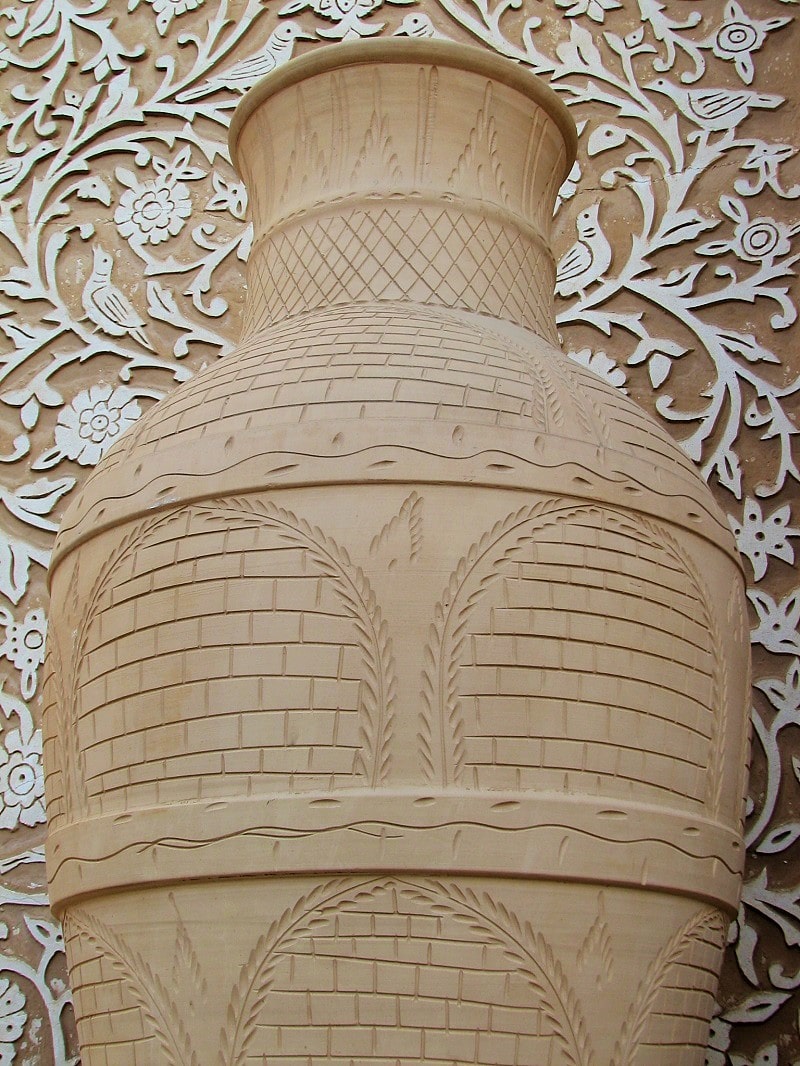
The Theme and Features of the Time Museum

  • Time has always been one of humanity’s greatest mysteries. Throughout history, scientists and inventors have devised ingenious methods to measure and organise it. In our modern world—where precise digital clocks surround us—it’s easy to forget how much creativity and experimentation once went into understanding the passage of time. At the Time Museum, visitors can explore this fascinating journey through devices that predate modern clocks. Among the exhibits are candle clocks and rope clocks, whose burning rates were carefully measured to indicate the passing hours. In the museum’s courtyard, you’ll also find oil clocks, water clocks, sand clocks, and sundials, all surrounded by the greenery of a tranquil garden. A café-restaurant nestled within the same grounds offers a peaceful spot to relax and reflect after your visit.
  • The museum covers an area of about 5,000 square meters, with the building itself occupying 700 square meters.
  • First Floor: This level showcases a captivating collection of European clocks from the 17th to 20th centuries, including mechanical, wind-up, pendulum, table, wall, and grandfather clocks. Many of these timepieces are richly decorated with elements of sculpture, enamelling (minakari), and marquetry (moarraq-kari). Some pieces are also dedicated to notable Iranian scientific and artistic figures, adding depth to the historical narrative.
  • Second Floor: Here, visitors can discover artworks made from clock components, created by artist Houshang Forootan, who began crafting them in 1988 (1367). Another section displays watchmaking tools—including knives, hand pullers, oil needles, and punch tools—along with collections of wristwatches, pocket watches, and custom timepieces. You can also find documents and manuscripts related to calendars, astronomy, and the science of timekeeping.

A Place Where Time Stands Still

With its combination of architectural splendour, artistic detail, and fascinating exhibits, the Time Museum offers a rare opportunity to see how Iranians have preserved the concept of time not just through clocks, but through art, craftsmanship, and history itself. Whether you’re an art enthusiast, a history lover, or simply curious about the passage of time, this museum is one of Tehran’s most delightful hidden gems.

  • State:Tehran
  • City: Tehran
  • Type: Science and Technology

63

Azarbaijan Museum of Nomads, Getting to Know One of the Most Influential Parts of Iranian Society

Iran

Many tourists plan their trips around visiting major cities, often overlooking the pristine and authentic attractions tucked away in smaller towns along the way.

One of the most popular routes for travellers in northwestern Iran stretches from Tabriz to Sarein, Ardabil, and Astara. However, most visitors focus only on the starting and ending points of this journey, passing by cities such as Sarab without realising what they’re missing. This scenic region is home to stunning landscapes and remarkable historical landmarks — among them, the Azarbaijan Museum of Nomads, a fascinating space dedicated to preserving and showcasing the lifestyle and heritage of Iranian nomads. 

The Importance of Nomads in the History of Iran

Nomads have played a vital role in shaping the political and social fabric of Iran. Many of the country’s ruling dynasties — including the Ghaznavids, Seljuqs, Khwarazmians, Ilkhanate, Qara Qoyunlu, Aq Qoyunlu, Afsharid, Zand, and Qajar — originated from nomadic tribes.

In recent decades, the trend toward urbanisation and the hardships of traditional nomadic life have caused this ancient way of living to fade gradually. The establishment of the Azarbaijan Museum of Nomads aims to preserve and celebrate this invaluable cultural heritage for future generations.


Nomads of Azarbaijan

The nomads of East Azarbaijan migrate twice a year — once in spring and once in autumn. Around mid-May, as the weather warms, they move toward their summer pastures in the highlands around Kalibar, Ahar, Heris, Sarab, Miyaneh, Maragheh, Charuymaq, and the Sahand, Sabalan, and Bozgush mountains.

As of 2022, nomads made up roughly two per cent of East Azarbaijan’s population but contributed nearly 20 per cent of the province’s light livestock production.

These nomadic communities belong mainly to the Arasbaran and Shahsavan tribes, comprising around ten different clans. They traditionally migrate between the provinces of East Azarbaijan, Ardabil, Zanjan, and West Azarbaijan, living in harmony with nature amidst the pristine mountain and plain landscapes that define their home.

Features and Architecture of Azarbaijan Museum of Nomads

The Azarbaijan Museum of Nomads is the first museum in Iran devoted to the life and culture of nomadic people. The museum is housed in a beautifully restored historic building known as the Jalal Bathhouse, which dates back to the late Qajar period (early 20th century). Covering an area of about 650 square meters, this bathhouse once served as a public bath for the people of Sarab. It featured separate sections for men and women, following the traditional design of Iranian bathhouses.

After its transfer from private ownership to the Sarab Municipality in 1993, the building underwent extensive restoration and was transformed into the museum it is today.

This anthropological museum offers a vivid depiction of nomadic life, showcasing their customs, language, livelihoods, housing, food, clothing, and handicrafts. Life-sized wax figures, dressed in authentic nomadic attire, stand beside traditional tents, illustrating scenes from everyday life. Many of the artifacts on display were collected from the East Azarbaijan and Ardabil provinces.
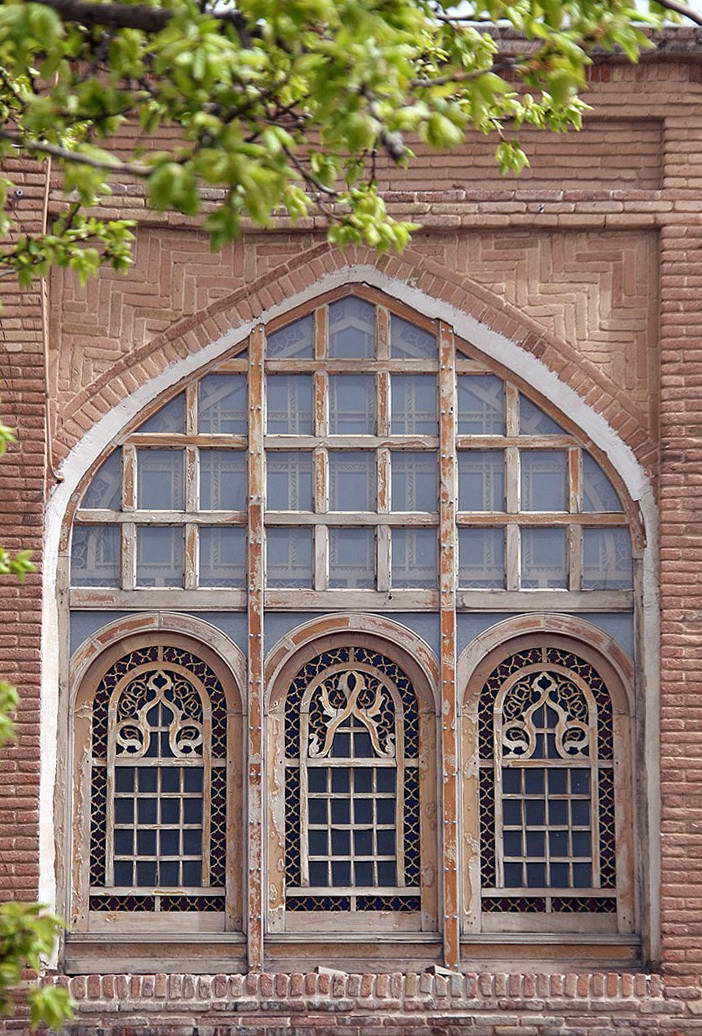
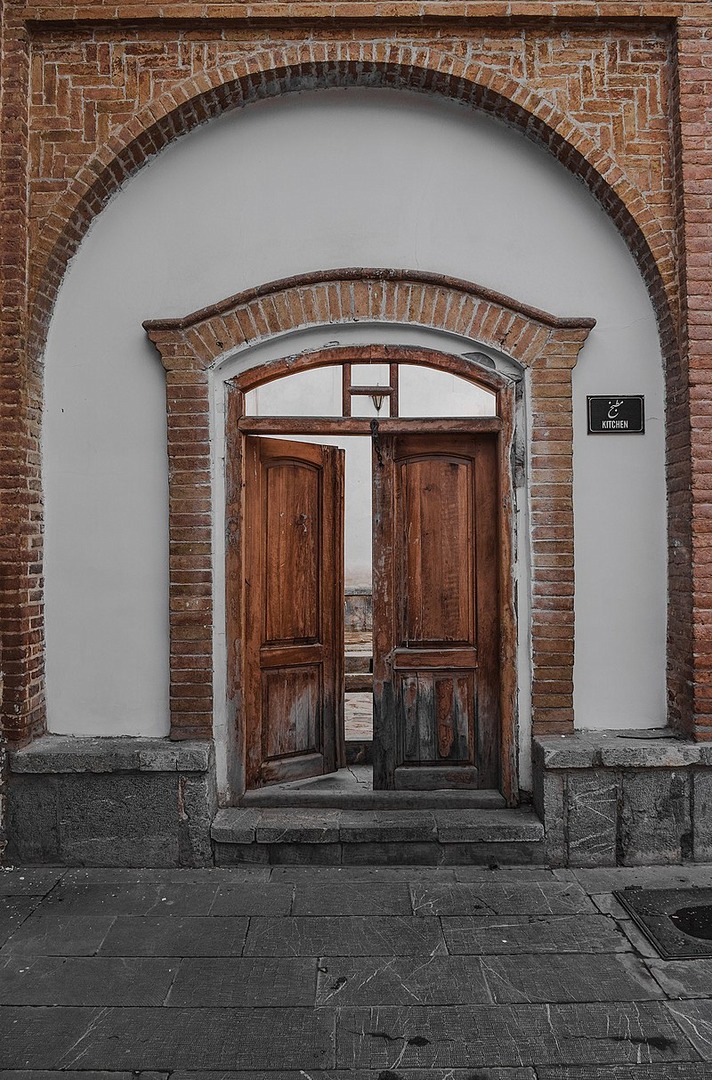
The museum also includes a specialised library featuring books on Iranian nomads and their culture. Visitors can explore diverse sections such as pastures and shepherding, dairy and wool processing, nomadic handicrafts, traditional music, clothing and ornaments, housing, a local bakery, a traditional coffeehouse, and exhibitions of handwoven carpets and rugs.
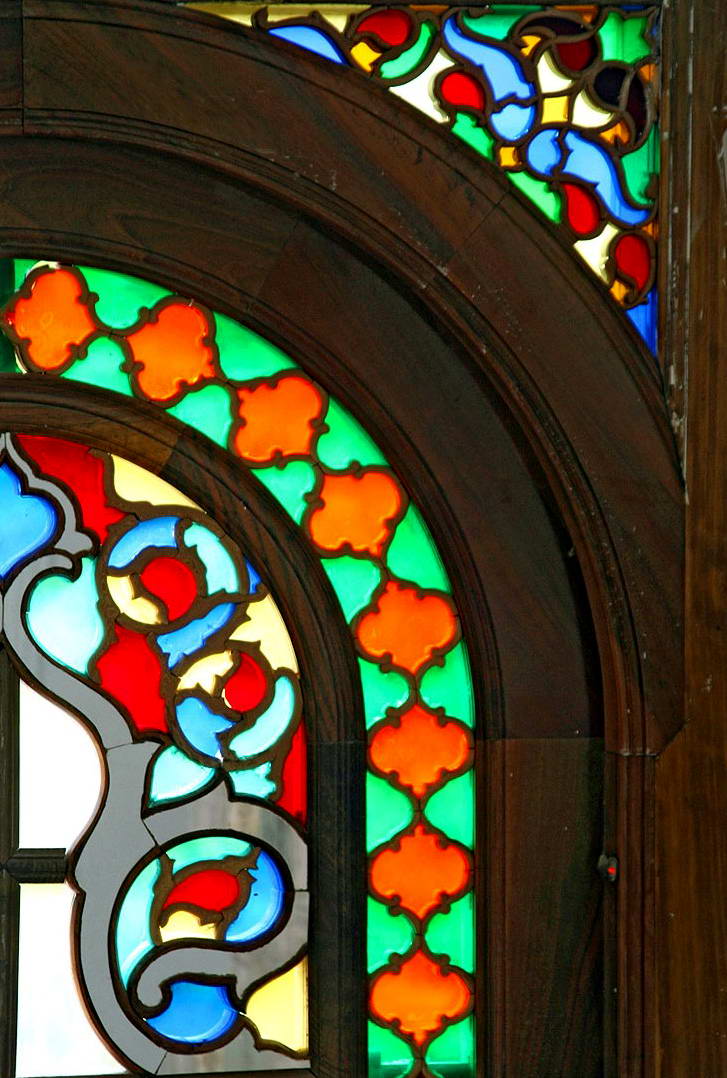
 

Where is the Azarbaijan Museum of Nomads Located?

The Azarbaijan Museum of Nomads is located in the city of Sarab, approximately 130 kilometres from Tabriz, right next to the Sarab Municipality building. For travellers seeking an authentic cultural experience and a glimpse into Iran’s living traditions, this museum is a must-see stop along the Tabriz–Ardabil–Astara route.

  • State:East Azerbaijan
  • City: Sarab
  • Type: Social