

Report on the Seminar: “The Universality of Saadi’s Thought and Its Reinterpretation in the Contemporary Era”
A seminar on “The Universality of Saadi’s Thought and Its Reinterpretation in the Contemporary Era” was held at the Cultural Office of the Embassy of the Islamic Republic, with scholars and literature enthusiasts in attendance. Ali Kebriaezadeh emphasized that Saadi’s human-centered ideas—such as solidarity, dignity, and social responsibility—remain highly relevant in the modern world. The session also included discussions and a .musical performance inspired by Saadi’s poetry
Report on the Seminar: “The Universality of Saadi’s Thought and Its Reinterpretation in the Contemporary Era”
On Friday, April 24, 2026 (Ordibehesht 4, 1405), a seminar titled “The Universality of Saadi’s Thought and Its Reinterpretation in the Contemporary Era” was held at the Cultural Office of the Embassy of the Islamic Republic, attended by a number of Persian literature enthusiasts, scholars, and translators.
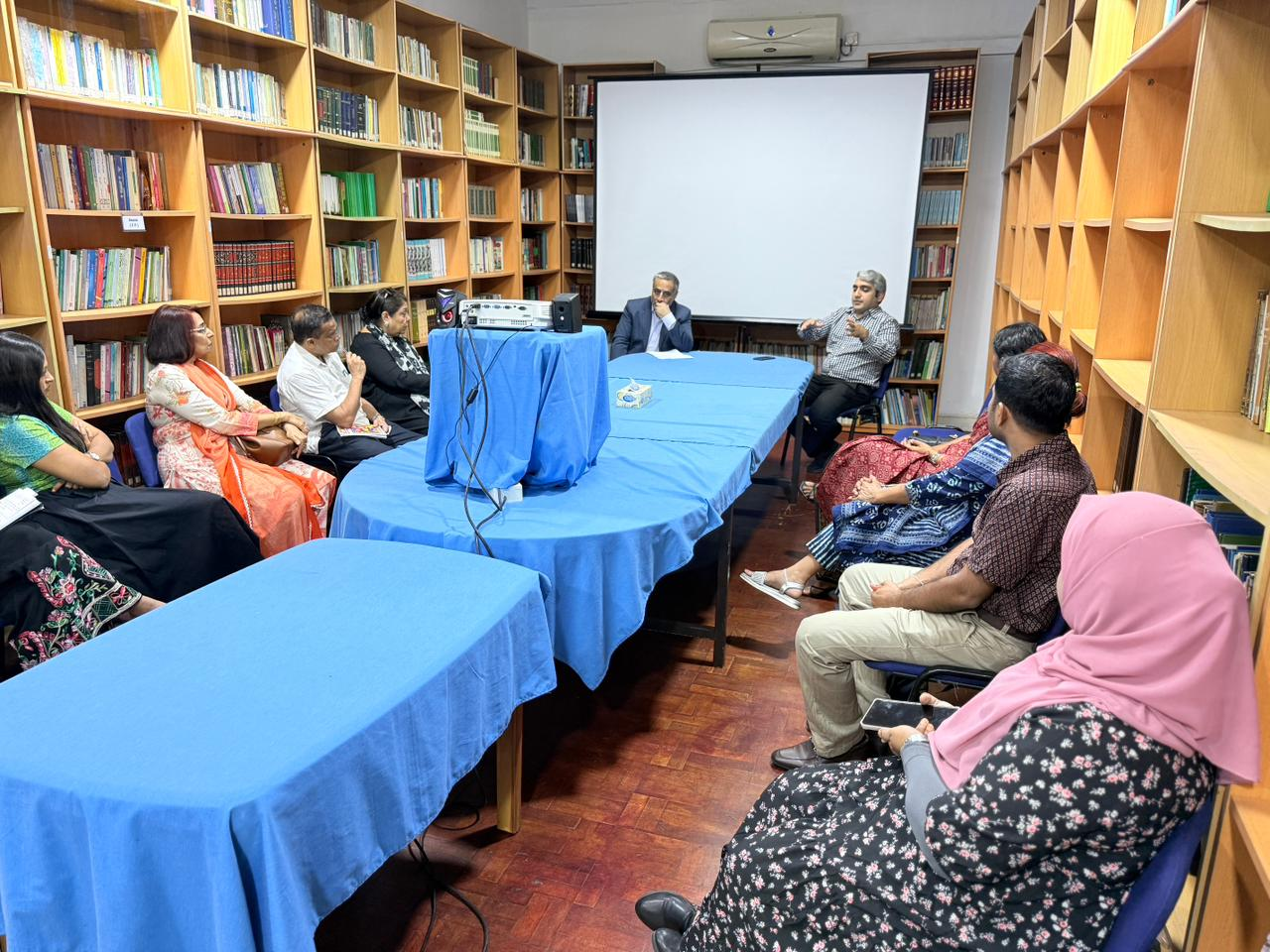
At the opening of the session, Mr. Ali Kebriaezadeh, Cultural Counselor of the Embassy of the Islamic Republic, stated that Saadi is a sage and thinker whose portrayal of humanity and society remains highly compatible with the standards of the modern world even after centuries. He noted that this perspective is grounded in shared human experiences that transcend time and borders.
He added that Saadi, through anecdotes and parables, and with a fluent and concise language, explains patterns of human behavior. For this reason, his ideas have not remained confined to a particular time or geography and are transferable across different cultures. As an example, Mr. Kebriaezadeh highlighted that one of the key elements of the universality of Saadi’s thought is his emphasis on the solidarity of humankind. Saadi views human beings as parts of a whole, where the suffering or well-being of one part affects the entirety. This perspective closely aligns with modern concepts such as mutual responsibility and human dignity.
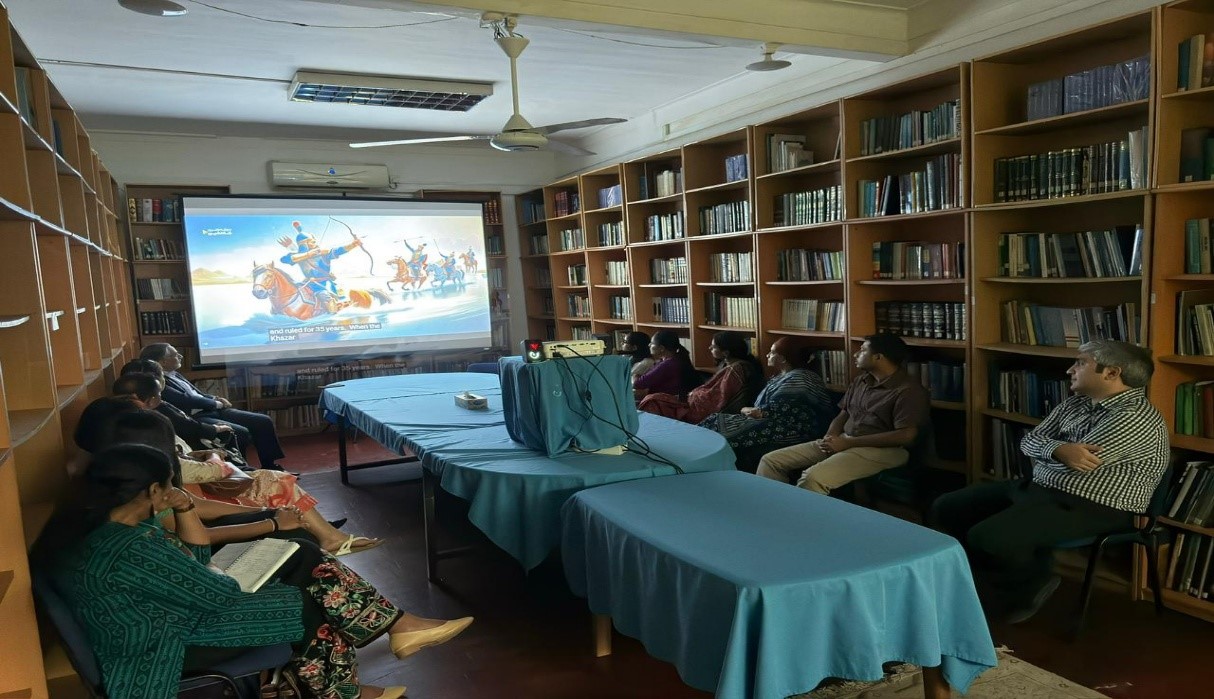
Mr. Kebriaezadeh further explained that, in terms of method, Saadi addresses moral virtues—such as justice, benevolence, contentment, humility, compassion, social responsibility, critique of power, and moderation—not in abstract or purely theoretical terms, but through real-life situations, particularly in his works Golestan and Bustan. Saadi’s simple yet profound language creates a meaningful bridge between the past and the present. Therefore, his teachings have wide applications in management, education, and cultural and social policymaking.
Following his remarks, several participants shared their views and perspectives on Saadi’s thought and poetry.
It is also worth noting that Mr. Shahini, a colleague at the Cultural Office, spoke about the musical qualities of Saadi’s poetry and performed selected pieces of Iranian music accompanied by Saadi’s verses for the audience.
