
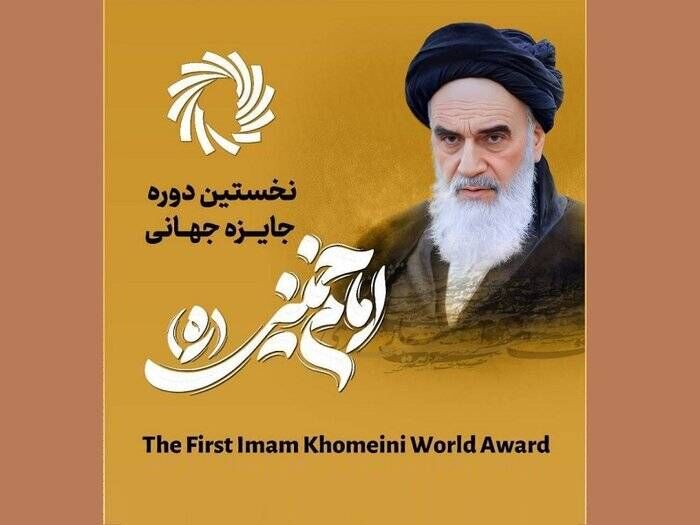
Imam Khomeini (RA) World Award, 2025
End of the Imam Khomeini (RA) World Award; Imanipour: Imam Khomeini (RA) is the most oppressed element of the Islamic Revolution
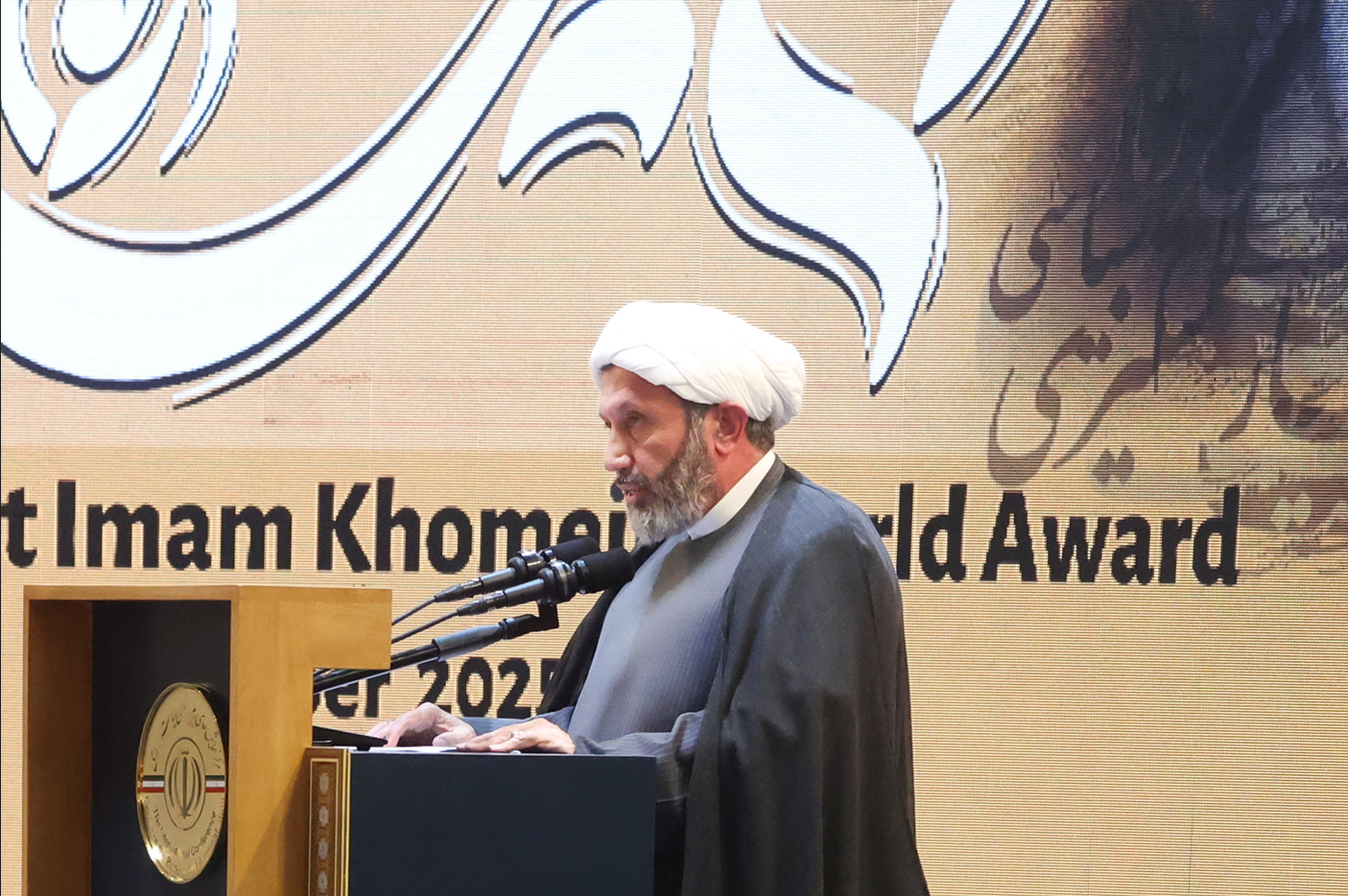
Emphasizing that today we need the advice of Imam Khomeini (RA) more than ever, Hojjatoleslam Mohammad Mehdi Imanipour continued: "Unfortunately, our generation, which considers itself the generation of the Imam, has been ineffective in promoting his thought. The situation of the youth, who have not understood him, needs no mention. If it were not for the personal efforts of the Supreme Leader of the Revolution in introducing Imam Khomeini and his school, his personality would not have been so well-known among the youth."
He pointed out that in various governments, a group of devotees of the late Imam were determined to include the introduction of the Imam in the country's higher-level documents and development plans, and expressed: "But the results of this work do not match the documents. Therefore, we need jihadi work to introduce Imam Khomeini (RA). Of course, this jihadi work is easy and unavoidable."
Imanipour continued: "It is easy because Imam Khomeini's words and thoughts still have buyers all over the world and their publication is met with success, but it is impossible because there is a widespread effort to forget it and systematic censorship of the Imam's thoughts by the arrogance."
The Secretary of the Imam Khomeini (RA) World Award, referring to the importance of considering artistic and media capacities to introduce the ideas of Imam Khomeini (RA), said: "Now, a renewed determination has been formed to introduce Imam Khomeini (RA), and we must explain and present this idea according to the taste of the audience. In this path, there is a need to involve social activists so that this important duty becomes universal."
Winners of the first Imam Khomeini World Award (RA) announced
In this ceremony, which was held in the Summit Hall with the presence of the President, thinkers and experts in the field of studies of Imam Khomeini's thoughts were also honored.
Ayatollah Sheikh Isa Qassem of Bahrain was recognized for his efforts in the fields of justice, freedom, and defense of human dignity.
Sheikh Ghazi Hanina from Lebanon was also honored by the judges of the Imam Khomeini (RA) World Award in the category of bringing Islamic religions closer together, promoting the spirit of brotherhood, and interacting with religions.
Rashid ibn Issa from Algeria was also praised for promoting the discourse of the Imam (may Allah have mercy on him).
In the section for promoting ethics, ethics, and monotheistic spirituality, Ms. Mbina Moker from Bosnia and Herzegovina was also commended.
Ms. Seyedeh Fatemeh Tabatabaei from Iran was also honored for her work in the field of promoting ethics, arqaan, and monotheistic spirituality.
In this ceremony, Muhammad Azmi Abdul Hamid from Malaysia was also declared worthy of recognition by the jury of the Imam Khomeini (RA) World Award in the category of anti-arrogance, resistance, and fight against Zionism and racism.
Abdullah Manajit from Thailand was commended for his work in explaining and promoting the discourse of progress and modern Islamic civilization.
Following the closing ceremony of the first Imam Khomeini (RA) World Prize, Sergey Baburin from Russia was recognized as deserving of recognition for promoting just peace and collective security.
Hojjatoleslam and Muslimin Mehdi Mehrizi from Iran was another figure who was honored in this ceremony in the category of promoting the role of women in society and promoting family-centered discourse.
Seyyed Muhammad Sadiq Al-Hashimi from Iraq was also honored for promoting the Imam's thought and the Islamic Revolution.
Yahya Fawzi from Iran was one of the honorees in this ceremony, receiving a letter of appreciation from the President of the Islamic Republic of Iran for explaining and promoting the discourse of progress and modern Islamic civilization.
Hojjat-ul-Islam and the Muslim Maulana Kalb Jawad Naqvi from India was another figure who was worthy of praise for promoting the thoughts of the Imam and the Islamic Revolution.
Also, Ibrahim Farhat, a representative of Al-Manar Network in Lebanon, received the prestigious Imam Khomeini (RA) World Award in the media category.
Miftah Fawzi Rahmat, the representative of the Martyr Motahari Foundation in Indonesia, was introduced in the section of appreciation for foundations and institutions.
Ali Asghar Karbalai, the representative of the Imam Khomeini (RA) Kargil Institute in India, was also honored in the Foundations and Institutions section.
Also, Hojjat al-Islam Abbas Kazemi from Türkiye and representative of the Kausar Publishing House received his certificate of appreciation from the President for the section of appreciation for organizations and institutions.
Closing statement
Hossein Diosalar, Deputy Director for the Development of Scientific and Cultural Cooperation at the Islamic Culture and Communications Organization, read the final statement of the Imam Khomeini (RA) World Award to the attendees.
Part of this statement states: This award, which has been approved by the Supreme Council as the most prominent civilizational award related to the school of the Imam and the sacred system at the national and international levels, has the mission of recognizing and honoring the most outstanding and most deserving works and activities in both theoretical and practical fields that have an effective and lasting role in promoting the thoughts of the Imam.
In the first edition of this event, which has been planned for more than a decade, more than 6,000 works from cultural and scientific institutions in the form of books, media, theses, articles, and works such as poetry were submitted and then judged in ten specified areas. In addition, in-depth observation and studies were conducted on the personalities who expanded and developed the great Khomeini school.
In the first phase, the process of evaluating the works was designed taking into account the award categories, and the theoretical and practical winners were independently assessed and selected based on specialized criteria.
These works included philosophical, jurisprudential, political, ethical, and social actions and analyses that systematically reinterpreted freedom, dignity, spirituality, Islamic unity, the lifestyle of the basic religion, and the discourse of Islamic civilization.
15 scientific meetings and pre-meetings at the international level and the compilation of four volumes of books are among the products of this award.
In the practical field, the indicators have paid attention to the degree of impact in the social, cultural and political environment. It included anti-arrogance activities to strengthen unity and serve the disadvantaged, enhance the role of women and promote religious discourse and promote a lifestyle based on religion and the spread of peace and the advancement of civilizational and social discourse.
In the future perspectives of the Imam Khomeini (RA) World Prize, an award based on problem-solving in content and practical productions for the future of humanity in the Islamic world and the expansion of the Imam's discourse at regional, Islamic and international levels will be presented as new sections.
Another part of the statement states: "We are looking for an elite network and a representation of Imam Khomeini's character and behavior as a faithful and civilized lifestyle. The award, based on moral values, is an opportunity to honor those who are advancing the culture of peace and social justice in the world. This award is a tribute to Imam Khomeini's legacy and a call to honorable global activists to build a better world."
This award can be a bridge between cultures and nations. The award can play an important role in promoting greater understanding and solidarity in the world.
The first Imam Khomeini (RA) World Award was held on December 16 at the Summit Hall, thanks to the efforts of the Islamic Culture and Communications Organization.

حراره زیمبابوه
Pictures


Write your comment.