

Visiting ethnographic museums is one of the best ways to become familiar with the lifestyle of a society. These museums showcase the cultural elements and combinations that define a community’s way of life, displaying objects and scenes that reflect people’s everyday experiences. Ethnographic museums, by focusing on ordinary people as their main subject, cover a broader thematic range compared to other types of museums—those that usually exhibit the creations of elites and artists or display inanimate artifacts lacking a clear social context.
A proper understanding of what is seen in ethnographic museums requires familiarity with the customs, history, and beliefs of the people represented. In Iran, such museums are often established in historical buildings so that visitors can experience the atmosphere in which people once lived and worked, offering a glimpse into their daily lives.
The Laundry House Museum (Rakhtshooykhaneh Museum) in Zanjan is one of the city’s notable ethnographic museums. Housed in a historic building, it presents aspects of the traditional life of Zanjan’s residents—elements of culture and work that had rarely been studied before.
Zanjan Laundry House: Features and History
This museum is located in the Goudal Baba Jamal area of Zanjan, locally known as Baba Jamal Choghouri. Today, it lies in the heart of Zanjan’s historical district. The site for the laundry house was chosen in one of the city’s most densely populated central neighborhoods so that more people could easily access it. A building with such a function has no equivalent in other Iranian cities.
This building was originally a place for washing dirty clothes, which is why it was called the Rakhtehshooykhaneh (Laundry House). In the past, when qanats were the main source of water for city residents, the emergence point of the qanat—where the water surfaced and began to flow—served as a washing place. The laundry house was used mostly during the cold seasons of the year.
After the development of urban infrastructure and the introduction of piped water, the laundry house gradually lost its original function and was eventually transformed into a museum. Nevertheless, the construction of such a facility for washing clothes is a testament to the importance of cleanliness and hygiene among the Iranian people.
The Zanjan Laundry House was established in the early Pahlavi period, in 1928 (1307 AH). The land for the building was provided by the Zanjan municipality, and two brothers, Mashhadi Akbar Meʿmar and Mashhadi Esmaʿil Meʿmar, were responsible for its construction. The laundry house was completed in 15 months. It was a public facility, open to people day and night. The running water in the building was supplied from the Haji Mir Baha’ al-Din qanat.
The Architectural Style of the Zanjan Laundry House
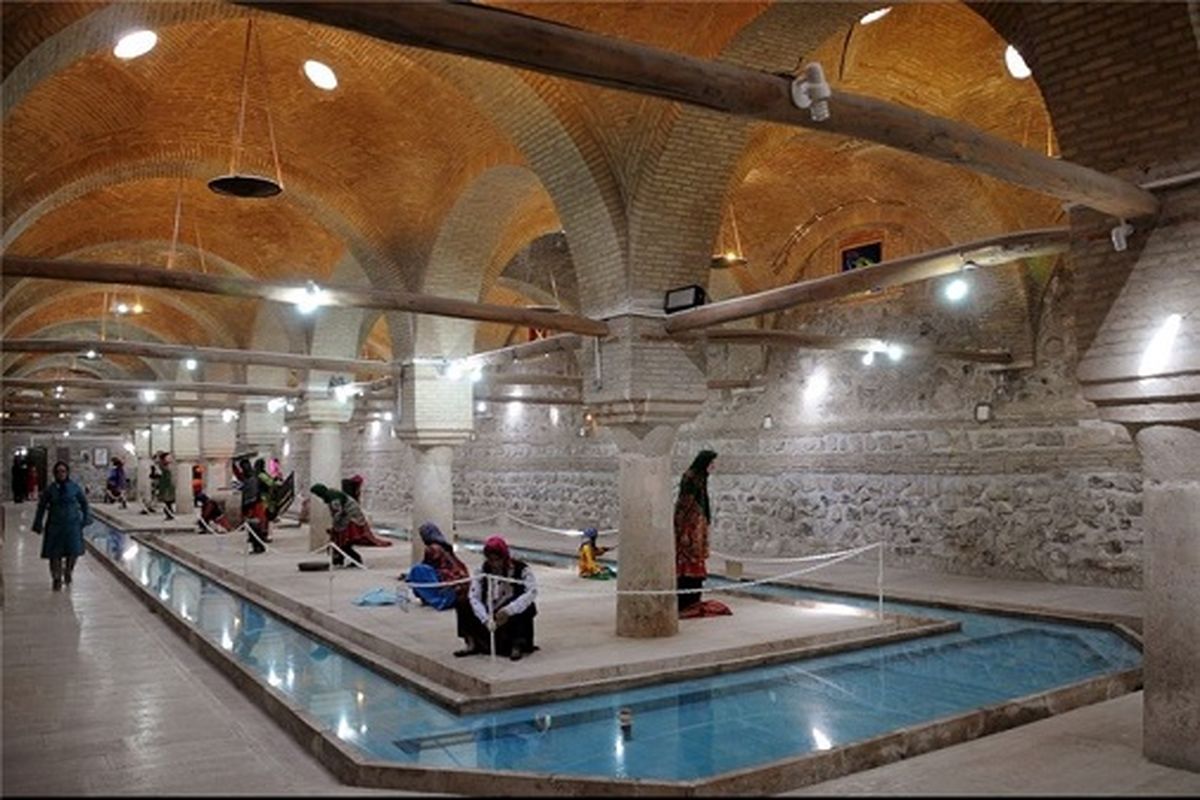
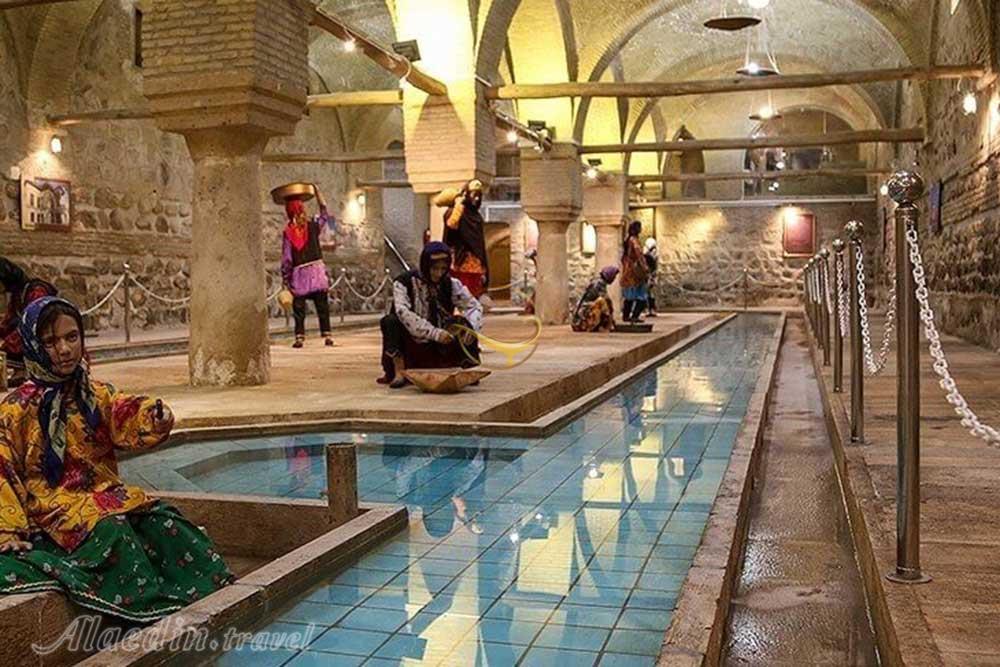
The laundry area consists of a beautiful hall measuring 62 by 7 meters, supported by 11 elegantly placed columns. Between these columns, four basins were built for washing clothes, each serving a different purpose. One basin was used for heavily soiled garments and the clothes of sick individuals; another was intended for rinsing clothes, usually in the final stage of washing; a third basin was dedicated to washing kitchen utensils; and the fourth contained clean, drinkable water. At the southern end of the hall, a window was installed to provide air ventilation. Because of the constant flow of water, the Rakhshouikhaneh was cool during the summer and also served as a recreational spot for bathing.
A space was also built as the residence of the laundry house manager, which included a courtyard and a small bathhouse. The courtyard of this section measures 32 by 12 meters and contains several trees. Today, in addition to wax statues depicting the stages of washing clothes, the museum also exhibits jewelry, traditional women’s clothing, and various tools and household items.