

-5-th4_3.jpg)
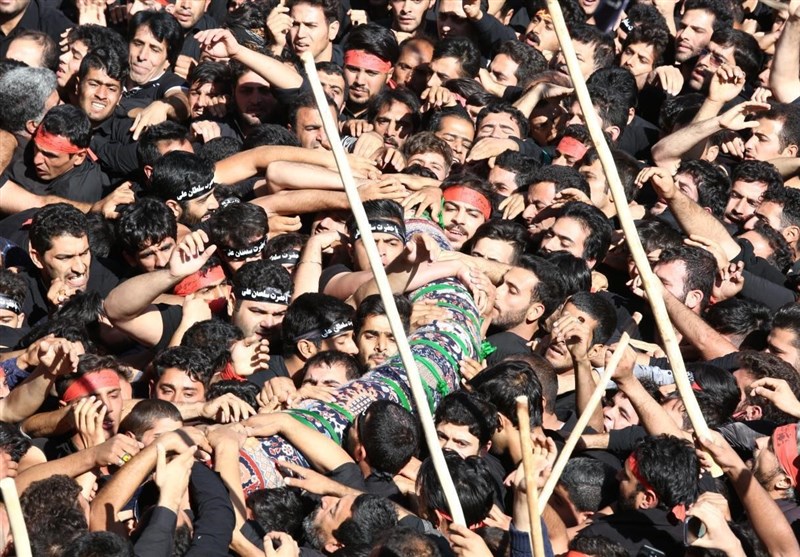
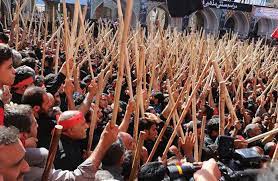
The traditional and religious ritual of the Carpet Washing Ceremony (Qali-Shuyan) in Fin, Kashan. The traditional and religious ritual of Qālī-Shūyān in Fin, Kashan, and the village of Khāveh Ardehāl, held annually on the second Friday of Mehr in Mashhad Ardehāl (42 km west of Kashan), is the only Islamic religious ceremony in Iran that follows the solar calendar. In this symbolic ritual, participants—who come from the Fin region—carry wooden sticks and wash a carpet in a spring, representing the symbolic body of Ali ibn Muhammad Baqir. This ceremony is inscribed on Iran’s National Intangible Cultural Heritage List and, in December 2012, it was also registered on UNESCO's Intangible Cultural Heritage List. Some researchers and writers trace the origins of the Qālī-Shūyān ceremony to the ancient Mehregan festival and other old Iranian rituals.
The Qālī-Shūyān tradition, performed annually by the people of Fin and Khāveh Ardehāl, takes place on the second Friday of the month of Mehr (the Friday closest to October 3, which marks the anniversary of the martyrdom of Soltan Ali ibn Mohammad Baqir). On the day of the ceremony, the people of Khāveh Ardehāl take one of the carpets kept inside the Imamzadeh shrine—rolled up to symbolize the carpet that is believed to have wrapped the body of the Imamzadeh at the time of his martyrdom. The carpet is placed on the shoulders of young men. After holding mourning rituals and recitations inside the shrine, they hand the carpet over to the people of Fin, who then carry it toward a spring located a few hundred meters to the east of the shrine.
Following this group, another contingent proceeds, each member carrying a long wooden stick. By waving these sticks in the air, they engage in a symbolic battle against the killers of the Imamzadeh. The carpet is placed on the ground beside the spring, and water from the spring is sprinkled over it as a symbolic act of washing the body of the Imamzadeh. It is then carried back toward the shrine. Before the carpet enters the sanctuary, the stick-bearers run, wave their sticks, and chant with fervor, continuing their symbolic confrontation with the Imamzadeh’s murderers. The arrival of the carpet bearers at the entrance of the shrine, and the moment they hand it over to the people of Khāveh Ardehāl—who must carry it inside—is accompanied by special ceremonial observances.
Carpet Washing Iranian Islamic Ceremony (Qālī-Shūyān)
According to IRNA News Agency, in 2005 (1384 Solar Hijri), the number of participants in the ceremony was estimated at 200,000 people. The ritual is performed in such a way that all the people of Fin, each carrying a wooden stick, gather in the main courtyard known as Sahn-e Safa. Some others join them from Sahn-e Shahzadeh Hossein, following specific ceremonial customs. After the recitation of elegies, chest-beating rituals, and speeches by the custodians of the shrine, representatives from the village of Khāveh Ardehāl hand over the sacred carpet to the elders and people of Fin.
Those who receive the carpet bring it from the Safa Portico into Sahn-e Safa. As they wave their sticks in the air and chant “Hossein, Hossein,” they carry the sacred carpet along a designated path toward the Shahzadeh Hossein stream, where the washing ritual is performed. After the sacred carpet is washed, the people of Fin return it via another route to Sahn-e Finis and ceremoniously hand it back to the people of Khāveh. Following several processions around the courtyard, accompanied by chest-beating and chanting “Hossein, Hossein,” the ceremony concludes until the following year.
The carpet-washing ceremony is performed exclusively by the stick-bearing men of Fin, accompanied by crowds of locals and pilgrims gathered along the historical Barikarsaf stream, around noon on the second Friday of Mehr (early October). The observance of this ritual according to a specific solar calendar, despite its religious framework, reflects the fact that the ceremony preserves traces of several ancient Iranian national traditions.
Historical and Mythological Roots
Bahram Beyzai argues that, given the week-long celebration of this ritual during the Mehregan festival, the carpet-washing ceremony is a remnant of a local and indigenous dramatic rite centered on the story of Siyavash—one that naturally transformed after the advent of Islam. Others believe that this ceremony is a surviving memory of ancient rites dedicated to the veneration of Tishtar, the divinity associated with rain. It is likewise assumed that the Imamzadeh structure originally served as one of the ancient Iranian temples devoted to Tishtar.