.jpg)
Sizdah Bedar (the thirteenth day of Farvardin)
Sizdah Bedar
Sizdah Bedar is the thirteenth day of Farvardin (the first month of the Iranian calendar) and is one of the Nowruz (Persian New Year) celebrations in Iran. In official Iranian calendars, after the Islamic Revolution, this day has been designated as Nature Day and is considered a public holiday.
Philosophy of Sizdah Bedar
Among Iranian celebrations, Sizdah Bedar is somewhat ambiguous, as it does not have a clearly defined origin or rationale like other festivals. Historical books do not directly mention the existence of this ceremony, though some ancient sources refer to the thirteenth day of Farvardin.
It is said that ancient Iranians, at the beginning of the new year, after twelve days of celebration and merrymaking—symbolizing the twelve months of the year—would go to gardens and fields on the thirteenth day of Nowruz, which was considered an auspicious day, to celebrate and enjoy nature. In this way, they formally concluded the Nowruz festivities.
Tir Day
In the Iranian calendar, each day of the month has a special name. For example, the first day of each month is called Hormozd Day, and the thirteenth day of each month is called Tir Day, dedicated to the deity Tir.
In the Avestan language, Tir is called Tishtrya, and it shares its name with Tishter, the god of rain. Given that Tir is associated with the rain deity, it can be said that Tir symbolized divine mercy for ancient Iranians.
In Zoroastrianism, Tir holds a high status and is associated with a charming and beautiful story. The major celebration of Tir Day in the month of Tir, known as Tirgan, is also named in his honor.
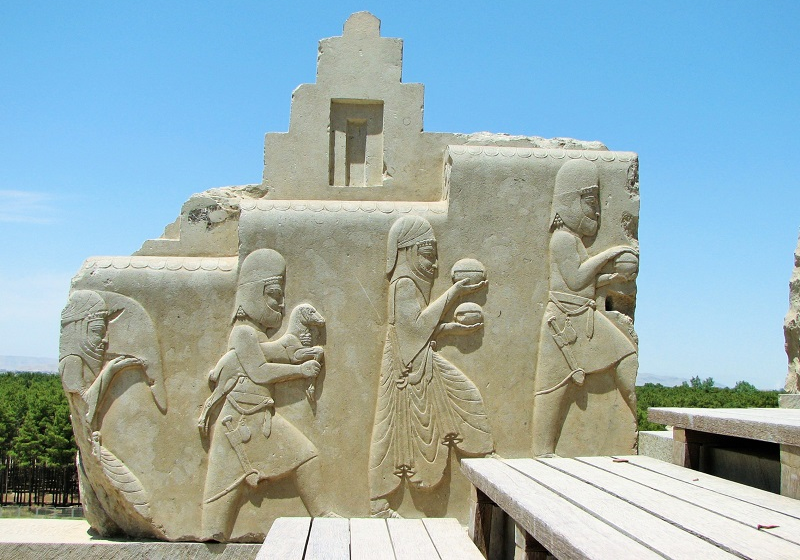
Archaeology of Sizdah Bedar
A Look at the Origins of the Sizdah Bedar
Festival Nature Day (Sizdah Bedar) is an ancient Iranian tradition commemorating the victory of Tir, the rain deity, over the drought demon Apush. This custom dates back to before Zoroaster (around 1800 BCE). As noted in From Nowruz to Nowruz by Mr. Kourosh Niknam (a representative of the Zoroastrian community), on pages 41–42, the thirteenth day of the month of Farvardin is called Tir or Tishter. Tir (or Tishter) is the rain god, and in the Avesta, there is even a dedicated Yasht (hymn) in his honor.
In pre-Zoroastrian belief, on Tir Day, people would honor Tir to ensure his victory over the drought demon and pray for rain in the new year. After the Nowruz celebrations, which marked the start of the year, people would go to the fields, plains, and riversides to rejoice and dance, while asking God for abundant rainfall.
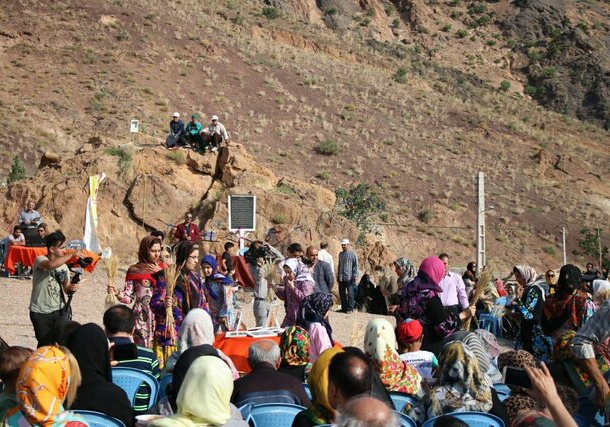
Even today, Zoroastrians celebrate Tir Day by taking their Nowruz spreads into nature. Leftover foods, nuts, and sweets from the Nowruz table are brought outdoors, along with green sprouts (sabzeh) grown for the celebrations. They set the sprouts afloat in running water, praying for a blessed and prosperous year. The rest of the day is spent outdoors, amidst greenery and nature, celebrating and enjoying the open air.
(Note: In Iranian mythology, the rain god Tir is depicted as a horse, constantly battling the drought demon Apush. When Tir triumphs, rain falls, springs gush, rivers flow, and the land flourishes.)
The 1968 Circular
According to Circular No. 1016, dated October 23, 1968 (1st of Aban 1347 in the Iranian calendar), issued to all ministries, organizations, and government-affiliated companies, and based on the decision of the Cabinet meeting on March 7, 1968 (16th of Esfand 1346), the thirteenth day of Nowruz was officially recognized as a public holiday in Iran.
The Term “Sizdah Bedar”
It is commonly believed that the term Sizdah Bedar means “to get rid of the misfortune of thirteen.” However, by examining the meanings of the words more closely, another interpretation emerges. The word “Dar” can be understood as “valley” or “plain” instead of simply “getting rid of.” For example, the renowned scholar Dehkhoda considers the phrase “Dar o Dasht” to be an abbreviation of “Darreh o Dasht” (valley and plain).
“When both armies came forth from their positions, you said they stood in ‘Dar o Dasht’.”
One of the meanings of the word “be” is “toward” or “in the direction of”, as in the expression “be the store” (toward the store).
Thus, from a general perspective, the term Sizdah Bedar can be interpreted as “the thirteenth day going out toward the valleys and plains,” which conveys the idea of going outdoors and spending time in nature. However, there is still some debate regarding the exact accuracy of this interpretation.
Historical Background
In historical books prior to the Qajar period, there is no direct and precise mention of such a ceremony. However, Mehrdad Bahar, in his book “From Myth to History,” briefly refers to celebrations and public dances, as well as women appearing in streets without veils or face coverings during the Safavid era. This practice is considered closely related to the rituals of Sizdah Bedar.
The Qajar Era
Abdollah Mostowfi, in his book Sharh-e Zendegani-ye Man (Description of My Life), describes in detail how the Sizdah Bedar ceremony was observed during the Qajar period. Edward Jacob Pollack also writes about the festival:
Finally, the thirteenth day—the last day of the New Year—arrives. According to an ancient custom, all homes are believed to be exposed to danger on this day. For this reason, everyone leaves the city gates and heads to the gardens.
Sizdah Bedar Rituals
This celebration has developed over time and gradually taken on a traditional form. Its main rituals include:
Tying the sprouts (sabzeh)
Sending the sprouts to the river
Eating lettuce with sweetened vinegar (sekanjabin)
Cooking various dishes, especially ash reshteh (a type of noodle soup)
Throwing 13 stones, particularly in Kurdish regions
Tying the Sprouts
One of the most popular rituals on this day is tying the sprouts. This is mostly done by young people, symbolizing the connection of human life with nature, with the hope of remaining evergreen, vibrant, and flourishing, just like the tied sprouts.
The Philosophy of Tying the Sprouts (Sabzeh Gerdan)
The creation myth in ancient Iran, including the story of the first human and the first king, holds great significance. In the Avesta, Keyumars (Kiumarth) is mentioned several times as the first king and the first human being. Accounts from Hamzeh Esfahani in Sana’eh Malook al-Arz wa al-Anbiya (pp. 23–29) and Asar al-Baqiyeh, based on Pahlavi sources, elaborate on these stories.
Mashya and Mashyaneh, the twin children of Keyumars, are said to have married on the thirteenth day of Farvardin—the day that later became associated with Sizdah Bedar—marking the first marriage in the world. At that time, formal contracts or ceremonies did not exist, so they established their union by tying two branches of the myrtle plant together.
The ancient Iranians, aware of this symbolic act, adopted it as a ritual—particularly young unmarried men and women—hoping for blessings in their own future marriages. Even today, young people tie grass or sprouts with the intention of forming a lasting bond and good fortune in marriage.
In Kurdish regions, at the end of Sizdah Bedar, people throw thirteen stones behind them. Each stone represents a wish, symbolizing the removal of misfortune and evil from one’s life, while invoking positive hopes and blessings.
| Name | Sizdah Bedar (the thirteenth day of Farvardin) |
| Country | Iran |
| City | Rodser |
.jpg)
.jpg)
.jpg)
.jpg)
.jpg)






Choose blindless
Red blindless Green blindless Blue blindless Red hard to see Green hard to see Blue hard to see Monochrome Special MonochromeFont size change:
Change word spacing:
Change line height:
Change mouse type: