

The event of Ashura is one of the greatest events in the history of Islam, in which truth and falsehood lined up against each other. Although Imam Hussein was apparently defeated on the battlefield, today, after about 1,500 years, his memory is alive and his path is sacred and instructive. In Iran, the month of Muharram is considered one of the greatest religious occasions, and all people mourn in it for Imam Hussein and his companions. The antiquity of these mourning rituals dates back centuries, and since then, various methods of mourning, which have been shaped according to the spirit, culture, and geography of each society, have become a part of Iranian culture. Such that Muharram can be considered a full-scale mirror of Iranian culture. In the last two decades, many of the authentic and old mourning methods and ceremonies in different parts of Iran have been registered as national intangible heritage. This action has been carried out with the aim of preserving these traditions and documenting them for public awareness, traditions many of which are unique and are not observed anywhere else except in one region or city. The Mash'al-Gardani ritual, which is also known as "Polkeh-Gardani," is one of these unique mourning rituals that can perhaps be considered a different way for the people of Iran to mourn and commemorate Imam Hussein and his noble companions.
Where is the Polkeh-Gardani ritual performed?
The Polkeh-Gardani ritual is performed in Shishavan village, part of the Central District of Ajabshir County, East Azerbaijan Province. Most of the population of this village, whose number reaches more than five thousand people, are farmers and orchard owners and grow various kinds of fruits and vegetables (summer crops) in their fields and gardens.
Characteristics of the Polkeh-Gardani Ritual
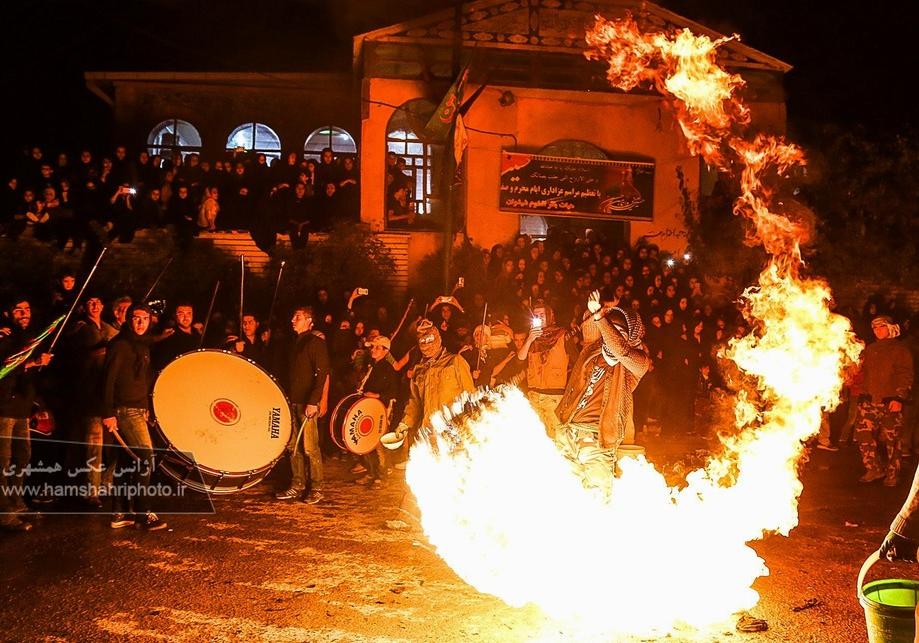
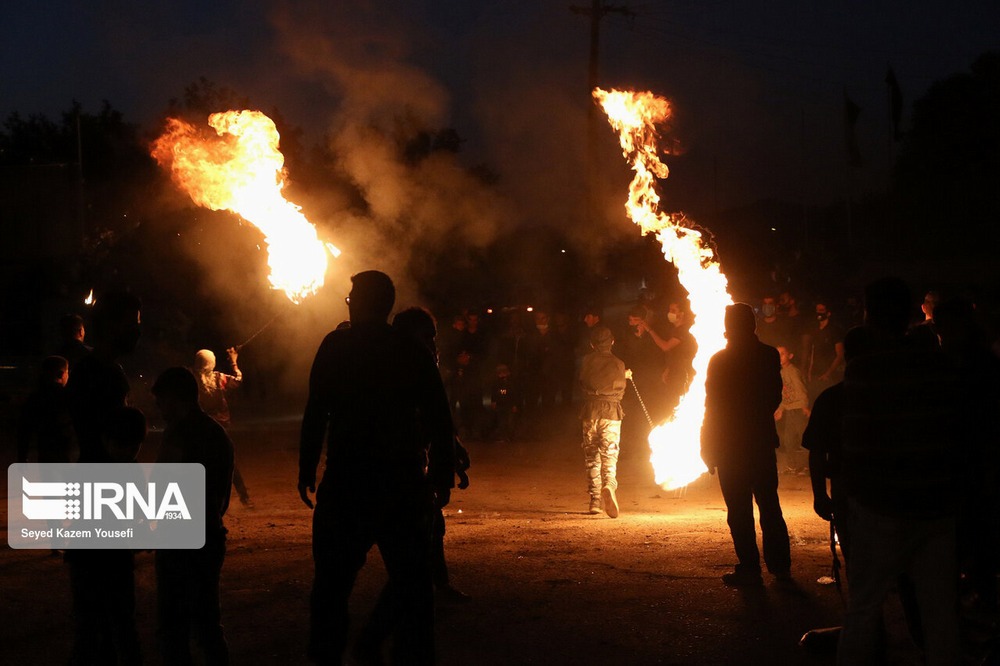
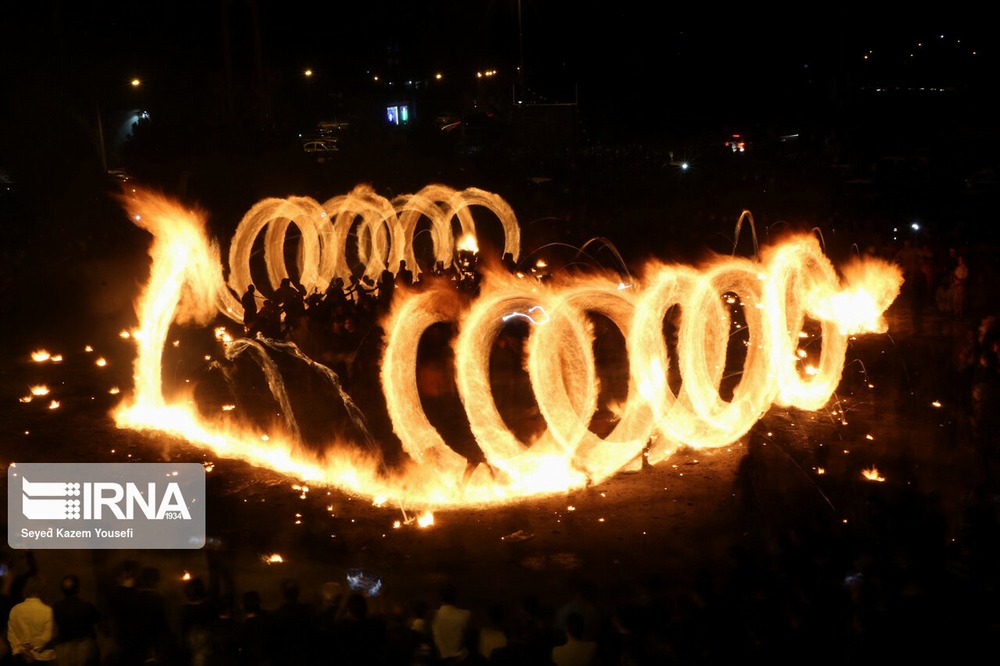
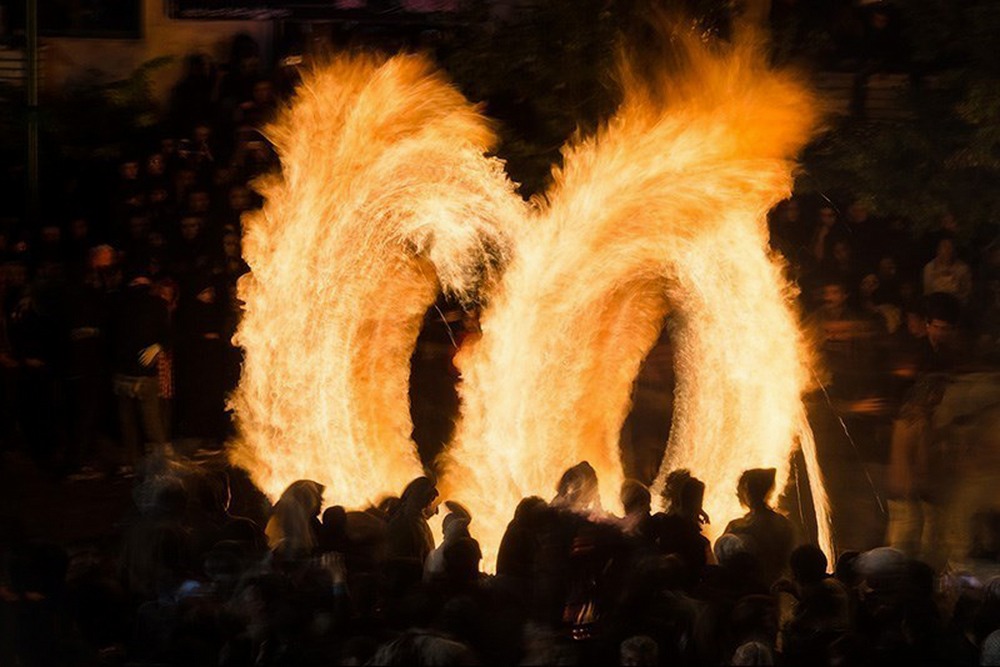
A polkeh is a traditional torch made from layers of oil-soaked cloth tightly bound with wire and attached to the end of a chain, allowing it to be swung through the air. On the nights of Tasu’a and Ashura, these torches are set alight and spun by designated participants among the mourning crowd. In the darkness—amid the rhythmic chants of “Shah Hossein!”—dozens of fiery torches whirling overhead create an atmosphere of solemnity and grief.
The torches vary in size according to the strength and age of the torch-bearers. Children begin the ritual by spinning small torches known as “Kichik Polkeh,” followed by adults who enter the field one by one carrying increasingly larger and heavier torches, some weighing up to 12 kilograms.
The ceremony begins with the lighting of a central torch in front of the village’s Grand Mosque, around which participants gather. All other torches used in the ritual are ignited from this main flame. Before a torch-bearer starts, two assistants pour water over his clothes and body to protect him from the heat. The torch-bearers then grip the chain and swing the blazing torch continuously above their heads and around their bodies, shifting the handle between their hands for better control. The entire Polkeh-Gardani ritual lasts approximately 90 minutes.
History and Symbols of the Polkeh-Gardani Ritual
Experts attribute the antiquity of this ritual to the Safavid period (16th century AD).
The torches that are lit in this ceremony are a symbol of the burning of the tents of Imam Hussein's family on the afternoon of Ashura and after the martyrdom of him and his companions.
The National Registration of the Polkeh-Gardani Ritual
The Polkeh-Gardani Ritual was registered in the list of Iran's National Intangible Heritage in 2013 CE (1391 Solar Hijri).