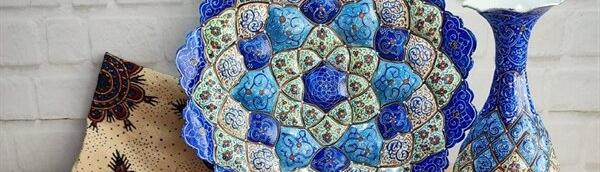
Minakari: A meticulous art form whose products are among the finest souvenirs of Iran
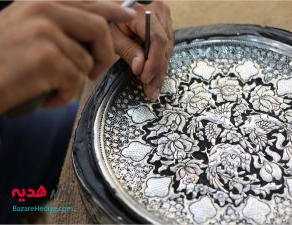
Minakari: The Art of Heaven and Fire Minakari, also known as Minagari or Minasazi, is the refined art of decorating and painting metal and ceramic surfaces with enamel. Because copper, gold, and silver are the only metals that do not oxidize when combined with enamel, they constitute the primary raw materials of this craft.
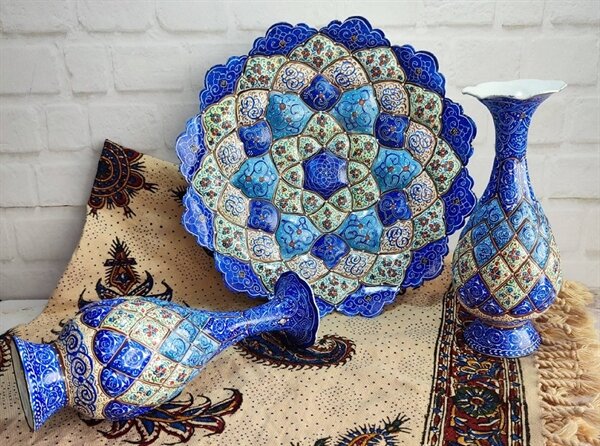
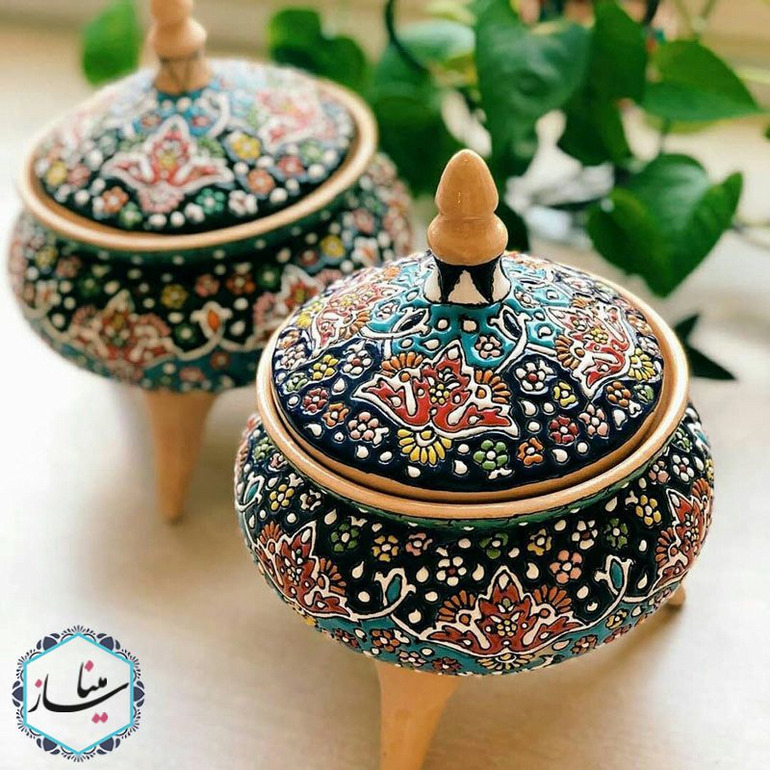
In Persian, the word mina refers to the blue sky. This art is called Minakari because blue is the dominant color in these works, evoking the impression that the viewer is gazing upon a fragment of the infinite sky captured on the surface of an object. Common items adorned with Minakari include plates, vases, bowls, picture frames, doors and windows, decorative boxes, mirrors, belts, and jewelry.
Historical Background
Experts trace the origins of Minakari back approximately five thousand years, and many scholars regard Iran as the birthplace of this art.
Ancient Roots Archaeological excavations in Cyprus have uncovered six gold rings dating to the 13th century BCE, which are considered examples of jeweled enamel (Mina-ye Morassa). If the theory of an Iranian origin is correct, enameling gradually spread from Iran to Europe and other regions.
Achaemenid Period (550–330 BCE) Several significant artifacts from this era attest to the prominence of enameling, including a bronze bowl housed in the Los Angeles County Museum of Art and a gold armlet preserved in the Victoria and Albert Museum in London.
Later Developments Following the Achaemenid period, Minakari continued to flourish. During the Seljuk era (11th century CE), enameled vessels were widely produced and exported to neighboring regions. The art reached its zenith in the Safavid period (16th–18th centuries CE), when Isfahan emerged as the principal center for master enamelers.
Techniques of Minakari
Enamel is a transparent, glass-like glaze produced by combining glass flux with metallic oxides. When fired in a kiln, it hardens in a manner similar to glass. Minakari is generally executed using two principal techniques:
-
Cloisonné Enameling (Mina-ye Khaneh-bandi) Also known as wire enamel, this technique involves forming designs with thin metal wires affixed to the surface. The compartments are filled with powdered enamel and fired in a kiln. Although historically significant, this method is less commonly practiced today.
-
Painted Enamel (Mina-ye Naqqashi) This is the most widely used method today. In this technique, designs prepared by master craftsmen are colored using enamel glazes. The object typically undergoes three to four stages of glazing and firing to achieve the final result.
Types of Minakari
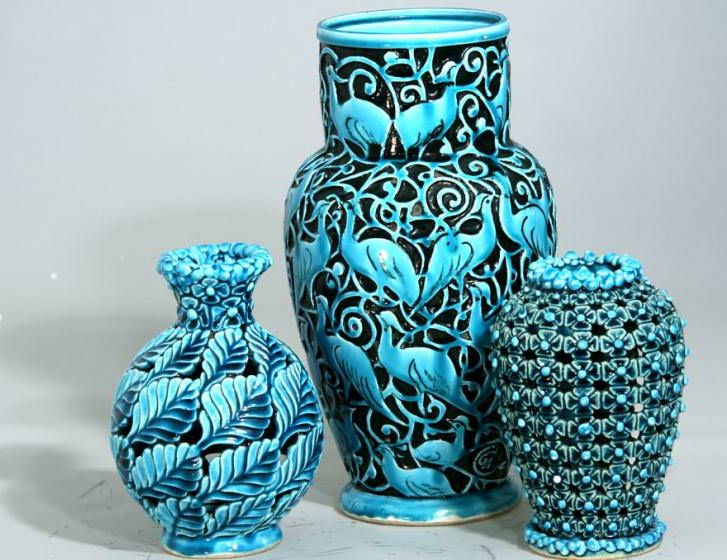
Type Description Jeweled Enamel (Morassa) Precious stones are set into the enameled surface, making these works highly valuable. Openwork Enamel (Moshabbak) The surface is rendered in a lattice-like structure; common forms include candlesticks and vases. Subi (Sabi) Enamel Produced by the Mandaean (Subi) religious minority, primarily in southern Iran. Executed on silver or 24-carat gold, it traditionally uses black enamel and features regional motifs such as palm trees, boats (balam), camels, and the Ahvaz Bridge.
National and International Recognition
Today, Isfahan is regarded as the principal center of Minakari in Iran. In 2023, the city received international recognition for this art from UNESCO. Additionally, in 2019, Ahvaz was officially designated as the National City of Subi Enameling.
| Name | Minakari: A meticulous art form whose products are among the finest souvenirs of Iran |
| Country | Iran |
| Cities | |
| Works | Metal and ornaments |
| Registration | Unesco |

Choose blindless
Red blindless Green blindless Blue blindless Red hard to see Green hard to see Blue hard to see Monochrome Special MonochromeFont size change:
Change word spacing:
Change line height:
Change mouse type: