

_0_19.jpg)
The History and Art of Traditional Persian Locksmithing Throughout human history, the need to safeguard valuable possessions has driven human societies toward innovation and creative problem-solving. These efforts gave rise to a wide range of security mechanisms designed to restrict access to precious objects. Consequently, the origins of locksmithing may be regarded as coeval with human social organization and collective intelligence.
The Origins of Locksmithing in Iran
Some scholars suggest that the earliest forms of locking mechanisms consisted of complex knots whose opening required specialized knowledge or skill. Over time, wood emerged as the primary material for constructing more effective and reliable locks. By the second millennium BCE, wooden locks were already in use across Southwest Asia. In Iran, archaeological and historical evidence indicates that the use of locks dates back to approximately 1800 BCE.
Key archaeological findings supporting this chronology include:
Tape Sialk (Kashan): The discovery of a stone bracelet composed of four separate elements joined by a fastening mechanism, indicating an early concept of controlled closure.
Chogha Zanbil (Susa): A lock dated to approximately 1300 BCE, reflecting the early development of mechanical security devices.
Persepolis: On the stone door of the tomb attributed to Artaxerxes III, a circular opening approximately six centimeters in diameter is visible. This opening was likely intended for inserting a key to operate a sliding wooden bolt (kolun).
In ancient Iran, large doors were typically secured with a wooden bolt known as a kolun, while smaller objects such as chests, caskets, and jewelry boxes were protected with fixed metal locks. The earliest fixed metal lock discovered in Iran dates to the Sasanian period (3rd–7th centuries CE). In addition, a bronze key from the 1st to 3rd centuries CE has been uncovered in archaeological excavations. Its close resemblance to Greek and Roman keys suggests that the technological development of locksmithing in Iran and the Mediterranean world occurred in parallel.
The Islamic Period and Artistic Development Several centuries after the advent of Islam in Iran, pictorial and zoomorphic locks—often incorporating animal forms—became increasingly common. This trend expanded notably during the Seljuk period (1037–1194 CE). In subsequent centuries, three major factors contributed to the transformation and refinement of traditional locksmithing:
The Safavid Era: A period marked by state patronage of the arts, which stimulated the growth and sophistication of locksmithing as both a functional craft and an artistic discipline.
Contact with European Travelers: Encounters with European artisans introduced Iranian craftsmen to new techniques and aesthetic approaches.
The Widespread Use of Steel: The adoption of steel enabled the production of more durable locks and facilitated the execution of increasingly complex designs.
Characteristics and Types of Traditional Persian Locks
In their pursuit of maximum security, traditional locksmiths continuously devised new mechanisms and technical solutions. As a result, locksmithing evolved into a highly specialized and intricate craft, often mastered by only a limited number of artisans. Some traditional locks were designed to function exclusively with a uniquely crafted key, rendering them inoperable without it.
Traditional Persian locks can generally be classified into two main categories:
Door Locks: Typically larger mechanisms intended for architectural use, primarily focused on strength and functionality.
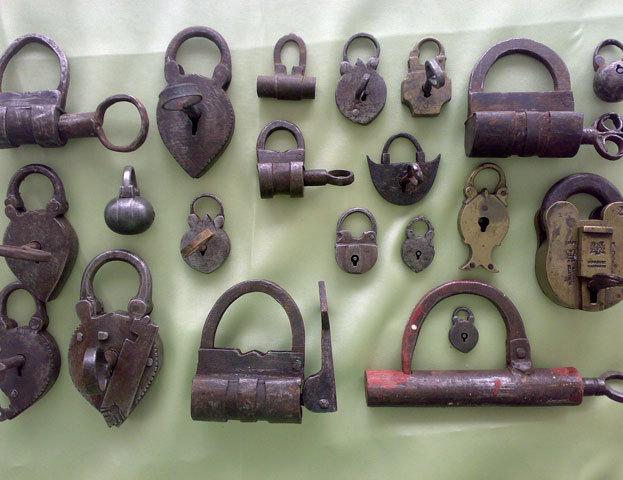
Metal Locks: Usually made of steel, though brass, bronze, and copper were also employed. These locks exhibit greater structural complexity and variety and may operate through key-based or combination systems. Many are distinguished by decorative forms, including representations of animals such as lions, bulls, horses, deer, or mythical creatures.
The Contemporary Status of Traditional Locksmithing
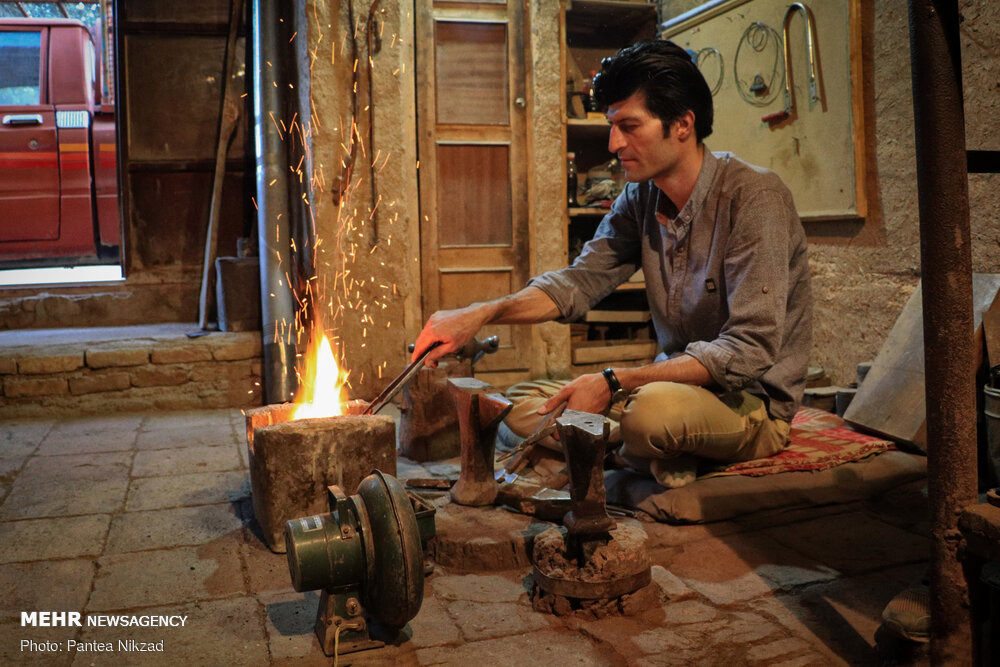
Although industrially manufactured locks dominate the modern market, traditional Persian locksmithing continues to survive as an artistic and decorative practice. Today, this craft is preserved in several Iranian cities, including Abarkuh, Qazvin, Hamedan, Borujerd, Taleqan, and Najafabad, where it has been officially registered as part of Iran’s National Cultural Heritage.
Notably, in 2019, Hassan Kokabi, a master locksmith from Qazvin who continues to practice the craft using traditional methods, was recognized as a Living Human Treasure and inscribed in Iran’s National Inventory of Intangible Cultural Heritage.