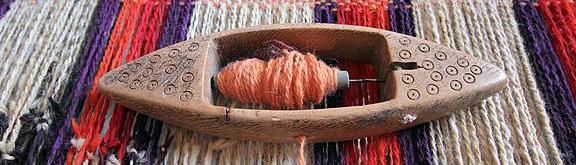
Ehrami weaving: an art form intertwined with religious beliefs and rituals
بیشتر بافتههای نساجی سنتی، با دستگاههایی تولید میشود که شکلی مشابه و شیوهای نزدیک به هم دارند. با این حال در طرح، کاربرد و نوع بافتهها تفاوتهای زیادی به چشم میخورد. این تفاوتها به گونهای است که میتوان تولیدات را از یکدیگر منفک کرد و آنها را محصولاتی متفاوت دانست. «احرامی» یکی از همین تولیدات است که با وجود شباهت دستگاه بافت آن به دستگاه گلیمبافی، از جهات مختلف تفاوتهایی با آن دارد، به طوری که «احرامیبافی» امروزه به عنوان یکی از رشتههای مستقل صنایع دستی سنتی ایرانی به شمار میرود.
احرامی چیست؟
احرامی که «حرمی» (در یزد) و «ارحام» (در ایلام) نیز نامیده میشود، پارچهای است که تار و پود آن معمولا از جنس پنبه است. دلیلی که این پارچه را به این نام میشناسند، استفاده از بافتههای آن به عنوان لباس حج در گذشتههای دور بوده است. البته به دلیل آن که محصولات احرامیبافی بیش از هر چیز به عنوان سجاده مورد استفاده قرار میگیرد، این رشته به «سجادهبافی» نیز مشهور است. به هر شکل، گره خوردن این هنر با مناسک و باورهای دینی، موجب شده مردم احترام خاصی برای آن قائل باشند.
با وجود آن که در شیوههای سنتی بافت این پارچه استاندارد فراگیری وجود ندارد، معمولا طول پارچه بین 100 تا 120 سانتیمتر و عرض آن در حدود 70 تا 90 سانتیمتر است، هر چند گاهی پارچههایی به طول سه متر نیز تولید میشود. در پارچههای دارای عرض 70 سانتیمتر، معمولا 22 چله و در پارچههای دارای عرض 90 سانتیمتر، 28 چله به کار میرود. یک هنرمند احرامیباف که به شیوه سنتی به بافت پارچه مشغول است، میتواند به صورت روزانه چهار قطعه پارچه احرامی را تولید کند، به عبارت دیگر میزان تولید هنرمندان این رشته را میتوان حدود سه متر مربع عنوان کرد.
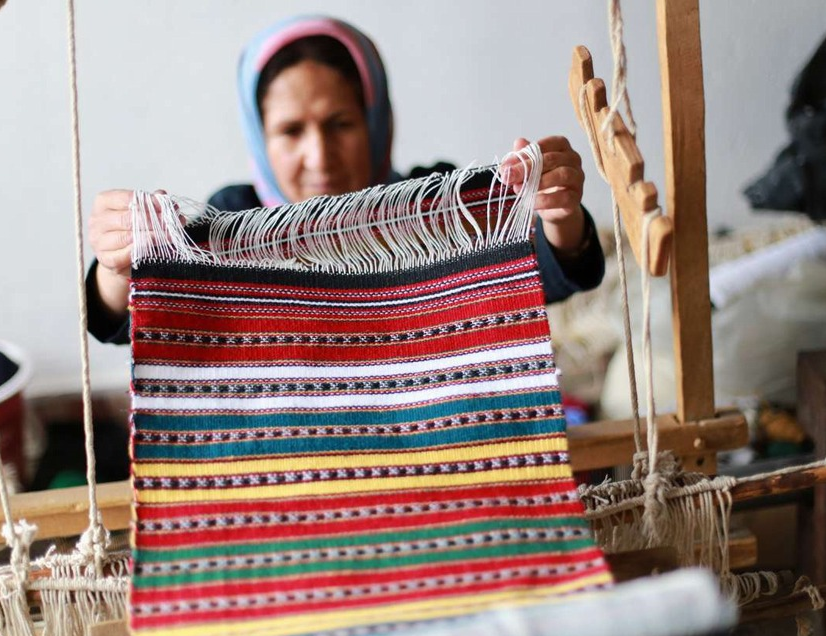
احرامی را معمولا با دو رنگ سیاه و سفید و به صورت دو رنگ میبافند، ولی رنگهای سبز، سفید و قرمز نیز در آن به کار میرود. در دهههای اخیر، استفاده از رنگهای شفاف روشن و گاهی تند نیز در احرامیبافی طرفدارانی پیدا کرده است. احرامی نه تنها در دستگاه بافت، بلکه در شکل و ظاهر نیز به گلیم شباهت فراوان دارد. این بافته با وجود عمر دراز، چندان دستخوش تغییر نشده و شیوهها و طرحهای کهن خود را حفظ کرده است. احرامی را معمولا به عنوان سجاده، روانداز، پارچه بستهبندی و روتختی مورد استفاده قرار میدهند.
شیوه بافت احرامیبافی
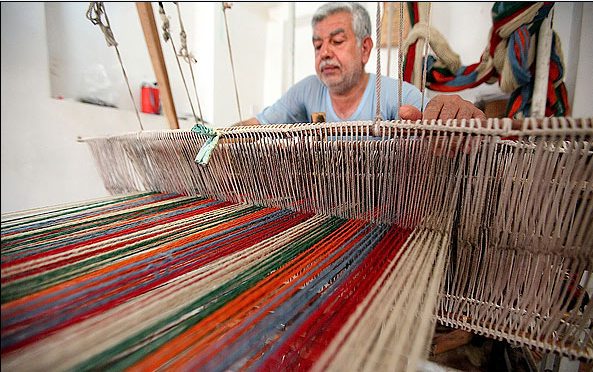
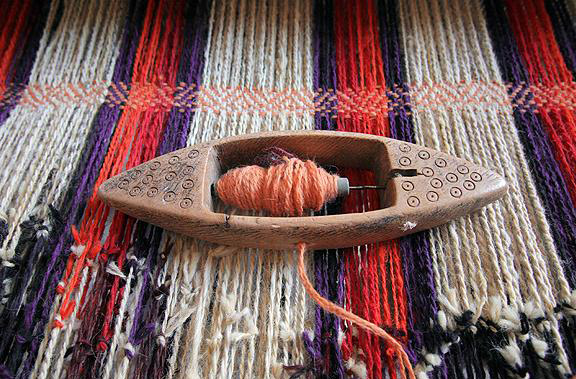
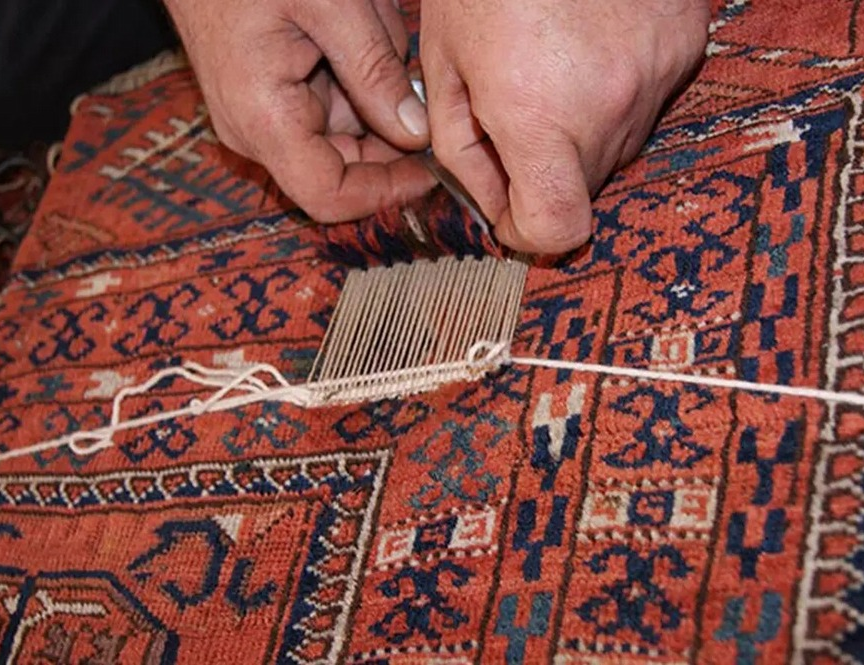
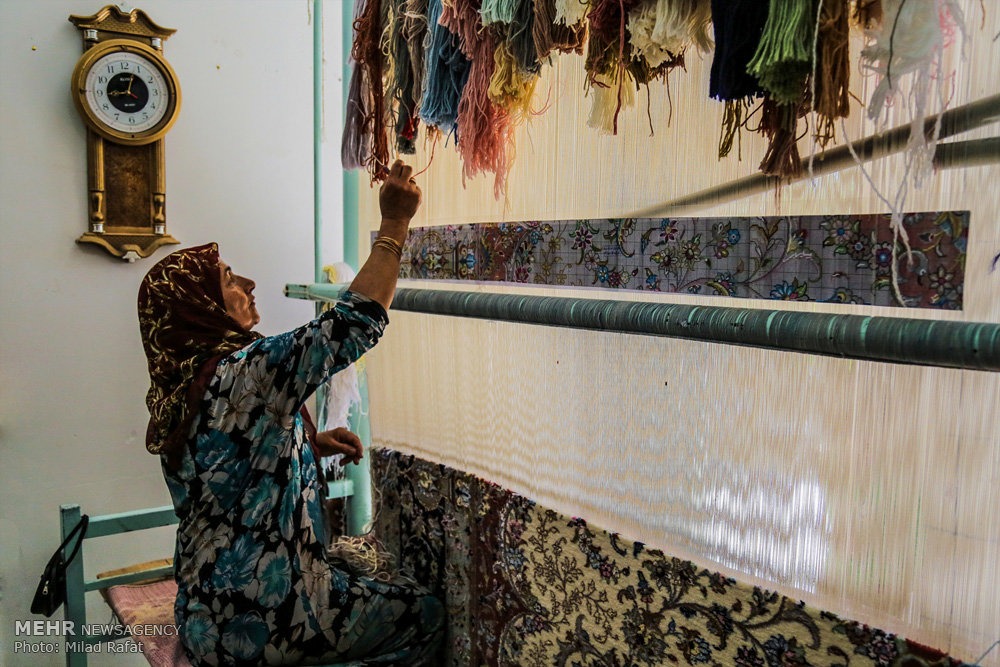
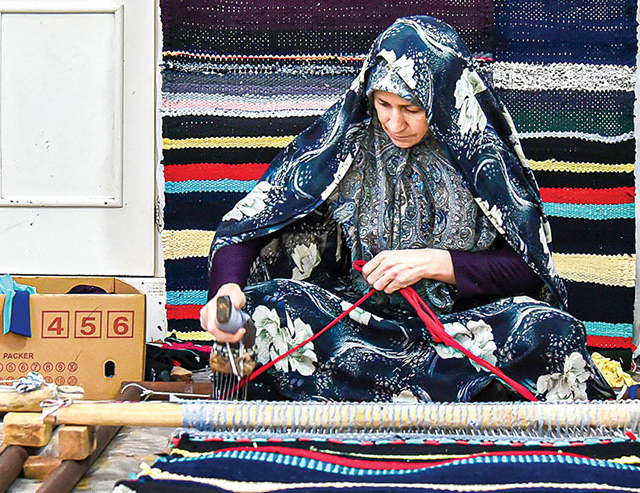
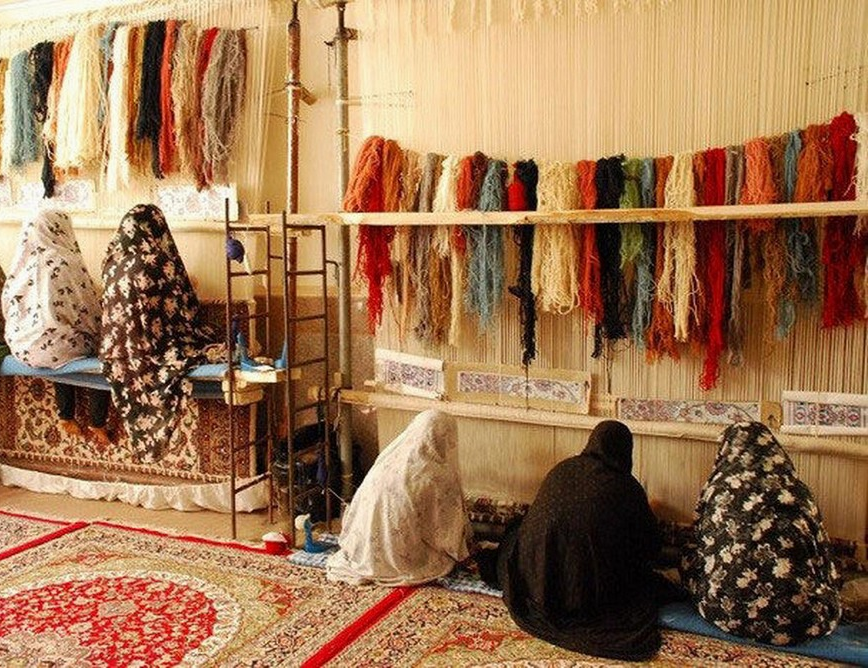
برای استقرار دستگاه احرامیبافی، گودالی در زمین میکنند تا بخشی از دستگاه که شامل پدالهای آن است، در آن قرار گیرد. هنرمند احرامیباف با این پدالها جای تار و پود را عوض میکند و امکان مییابد تا با عبور دادن ماکویی که یک ماسوره در خود دارد، بافت پارچه را پیش ببرد. با هر بار عبور ماسوره، هنرمند بخشی از دستگاه را که «شانه» نامیده میشود به روی پارچه میکوبد و یک رج را کامل میکند. این کار تا زمانی که بافت ادامه داشته باشد به تناوب تکرار میشود و صدایی ریتمیک به وجود میآورد.
مراکز اصلی احرامیبافی
در استان خوزستان، شهرستانهای شوشتر، دزفول، بهبهان، سوسنگرد و مسجد سلیمان مراکز اصلی احرامیبافی به شمار میآیند. از میان شهرهای مختلف، شوشتر در سال 2022 میلادی به عنوان شهر ملی احرامیبافی معرفی شد. استانهای یزد و ایلام نیز مراکز اصلی بافت این نوع پارچه به شمار میروند. احرامیهای یزد معمولا با طرحهای چلیپایی (صلیبی) بافته میشود و نقوشی ریز در آن قابل تشخیص است. بافتههای تولیدی در خوزستان نسبت به یزد تنوع رنگی بیشتری دارند، در حالی که یزدیها معمولا از نخهای سیاه و سفید برای بافت استفاده میکنند و طرحهای مورد استفاده آنها، ساده و لوزیمانند است. این طرحها در دیگر صنایع دستی، همچون سفالگری، زیلوبافی، جاجیمبافی و حتی قالیبافی نیز کاربرد دارد.
دستگاههای هنرمندان یزدی، نسبت به دستگاههای رایج در دیگر مناطق ایران متفاوت است و به آنان امکان میدهد احرامی را به صورت دو رو ببافند. گونهای دیگر از احرامیبافی در استان لرستان (شهر بروجرد) رواج داشت که محصولات آن به عنوان بقچه نیز مورد استفاده بود.
هنر احرامیبافی در سال 2008 میلادی (1387 خورشیدی) در فهرست آثار ملی ایران به ثبت رسیده است. برای حمایت از این هنرصنعت، در سالهای اخیر تلاشهایی برای راهاندازی کارگاههای تولیدی و آموزش شیوه بافت به علاقمندان صورت گرفته، با این حال گسترش صنایع جدید، احرامیبافی را با چالشهای زیادی روبرو کرده است.
The Art of Ehrami: A Distinctive Tradition in Iranian Textiles
While most traditional Iranian textiles are produced using looms with similar structural forms and comparable weaving mechanisms, they differ significantly in design, function, and type of fabric. These distinctions are substantial enough to classify each product as a separate and independent craft. Ehrami is one such textile. Although its loom closely resembles that used in kilim weaving, it differs in several fundamental aspects. Consequently, Ehrami-bafi is today recognized as an independent branch of Iran’s traditional handicrafts.
What Is Ehrami?
Ehrami—known as Harami in Yazd and Arham in Ilam—is a woven textile whose warp and weft are typically made of cotton. The name derives from its historical use as a garment worn during the Hajj pilgrimage in earlier periods. However, since Ehrami textiles are most commonly used today as prayer rugs, the craft is also widely referred to as Sajjadeh-bafi (prayer-rug weaving). Its close association with religious practices and beliefs has contributed to the high level of respect it enjoys among local communities.
Although no universal standard exists in traditional Ehrami weaving, the fabric is generally produced in lengths ranging from 100 to 120 centimeters and widths of approximately 70 to 90 centimeters; in some cases, pieces up to three meters long are woven. Fabrics measuring 70 centimeters in width typically employ 22 warp threads, while those with a width of 90 centimeters use 28. A skilled artisan working with traditional methods can produce approximately four pieces per day, corresponding to an average output of about three square meters.
Traditionally, Ehrami is woven in a two-color scheme—most commonly black and white—although green and red are also used. In recent decades, the use of brighter and more vivid colors has gained popularity. Despite its visual and technical resemblance to kilim, Ehrami has remained largely unchanged over time, preserving its traditional patterns and weaving techniques. Beyond prayer rugs, it is also used as bedspreads, covers, and wrapping cloths (boqcheh).
The Weaving Process
To install an Ehrami loom, a pit is dug into the ground to accommodate the lower part of the structure, including the pedals. The weaver operates these pedals to alternate the warp threads, allowing a shuttle (maku) containing a bobbin (masureh) to pass through the shed. After each pass, the weaver strikes the fabric with a component known as the reed (shaneh) to secure the weft and complete one row. This repetitive process produces a distinctive rhythmic sound throughout the weaving activity.
Major Centers of Ehrami-Bafi
In Khuzestan Province, the cities of Shushtar, Dezful, Behbahan, Susangerd, and Masjed Soleyman are the principal centers of Ehrami weaving. In 2022, Shushtar was officially designated as the National City of Ehrami-Bafi.
The provinces of Yazd and Ilam are also important production centers. Ehrami textiles woven in Yazd are typically characterized by cruciform (cross-shaped) motifs and fine decorative patterns. Yazd weavers generally employ black and white yarns and favor simple, diamond-shaped designs—motifs that also appear in other regional crafts such as pottery, zilu weaving, jajim weaving, and carpet weaving. Looms used in Yazd differ from those in other regions, enabling the production of double-sided (reversible) Ehrami textiles. By contrast, Ehrami woven in Khuzestan is distinguished by a greater diversity of colors.
Preservation and Current Status
The art of Ehrami-bafi was inscribed on Iran’s National Heritage List in 2008. In recent years, initiatives have been undertaken to establish workshops and provide training for new practitioners. Nevertheless, the expansion of modern industrial production has posed significant challenges to the continuation and sustainability of this traditional craft.
| Name | Ehrami weaving: an art form intertwined with religious beliefs and rituals |
| Country | Iran |
| Cities | |
| Registration | National |



Choose blindless
Red blindless Green blindless Blue blindless Red hard to see Green hard to see Blue hard to see Monochrome Special MonochromeFont size change:
Change word spacing:
Change line height:
Change mouse type: