


Metal Engraving (Qalam-zani) of Tabas
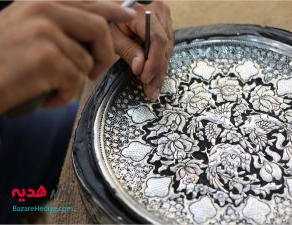
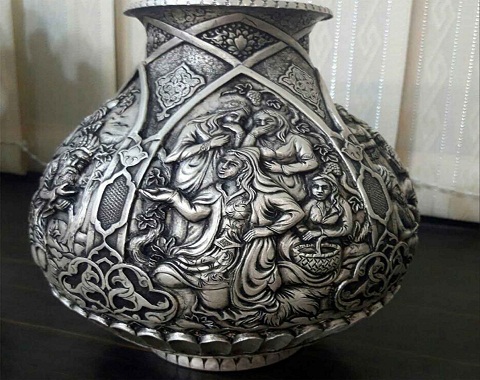
Qalam-zani (metal engraving) is a traditional Iranian art that involves creating decorative designs and motifs on metal surfaces through the use of specialized steel chisels and controlled hammering techniques. Copper is the primary material used in this craft, and common products include trays, bowls, goblets, vases, and other utilitarian or decorative objects. In some cases, brass and silver are also employed. The designs are executed by skilled artisans using a variety of chisels, each producing distinct textures and lines.
Within Iran, the metal engraving traditions of Isfahan, Shiraz, and Tabriz have achieved international recognition, each characterized by distinctive stylistic and technical features. Nevertheless, Qalam-zani has also been practiced historically in other regions of the country. Among these, the city of Tabas has long been regarded as one of the principal centers of metal engraving in eastern Iran, where the craft developed unique local characteristics.
Geography and Cultural Context of Tabas
Tabas is located in South Khorasan Province, on the western margins of the Lut Desert. The city’s name is commonly believed to derive from the term Tab-bas, composed of tab (heat) and bas (abundance), reflecting the region’s intense climate. Geographically, Tabas occupies a strategic position at the intersection of the historic routes connecting Kerman, Khorasan, Fars, and Isfahan. This location contributed to the early development of transportation infrastructure, including railway and air connections, which facilitated trade, communication, and tourism. Furthermore, the presence of Iran’s largest coal mines in the region has played a significant role in shaping the city’s economic and infrastructural development.
Covering an extensive area, Tabas is the largest county in Iran, with a north–south distance of approximately 400 kilometers. Archaeological and historical evidence indicates that human settlement in this region dates back several millennia. Today, Tabas encompasses a rich collection of historical and natural attractions, including the Shrine of Hussein ibn Musa al-Kadhim, Golshan Garden, the Morteza Ali hot springs, the Tabas Citadel (Arg-e Tabas), Chah-Gombad Caravanserai, traditional water reservoirs and mills, and the historic villages of Nayband and Pir Hajat.
The inhabitants of Tabas have long been recognized for their expertise in traditional crafts, particularly coppersmithing, Qalam-zani on copper, basket weaving, kilim weaving, and pottery.
History and Distinctive Features of Tabas Qalam-zani
The tradition of Qalam-zani in Tabas dates back more than two centuries. It initially emerged as an innovative practice among local coppersmiths, who sought to enhance the visual appeal of their products by incorporating engraved designs. Over time, this practice evolved into a specialized craft, giving rise to professional engravers and enabling the formation of a distinct local style.
A defining characteristic of Tabas Qalam-zani is its intricate geometric network structure, in which the entire surface of the object is covered with finely executed geometric and floral motifs. Unlike some other regional styles in Iran, the engraving in Tabas is applied comprehensively across the object rather than being limited to specific sections.
Although copper remains the dominant material, examples of engraving on silver can also be found. Two principal technical styles are practiced: Sefid-Qalam (white-pen) and Qermez-Qalam (red-pen), which may be executed independently or in combination.
In the Qermez-Qalam technique, the copper surface is first tinned. The artisan then uses a thin chisel and light, rhythmic hammer strokes to incise the surface, allowing the reddish tone of the copper beneath to subtly emerge. A distinctive technical feature of this method in Tabas is the angle at which the chisel is held—approximately 30 degrees relative to the metal surface—resulting in exceptionally delicate engravings. In contrast, the Sefid-Qalam technique employs a steeper angle of approximately 70 degrees.
The embossing height in Tabas Qermez-Qalam works is typically less than one millimeter, producing extremely fine and precise patterns that, in many cases, surpass the delicacy of engravings produced in Isfahan. Moreover, unlike the Isfahan tradition, Tabas Qalam-zani does not employ siyah-kari (blackening) compounds to darken the engraved lines, thereby preserving the natural brilliance and luminosity of the metal surface.
Motifs and Symbolism
Tabas Qalam-zani is distinguished by the use of motifs that are rare or absent in other Iranian engraving traditions. Among the most prominent are the palm tree and the pelican, both of which function as symbolic representations of the city and are prominently featured in Golshan Garden. These motifs reflect the environmental and cultural identity of the region and contribute to the uniqueness of Tabas metal engraving.
National Recognition
In recognition of its cultural significance and distinctive technical features, the craft of Tabas Qalam-zani was inscribed on Iran’s National List of Intangible Cultural Heritage in 1398 SH (2019–2020 AD), under registration number 2060.