

Papier-Mâché: The Art of “Chewed Paper” in Iran
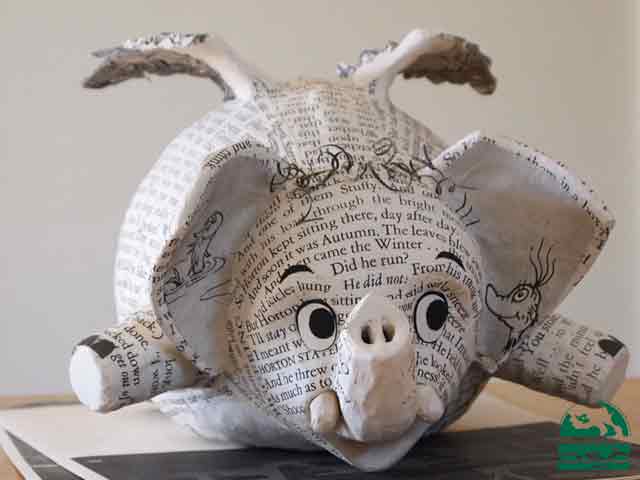
The term papier-mâché is derived from French and literally means “chewed paper.” It refers to a traditional handicraft that transforms paper-based materials into durable and often highly refined artistic objects.
What Is Papier-Mâché?
Paper fragments or paper pulp constitute the primary materials used in papier-mâché. These materials are sometimes reinforced with fabric and adhesive substances to enhance strength and durability, allowing artisans to create a wide range of forms and containers. Traditionally, paper is pulped, mixed with serish—a natural adhesive made from the roots of the Eremurus plant—and pressed under pressure to achieve the initial shape of the object.
In contemporary practice, artisans commonly use newspaper or recycled waste paper. The production process typically involves several stages:
Forming: Paper pieces are soaked in a mixture of water and wood glue.
Structuring: The pulp is applied to a mold constructed from wire mesh or thick cardboard.
Drying: The formed object is left to dry for several days to ensure structural stability.
Painting: Two or three layers of white primer are applied, followed by decorative painting using colors appropriate to the final design.
Global History and Evolution
Despite its French name, specialists agree that papier-mâché originated in Asia and has a long historical background closely linked to the invention of paper in China. According to some historical accounts, the early dissemination of this technique was associated with military encounters between Iran and China in the eighth century CE. By the tenth century, papier-mâché had spread to Morocco and from there to Spain, France, and other parts of Europe.
Another theory suggests that Venetian merchants acquired knowledge of the technique through commercial exchanges with the East and subsequently transmitted it to regions such as India and Iran. What is certain is that by the fifteenth century, papier-mâché was widely used in Europe to produce small sculptural objects, many of which served religious purposes.
In the modern era, papier-mâché is practiced worldwide for the creation of paper sculptures, decorative objects, and household ornaments. Notably, during World War II, lightweight fuel tanks made of papier-mâché were designed for aircraft; their reduced weight allowed planes to travel longer distances and improved maneuverability.
Papier-Mâché in Iran
Iranian artists began adopting papier-mâché during the sixteenth century, with Isfahan and Qazvin emerging as the principal centers of production.
The Qazvin School
During the reign of Shah Tahmasp I of the Safavid dynasty (1514–1576 CE), Qazvin became a major hub for papier-mâché production, particularly for the manufacture of qalamdans (ornate pen cases). This prominence continued until the late Qajar period (early twentieth century), after which the craft gradually declined in the city.
Earlier Origins
Some historians argue that papier-mâché entered Iran before the Safavid period. According to this view, the technique was first adopted in Herat and expanded during the Timurid era (1370–1506 CE). It is often suggested that Mir Sayyid Ali Hamedani, a fourteenth-century Iranian mystic and poet, played a significant role in introducing this craft to Iran. Through his extensive travels for the propagation of Islam, he may have encountered papier-mâché and facilitated its acceptance among Iranian artisans.
During the Timurid period, calligraphy was highly esteemed as a courtly art, and papier-mâché proved to be an ideal medium for producing pen cases used by calligraphers.
Artistic Integration in Iran
In Iran, papier-mâché functions not only as a structural technique but also as a foundation for sophisticated artistic expression. It has been extensively used in:
Lākī (Lacquerware): Painted surfaces protected by layers of varnish.
Gol-o-Morgh (Flower and Bird Painting): A classical Iranian decorative motif.
Bookbinding: Including Qur’an covers, book jackets, and frames.
Courtly Arts: Integrating tazhib (illumination), tash‘ir (marginal gilding), miniature painting, binding techniques, and complex color compositions.
The synthesis of these artistic traditions has given Iranian papier-mâché exceptional diversity and aesthetic richness throughout history.
National Heritage Status
In recognition of its cultural significance, papier-mâché has been registered twice on Iran’s National Inventory of Intangible Cultural Heritage:
Isfahan Province: 2010 (1389 SH)
Qazvin Province: 2012 (1391 SH)