
Sond Weaving: A Palm-Based Handicraft of Southern Iran
One of the most distinctive features of Iranian handicrafts is the use of raw materials available in each region. Over centuries, Iranian artisans have learned how to transform materials that may seem useless to unfamiliar eyes into valuable and practical products. In the southern provinces of Iran, where climatic conditions favor the growth of date palms, various parts of this tree are widely used in traditional handicrafts. The date palm plays such a vital role in the lives of the people of southern Iran that no part of it is wasted or regarded as useless. Sond-bafi (sond weaving) is one of these palm-related handicrafts, practiced mainly in Hormozgan Province.
Materials and Weaving Method
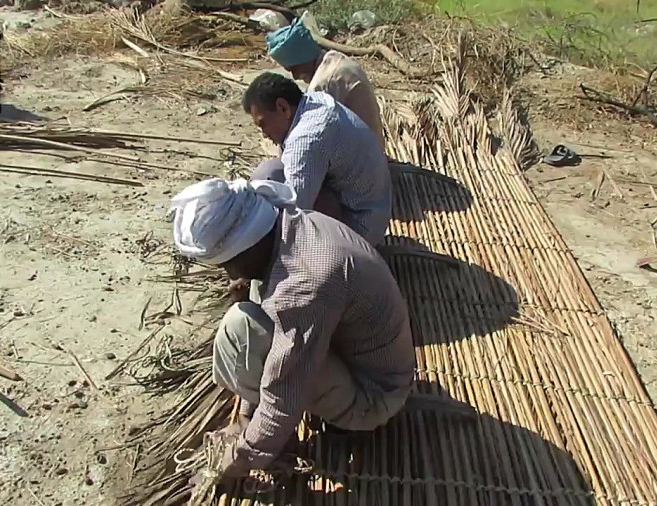
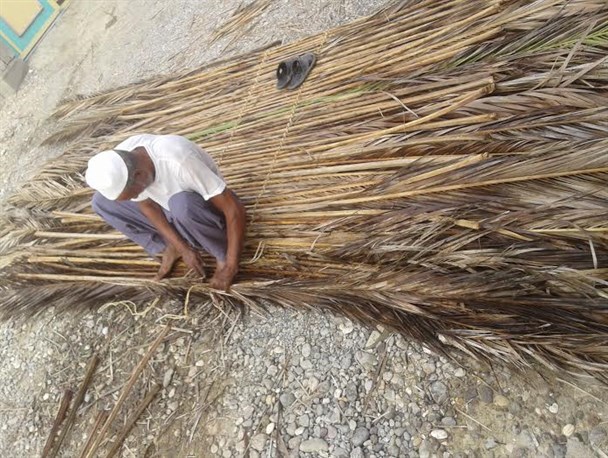
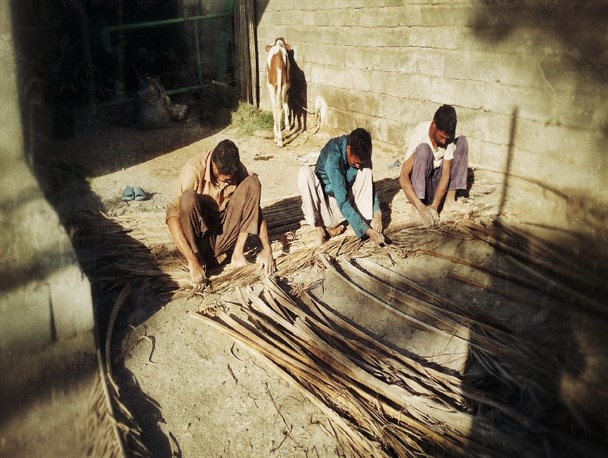
Sond is a type of mat produced by arranging and fastening together the stems of the date palm using thin ropes, which are themselves woven from palm leaves. Traditionally, sond has been used as roofing material, floor covering, and sunshade. In recent years, it has also gained decorative value and is used in restaurants, eco-lodges, and traditional accommodations. Sond weaving relies on very simple tools and materials. Apart from date palm fibers, only a wooden board, stones, and water are required. The process begins in late summer, when green branches of the date palm are cut and left under the sun to dry. Drying allows the leaves to be separated from the stems. The stems are then soaked in water for about a day to soften them. Locally, these softened stems are known as pish-khorma. After soaking, pish-khorma can easily be split into thin strands. These strands are twisted to form ropes called chilik. The chilik is again dried in the sun and later beaten with a special wooden board to remove excess fibers. Finally, stones are used to determine the width of the mat, and the weaving process is completed.
Social Practice and Production
Sond weaving is generally carried out by men and usually takes place in open spaces near palm groves and farmlands rather than in workshops. In some cases, the work is done collectively. Although sond weaving is traditionally considered a male craft, women also play an important role, particularly in weaving the chilik ropes.
History and Cultural Significance
Sond weaving is among the most common handicrafts of Hormozgan Province. While there is no precise information about its origins, its history is estimated to be more than a thousand years old. Some researchers believe that early humans created their first floor coverings by interweaving plant fibers, producing mat-like textiles. Due to their flexibility and durability, palm leaves and fibers were among the earliest materials used for such purposes. Despite the development of new materials and techniques over time, these traditional products have maintained their place in daily life, and the knowledge and skills of sond weaving have been transmitted orally from generation to generation. Sond is a completely natural product, made without industrial tools or synthetic materials, and reflects the close relationship between human life, nature, and traditional art. It is lightweight, easy to transport, and simple to clean, as surface dirt can be removed with water alone, without detergents. Moreover, sond is resistant to moisture and sunlight and can also be used as a decorative element on interior walls.
National Registration
The art and technique of Sond-bafi (sond weaving) were officially registered in 2019 (1398 Solar Hijri) in the National List of Iran’s Intangible Cultural Heritage, under the name of Hormozgan Province, in recognition of its cultural and historical significance.