


Persian Kilims (Gelim): Diversity of Color, Technique, and Cultural Identity
The widespread popularity of loom-woven textiles in Iran can largely be attributed to the abundance of raw materials available throughout the country. Iran’s long tradition of agriculture and animal husbandry provided ample supplies of wool and cotton, which formed the primary materials for the production of kilims (gelim), jajims, and carpets. Over the course of centuries, Iranian creativity and aesthetic sensibility transformed these functional textiles into richly varied forms that today constitute essential elements of Persian cultural identity. The diversity of Iranian kilims closely reflects regional geographies and local subcultures, to the extent that certain weaving techniques have developed distinct identities and are now recognized as independent branches of traditional handicrafts.
Definition and Characteristics of Kilim
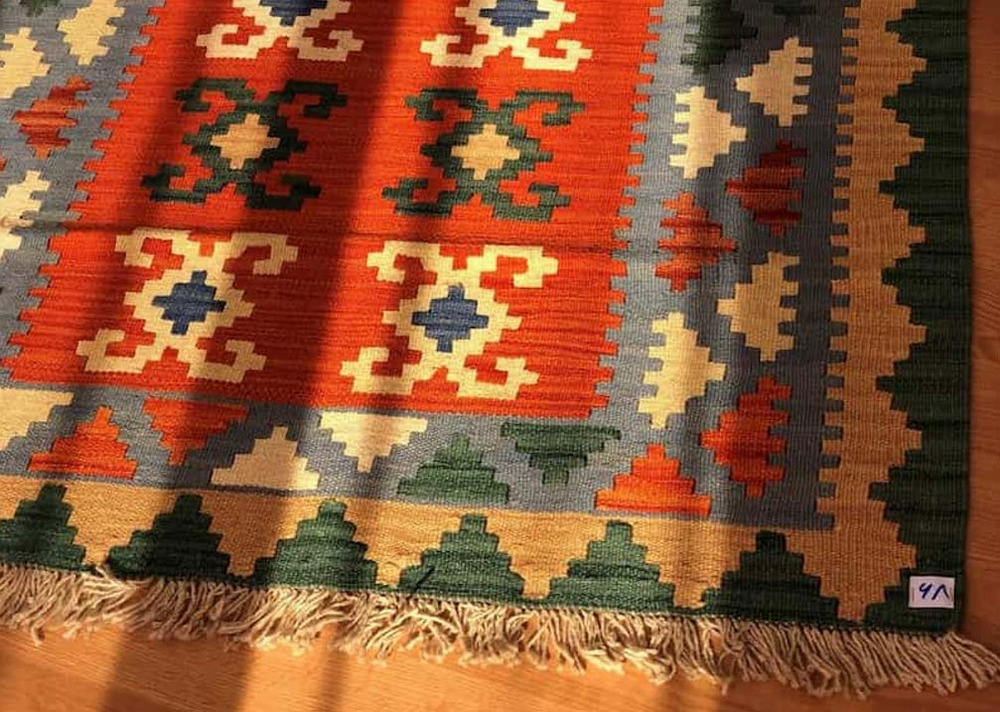
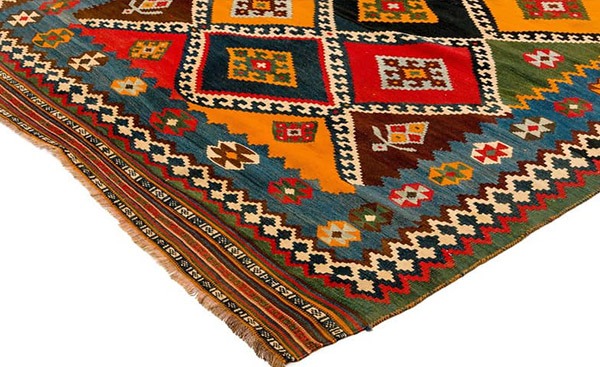
A kilim is a hand-woven, flat-weave textile produced on a loom. Although vertical looms are more commonly used, horizontal looms—owing to their portability—are particularly well suited to the nomadic lifestyle of tribal communities. The warp and weft are typically made of wool or cotton, and in some cases silk. Kilims are primarily used as floor coverings. While they may resemble jajim or ziloo in appearance, the weaving techniques differ substantially; notably, kilim weaving does not employ a shuttle (masureh).
Traditionally, kilims were dyed using natural substances such as tea, walnut shells, and other plant-based materials. In the past, these textiles served multiple functions, including use as floor coverings and as protective coverings for pack animals. In contemporary contexts, kilims are predominantly employed as decorative and functional floor coverings in Iranian homes. There is no fixed standard size for kilims, as their dimensions historically depended on the needs of the weaver, although modern production often follows conventional carpet sizes. While industrial production exists today, traditional hand-woven kilims continue to be highly valued and widely produced.
Types of Kilims
Each kilim acquires a distinct identity based on its geographical and cultural context, which is reflected in its motifs, materials, techniques, and dimensions. Well-known regional types include Shahsevan, Lori, Sistan, Harsin, Baluch, Khamseh, Sanneh, Qashqai, Afshar, Zarand, Turkmen, and Ambaran kilims.
Kilims may also be classified according to weaving technique, structure, and function:
Sozani (Needlework) Kilim
One of the principal traditional techniques, sozani kilim weaving employs a needle to wrap the weft around the warp. These kilims are characterized by their fine texture and are commonly made of wool. This technique was registered in 2023 in Iran’s National Intangible Cultural Heritage list under Kohgiluyeh and Boyer-Ahmad Province.
Dowreh-Chin (Reverse Weave)
Practiced among the Qashqai tribe of Fars Province, this technique uses conventional kilim looms but reverses the wrapping of the weft beneath pairs of warps. Weavers often place a mirror beneath the loom to observe the reflected image of the design during weaving.
Rend-Bafi (Sar-Andaz Weaving)
Executed using the needlework technique, rend-bafi produces single-sided kilims. Common among the Qashqai and Bakhtiari tribes, these textiles often feature animal or plant motifs and are typically made in the size of small rugs or table coverings.
Double-Sided (Do-Ru) Kilim
In this technique, both sides of the textile are functional, achieved by passing the weft alternately over and under the warp in two distinct stages.
Sofreh-ye Kordi (Kurdish Bread Cloth)
Woven in the kilim technique, this small textile is traditionally used during bread-making to hold dough portions. Usually measuring approximately 100 × 100 centimeters, it features a simple central field bordered by colorful geometric patterns.
Shiriki-Pich
A single-sided kilim primarily produced in rural areas of Sirjan (Kerman Province), shiriki-pich derives its name from the wrapping of colored yarn around the warp threads. Its motifs are more complex than those of ordinary kilims and often resemble carpet designs. This craft was registered in 2016 as a national heritage of Sirjan.
Gamcheh-Bafi
Produced mainly by Qashqai nomads of Kohgiluyeh and Boyer-Ahmad, gamcheh combines kilim and carpet-weaving techniques. The central field is flat-woven, while raised carpet motifs appear in the floral designs, and the corners are executed using carpet knots.
Embossed (Naghsh-Barjasteh) Kilim
Similar in structure to gamcheh, this type features a flat-woven kilim background with motifs formed by carpet knots, creating a three-dimensional effect. Ilam Province, the principal center of production, was designated the National City of Embossed Kilim in 2018.
Ley-Bafi
Common among the Bakhtiari people, ley is a single-sided kilim used to cover bedding and household items inside black tents (siyah-chador). Each row typically incorporates multiple colors.
Masnad-Bafi
Woven in the regions of Namin and Anbaran in Ardabil Province, masnads are often used as prayer mats (janamaz). Their geometric motifs are commonly arranged in a mihrab-like composition. Historically, they were also used as seating textiles for honored guests.
Varni-Bafi
Varni weaving features abstract motifs inspired by nature and is executed using the needlework technique. Made from wool or silk, it is prevalent in northwestern Iran among Azeri-speaking communities. Aslanduz was registered as the National City of Varni in 2021, and varni weaving of the Arasbaran region was inscribed on Iran’s National Heritage List in 2011.
Do-Layi (Oui-Bafi)
This narrow woven band, typically 4–7 centimeters wide, is characterized by strong contrasts between dark and light colors, sometimes accented with red or yellow. It is used to secure loads on animals during migration and to fasten nomadic tents.
Shisheh-Darmeh
Woven by tribal communities in Fars Province on simple ground looms, shisheh-darmah resembles oui-bafi but can reach widths of up to one meter. It is used for making saddlebags (khorjin), floor coverings, and bedding wraps.