
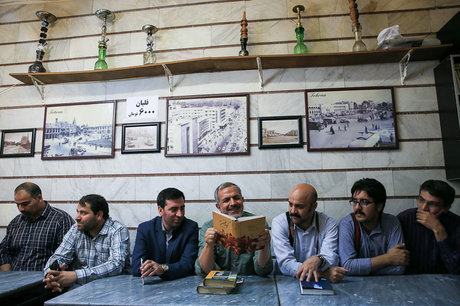
After coffee gradually found its way into Europe in the 13th century, places dedicated to serving coffee emerged—spaces where people could drink coffee while socializing and conversing. Coffeehouses slowly became more widespread, and similar establishments appeared in Eastern Europe, North Africa, and West Asia. With the introduction of the coffeehouse to Iran and the increasing public interest in it, certain traditions developed—traditions that can still be observed, at least in part, in today’s traditional Iranian coffeehouses.
History of Iranian Coffeehouses
In Iran, the emergence of coffeehouses dates back to the Safavid era (16th century CE), a period marked by a strong centralized government and increased contacts with Europe. It is believed that during the reign of Shah Tahmasp I (1514–1576 CE), the first Iranian coffeehouse was established in Qazvin, the capital of Iran at the time. Interestingly, Iranian coffeehouses of the Safavid period are considered the origin of the coffeehouse tradition in the Ottoman Empire (modern-day Turkey).
The spread of coffeehouses in Iran was so extensive that in most cities, each neighborhood had one or several coffeehouses. In this sense, coffeehouse-going can be described as a significant social phenomenon in Iranian society over the past several centuries, where men spent time socializing outside their homes and workplaces.
However, some coffeehouses attracted particular groups by offering gambling and indulgent activities, which led to social disorder and group conflicts. Such coffeehouses became especially common during the second Pahlavi period (mid-20th century), but disappeared after the Islamic Revolution. Nevertheless, they contributed to the formation of a negative image of coffeehouses in public perception.
Iranian Coffeehouses: Features and Traditions
If we want to point to the closest equivalent of the Iranian coffeehouse in the West, we could mention the “café” or “coffee shop.” Of course, the atmosphere of traditional coffeehouses is quite different from that of modern cafés, but they are similar in terms of serving beverages and light snacks and providing a place for rest and social interaction.
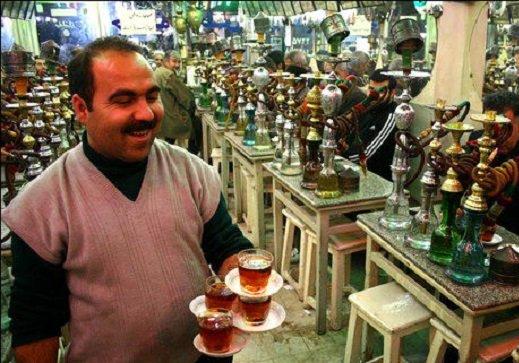
In Iranian coffeehouses, in addition to coffee, tea and various herbal infusions are served, and sometimes light meals or snacks (such as omelets or fried eggs) are also available. In fact, tea is often more popular than other drinks. Hookah (qalyan) is also included on the menu of most Iranian coffeehouses. Hookah is a smoking device originally associated with Iran, made in the form of a vertical, multi-part vessel. One or more hoses are attached to each hookah, and at the very top, several pieces of glowing charcoal are placed on a chamber that holds the tobacco. Water is poured into the base of the hookah so that the smoke passes through it and cools down. This smoke is then drawn into the lungs through the hose. Hookahs with a variety of flavors and essences are available in Iranian coffeehouses.
The coffeehouse is traditionally considered a male-only space, and women do not usually attend. In the past, many coffeehouse owners were committed to holding religious ceremonies, especially mourning rituals during the month of Muharram. Even today, some coffeehouses close during Muharram and dedicate their space to mourning gatherings. During the month of Ramadan as well, coffeehouses begin operating after iftar (early evening) and remain open until dawn.
Playing in Coffeehouses
Various games are played in traditional Iranian coffeehouses, most of which fall into the category of board or tabletop games. Backgammon is one of the most popular games, but group games such as Torna, Gol ya Pooch, or Mafia may also be played. Torna is an old Iranian game in which each player is assigned a role by chance. A die-like tool is thrown to determine the roles, and each player must issue or carry out specific commands involving other players based on the role they receive. Gol ya Pooch is a very simple game, yet far more exciting than it looks. The players are divided into two groups: one group hides a “gol” (a small object, usually something like a pea) in their hands, and the other group tries to find it using different tricks and tactics. Mafia, originally a Western game, is also popular. Roles are assigned randomly, and the group known as the “citizens” must, through reasoning and reading other players’ behavior, identify the members of the “mafia” who are playing against them. Typically, in each round of Mafia, one person is eliminated by the mafia’s choice and another by a vote among the players.
Coffeehouse Arts
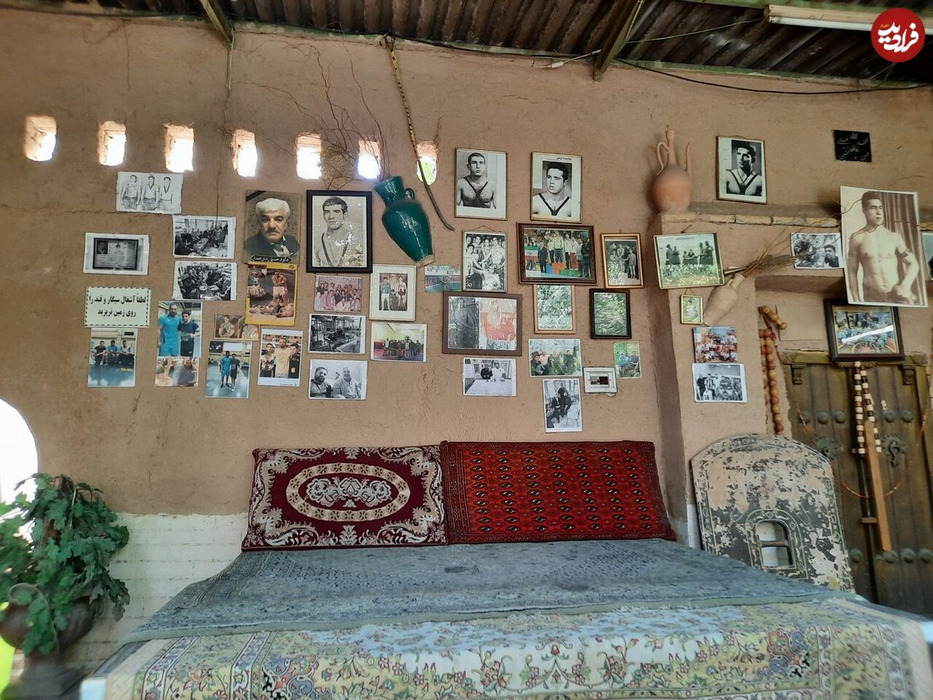
In old Iranian coffeehouses, various arts were practiced to entertain the patrons, the most prominent of which was Naqqali. Naqqali is the narration of stories—mainly epic tales—usually selected from Ferdowsi’s Shahnameh, the great Persian epic. The naqqal entertains the audience by reciting verses and performing gestures in harmony with the story. Since many coffeehouse customers in the past belonged to the lower social classes and had limited literacy, Naqqali served as one of the most important ways to recount stories from Persian literature and transmit Iran’s oral heritage. Although Naqqali is now performed in fewer coffeehouses, it remains an important Iranian performing art. In some coffeehouses, live music is also performed. Another art that developed in coffeehouses and gradually evolved into a distinct style of Iranian painting is coffeehouse painting. These paintings depict epic heroes and sometimes religious figures. Coffeehouse painting can be considered a branch of figurative art that blends popular beliefs with literature and oral storytelling traditions.