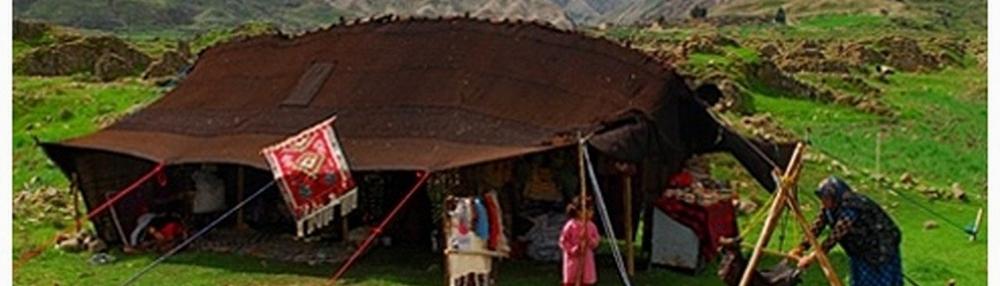
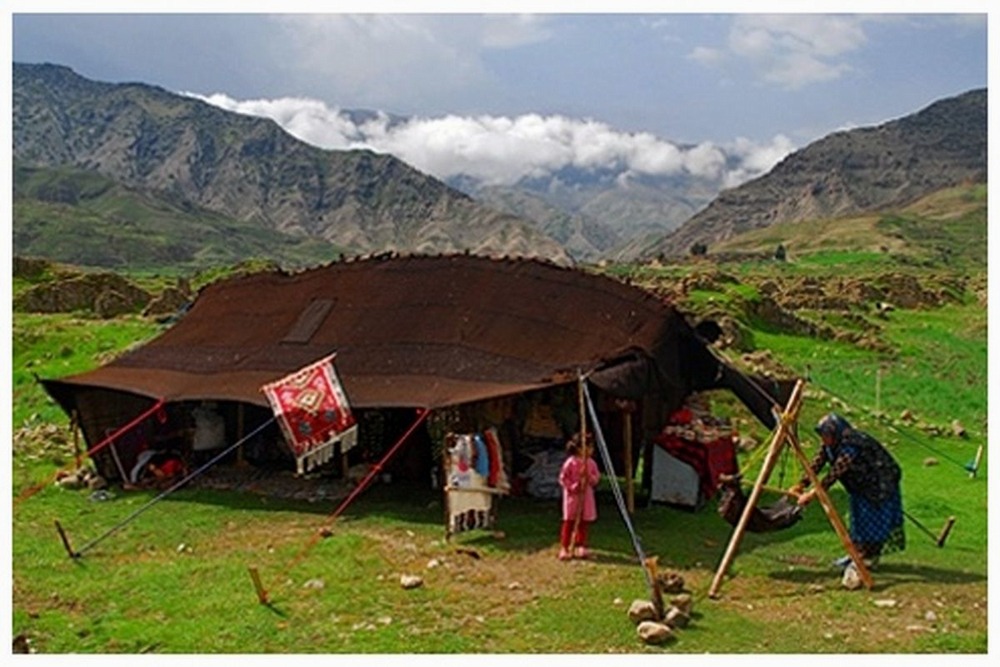
The skill of dismantling and erecting a nomadic tent, a heritage born of nature.
Nomadic life in Iran has a long and ancient history, and the culture of this segment of Iranian society is exceptionally rich and vibrant. Nomadic communities are found across northern, northwestern, western, and southern regions of Iran. Through livestock herding and the production of animal products, they play an important role in the country’s economy and the livelihood of its people.
Beyond their economic contributions, nomads have also played an active role in Iran’s political and social history. Their influence was so significant that, in various historical periods, kings and rulers attempted to force them to adopt a settled lifestyle—efforts that caused serious damage to nomadic ways of life but ultimately failed to eliminate them.
Over centuries, nomadic groups have developed specialized skills to adapt to a migratory lifestyle, passing these skills down from one generation to the next. Among these, the skill of erecting and dismantling yurts among the nomads of East Azerbaijan has been registered as part of Iran’s intangible cultural heritage. This skill was nationally registered in 2012 (1391 in the Iranian calendar) in recognition of its cultural significance.
Yurts (Alachiq), Nomadic Dwellings
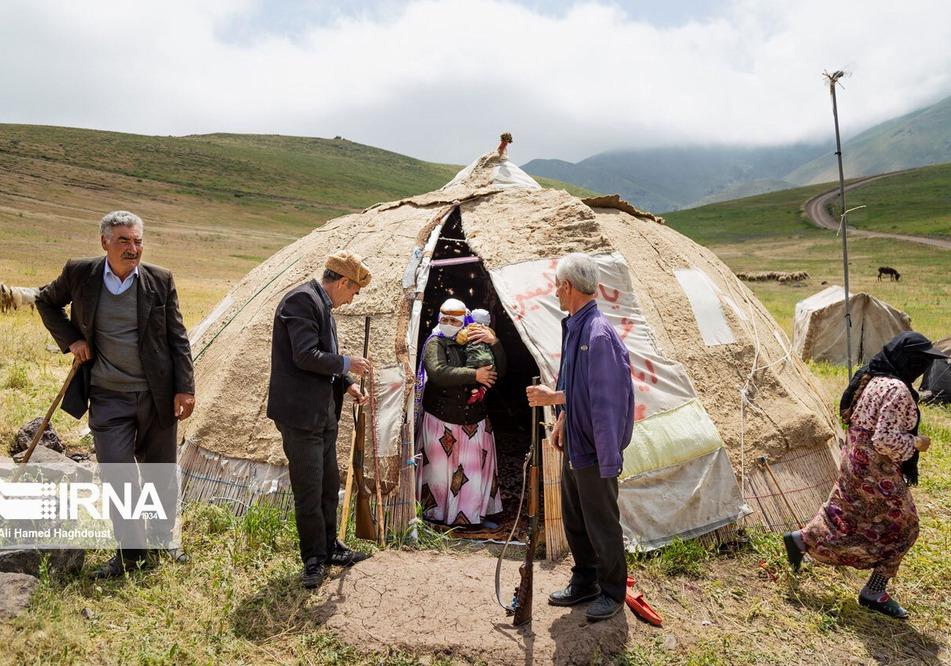
Nomads, due to their need to migrate at various times of the year to provide food for their livestock, use a specific type of dwelling. These dwellings, in addition to being strong and resistant to wind, rain, and other weather conditions, must be lightweight and portable, and must be able to be erected and dismantled in the shortest possible time. Over several centuries, nomadic huts have evolved to meet the needs and necessities of nomadic life and have become part of their identity and cultural heritage.
The life of nomads, due to its entanglement with nature, has many beauties despite the difficulties; beauties that are evident in the clothing and attire of nomads and can also be seen in the decorations related to the huts. In East Azerbaijan, nomadic yurts, together, display part of the beauty of nomadic life, so much so that they can be described as a spectacular tourist attraction. The nomads of East Azerbaijan are present in the Arasbaran region. They reside in Sabalan and the mountains of the region in the summer, and in winter, they go to areas such as the south of the Moghan plain in Ardabil province.
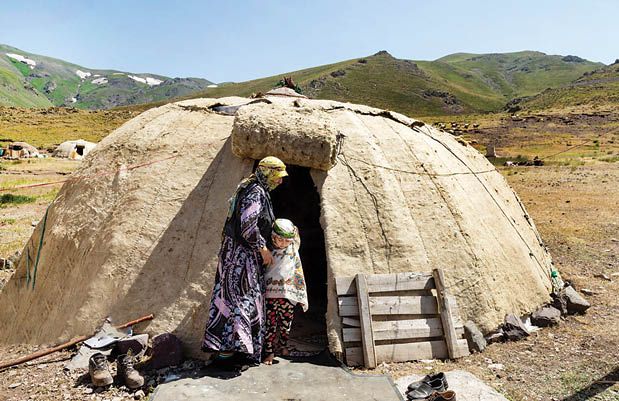
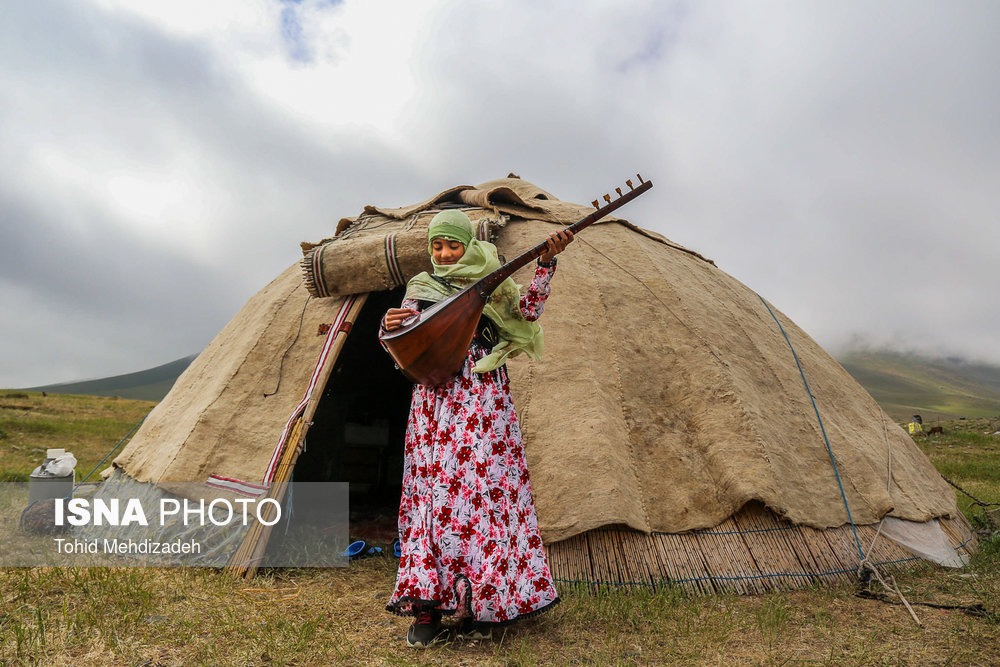
The nomads of East Azerbaijan call the yurts in which they live "Oba." Oba are tents made of felt that are constructed in the shape of a dome using a wooden frame. These tents are made from completely natural raw materials, and their decorations are provided by the hand-woven and hand-made products of nomadic women.
The Skill of Dismantling and Erecting the Alachiq
The skill of dismantling and erecting yurts is a key feature of the nomadic culture of East Azerbaijan. This skill has traditionally developed among nomadic communities and allows them to erect yurts with complete stability in the shortest possible time. Likewise, yurts can be quickly dismantled in a way that ensures they remain reusable and ready for relocation. The main structural framework of the yurts consists of two essential components: the wooden roof ring and the curved, bent poles. Among the Shahsavan nomads of the Arasbaran region, yurts vary in size, and accordingly, the number of curved poles ranges from 24 to 28.
The entrance to the yurts, known locally as “Bellikh,” is positioned facing away from the wind to protect the inhabitants from harsh, cold, and dusty winds. To enhance the exterior appearance, colorful woolen tassels called “Qutaz” are sewn onto the top of the yurt. Over time, however, these decorations gradually lose their original colors and turn white or black.
Interior Decorations of Nomadic TentsTypically, when nomadic tents (ālâchiqs) are set up, the interior is decorated with a band approximately 10 centimeters wide. This band is usually made of wool and features a variety of colors. Along the lower edge of the band, a black lace trim in a triangular pattern is often attached.
The decorative motifs used in these ornaments are inspired by nature. Among the most common designs found in the interior decorations of nomadic tents are motifs whose names correspond to their shapes, such as cat’s paw, comb, leaf, star, and ram’s horn.
| Name | The skill of dismantling and erecting a nomadic tent, a heritage born of nature. |
| Country | Iran |
| State | East Azerbaijan |
| City | Tabriz |
| Type | National |





-5-th4_3.jpg)

_1.jpg)
Choose blindless
Red blindless Green blindless Blue blindless Red hard to see Green hard to see Blue hard to see Monochrome Special MonochromeFont size change:
Change word spacing:
Change line height:
Change mouse type: