

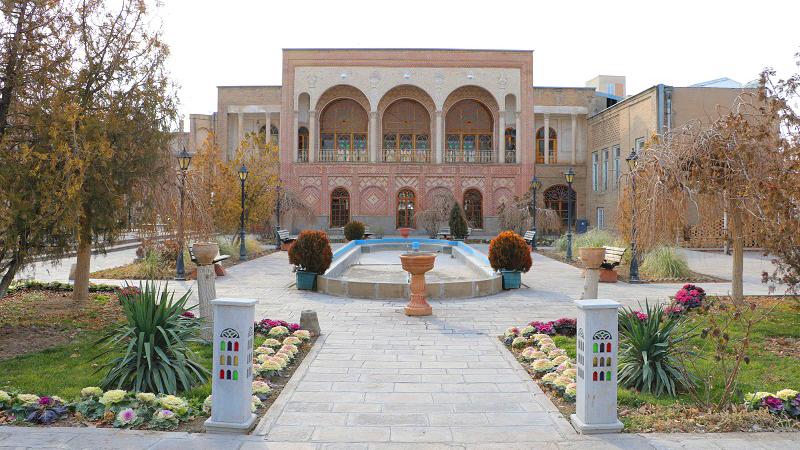
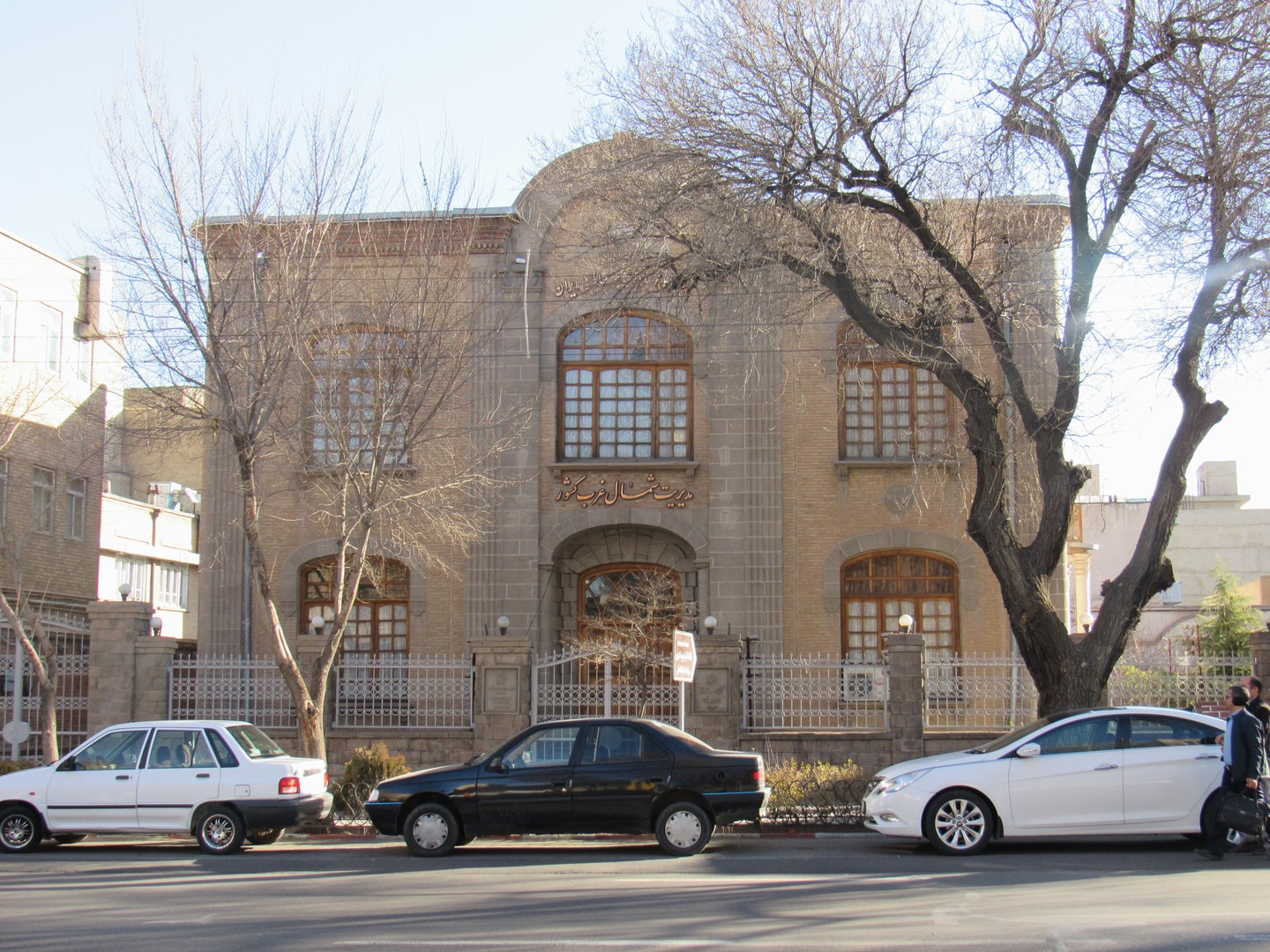
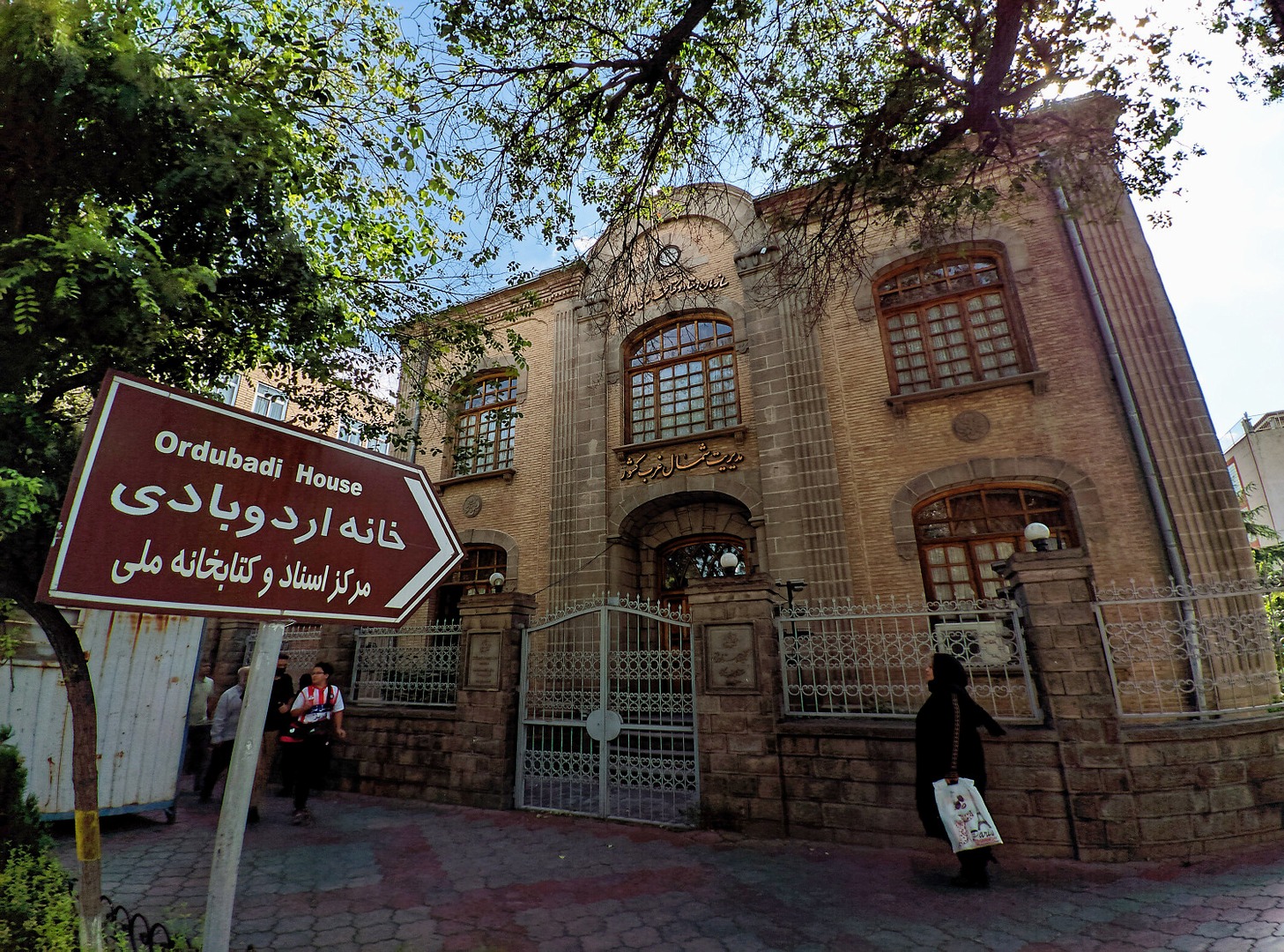
In one of the central areas of Tabriz, a number of historic houses are located close to each other, forming one of the most attractive parts of the city. The “Ordubari House,” which is today known as the “National Archives of Northwest Iran,” is one of these historic buildings. Nearby attractions include the Tabriz Municipality Building and Clock Square, the Master Shahriar Museum, the Blue Mosque, and the historic Tabriz Bazaar.
Features and Architecture of the Ordubari House
Throughout its history, this building has experienced many ups and downs. The construction of the Ordubari House dates back to the Pahlavi I era (early 20th century). It was built between 1928 and 1931 (1307 to 1310 in the Iranian calendar), simultaneously with the construction of the Tabriz Municipality Palace. The first owner of this large house was a physician named Musa Beyg, who converted part of the house into a clinic for treating patients. During World War II, the house was repurposed as the Iraqi consulate. This consulate was closed following the occupation of Tabriz by Soviet forces. Russian troops entered Tabriz on August 26, 1945 (4 Shahrivar 1324), and during this occupation, Reza Shah Pahlavi resigned from the throne and was forced to leave Iran.
Years later, a psychiatrist named Dr. Ordubari purchased the house and converted it into a clinic for psychiatric patients. In the 1970s (1350 Iranian calendar), the Ordubari House was repurposed as a printing house. However, in the 1990s (1370 Iranian calendar), it was transformed again, this time into the National Organization for Documents and Library of Iran. Today, this historic house preserves valuable historical documents. Among them, a document from the reign of Shah Tahmasp (1523–1576 CE / 930–984 AH) is considered one of the most significant. Shah Tahmasp was the second ruler of the Safavid dynasty and was skilled in calligraphy and painting. One of the major events of his reign was the war with the Ottoman Empire.
Some parts of this historic house have also been used as administrative offices. Visiting the interior spaces of the house is not possible without prior arrangement; however, most tourists can still enjoy viewing the exterior of the building when they visit the site.
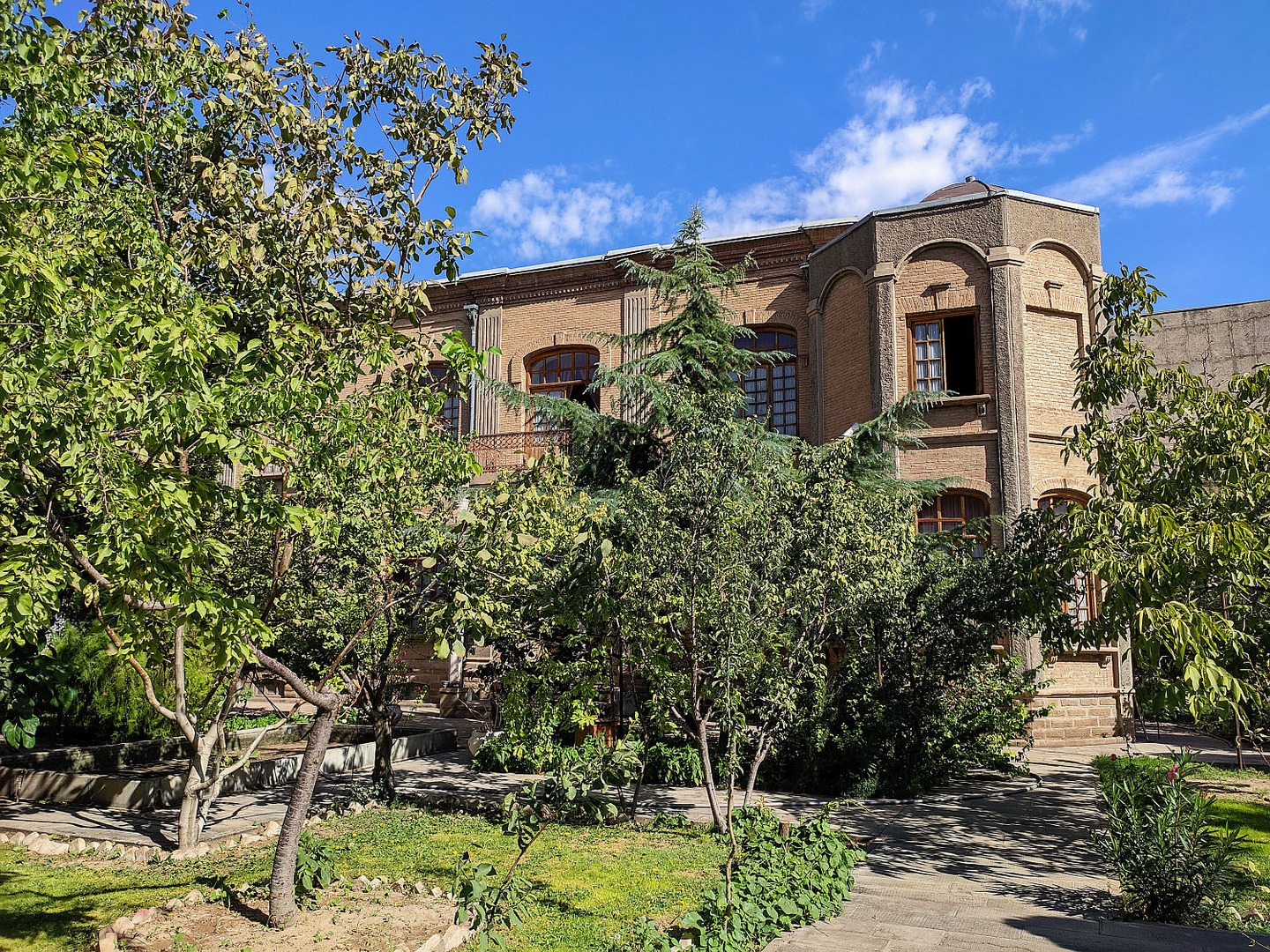
Features and Architecture of the Ardubari HouseOne of the notable features of Ardubari House is its distinctive architecture. Unlike most houses built during the Pahlavi I era, this house was constructed using stone and brick, making it a luxurious residence of its kind. The artistic combination of bricks and construction stones, such as trachyte, gives the house a striking appearance. These stones were sourced from the Esprakhon quarry in Tabriz.
Ardubari House: Layout and Features
The house has three floors and a total area of 1,600 square meters. Following the style of traditional Iranian houses, it features a central courtyard surrounded by rooms for the residents. Within the courtyard, there are garden plots with walnut, mulberry, and peach trees. The rooms are designed to receive ample natural light and provide good views of the courtyard. The building’s arched wooden windows were carefully chosen to create visual harmony in the exterior architecture. The Ardubari House’s proximity to Saat Square and the Tabriz Municipality Palace makes it easily accessible. Tabriz city buses and the metro stop at Saat Square, providing convenient access to this historic house.
National Registration of Ardubari HouseArdubari House was registered as a national heritage site in 1999 (1378 AH in the Iranian calendar).