

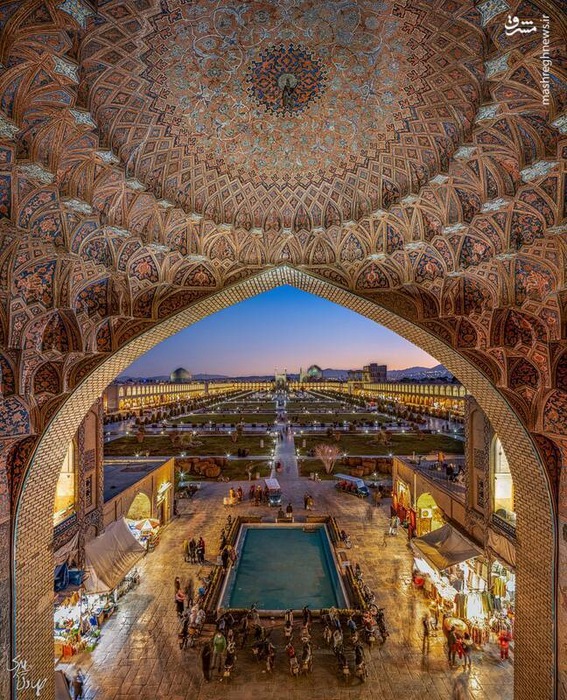
On the northern side of Naqsh-e Jahan Square in Isfahan, directly opposite the Shah Mosque, now known as the Imam Mosque, stands the entrance to a bazaar that is itself a masterpiece of architecture. The Qeysarieh Gate, with its magnificent murals, exquisite tilework, and grand, towering iwan, is far more than a simple entrance; it is a powerful architectural statement reflecting the political and economic power, wealth, and splendor of the Safavid Empire. The Qeysarieh Bazaar, which begins at this monumental gateway and extends deep into Isfahan’s historic bazaar network, formed the commercial backbone of Safavid Isfahan and remains one of the city’s most important and remarkable historic markets.
To understand Qeysarieh Bazaar, one must first understand Naqsh-e Jahan Square as the beating heart of Safavid Isfahan. Built in the early seventeenth century by order of the Safavid Shah Abbas I, the square was a vast and unique “multifunctional space” that brought together political power, represented by Ali Qapu Palace; religious power, represented by the Shah Mosque; economic power, represented by Qeysarieh Bazaar; and social life, represented by the public square itself, within a single, harmonious, and magnificent spatial composition. Qeysarieh Bazaar served as the link between this magnificent square and Isfahan’s vast, interconnected network of bazaars. As a result, it played a key role in the city’s economic and social dynamism.
Shah Abbas, who had moved the capital from Qazvin to Isfahan, sought to transform Isfahan into not merely a political center, but also a major center of regional and international commerce. To achieve this, he needed a bazaar that would be more than a place for buying and selling everyday goods—a symbol of the grandeur, wealth, and power of the Safavid Empire, capable of attracting merchants from across the region and beyond. Qeysarieh Bazaar was an ambitious response to this vision. The very name “Qeysarieh” evokes the idea of a royal or imperial bazaar, reflecting the grandeur and prestige associated with such commercial spaces in the Islamic world, where luxury, precious, and high-value goods were traded.
The Qeysarieh Bazaar Gate is regarded as one of the most magnificent historic bazaar entrances in Iran. Its grand, lofty, and well-proportioned iwan is adorned with intricate tilework featuring arabesque motifs, delicate floral-and-bird designs, and decorative inscriptions in traditional Islamic calligraphic styles. Above the entrance are large murals depicting scenes inspired by the mythical battles of the Shahnameh, including Rostam’s battle with the White Demon, as well as royal hunting scenes, rendered in vivid colors. Unfortunately, some of these paintings have been damaged over time by weathering and the elements. They formed an important part of the gate’s visual program, conveying ideas of royal power, legitimacy, and grandeur and reinforcing the connection between the bazaar and the Safavid court.
One of the fascinating and lesser-known features associated with the gate is the sundial and large bells that once stood above it. Historical accounts of the gate mention these elements, which reflect the extensive connections between Safavid Isfahan and the wider world. The presence of such features also points to the circulation of technology, craftsmanship, and cultural influences between Iran and Europe during the Safavid period. The decorative program of the gate also includes representations associated with the zodiac, reflecting the importance of astronomy and astrology in the intellectual culture of the period. Together, these details illustrate how science, art, technology, and commerce could converge within a single architectural space.
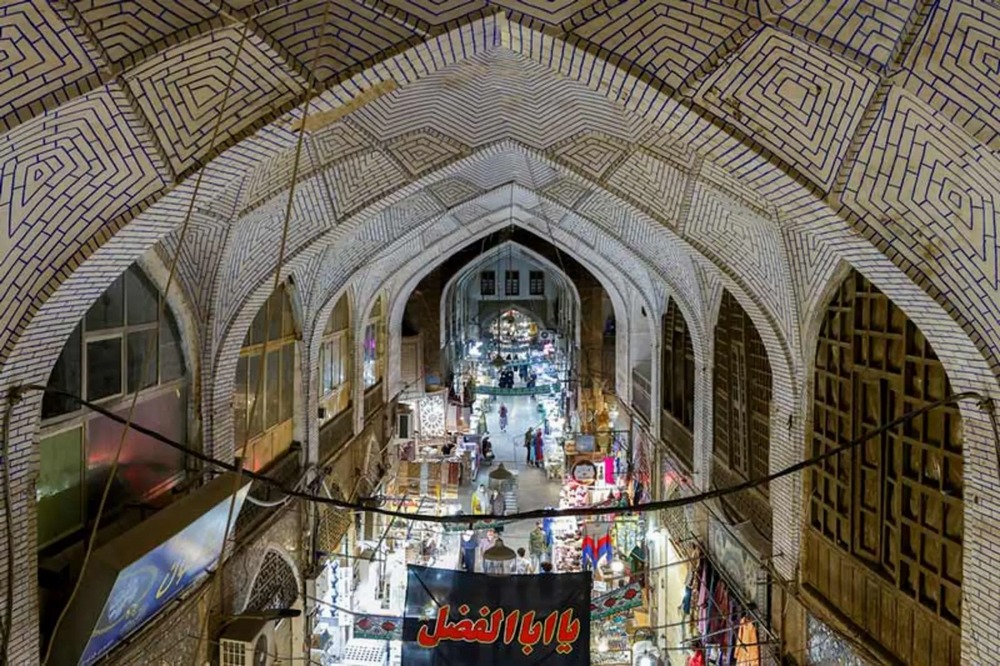
Qeysarieh Bazaar begins just beyond the gate and extends as a long, covered, and magnificent commercial passage, continuing northward and then eastward through the historic fabric of Isfahan. It eventually connects with the area around Isfahan’s Jameh Mosque. This historic route forms an important “commercial-religious axis,” connecting two of the city’s most significant symbolic centers: Naqsh-e Jahan Square, representing the political and economic aspirations of Safavid Isfahan, and the Jameh Mosque, representing the city’s deep religious and historical heritage. This connection facilitated the movement of citizens, merchants, and visitors while also contributing to the cohesion and integration of Isfahan’s historic urban fabric.
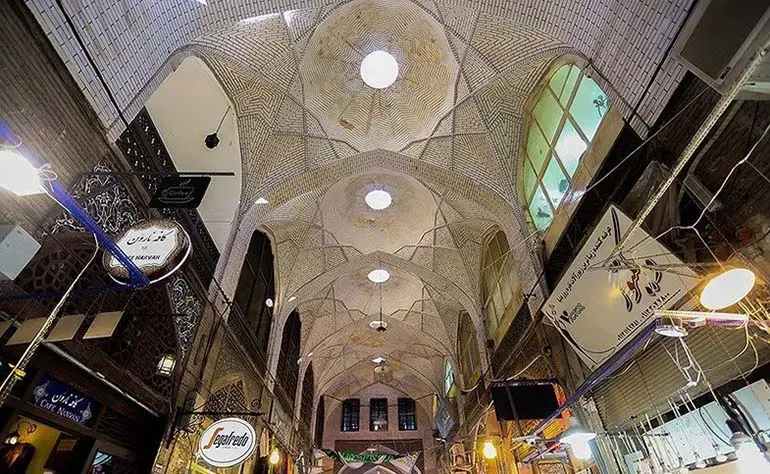
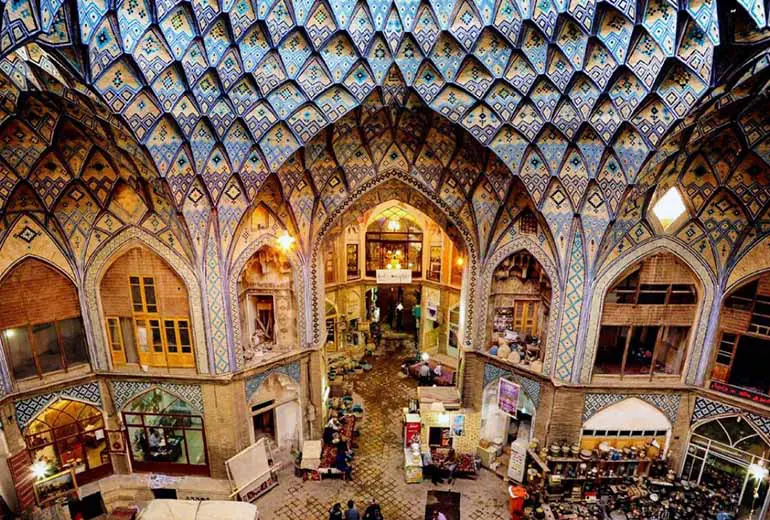
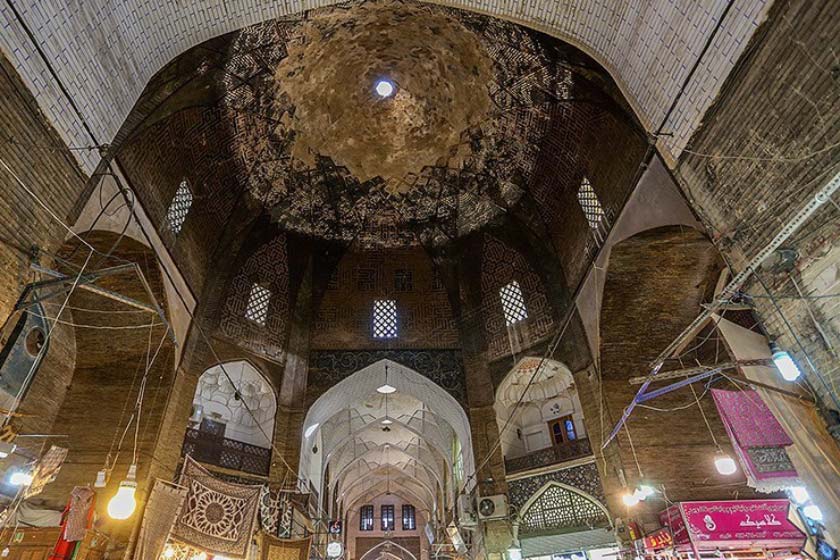
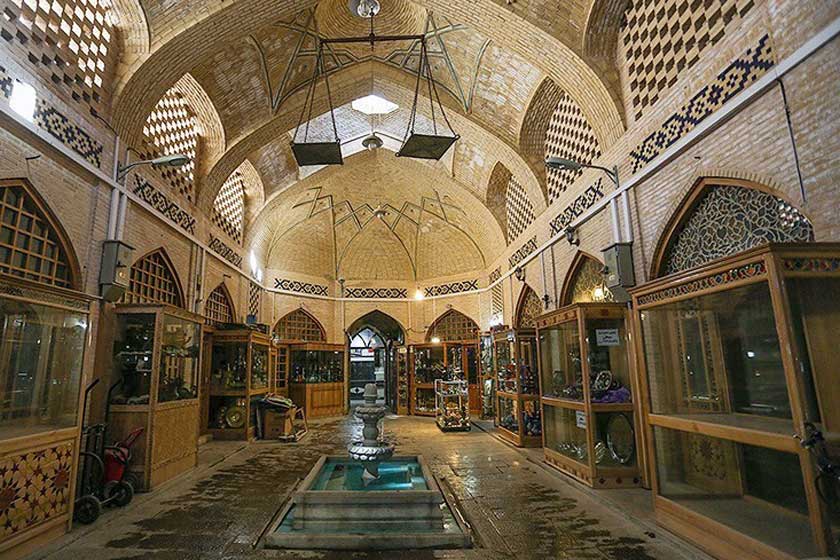
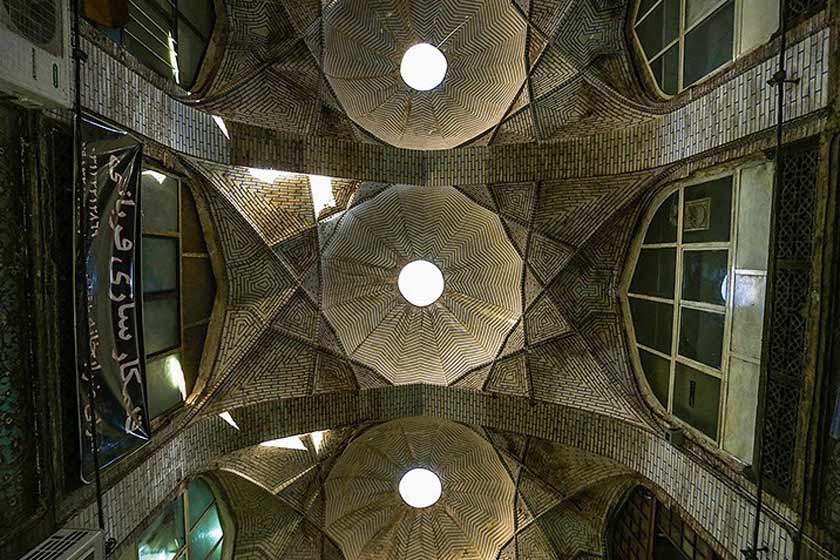
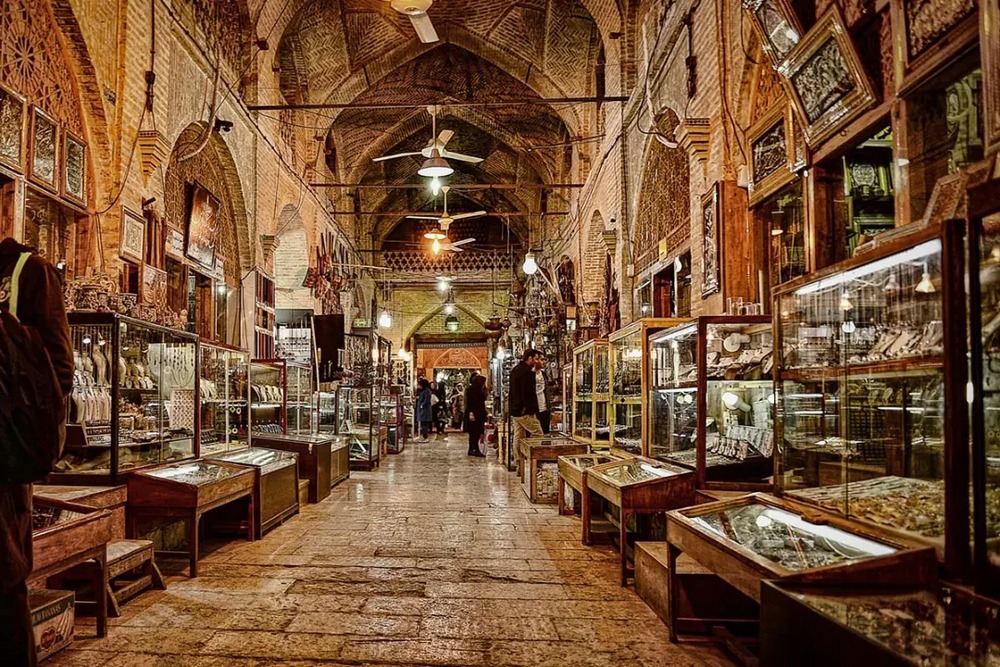
The main bazaar passage is covered by high, well-proportioned barrel vaults, with a series of carefully positioned skylights that allow natural light to filter through. On either side of the passage are numerous shops, each with small recessed porches and raised platforms. What distinguishes Qeysarieh Bazaar from many other historic bazaars in Iran, however, is the variety, abundance, and architectural quality of its auxiliary spaces. Along the main passage are numerous sarās—urban caravanserais built around central courtyards—along with timchehs, magnificent domed spaces associated with the trade of specialized and valuable goods, as well as small mosques, religious schools, and public bathhouses. Each sarā typically features a spacious central courtyard, often with a pool and planted areas, surrounded by shops or chambers arranged on one or two levels. Such spaces could be associated with particular guilds, trades, or merchant communities.
One of the most fascinating and magnificent features of Qeysarieh Bazaar is its caravanserais, or sarās. Sarā-ye Mokhles, Sarā-ye Golshan, Sarā-ye Jarchi-Bashi, and Sarā-ye Khani are examples of these impressive urban caravanserais. With their large central courtyards, pools, and orderly two-story chambers, these spaces provided facilities for merchants, commercial activities, and the storage of goods. Merchants from India, the Ottoman Empire, Armenia, and other regions connected to Isfahan’s extensive trading networks came to the city to conduct business and negotiate with one another. The design of these caravanserais represents a thoughtful combination of Iranian architectural traditions and the practical requirements of long-distance trade. The central courtyard provided a secure and controlled space for the movement, loading, and unloading of goods. The ground-floor chambers could function as shops or commercial spaces, while upper-floor chambers could provide accommodation and resting quarters for merchants. Stables and service areas within or around the complexes supported the animals and logistical needs of trading caravans.
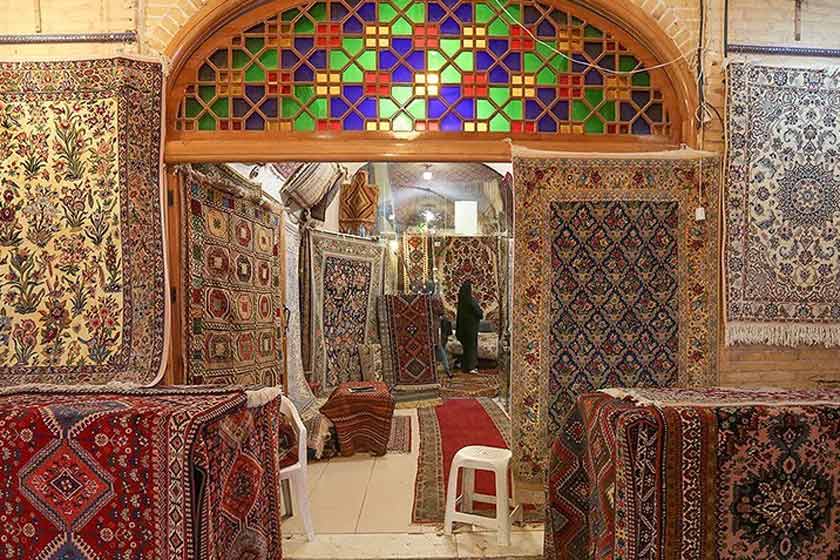
Today, four centuries later, Qeysarieh Bazaar remains one of Isfahan’s best-known and most active historic markets. The bazaar is filled with exquisite Isfahani handicrafts, including handwoven carpets, delicate miniatures, intricate Khatamkari, dazzling turquoise inlay, copper and silver engraving, and traditional Qalamkar textiles decorated with arabesque motifs and floral-and-bird designs. Visitors can also find colorful and aromatic spices, as well as local sweets such as Gaz and Poolaki. Unlike some historic bazaars that have become primarily tourist-oriented, Qeysarieh Bazaar remains deeply intertwined with everyday life in Isfahan. The pulse of the city’s economy, culture, and art still beats within its historic passageways.
Qeysarieh Bazaar offers a comprehensive lesson in the “organic relationship between the square and the bazaar,” the “harmonious integration of commerce, accommodation, worship, and urban life,” and the “creation of pedestrian-oriented commercial and cultural axes within a historic urban fabric.” The bazaar demonstrates how a grand and symbolic public square can be seamlessly connected to an extensive and efficient pedestrian commercial network, creating a cohesive, vibrant, and dynamic urban axis that simultaneously accommodates commercial, religious, lodging, educational, and social functions. Qeysarieh Bazaar is an inseparable part of a “larger whole”—the Naqsh-e Jahan Square complex. This thoughtful urban integration has been one of the key factors behind its enduring vitality, significance, and remarkable longevity.