Architecture
Iranian Architecture, An Encounter with Iran
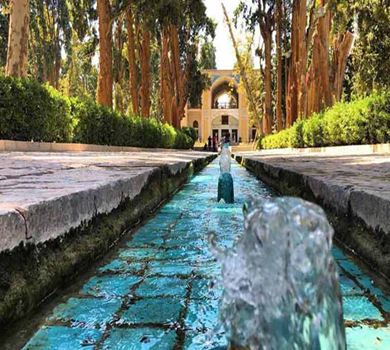
When someone sets foot in Iran for the first time, before words or books can say anything, the buildings themselves begin the conversation. The wooden doors of traditional houses, sometimes fitted with different knockers for men and women, courtyards filled with pomegranate trees and domes that, from a distance, seem like blue skies resting upon the earth all speak to the traveler from that very first moment to understand this land, you must experience it through its architecture.
Architecture
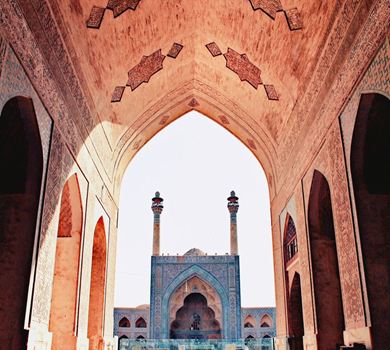
The Jameh Mosque of Isfahan A Living Museum of Iranian Architecture
What makes the Jameh Mosque of Isfahan unforgettable and deeply instructive for today s audience whether architects, historians, or travelers is its simultaneous continuity and change. The building is a manifesto against the idea of architecture as something finished, complete, and untouched. The Jameh Mosque shows that an architectural masterpiece does not necessarily have to be the product of a particular golden age or the work of a single genius. It can instead emerge from a collective dialogue, gradual evolution, and shared creation over the course of centuries.
Architecture
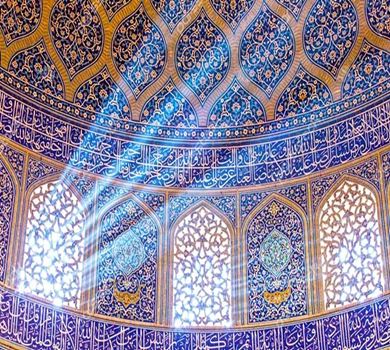
Sheikh Lotfollah Mosque The Hidden Jewel of Naqsh-e Jahan Square
Unlike the conventional principles of Iranian mosque architecture, this mosque sits on the eastern edge of Naqsh e Jahan Square in Isfahan and, rather than announcing itself, seems to conceal itself.
Architecture
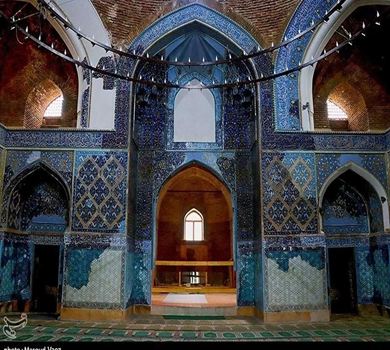
The Blue Mosque of Tabriz, The Turquoise of Islam and the Lost Splendor of an Empire
Unlike the traditional four iwan mosques of Iran, the Blue Mosque has a distinctive and highly unusual spatial organization. Its core is formed by a large central domed chamber, surrounded by galleries and subsidiary spaces, while the mausoleum is connected to the main domed chamber on the southern side. This spatial composition is one of the defining characteristics of the Blue Mosque and represents an important development in pre-Safavid Iranian architecture. The mosque s main dome, which collapsed during the numerous earthquakes that struck Tabriz particularly the devastating earthquake of 1780 CE once stood above the central domed chamber and played a major role in shaping the monument s monumental spatial character. Today, what survives of the dome can be studied mainly through the remaining structural traces and architectural evidence, yet even these fragments reveal the scale and remarkable structural complexity of the original building.
Architecture
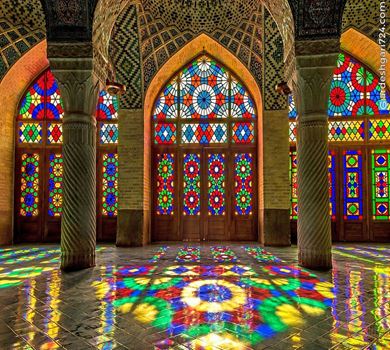
Nasir al-Mulk Mosque of Shiraz Light and Color in the City of Poetry
The Nasir al-Mulk Mosque of Shiraz, built in the late Qajar period in the late nineteenth century, is a brilliant and poetic exception in the history of Iranian mosque architecture. Unlike the monumental and imposing Seljuk and Ilkhanid buildings, and even the grandeur and dignity of Safavid mosques, it speaks of delicacy, refinement, human scale, and pure poetry.
Architecture
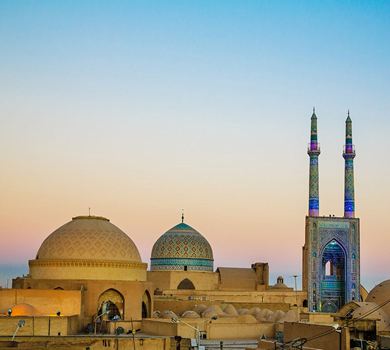
Jameh Mosque of Yazd, The Sky High Minarets
At the heart of Iran’s central desert, where the sky stretches endlessly and the earth offers architects an abundance of local and readily available building materials, a remarkable structure rises above the city, crowned by some of Iran’s tallest mosque minarets.
Architecture
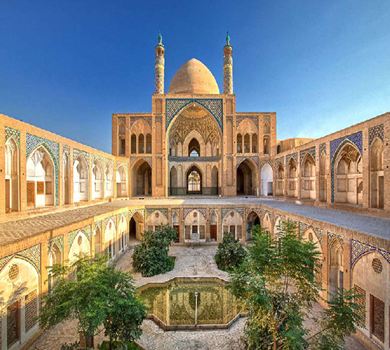
Agha Bozorg Mosque, Kashan: Architecture for Wisdom and Faith
This building shows that an architectural masterpiece does not necessarily have to be the largest, tallest, or most richly decorated. Sometimes, the rightness of a space, its alignment with its function, and the harmony of its elements can be more valuable than any form of luxury or excess.
Architecture
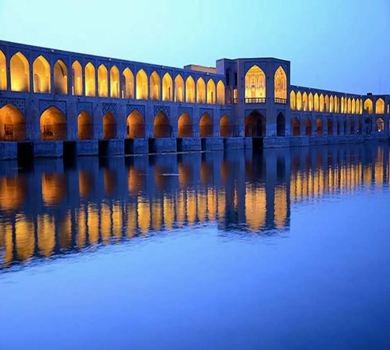
Khaju Bridge: A Palace Above the Water, a Symphony of Stone and Light
Among all the historic bridges of Iran, there is one that is far more than a passage across a river. It is at once a recreational palace, a public gathering place, a water-regulating weir, and a masterpiece of art and architecture. Khaju Bridge, built in the mid-seventeenth century by order of Shah Abbas II of the Safavid dynasty over the Zayandeh Rud River in eastern Isfahan, represents one of the finest achievements of Iranian bridge architecture. Here, hydraulic engineering, monumental architecture, and landscape design are woven together with such remarkable intelligence that, even nearly four centuries later, the bridge remains breathtaking.
Architecture
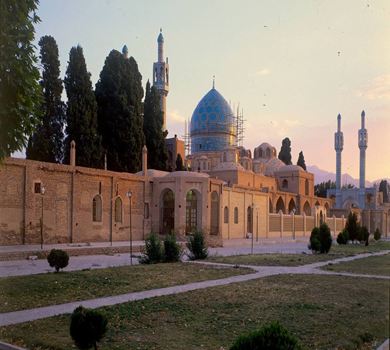
Shah Nematollah Vali Mausoleum: A Garden Embraced by the Desert, a Journey from Earth to the Heavens
This multifunctionality is one of the defining characteristics of Iranian funerary gardens. Unlike many Western mausoleums, which often function primarily as memorial structures, Iranian garden-tombs have traditionally been living and dynamic spaces for community, education, worship, and everyday life. The Mausoleum of Shah Nematollah Vali, through the integration of these functions, suggests that in Iranian culture, death is not necessarily conceived as a tragic ending separate from life, but as part of the broader fabric of everyday and spiritual existence.

