

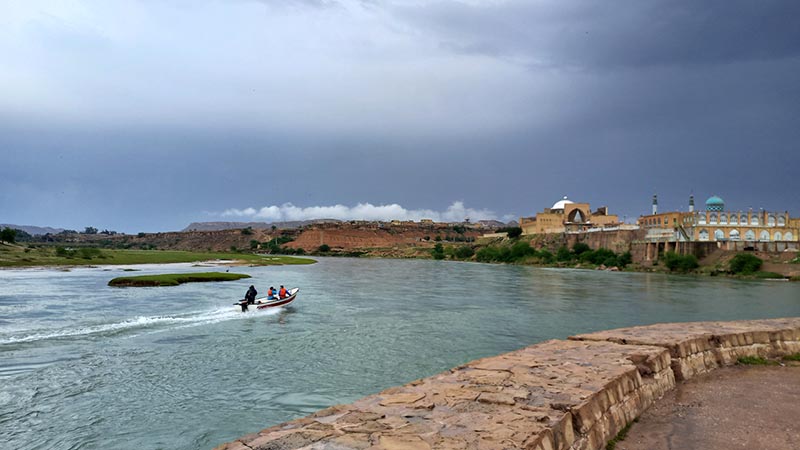
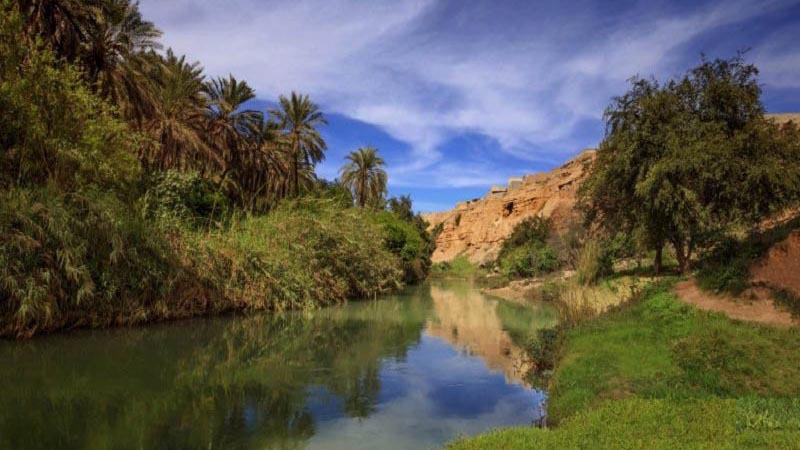
Among all the architectural masterpieces of Iran, there is one whose architecture was shaped not by bricks and tiles, but by water. This masterpiece is the Shushtar Historical Hydraulic System—a vast hydraulic system dating back to antiquity that has, remarkably, grown beyond its original technical purpose to become a magnificent cultural landscape. Located in Khuzestan Province on the banks of the Karun River, Shushtar tells a story of how engineering and architecture, when placed in the service of human life and community, can become a form of poetry.
This complex, which is also inscribed on the UNESCO World Heritage List, is often described as a “masterpiece of creative genius.” But this official description tells only part of the story. Above all, Shushtar is a testament to an ancient and almost forgotten relationship between humans and water—a relationship in which water was not merely a resource to be consumed, but a “partner” in the processes of building and living. In Shushtar, ancient engineers did not simply confine water within pipes and hide it from view. Instead, they brought it into the open, gave it a voice, and harnessed its movement to turn millstones, irrigate thirsty plains, and create cool, refreshing public spaces.
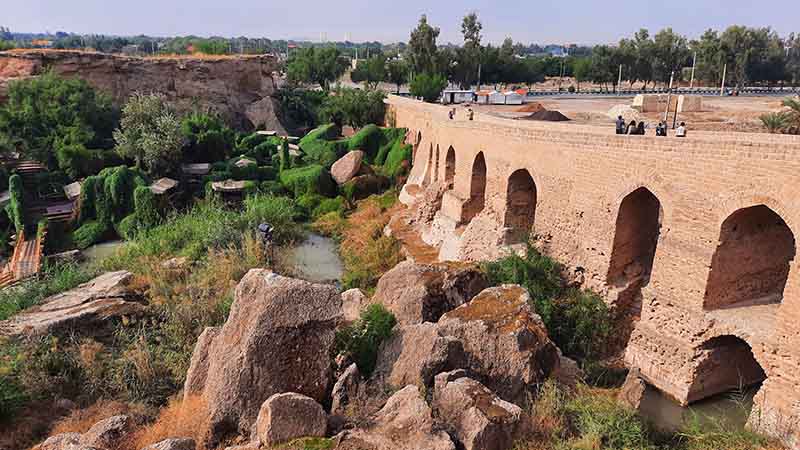
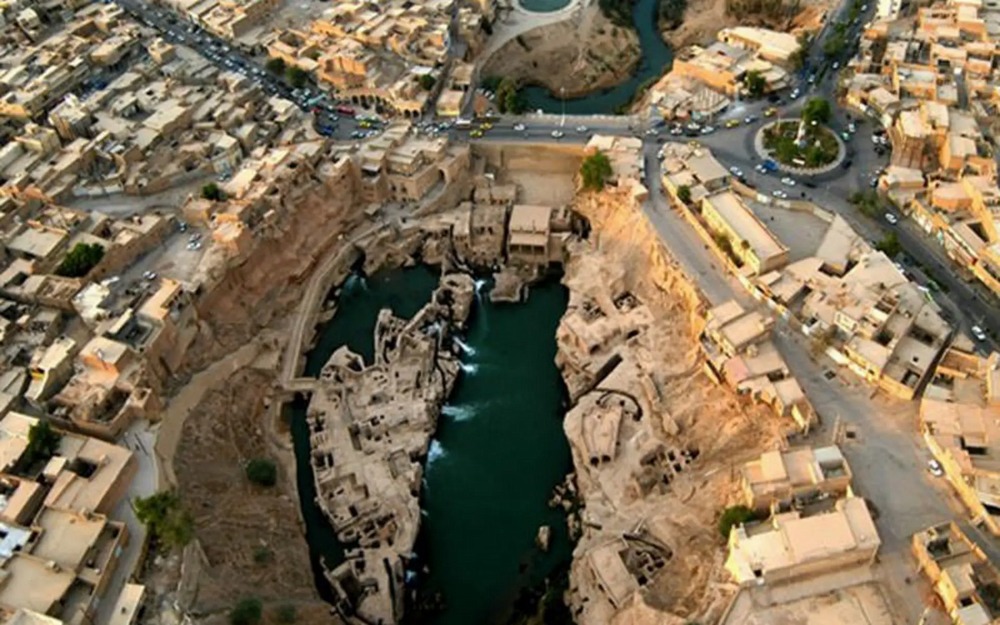
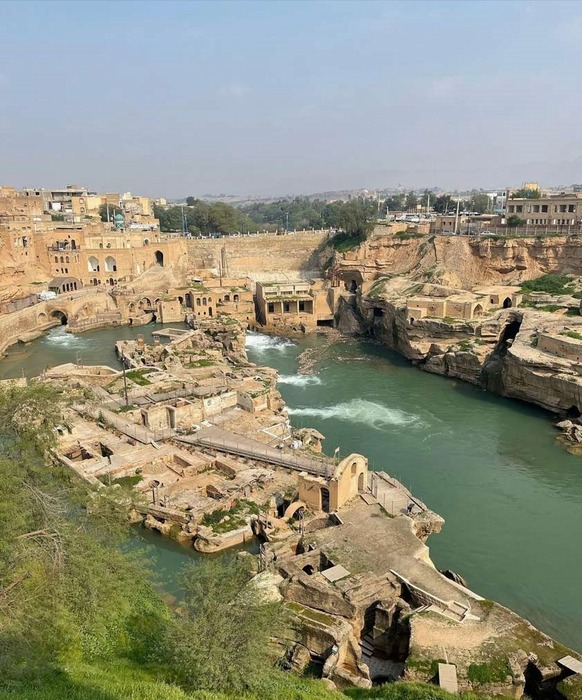
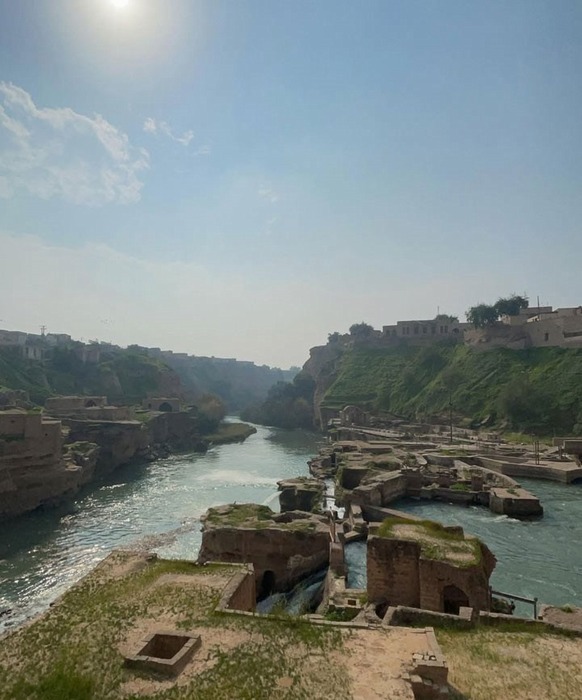
The story of Shushtar begins with a major engineering undertaking that dates back to the Achaemenid period and, particularly, the Sasanian era. To harness the immense power of the Karun River, ancient engineers built a massive weir, known as Band-e Mizan, across the river. They then constructed diversion canals to channel part of the river’s flow into the city. These canals, known as the Dariyun Canal and the Gargar Canal, became the lifelines of Shushtar. The entire hydraulic system was built around them.
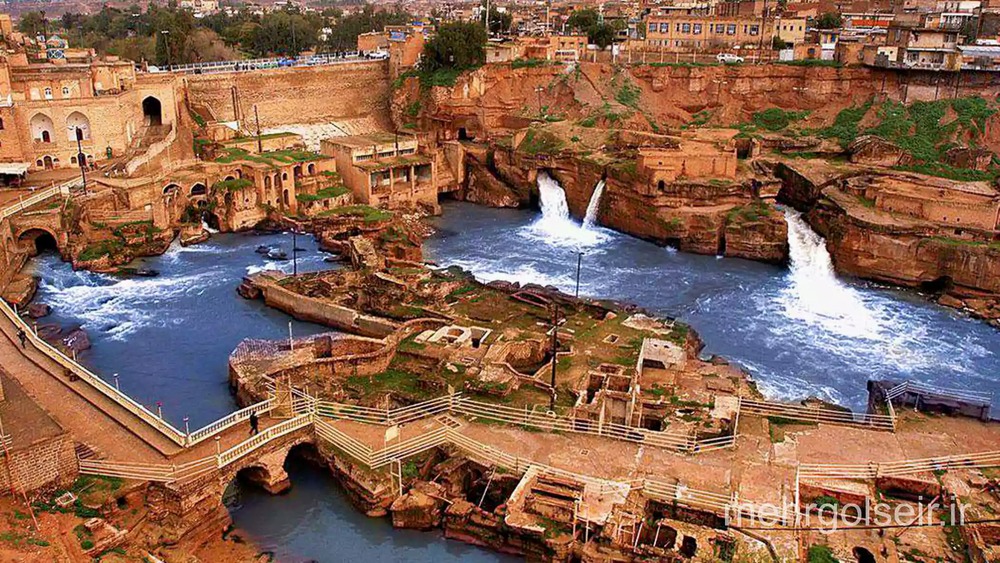
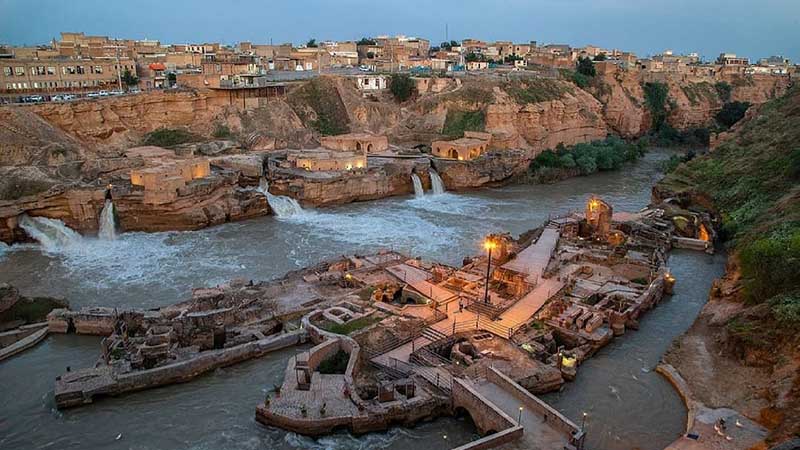
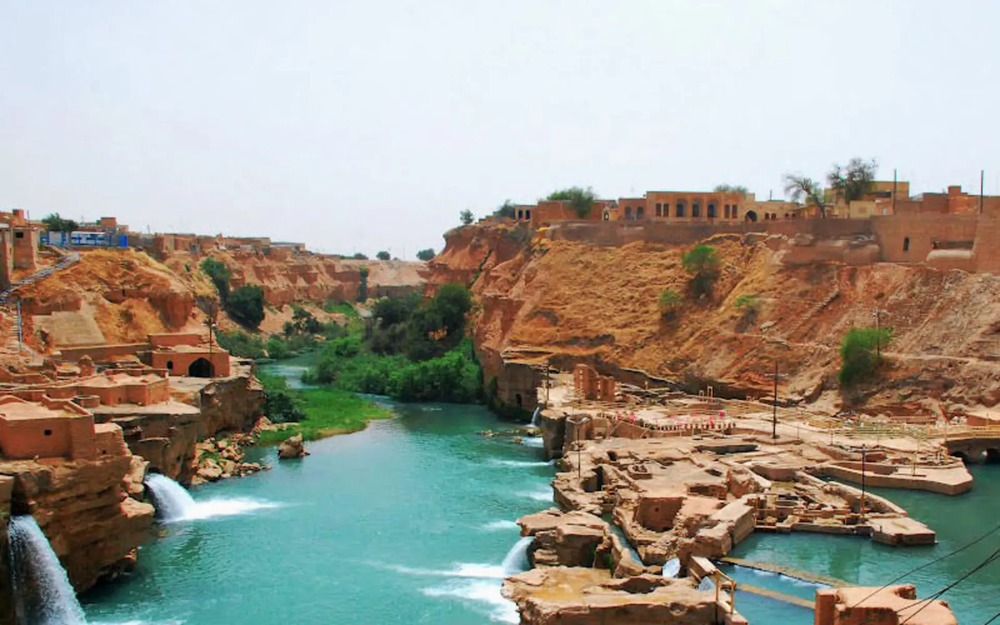
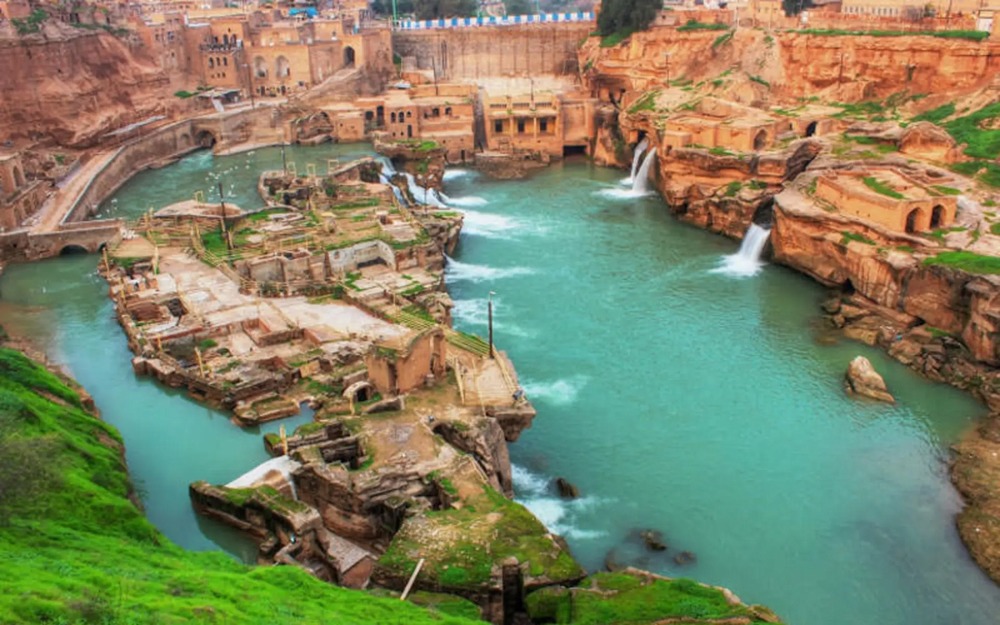
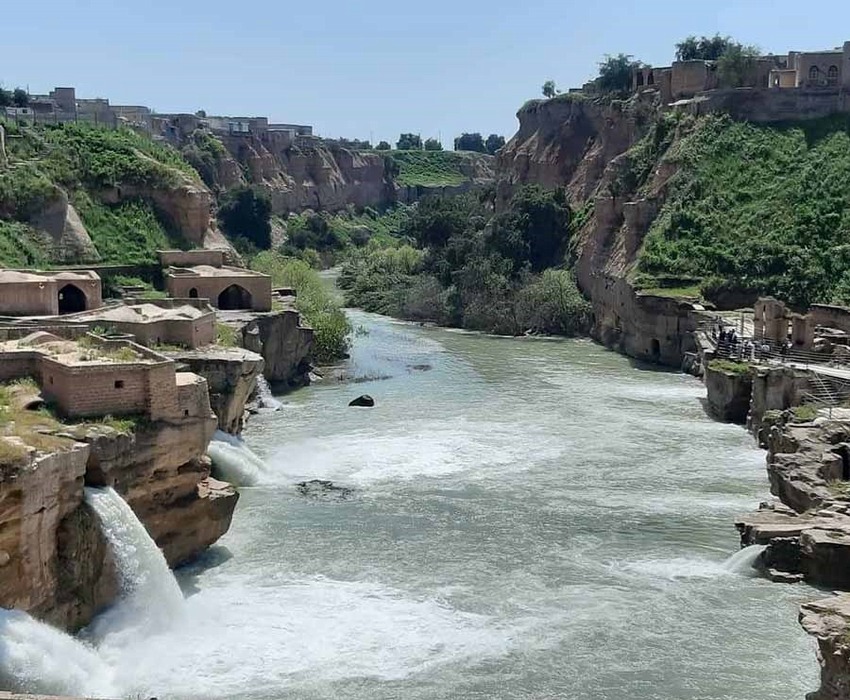
But what transforms this water-management system into a work of architecture is the moment when the water reaches the waterfalls. At the Shushtar Waterfalls, the water does not flow gently. Instead, it plunges in a series of powerful, man-made cascades through rocky channels and stone tunnels. The Sasanian engineers did more than simply build canals to transport water. They created a “stage” for the water. They took advantage of the natural difference in elevation to transform the river into spectacular waterfalls that, at the same time, provided the driving force for numerous watermills.
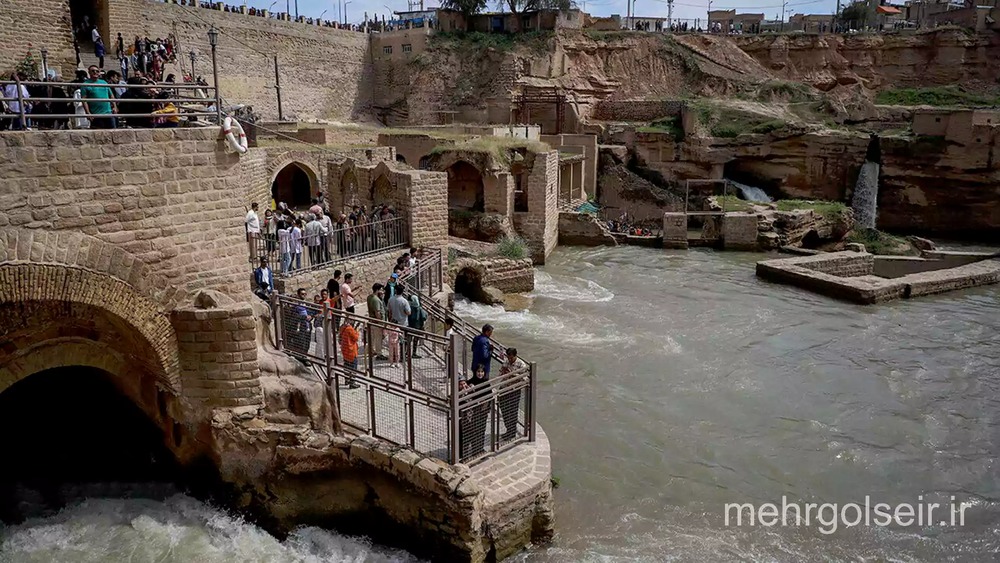
Walking through this complex is a multisensory experience: the roar of water as it bursts from dark tunnels and pours into the pools below, the cool mist hanging in the air and tempering the intense heat of Khuzestan, and the sight of waterfalls that seem to burst from the heart of a massive stone fortress. Here, infrastructure has been transformed into a sensory experience—something rarely seen in modern architecture, where utilities and mechanical systems are often hidden underground or behind walls.
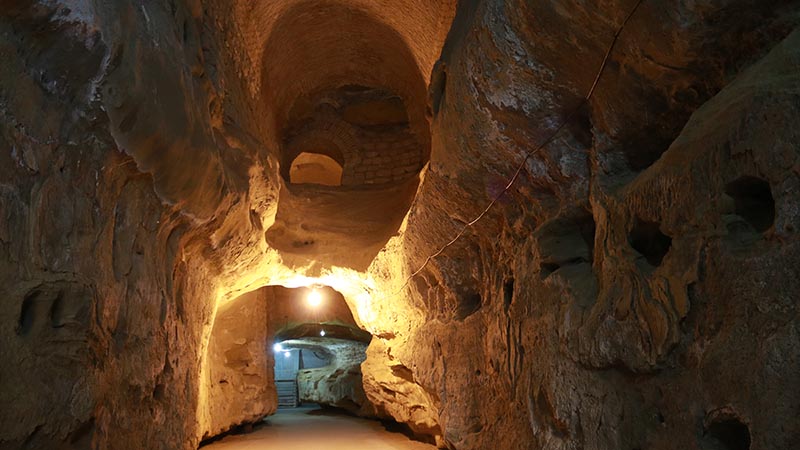
At the heart of these waterfalls, small stone chambers were built to house the watermills. With their brick vaults and stone walls, these spaces are, aesthetically, no less remarkable than historic bathhouses or traditional bazaars. The architects of Shushtar designed what was essentially an industrial space with remarkable care, precision, and craftsmanship.
The large millstones, turned by the power of the water and used to grind wheat into flour, are still in place. They tell the story of a time when this complex was the economic heartbeat of a vast region. One of the most remarkable aspects of the mills’ design is their water intake and drainage system. After turning the millstones, the water slowly exits through the floor of the chamber and flows into the downstream channels without flooding the space or making it muddy and unusable. This precise management of water within an enclosed space reflects a sophisticated body of knowledge—one that can still inspire the design of sustainable water and utility systems today.
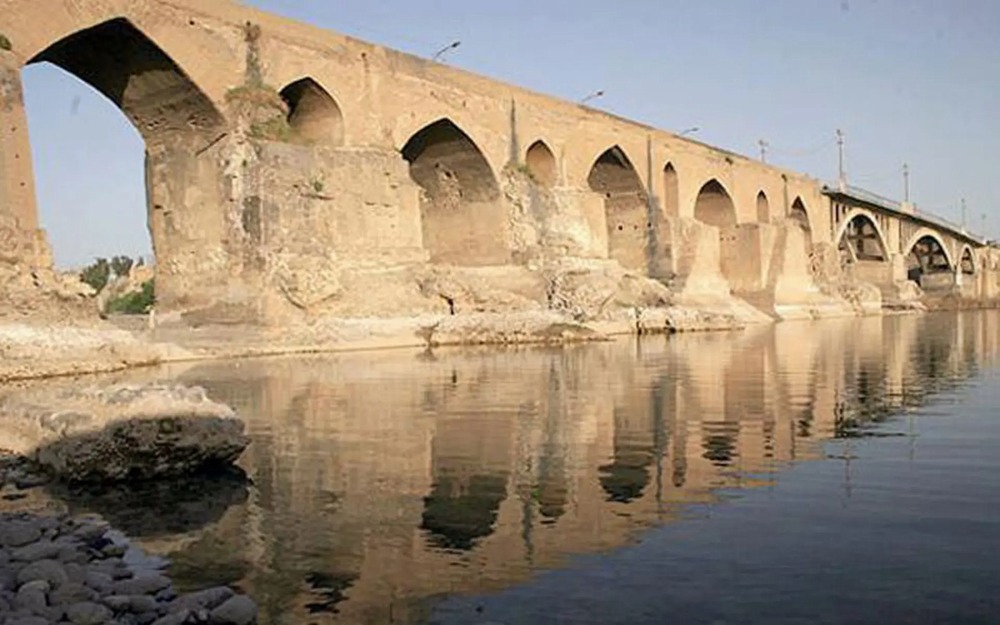
To fully understand Shushtar, we need to go a little higher, to Band-e Mizan. This ancient weir, dating back to the Sasanian period, is a masterpiece of hydraulic engineering. It divides the waters of the Karun River in a precise two-to-three ratio between the Gargar and Shatit branches. What distinguishes Band-e Mizan from an ordinary dam is its curved, stepped form. This design not only helps the structure withstand the pressure of the water, but also creates a long and beautiful artificial waterfall.
During periods of high water, the sight of water cascading over the edge of this stepped weir is unforgettable. Here again, engineering function and aesthetic quality are two sides of the same coin.
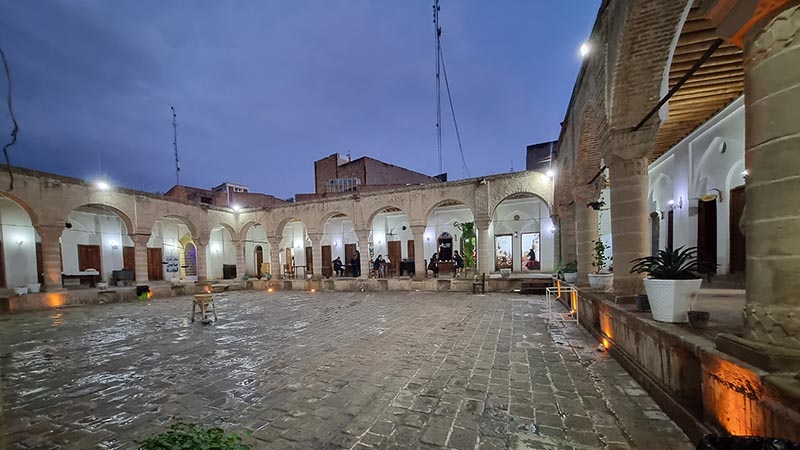
Shushtar teaches us how infrastructure can become cultural heritage and a civic space. Today, the waterfall complex and its surroundings form a large and popular urban park. Families come for picnics, young people take photos beside the waterfalls, and visitors are amazed to discover such remarkable engineering in the heart of a historic city. Shushtar proves that a city’s infrastructure does not necessarily have to be ugly, inaccessible, or single-purpose. It can become the beating heart of a city’s social life and identity.
The importance of Shushtar for the modern world, especially in the face of today’s water and climate crises, is profound. This ancient complex shows us that water management is not merely a technical problem of pipes and infrastructure; it is also a cultural and spatial issue. In Shushtar, water was not a hidden commodity buried underground. It was a visible, respected, and even sacred element of the urban landscape. Seeing the water, hearing it, and being near it were all part of everyday life for the people of the city.
For contemporary architects and engineers, Shushtar offers a practical pre-modern model of green-blue infrastructure—a system in which flood management, energy production through watermills, agricultural irrigation, and the creation of recreational and public spaces were all integrated into a single, interconnected, and beautiful cycle.
In the end, Shushtar can be described as “the architecture of water”—a place where humans, rather than seeking to conquer nature, entered into a process of co-creation with it. This complex reminds us that the greatest achievements of architecture are not always the tallest towers or the largest halls. Sometimes, the most magnificent architecture is that which allows a natural element like water to become the hero of the story, while architecture itself serves as a humble and intelligent stage for this endless performance.
Shushtar is a stage through which water has flowed for thousands of years, inviting us to witness the enduring mystery of a civilization.