
Report on the Commemoration of Tasua, Ashura, and Sham-e Ghariban of Imam Hussein (AS) at the Cultural Center of the Embassy of the Islamic Republic of Iran in Sri Lanka
A three-day calligraphy exhibition entitled "One Must Rise" was held at the Cultural Center of the Embassy of the Islamic Republic of Iran in Sri Lanka from 29 June to 1 July 2026. The exhibition featured the works of Sri Lankan artist Amer Faisal, highlighting the themes of resistance, dignity, faith, and cultural identity through contemporary calligraphy. The event received wide public and media attention in Sri Lanka and contributed to promoting Iranian-Islamic cultural thought through the universal language of art
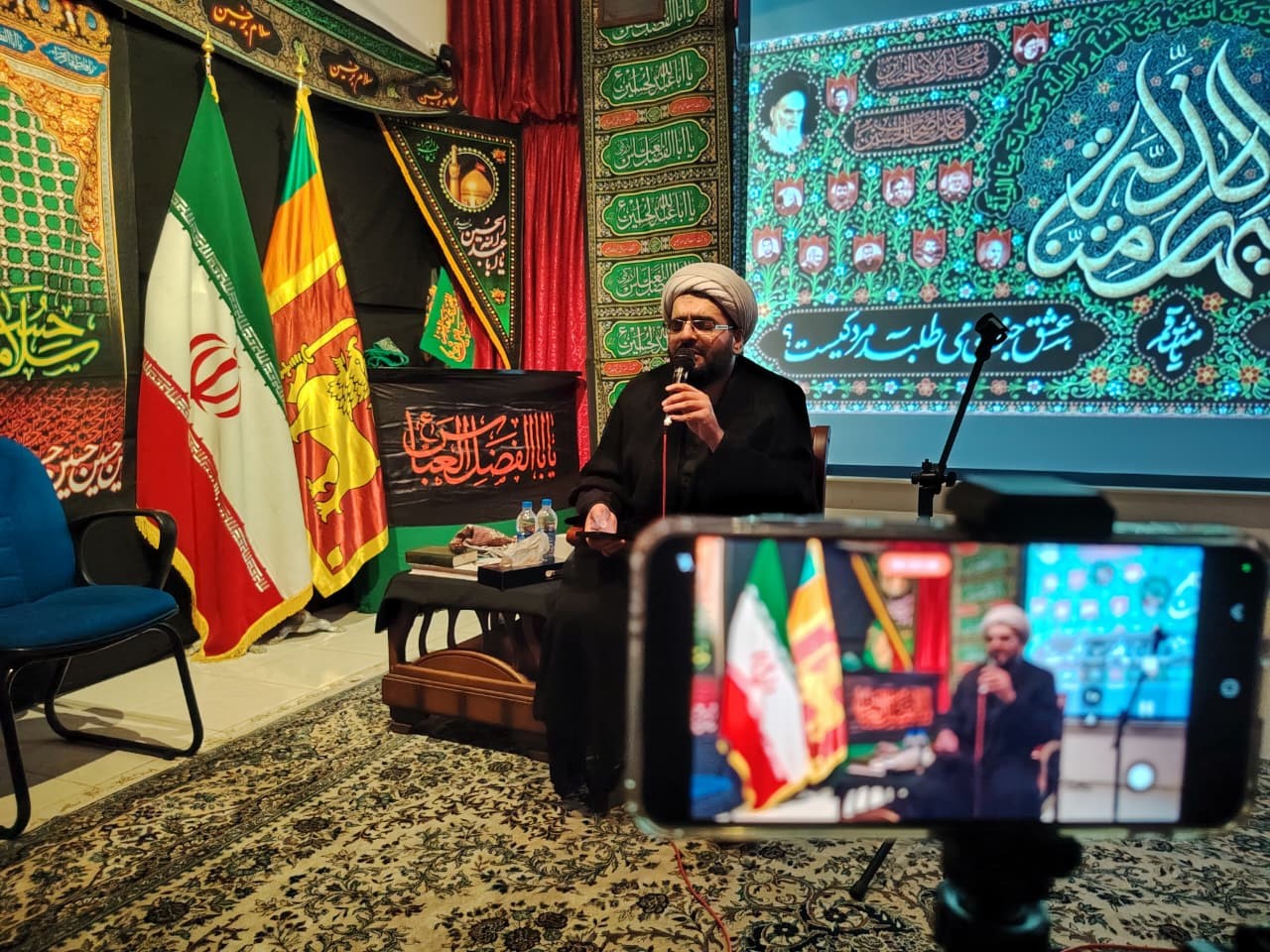
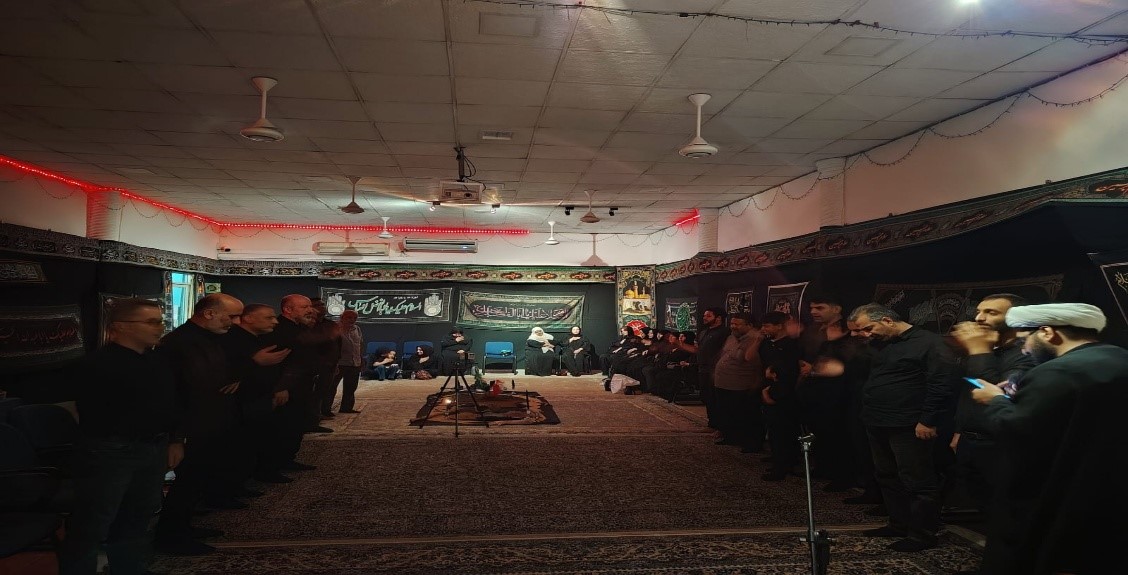
Coinciding with the days of mourning for Tasua and Ashura of Imam Hussein (AS), commemorative ceremonies honoring the Master of Martyrs, Imam Aba Abdillah Al-Hussein (AS), were held on Wednesday and Thursday, 24 and 25 June 2026 (corresponding to 3 and 4 Tir 1405), at the Cultural Center of the Embassy of the Islamic Republic of Iran in Sri Lanka. The events were attended by a large number of devotees of the Ahl al-Bayt (AS) and individuals interested in Islamic culture and teachings.
During the ceremonies of Tasua, Ashura, and Sham-e Ghariban of the martyrs of Karbala, Hojjat al-Islam wal-Muslimeen Rajabi, a cleric dispatched from the Islamic Republic of Iran, delivered speeches on the events of Ashura, the suffering endured by the Household of the Prophet (AS), and the responsibilities of the followers of the Hussaini school of thought.
Elaborating on the spiritual and Qur'anic dimensions of the Ashura movement, he emphasized the distinguished place of the Holy Qur'an in the life and uprising of Imam Hussein (AS). Referring to Imam Hussein's request to postpone the beginning of the battle until the eve of Ashura, he noted that the Imam valued this opportunity for worship, prayer, and recitation of the Holy Qur'an, an event that reflects the profound connection between the Ashura movement and divine revelation, as well as the fundamental role of the Qur'an in the Hussaini tradition.
Hojjat al-Islam Rajabi further referred to the complaint of the Prophet Muhammad (PBUH) regarding the neglect of the Holy Qur'an among the Muslim community and stressed that the Qur'an was not revealed merely for recitation at gravesites or for the deceased. Rather, it is a book of guidance, life, education, and human prosperity.
He stated that the Qur'an introduces itself as a "Blessed Book" and identified continuous engagement with the Qur'an, reflection upon its verses, and adherence to its teachings as among the most important needs of contemporary Islamic societies. He emphasized that true followers of Imam Hussein (AS) should embody the message of Ashura through the teachings of the Holy Qur'an in both their personal and social lives.
The ceremonies continued with elegies and traditional mourning rituals in remembrance of Imam Hussein (AS) and the martyrs of Karbala, led by Hojjat al-Islam wal-Muslimeen Rajabi. Participants renewed their commitment to the ideals of Ashura and mourned the martyrdom of the Imam and his loyal companions.
The ceremonies concluded with the serving of refreshments to the participants and mourners.

Write your comment.