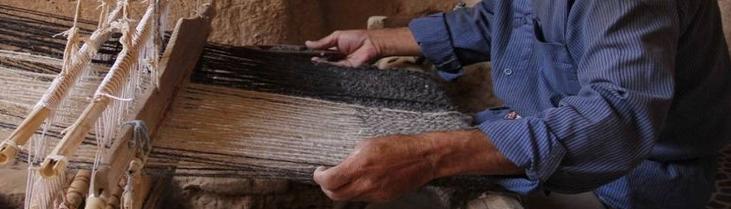
Mootabi, a technical fabric with strong and durable weaves.
The Art of Mootabi:
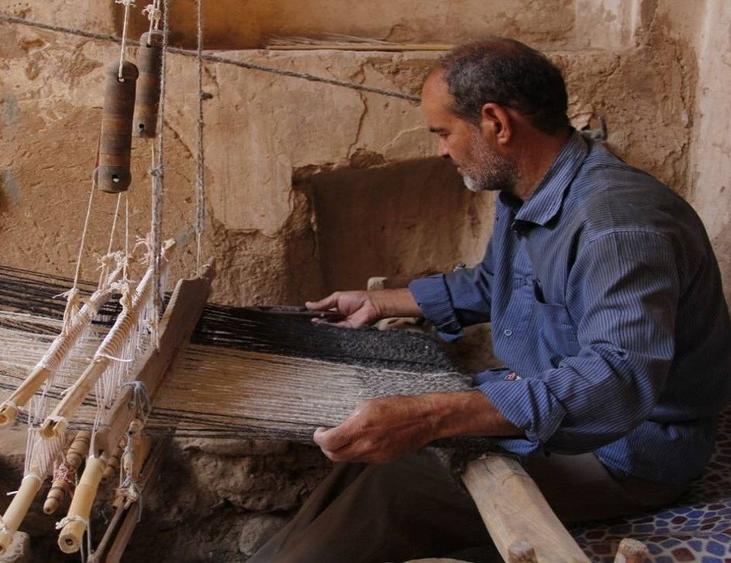
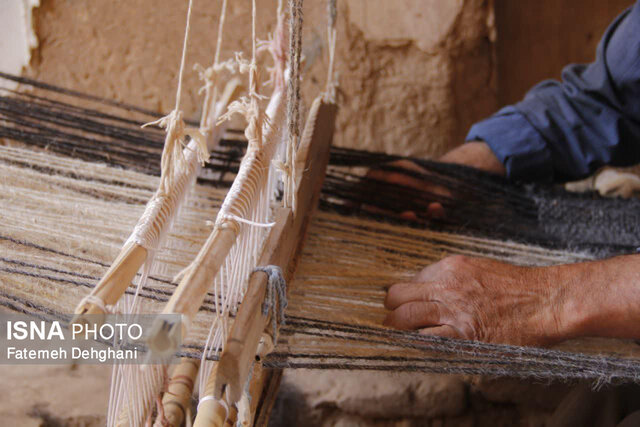
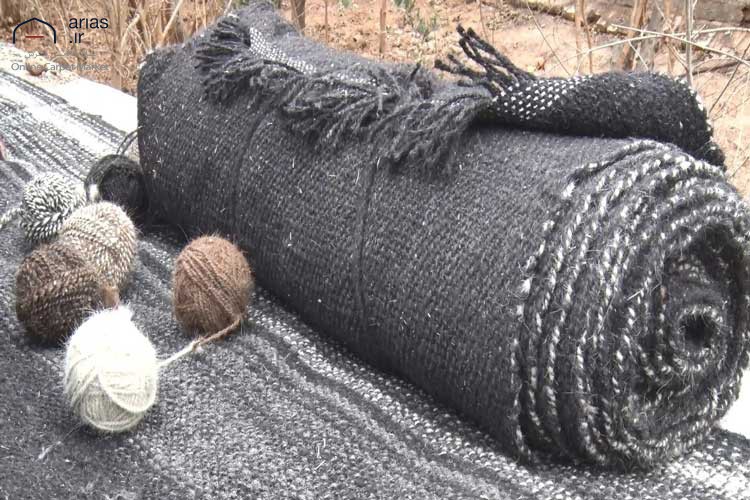
Traditional Goat Hair Spinning Animal husbandry allowed humans to obtain wool, leather, and other raw materials in addition to food, utilizing them in their daily lives. Over time, industries grew around these materials, most of which relied on primitive machinery and manual labor. "Mootabi" is one such industry that uses simple devices and handwork to spin goat and camel hair.
What is Mootabi?
Mootabi is a form of spinning where goat hair is converted into thread, netting, and rope using a hand-operated wheel. Products made via the Mootabi technique are exceptionally strong and are used for tasks such as erecting nomadic tents, restraining livestock, securing agricultural tools, fastening camel saddles, and producing "Chahartakhteh" shawls.
The use of goat hair for weaving nomadic tents is strategic: In hot weather: The fibers expand, allowing air circulation and cooling the interior and in the rain: The hair becomes sticky and dense, preventing water from penetrating the tent.
While the tradition of weaving nomadic tents continues, the decline of Mootabi has led nomadic women toward a technique called "Ashti-Risi." Nevertheless, Mootabi remains valued for producing incredibly durable and efficient goods.
The Methodology of Mootabi
Mootabi artists use a device more complex than standard hand spindles. Furthermore, while hand spindles typically turn cotton into thread, Mootabi specifically utilizes goat hair.To prepare the raw materials, black and colored goat hair are separated. This hair is harvested from either live goats or tanned hides, though artists consider the quality of hair from live animals to be superior.
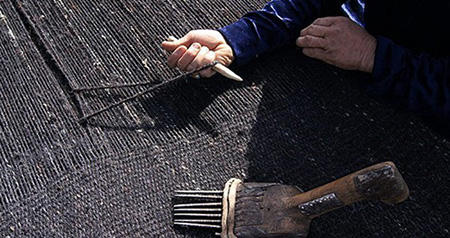
Cleaning: The hair is beaten on a platform called a "Takht-e Ziga" to remove impurities and untangle the fibers.
Carding: The hair is processed using a special bow (hallaji).
Spinning: It is rolled into a wick-like shape and spun. Note: Camel hair, particularly the long hair from the hump, is also used.
The most significant feature of Mootabi products is their durability. This level of strength is often unmatched even by modern electric machinery, giving handmade Mootabi a unique value.
Where is Mootabi Practiced?
Before the rise of modern spinning machines, villagers would engage in spinning and Mootabi during their leisure time or social gatherings using local materials and hand spindles. Specialized workshops also existed across various regions.
Today, this craft is highly restricted and is mostly found in parts of Hamadan, Yazd, and Lorestan provinces. Specifically, the village of Bafruiyeh in the city of Meybod (Yazd Province) is renowned for its long history with the craft. Historically, different villages in Meybod specialized in specific trades, with Bafruiyeh being the hub for Mootabi.
National Registration
Mootabi has been registered as a piece of National Heritage under the names of several Iranian cities:
Lorestan: The "Technique and Skill of Mootabi" was registered in 2022.
Hamadan: The technique was added to Iran's Intangible Cultural Heritage list in 2012.
Bafruiyeh (Yazd): The village's Mootabi craft was nationally registered in 2014.
| Name | Mootabi, a technical fabric with strong and durable weaves. |
| Country | Iran |
| Cities | |
| Registration | National |


Choose blindless
Red blindless Green blindless Blue blindless Red hard to see Green hard to see Blue hard to see Monochrome Special MonochromeFont size change:
Change word spacing:
Change line height:
Change mouse type: