
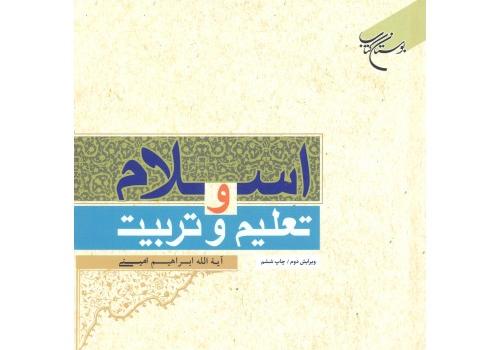
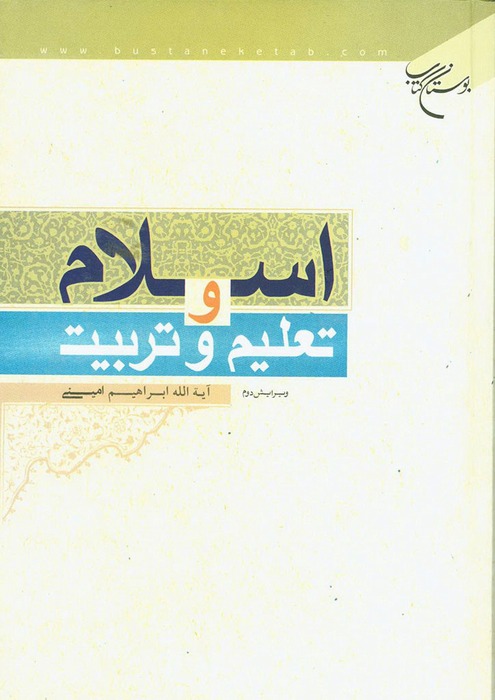
"Islam and Education" is written by Ibrahim Amini. In this work, the author examines the educational attitudes of Islam with moral, anthropological, hygienic, and psychological approaches. By studying the book "Islam and Education," the audience becomes acquainted with the definition, subject, foundations, principles, goals, stages, factors, and methods of Islamic education from an Islamic perspective. In some parts of the book, the viewpoints of certain non-Muslim scientists are also mentioned. To better define education, the author first examines the role of the mentor in upbringing and notes that in verses and narrations, the word "Tarbiyat" (education) is used less frequently, while "Tazkiyah" (purification) and "Ta’dib" (disciplining) are used more often.
Reforming Oneself and Society
The definition of education, the human being and their educational dimensions, heredity and education, and those responsible for education and their heavy responsibility are among the important chapters of this book. The author considers education to be a universal responsibility and believes that if everyone feels responsible and fulfills their duty in this regard, the groundwork for the proper upbringing of individuals will be prepared. He goes on to explain the educational responsibilities of the family, school, national media, religious scholars, writers, and the Islamic government, and mentions the factors effective in education and the necessity of coordination between them. He believes: Education holds a very important position in Islam, and the Great Prophet of Islam, in one of his sayings, stated the goal of his mission to be the completion of moral virtues. This book, penned by one of the prominent Muslim scholars, expresses the moral and educational principles of Islam by citing verses of the Holy Quran and the Hadiths of the Infallibles so that by practicing them, oneself and society may be reformed.
Stages of Education
In the book "Islam and Education," Ibrahim Amini mentions three stages for education.
-
The first stage of education (before birth): He believes that the educational role of the father and mother begins before the birth of the child. In explaining this statement, Amini speaks of the choice of a spouse and their role in the happiness, health, and education of the child. He addresses the pregnancy period and mentions the following hygienic topics: the beginning of pregnancy, the sensitivity of the pregnancy period and maternal nutrition, Islam's view on the nutrition of a pregnant woman, the impact of the mother's food on the child's character, the role of clean air and rest in the health and growth of the fetus, and childbirth are the discussions raised in this section.
-
The second stage of education (the first two years of life): In this stage, the author highlights the role of nutrition in education and points to tips such as: the role of breast milk in education, Islam and breast milk, Islam and the effect of milk on the child, the effect of food on the milk, the breastfeeding schedule, if the milk is insufficient, weaning the child, etc.
-
The third stage of education (after two years of age): In this section, Amini divides the child's education into two parts: physical education and spiritual education, and explains the sensitive role of the family and the learner (the one being educated) in this stage.
The Necessity of Knowing the Learner
The necessity of knowing the learner is one of the important sections of the book "Islam and Education." The author points to the age, psychological, and spiritual differences between the mentor and the learner and reminds that this lack of harmony is one of the great obstacles to education. Therefore, the mentor must strive, as much as possible, to act like a child when educating a child, just as the Holy Prophet (PBUH) did in his behavior with children. Another requirement for educating a human is the existence of understanding between the mentor and the learner, which he explains; after referring to the role of faith in education, he speaks of the role of intellect in education, refers to the position of intellect in moderating instincts, and recounts the effects and signs of a wise person through the language of narrations. The author subsequently reminds of the enemies of the intellect and examines the ways of cultivating the intellect from the perspective of the Quran and Hadith, which include: employing the intellect, reflection, considering consequences, consultation, accepting the truth, socializing with the wise, and curiosity. Sexual maturity is another important topic of this book.
In this section, Amini addresses the difference in puberty between girls and boys, speaks of the sexual curiosity of adolescents and the correct way to respond to them, and refers to the moral-psychological deviation of voyeurism (improper gazing) and its harms to the individual. He considers the responsibility of the father and mother in guiding children to avoid these issues to be important. Subsequently, he brings up the role of Hijab in protection against sexual deviations and addresses marriage and its role in sexual education, explaining the obstacles to marriage and their solutions.
The Method of Honoring (Takrim)
At the end, the book presents the method of "Takrim" (honoring/dignity) as a solution for families.
Tools for honoring the child, conditions for honoring the child; the method of forgiveness and cases for its use; the method of benevolence in the face of misconduct; the role of affection in education, the effect of affection on the child, the necessity of expressing affection, avoiding making affection a bargaining chip, and the harms of excessive affection, etc., are among the headings of this section so that concerned parents can have a comprehensive package and a roadmap with an Islamic view in response to the question of how to educate from an Islamic perspective.