

Yalda’s splendor, when love and light converge in the longest night
Yalda’s splendor, when love and light converge in the longest night As the curtains of autumn draw to a close and winter begins its ceremonial entrance, Iranians worldwide, alongside aficionados of Persian culture, prepare in anticipation for the year’s Yalda night. Known nationally as Shab-e Yalda or Shab-e-Chelleh, signifying the night of the forty, this occasion commemorates the initial forty days of winter, often considered the harshest and coldest period to endure. On this graceful night, the wintry chill dissipates, yielding to an embrace of familial warmth that blankets every home. It’s a time for heartwarming family reunions, where laughter, jubilation, and a contagious sense of camaraderie abound. In the midst of Yalda, hearts draw closer, intertwining in the love and presence of cherished kinfolk.
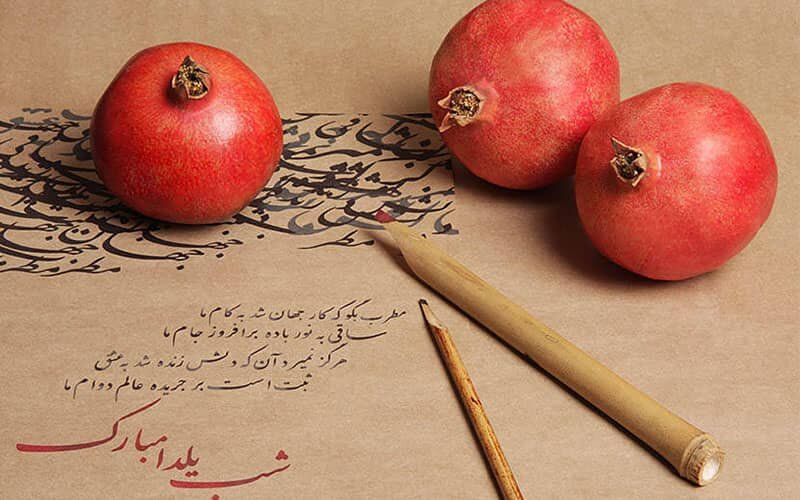
Yalda’s splendor, when love and light converge in the longest night
Yalda’s splendor, when love and light converge in the longest night
As the curtains of autumn draw to a close and winter begins its ceremonial entrance, Iranians worldwide, alongside aficionados of Persian culture, prepare in anticipation for the year’s Yalda night.
Known nationally as Shab-e Yalda or Shab-e-Chelleh, signifying the night of the forty, this occasion commemorates the initial forty days of winter, often considered the harshest and coldest period to endure.
On this graceful night, the wintry chill dissipates, yielding to an embrace of familial warmth that blankets every home. It’s a time for heartwarming family reunions, where laughter, jubilation, and a contagious sense of camaraderie abound. In the midst of Yalda, hearts draw closer, intertwining in the love and presence of cherished kinfolk.
For a quick glimpse, just imagine homes in which elders are talking together, children joyfully chasing one another, mothers meticulously arranging an array of dried nuts, luscious pomegranates, and refreshing watermelons, while fathers engage in the shared enthusiasm of a ball game on TV screen!
On this night, tables are traditionally adorned with floral bowls, fresh fruits and vibrant Ajil, which is dried fruits, seeds, and nuts. Here, fruits, as an evocative of summer’s abundance, hold symbolic significance; watermelons and pomegranates, embodying bounty, stand as traditional offerings. They say consuming watermelon before winter’s arrival fortifies the body against illness.
However, arranging such a modest festival might pose a challenge and be unattainable for many people, including retired workers who have incomes below the poverty line.
As the calendar inches closer to this cherished celebration, every breadwinner wants to fill their homes with the vibrancy of colorful fruits, the sweetness of confectionery, but the reality they face is one of meager wages and the unrelenting grasp of rising inflation.
The good news is that both the government and many non-governmental organizations provide assistance to low-income people hoping every family partakes in its traditions and festivities without constraint.
While not an official holiday, Yalda stands prominently among ancient traditions, drawing reverence through its affiliation with genuine Persian heritage. Television and radio broadcasts enthusiastically embrace this occasion, dedicating special programs that reflect its rich tapestry of traditions, captivating families who willingly set aside modern distractions to fully immerse themselves in its enchantment.
Of the numerous ancient Persian festivals, only two command the global celebration of Iranians: Yalda night, symbolizing the birth of a new sun, and Nowruz, the Persian New Year marking the birth of a new day.
The narrative of Yalda resonates as a tale of courage amid darkness, a triumphant convergence of light and human warmth that ignites the bloom of spring within our hearts.
Following a sumptuous dinner, many engage in the recitation of poetry, storytelling, chanting, musical performances, or cozy conversations that linger till the midnight hour.
Here are some captivating insights about Yalda night:
- In 2022, Yalda was inscribed on UNESCO’s Representative List of the Intangible Cultural Heritage of Humanity
- It is celebrated on the last day of Azar, the final month of autumn in the Iranian calendar, just before the advent of Dey, the first month of winter.
- This year, Yalda falls on December 21.
- In the ancient Iranian calendar, winter is segmented into Chelleh Bozorg (the bigger forty) from December 22nd to January 30th, followed by Chelleh Kouchak (the smaller forty) from January 30th to March 10th.
- The term “Yalda,” meaning birth, was adopted from Syriac by the Syriac Christians into the Persian language.
- Legends intertwine Yalda night with the emergence of Naneh-Sarma, a folklore figure representing the onset of winter’s chill and the promise of imminent spring.
Yalda night is not merely a date on the calendar; it embodies a symphony of love, resilience, and cultural heritage that resonates through time, promising hope and the renewal of light in the midst of winter’s darkness.
The festivity stands as a testament to the enduring spirit of unity and the celebration of life’s cyclical beauty.
