

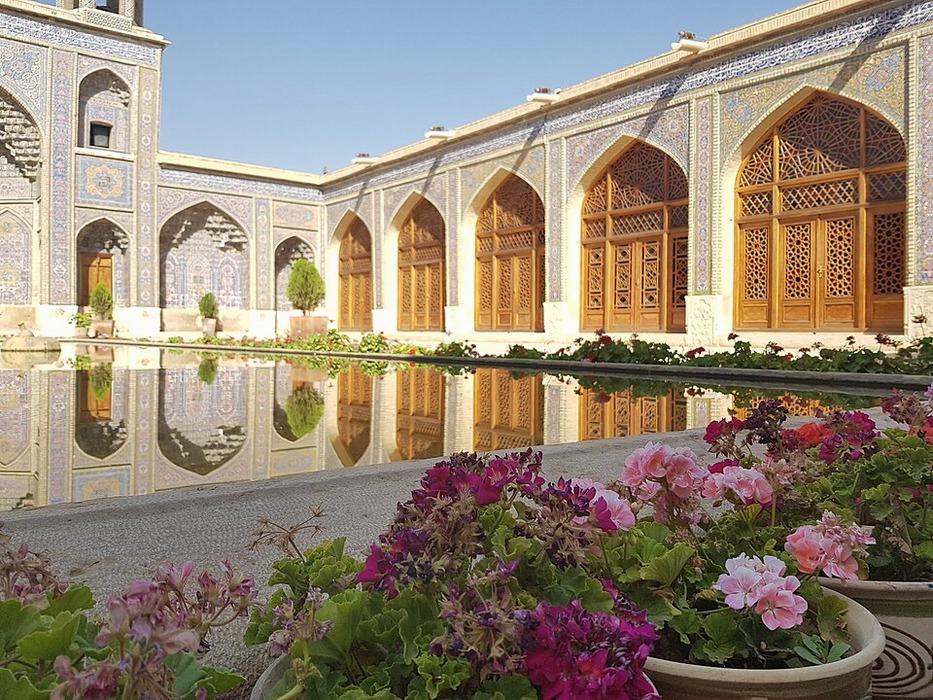
Among all the mosques of Iran, there is one that seems almost more like a vast kaleidoscope than a traditional mosque. The Nasir al-Mulk Mosque of Shiraz, built in the late Qajar period in the late nineteenth century, is a brilliant and poetic example in the history of Iranian mosque architecture. Unlike the monumental and imposing Seljuk and Ilkhanid buildings, and distinct from the grandeur and dignity of Safavid mosques, it speaks of delicacy, refinement, human scale, and pure poetry.
If the Jameh Mosque of Isfahan is a monumental book of architectural history, and the Sheikh Lotfollah Mosque is a mystical poem in praise of silence, the Nasir al-Mulk Mosque is a passionate symphony of light and color, performed every morning in the quiet of its prayer hall.
To understand the Nasir al-Mulk Mosque, we need to understand its historical and social context. The mosque was built during the Qajar period at the request of Mirza Hasan Ali Khan, known as Nasir al-Mulk, a prominent and influential nobleman of Shiraz. The Qajar era was a period of transition in Iran, as the country moved from a traditional world toward modernity, and this transition was reflected in architecture as well. Although Qajar architecture has sometimes been described as a period of decline, the Nasir al-Mulk Mosque reveals another side of the period—a path toward greater delicacy, a more human scale, new sensory experiences, and a kind of “spatial intimacy” that is less evident in many of the monumental mosques of earlier periods.
The craftsmen and architects associated with the mosque, including Mohammad Hasan Memar and Mohammad Reza Kashi-Saz, chose a different path rather than competing with the grandeur of Safavid mosques. They created a mosque that captivates visitors not through sheer monumentality or grandeur, but through color and light. Construction took approximately twelve years, from 1876 to 1888, and the result is now one of the best-known and most widely visited historic mosques in Iran among international travelers.
At first glance, the plan of the Nasir al-Mulk Mosque is relatively simple and conventional: a rectangular central courtyard with a long pool at its center, a winter prayer hall to the north, and a summer prayer hall to the south. But this apparent simplicity was a deliberate choice. Rather than concentrating their creative energy on a complex plan, the architects focused on the spatial quality and sensory experience of the prayer halls.
The central courtyard, with its rectangular pool and surrounding garden beds, acts as a transitional space, separating visitors from the bustle of Shiraz’s streets and gradually drawing them into the mosque’s spiritual atmosphere.
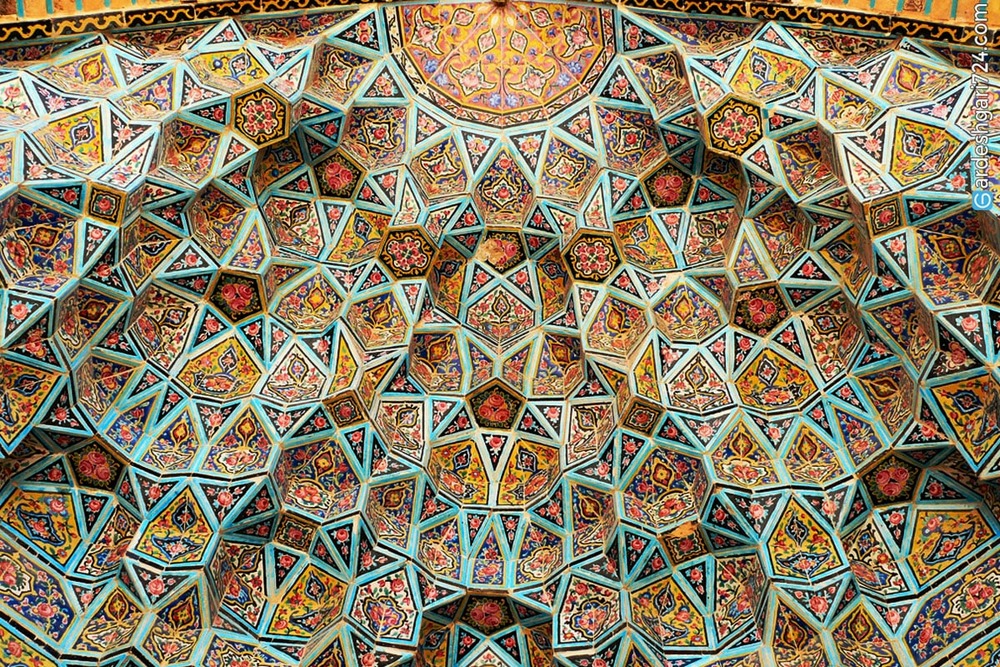
Seven-color tiles, or haft-rang tiles, decorated with arabesque motifs, floral designs, birds, and Thuluth inscriptions cover the courtyard walls. Shades of pink, yellow, turquoise, and white dominate the palette. This warm and gentle color scheme, often associated with Qajar-era aesthetics, creates a cheerful and inviting atmosphere that contrasts with the heavier solemnity of many earlier mosques.
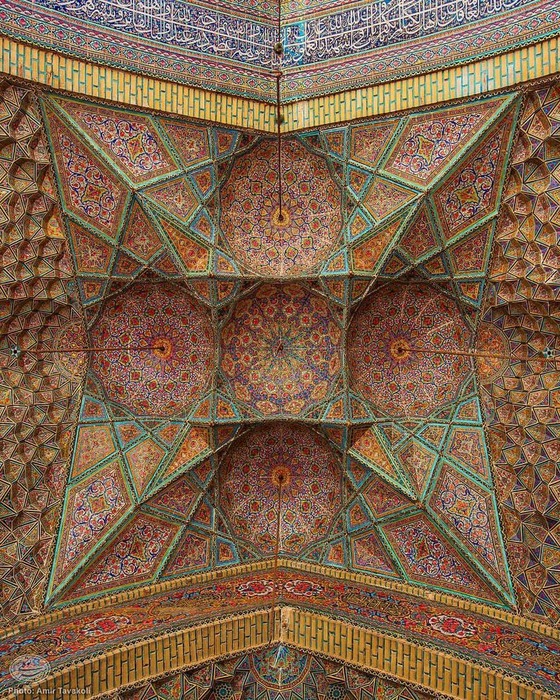
The northern iwan, which leads to the winter prayer hall, is decorated with plaster muqarnas and delicate tilework. But the true jewel of the mosque is the southern iwan and the summer prayer hall connected to it.
The southern iwan, with its tall pointed arch and two small minarets on either side, presents a symmetrical and striking façade. The seven-color tiles of this iwan, dominated by shades of pink, have also given the Nasir al-Mulk Mosque its popular nickname among international visitors: the “Pink Mosque.”
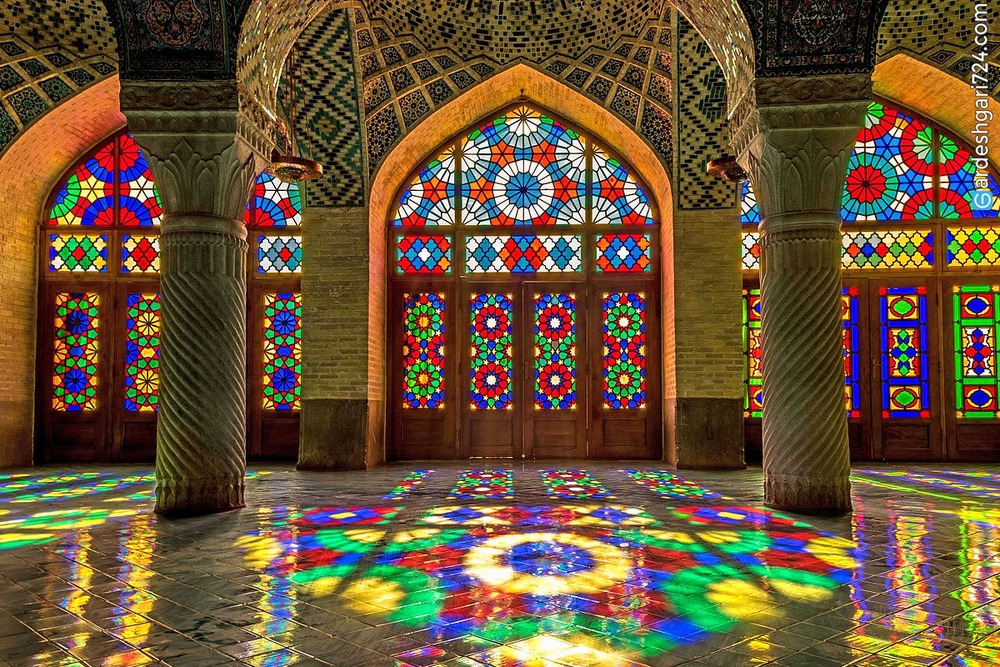
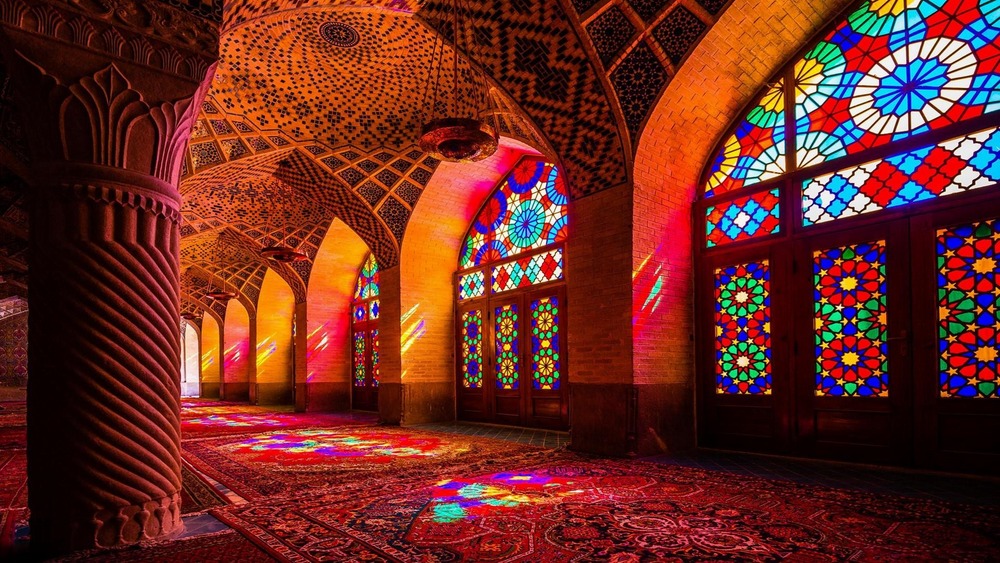
But what has brought the Nasir al-Mulk Mosque worldwide fame is its western prayer hall, commonly referred to as the summer prayer hall. Designed with seven large arched bays and elegantly twisted stone columns, the space is transformed into a “theater of light.”
The secret behind this spectacle lies in the large, colorful orosi windows set into the western façade of the prayer hall. Their colored glass—in shades of red, yellow, blue, green, and violet—casts a dazzling interplay of colors across the interior.
When sunlight passes through these colored panes, the interior of the prayer hall is flooded with an explosion of color. The twisted stone columns supporting the roof seem to become prisms of light, while the carpeted floor is transformed into a canvas of colorful patches of sunlight. The visual experience is so poetic and otherworldly that some visitors and popular travel sources have described the mosque as a “Rainbow Mosque.”
But this play of light is not merely a beautiful accident; it is also the result of deliberate architectural design. The architects carefully considered the relationship between the building, its windows, and the changing path of sunlight. The position and proportions of the orosi windows allow sunlight to enter the prayer hall and interact with the colored glass, producing constantly changing patterns of light and color.
The high ceiling and vaulted bays help distribute the light across the interior surfaces. As the sun moves and the angle of the light changes, the spectacle gradually fades and transforms, while the prayer hall becomes a calm and cool space for worship and contemplation.
Beyond its orosi windows, the Nasir al-Mulk Mosque is a treasure trove of Qajar-era ornamentation. The carved wooden ceiling of the prayer hall, decorated with geometric and arabesque motifs, is a striking example of traditional Iranian woodcarving.
The delicate marble mihrab, adorned with arabesque designs and Qur’anic inscriptions, forms an important focal point of the prayer hall. The seven-color tiles featuring gol-o-morgh, a floral-and-bird motif associated with Persian decorative art, reflect the mosque’s deep connection with the artistic culture of Shiraz, the city of poetry and literature.
The Nasir al-Mulk Mosque teaches us that spirituality and religious experience are not necessarily found only in absolute silence or in the absence of color. Sometimes, one can also experience wonder amid an explosion of color, in the dance of light across stone columns, and in watching a carpet transformed into a canvas of light—and through these experiences, feel a sense of spiritual connection through light and color. This mosque is a true celebration of life, light, and beauty. It demonstrates that Iranian architecture, even during a period sometimes described as one of decline, could still produce masterpieces that continue to captivate visitors from around the world.