

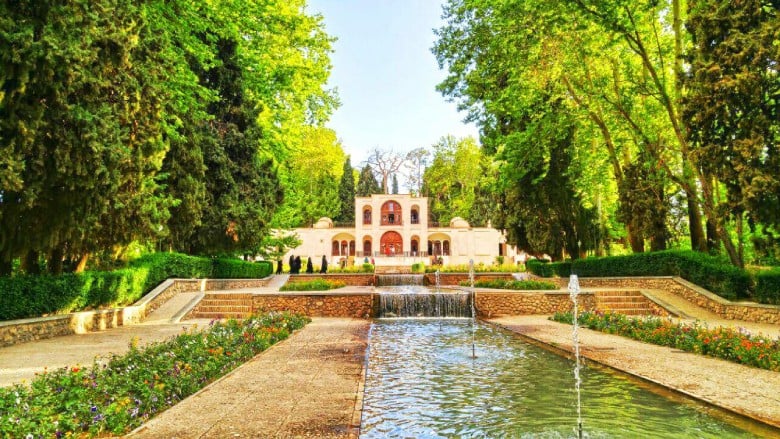
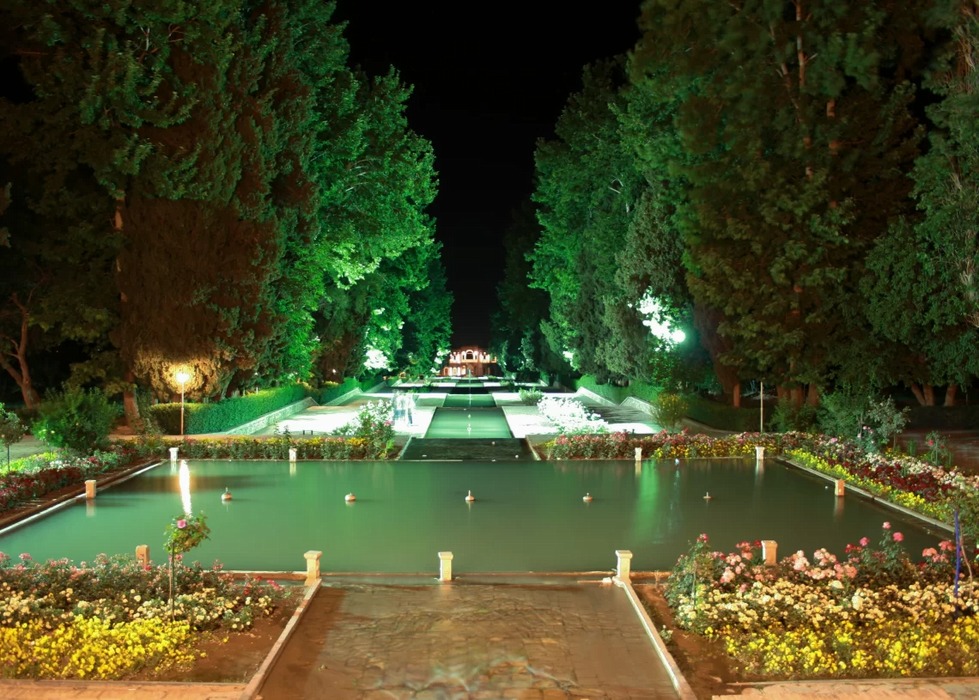
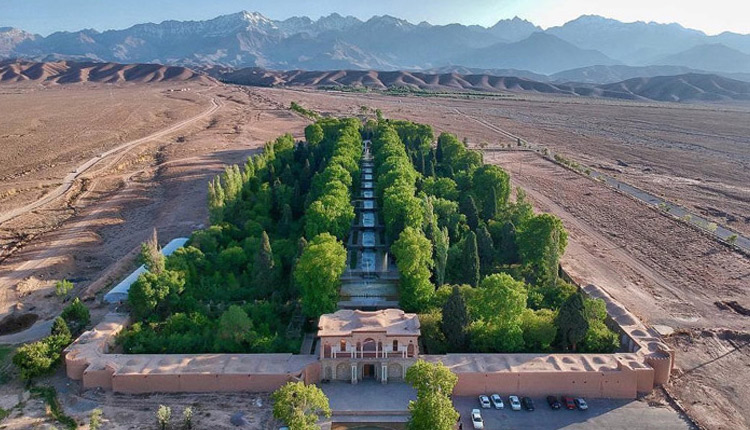
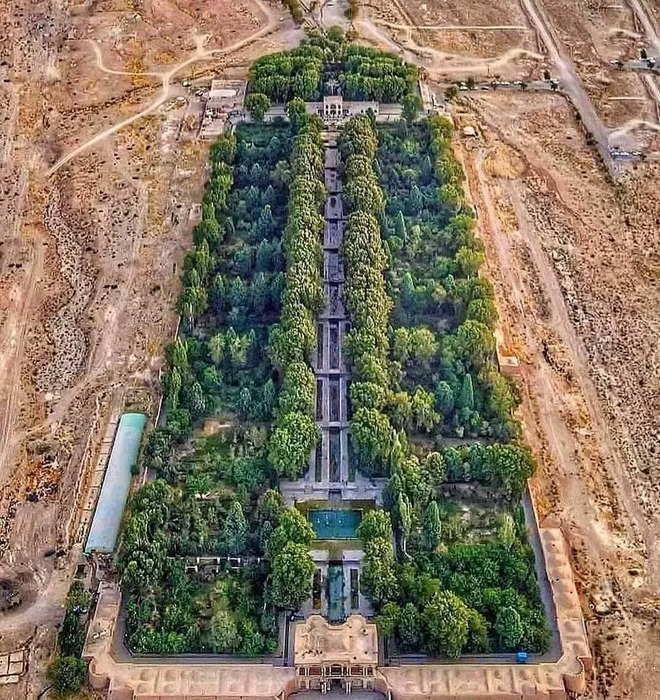
Amid the dry, rocky landscapes of Kerman Province, near the historic town of Mahan and on the edge of the Lut Desert, Shazdeh Garden (Prince’s Garden) stands out as a remarkable oasis of greenery. As one of the gardens included in the UNESCO World Heritage property “The Persian Garden,” it offers a striking contrast between the arid surroundings and its lush trees, flowing water, and carefully designed landscape. The garden is a testament to the ingenuity of Persian garden design and the importance of water in creating life in an arid environment.
The garden dates back to the Qajar period and is closely associated with Abdolhamid Mirza Naser al-Doleh Farmanfarma, a Qajar prince who served as governor of Kerman. Its development is generally placed in the late nineteenth century, although details of its construction history and chronology require further verification. Local accounts tell of work on the entrance remaining unfinished following the prince’s death. This story has become part of the garden’s historical lore, though it should be understood as a local tradition rather than a definitively established historical fact.
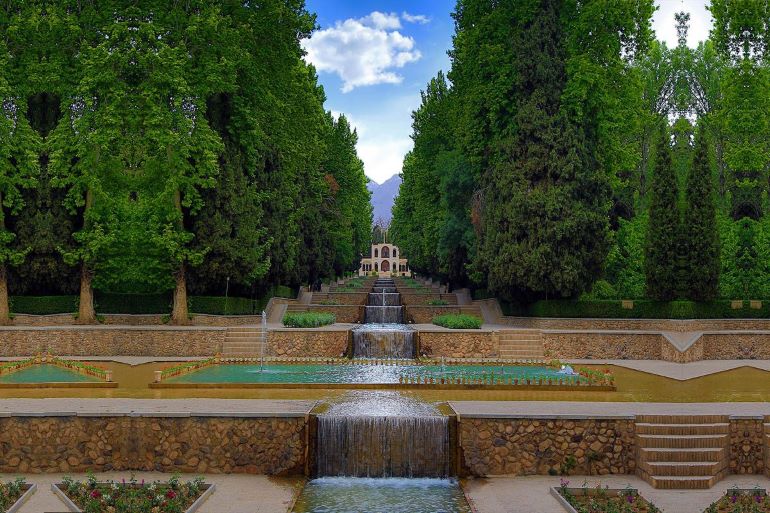
Covering approximately 5.5 hectares, Shazdeh Garden occupies a natural slope near the surrounding hills. Its rectangular layout is enclosed by walls, creating a distinct green space within the rugged landscape. The contrast between the garden’s orderly paths, vegetation, and water features and the dry terrain beyond its boundaries is central to its distinctive character.
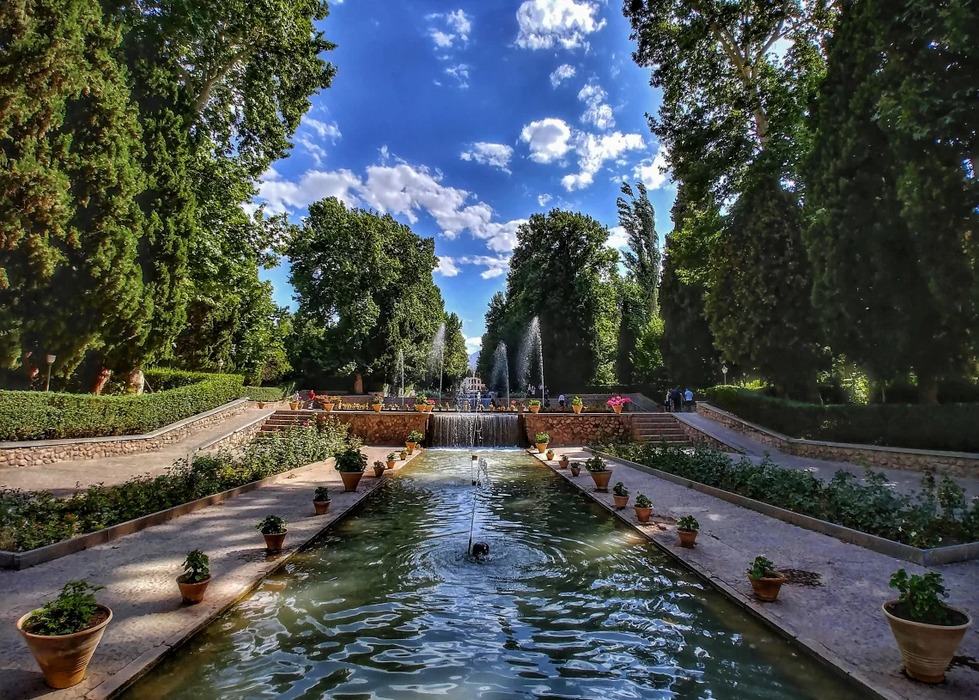
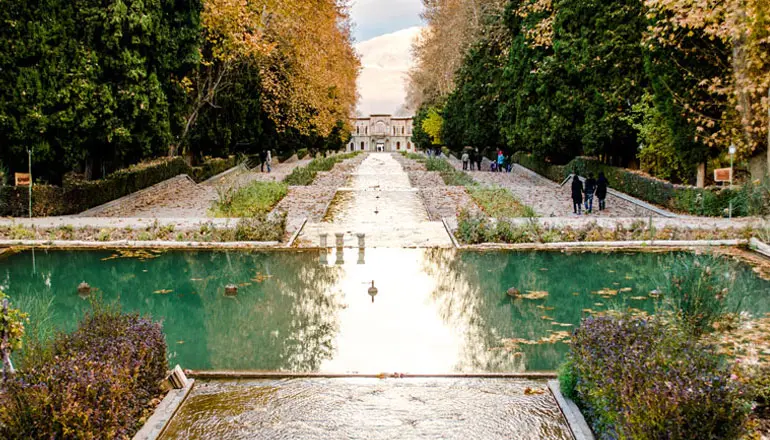
Water is the heart of Shazdeh Garden. The garden’s traditional water-supply system, associated with the region’s qanat heritage, channels water through carefully designed pathways and distributes it throughout the grounds. Stone-lined channels and decorative water features guide the flow, while the garden’s sloping terrain helps water move from higher to lower levels. This system illustrates how traditional Persian landscape design combined practical water management with aesthetic considerations.
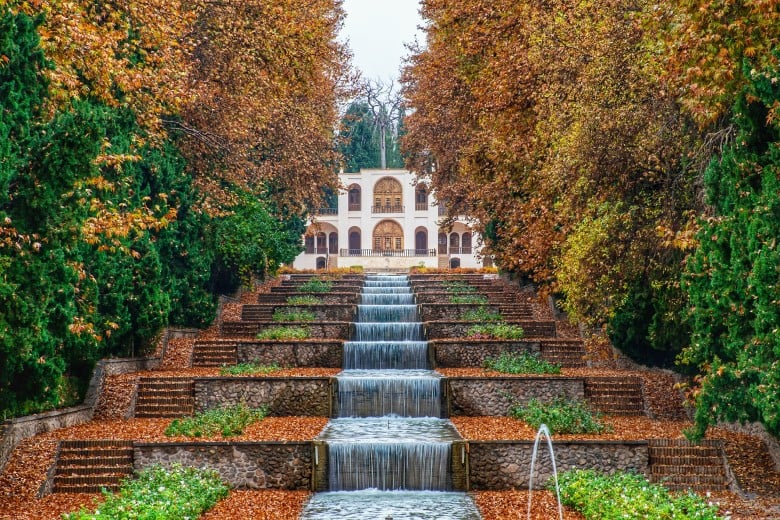
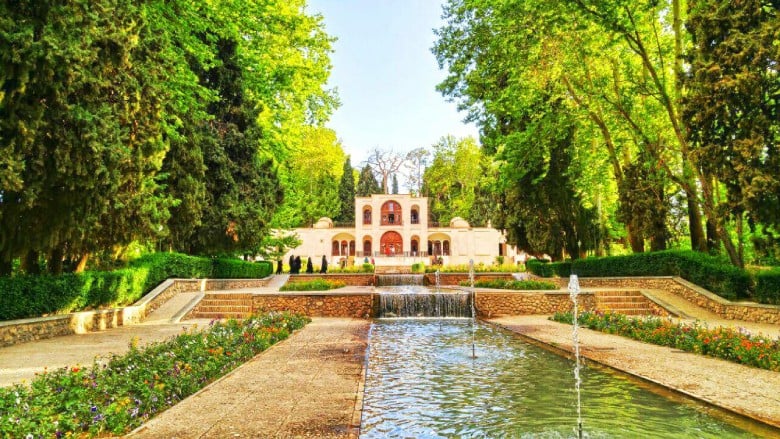
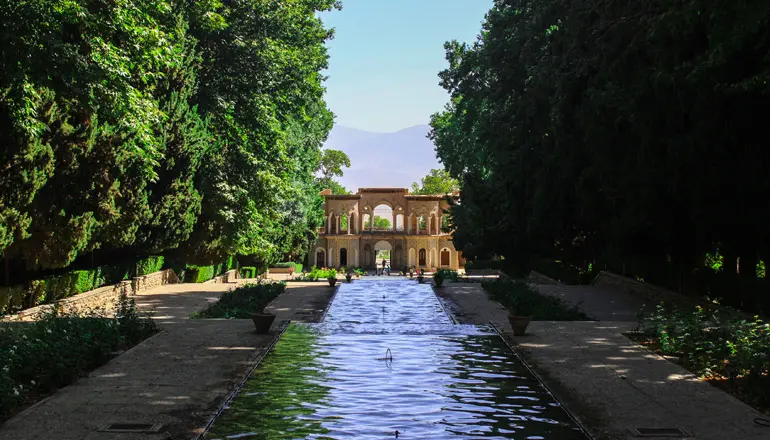
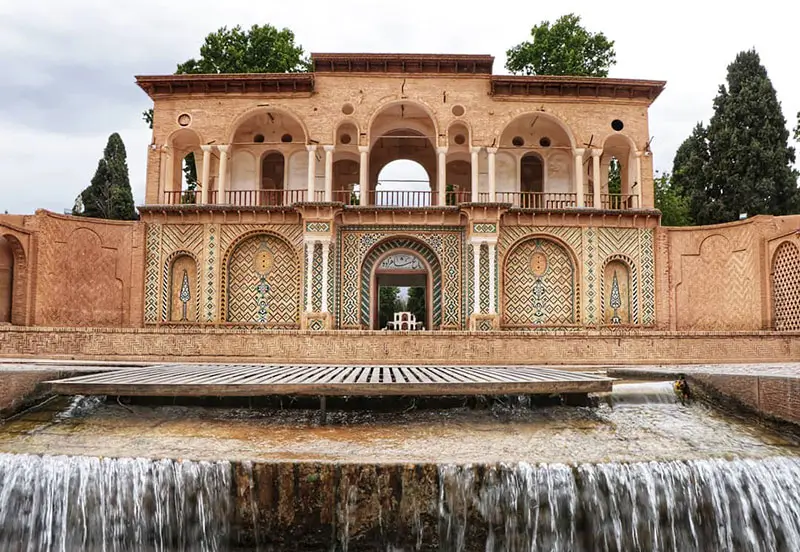
One of the garden’s most striking features is its series of cascading pools and fountains. Their arrangement takes advantage of differences in elevation and water pressure to create a sequence of flowing water along the main axis. The system reflects the ingenuity of traditional hydraulic engineering, in which the natural slope and carefully planned channels helped distribute water and animate the garden without relying on modern pumping equipment.
The main axis is lined with trees that provide shade and emphasize the garden’s long, symmetrical layout. Cypress, pine, and plane trees contribute to its distinctive landscape, while fruit trees—including pomegranate, grape, fig, and apricot—reflect the traditional Persian garden’s combination of beauty and productivity. Together, the trees, pathways, and water features create a cool, inviting environment amid the surrounding dry landscape.
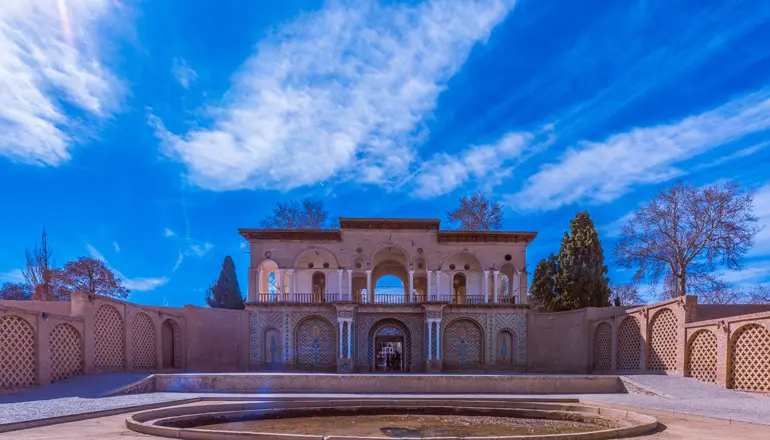
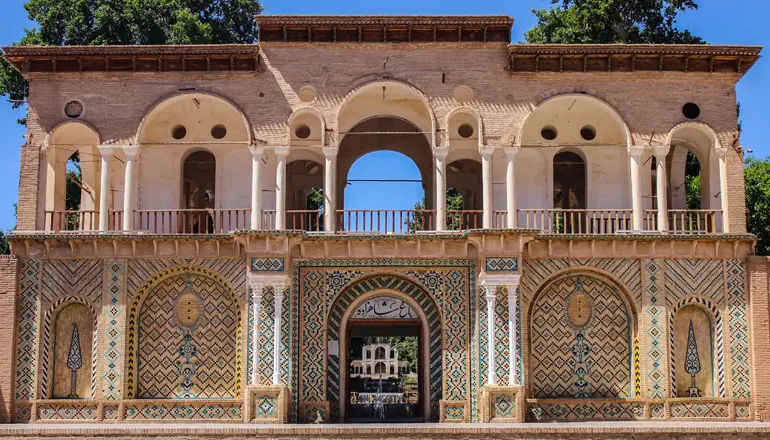
At the upper end of the garden stands the main pavilion, or kushk, a prominent architectural feature associated with the Qajar period. Its position provides a commanding view of the garden’s central axis and the surrounding landscape. Traditional architectural details, including decorative windows and orsi—windows featuring intricate wooden frames and colored glass—contribute to the pavilion’s character. From this elevated point, the garden appears as a carefully composed green landscape set against the rocky terrain.
In addition to its pavilion and water features, Shazdeh Garden includes historic service structures associated with the functioning of the estate, such as a bathhouse, stables, and other supporting spaces. The entrance portal is particularly notable for its decorative brickwork and colorful tilework. These architectural elements complement the garden’s landscape design and reflect the craftsmanship associated with Qajar-era buildings.
Shazdeh Garden is remarkable for the way it brings together architecture, vegetation, and flowing water within an arid environment. Its carefully planned layout, use of the natural slope, and traditional water-distribution system demonstrate the principles of Persian garden design. More than a beautiful green retreat, the garden represents a cultural achievement in which environmental knowledge, engineering, and aesthetics come together to create a lasting landscape.