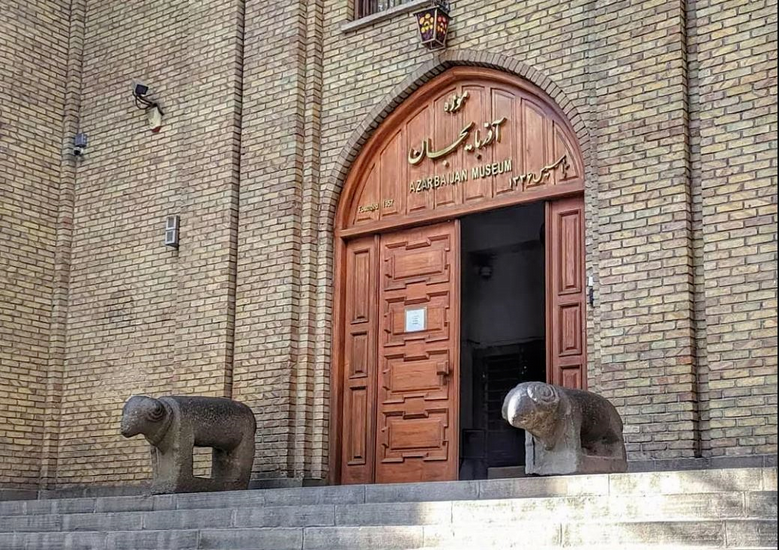
The Architecture of Tabriz: Iran at the Crossroads of East and West
Imagine yourself standing on the ancient Silk Road. From the East comes the fragrance of spices and incense. From the West, the rustle of Venetian fabrics and the voices of Genoese merchants. At the meeting point of these two worlds rose a city that, for centuries, was not merely an exotic destination of the East, but one of the world's great crossroads: Tabriz.
To truly understand Iran, we must look beyond the familiar image of Isfahan's turquoise domes and encounter this remarkable city—a place where architectural beauty is expressed not through color and tilework alone, but through the strength of stone and brick, the boldness of its forms, and the intelligence of its engineering. The architecture of Tabriz tells a story of resilience, renewal, and the enduring dialogue between civilizations.
Tabriz stands upon one of the most seismically active regions of the Iranian Plateau, and its history has been shaped by a succession of devastating earthquakes. Time and again, the city was reduced to ruins, only to rise again—like a phoenix from its own ashes—stronger and more resilient than before. This continuous cycle of destruction and rebirth gave birth to a distinctive architectural identity. The architecture of Tabriz is not a display of royal grandeur or courtly luxury. It is, above all, an expression of the determination to endure.
Here, you will not find the dreamlike ornamentation or the dazzling colors that define the architecture of Shiraz or Isfahan. Instead, you encounter something equally remarkable: an architecture of brick and stone, honest in its materials and uncompromising in its purpose—one that transforms the necessity of survival into a lasting architectural virtue.
The Labyrinth of Silk: The Bazaar of Tabriz
To begin our architectural journey, we step into the world's largest covered brick bazaar: the Grand Bazaar of Tabriz. This is far more than an old marketplace where visitors come to buy souvenirs. It is an entire city beneath a network of soaring vaults and brick domes—a medieval commercial metropolis that has preserved its original complexity and vitality for centuries.
Walk through its winding passageways, and you are following the same routes once traveled by merchants from every corner of the known world. Among them was the Venetian explorer Marco Polo, who passed through Tabriz in the thirteenth century and wrote of its thriving trade in pearls, precious stones, fine textiles, and luxury goods.
Imagine this place centuries ago: a merchant from India bargaining with a trader from Constantinople, both seated beneath these very vaults, sharing tea as they negotiated silk, spices, and precious cargo . The Bazaar of Tabriz was more than a marketplace. It was a crossroads of civilizations—a place where goods, languages, ideas, and cultures met beneath the same roof.
What makes the Bazaar of Tabriz an architectural masterpiece is not merely its astonishing scale, but the ingenuity behind its natural climate-control system—devised centuries before the invention of modern air conditioning.
Its lofty ceilings and succession of brick vaults soften the harsh sunlight, filtering it through carefully placed skylights until it becomes a gentle glow, suspended like golden dust in the air. In summer, the bazaar remains remarkably cool. In winter, it retains a comfortable warmth. This is architecture working in harmony with nature, using form, proportion, and airflow instead of mechanical technology.
Here, architecture is more than shelter—it is an intelligent environmental system. Through the steady rhythm of its vaults and the ever-changing interplay of light and shadow, it transforms the bustle of commerce into a space of balance, comfort, and quiet beauty.
Deep within this labyrinth, you suddenly arrive at spaces that take your breath away: the Timchehs—the grand vaulted trading halls of the bazaar. Among them, the Timcheh-ye Mozaffarieh is its finest jewel. This magnificent brick-domed chamber seems to embody a single architectural ambition: to achieve the most sophisticated geometry using the simplest of materials.
The proportions of the space, the perfect dialogue between the skylights above and the blind arches below, and the extraordinary sense of calm that fills the central hall reveal the genius of Persian architecture. Here, architects transformed commerce—an activity often driven by urgency and negotiation—into an experience of dignity, contemplation, and harmony.
Within this magnificent hall, the architecture captivates the visitor long before any bargain is struck. . It is no surprise that the Historic Bazaar Complex of Tabriz has earned its place on the UNESCO World Heritage List. Outwardly, it presents the modest, inward-looking character typical of traditional Iranian architecture; within, however, it embraces a profoundly cosmopolitan world. The bazaar is the physical embodiment of the Silk Road—a place where bricks themselves become the silent witnesses to centuries of exchange, dialogue, and encounters between civilizations.
A Medieval Skyscraper
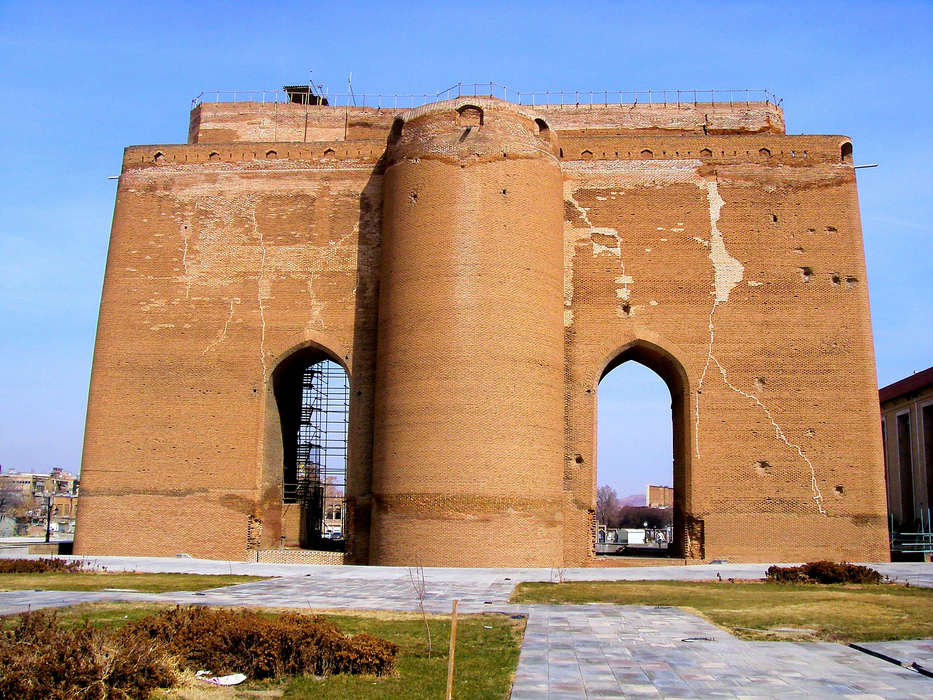
Just a few minutes' walk from the labyrinth of the bazaar, another monument tells a very different story—the story of extraordinary ambition. The Arg of Ali Shah, once conceived as a monumental mosque, now rises with towering walls reaching nearly 26 meters into the sky. Today, it resembles a forgotten fortress or the weathered stone shell of an ancient giant.
It may well be regarded as Iran's answer to the great Gothic cathedrals of medieval Europe—yet expressed in an entirely different architectural language. In the fourteenth century, while Europe's master builders were raising soaring cathedrals toward the heavens, Ali Shah Jilani, the powerful Ilkhanid vazier, envisioned something equally audacious in Tabriz: a brick vault with a span greater than that of the legendary Taq Kasra (the Arch of Ctesiphon), the largest brick arch of the ancient world.
This was far more than a construction project. It was a declaration of ambition—a bold statement of political authority, fearless engineering, and humanity's determination to conquer space and gravity using nothing more than brick, mortar, and imagination.
The great vault ultimately collapsed—perhaps because such an ambitious span could never have remained structurally stable with the engineering knowledge of its time. Yet the surviving walls, rising to a height of nearly 26 meters—the equivalent of a modern ten-story building—still possess the overwhelming presence of a medieval skyscraper.
Standing beside these colossal masonry piers is a humbling experience. You find yourself face to face with a mass of brick and stone that, more than six centuries ago, pushed the boundaries of what architecture and engineering believed possible. The Arg of Ali Shah reminds us that Iranian architecture is not defined solely by gardens, domes, and visions of paradise. Here in Tabriz, architecture can be monumental, austere, and strikingly modern in spirit. It is as though the ideals of structural minimalism and architectural boldness had taken root in this land centuries before they emerged as defining principles of modern design.
The Houses That Witnessed a Revolution
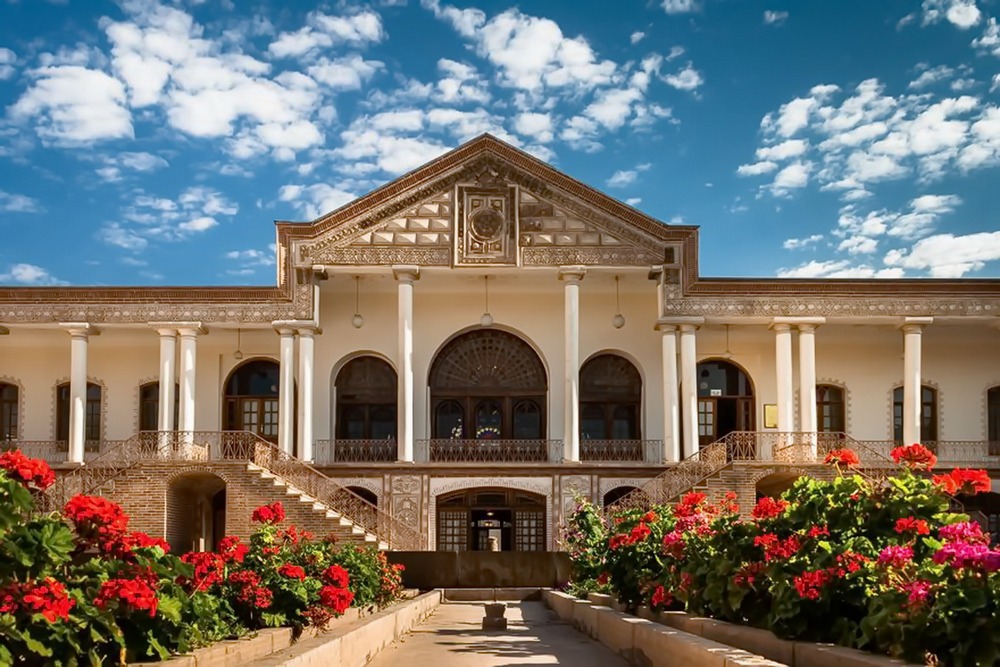
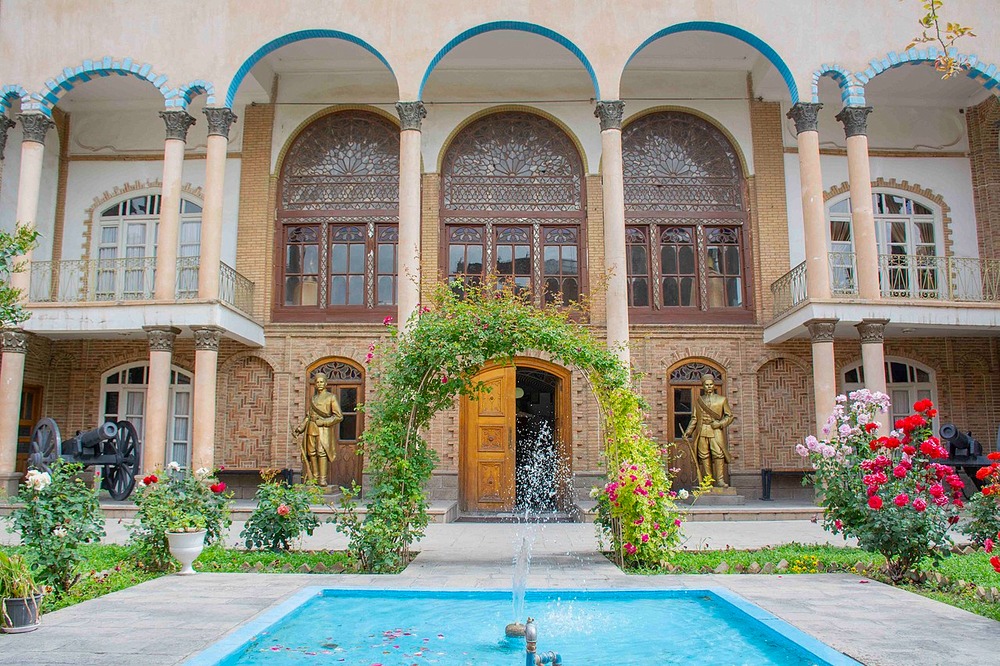
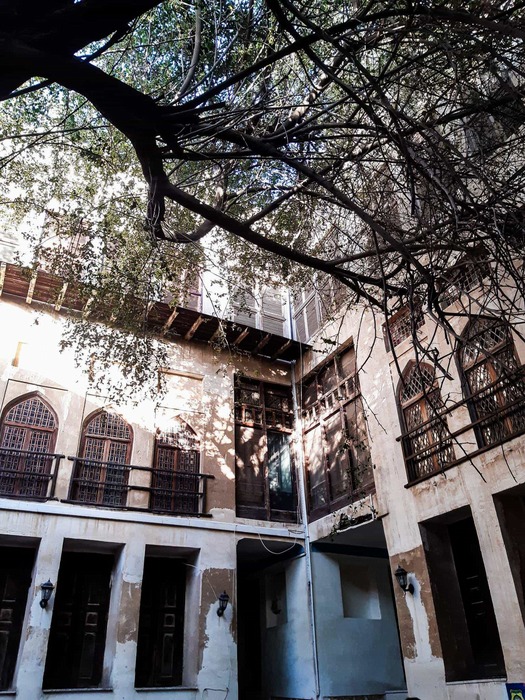
No story of Tabriz's architecture is complete without stepping inside its historic homes. In the nineteenth century, Tabriz became known as Iran's Gateway to Modernity, and this remarkable transformation is beautifully reflected in its residential architecture. Historic Qajar-era houses—such as the Constitution House and the Behnam House—became architectural laboratories where East and West entered into a remarkable visual dialogue.
These residences remain faithful to one of the oldest principles of Persian architecture: the central courtyard and the hidden garden. Passing through the entrance, you leave the bustle of the city behind and enter a secluded oasis—a quiet courtyard centered on a reflecting pool, where trees frame the sky above. Yet, almost unexpectedly, another architectural language begins to reveal itself. Verandas supported by columns inspired by the architecture of Imperial Russia, ornate capitals adorned with European decorative motifs, and finely crafted plaster fireplaces all speak of a city that looked confidently beyond its own borders.
These were not imitations of foreign styles. They were thoughtful adaptations—evidence that Tabriz embraced new ideas without abandoning its own architectural identity.
The finest expression of this creative fusion can be found in the Tanabi halls—the grand reception rooms of these historic houses. Their richly carved wooden ceilings, dazzling Persian mirrorwork, and monumental Orosi windows come together in a remarkable architectural composition. Filled with panels of red, blue, and amber stained glass, these windows transform ordinary daylight into a luminous tapestry of color, as though the rooms themselves were filled with precious gemstones.
Within these spaces, a profound cultural synthesis took shape. Tabriz discovered how to embrace the outside world without ever losing sight of its own identity. These houses were far more than private residences. They became centers of intellectual life and, ultimately, the cradle of Iran's Constitutional Revolution—one of the earliest movements for constitutional government and the rule of law in the modern Middle East.
Within these very walls, advocates of liberty, reformers, and intellectuals gathered beneath the colored light of the Orosi windows, debating ideas that would help shape the future of a nation. Here, architecture was never a passive backdrop to history. It became one of its active participants—a space where ideas were exchanged, movements were born, and the course of history was quietly transformed.
An Echo for the Modern World
To explore Tabriz is not simply to visit a collection of historic monuments. For a global audience, it is an invitation to reflect on a deeper human story. The architecture of Tabriz reminds us that Iranian civilization is defined by far more than the epic poetry of Ferdowsi or the intricate beauty of Persian carpets. It is equally expressed through an extraordinary capacity to build, to innovate, to calculate, to connect, and to rise again after adversity.
Within the Grand Bazaar, we witness how a commercial infrastructure can transcend its practical purpose and become a masterpiece of space, light, and human experience. At the Arg of Ali Shah, we discover that architectural ambition has never depended solely on stone, steel, or modern technology. Centuries ago, master builders reached for the sky with little more than brick, geometry, and imagination.
And in the Qajar houses of Tabriz, we encounter one of history's most compelling examples of cultural exchange—not as an abstract ideal or political slogan, but as something woven into the very fabric of architecture itself. It lives in the proportions of a room, the colors of stained glass, the rhythm of carved wood, and the dialogue between Persian tradition and influences from beyond its borders.
Perhaps that is Tabriz's greatest lesson for the world today. Architecture is more than the construction of buildings. It is the construction of relationships—between people and place, between memory and innovation, between local identity and global exchange. In Tabriz, those relationships have endured for centuries, reminding us that the strongest civilizations are not those that close themselves to the world, but those that engage with it while remaining unmistakably themselves.
With its resilient, inward-looking yet globally minded architecture, Tabriz invites the world to discover another dimension of Iran's soul. The city reminds us that the identity of a nation is forged not in isolation, but through engagement with the great routes of civilization and through the resilience to rise stronger after every devastation. Walking through Tabriz is like wandering among the echoes of the Silk Road. Here, every brick tells the story of a Venetian merchant, a Persian poet, and a shared dream of a world that, centuries ago, found a path toward connection, coexistence, and exchange—a vision that still inspires us today to reflect on what it truly means to build, to endure, and to belong.
.
| Name | The Architecture of Tabriz: Iran at the Crossroads of East and West |
| Country | Iran |

.jpg)


_3.jpg)

.jpg)
_1_2.jpg)


Choose blindless
Red blindless Green blindless Blue blindless Red hard to see Green hard to see Blue hard to see Monochrome Special MonochromeFont size change:
Change word spacing:
Change line height:
Change mouse type: