

_1_2.jpg)
_1_2.jpg)
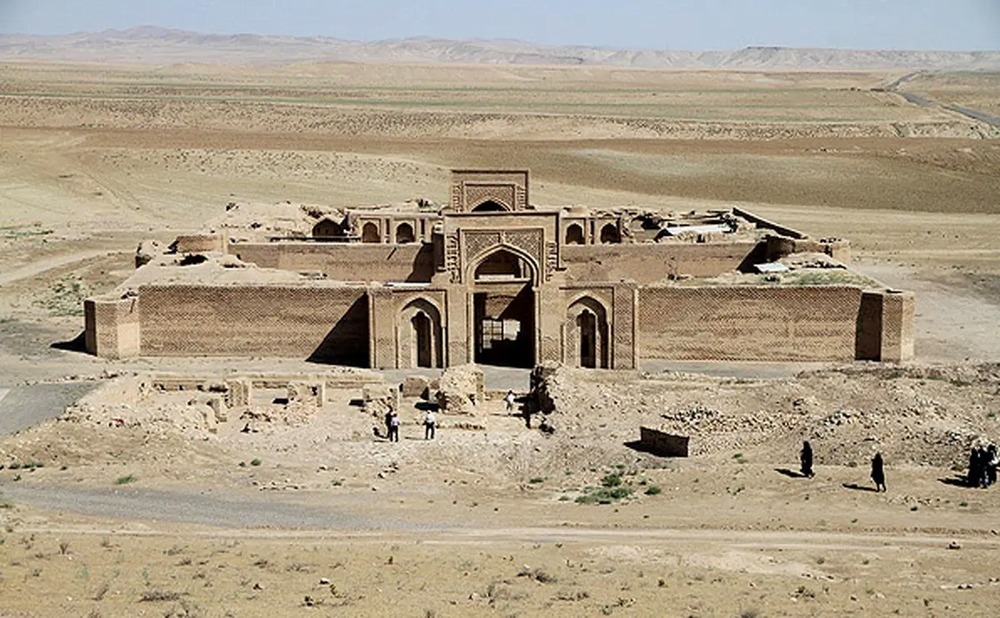
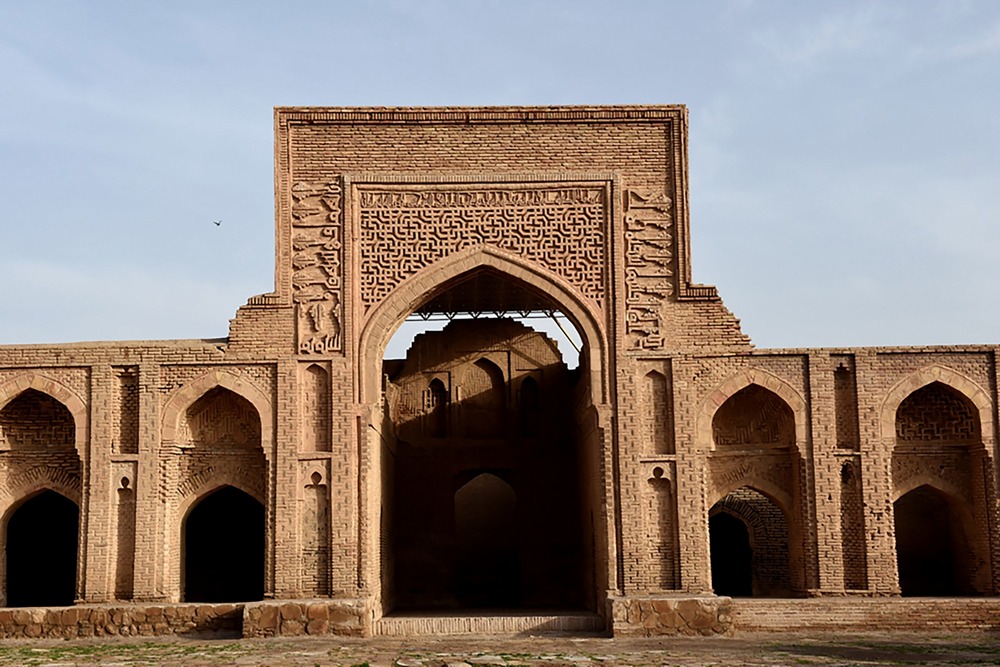
Imagine traveling along an ancient road through a desert, across an open plain, or at the foot of a mountain pass. Suddenly, you come across a building with towering fortified walls, a grand entrance, and a spacious central courtyard surrounded by rows of orderly chambers. This is a caravanserai—a sanctuary where, centuries ago, weary travelers found rest, while their camels and valuable goods were sheltered after long and arduous journeys.
Today, you might pass by such a structure and see nothing more than an old building. But if you pause for a moment and look more closely, you will discover something far greater than brick and stone: an ingenious network of communication and exchange that once connected the civilizations of East and West.
The tradition of building caravanserais in Iran stretches back as far as the country's recorded history. The Greek historian Herodotus describes a series of structures commissioned by the Achaemenid Empire along the route between Susa and Sardis. He refers to 111 relay stations—the predecessors of caravanserais—that formed a communication network connecting the vast territories of the empire. Although none of these Achaemenid structures have survived, several examples from the Sasanian period remain, including the Deir-e Gachin Caravanserai near Qom, often referred to as the "Mother of Iran's Caravanserais."
The golden age of caravanserai construction, however, came during the Safavid era. Recognizing the strategic importance of trade routes, Shah Abbas I initiated a large-scale revival of the Silk Road and commissioned the construction of dozens of caravanserais across the country. According to a widely accepted convention of the time, a caravanserai was built approximately every 36 kilometers—the average distance a caravan could travel in a single day. Historical accounts suggest that nearly one thousand caravanserais once stood along Iran's principal highways, forming an extensive network that facilitated trade, travel, diplomacy, and cultural exchange across the region.
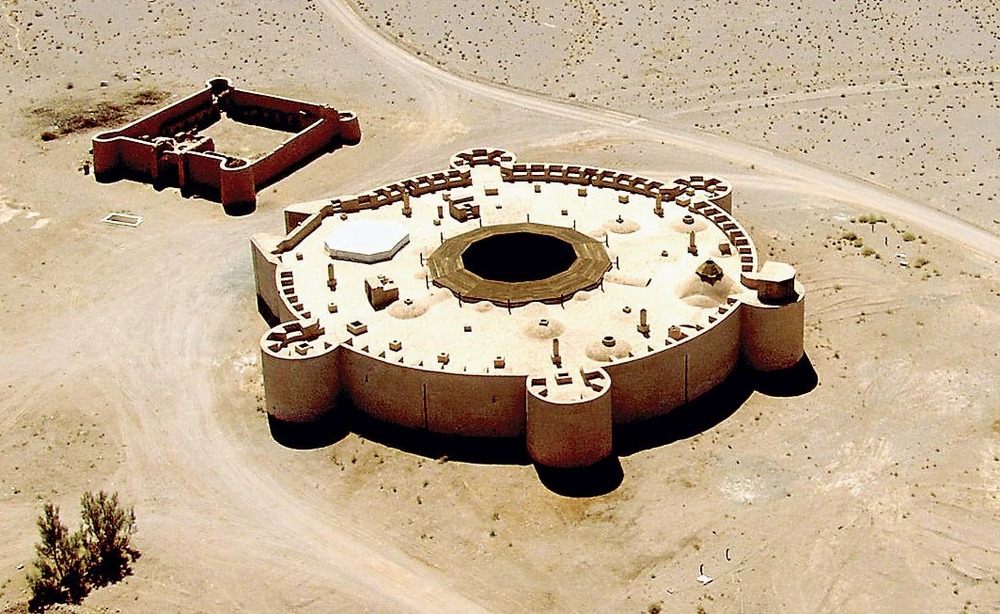
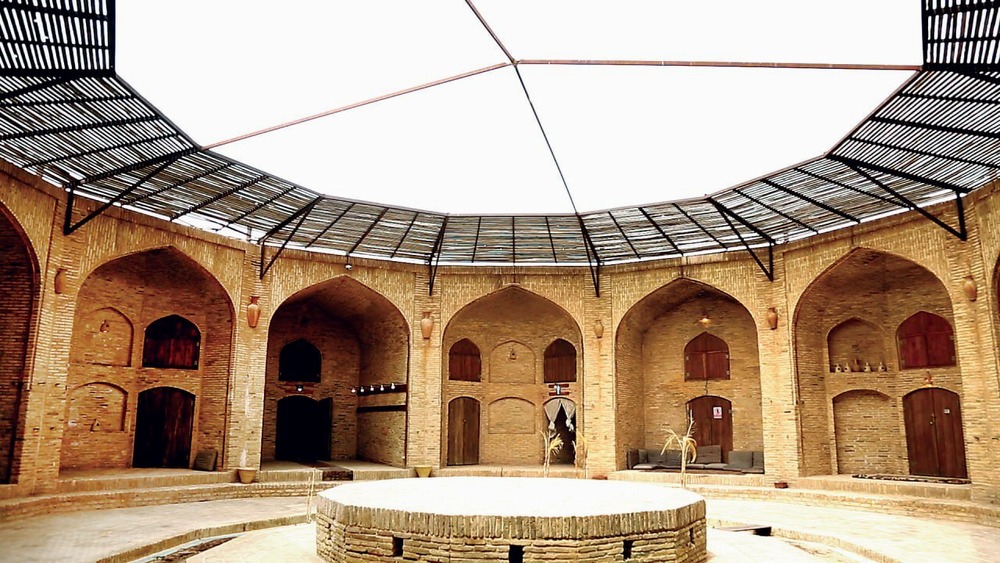
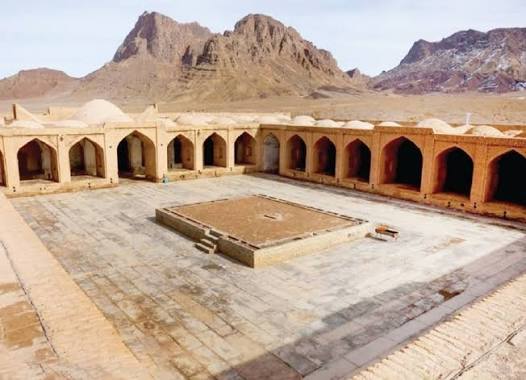
.However, a caravanserai was far more than a simple shelter. If you look at the floor plan of a traditional Persian caravanserai today, you will find a central courtyard surrounded by rows of chambers. This seemingly simple yet highly efficient layout fulfilled several functions at once: an open courtyard for movement and rest, rooms for travelers to sleep in, vaulted spaces for housing pack animals, and storage areas for goods. In two-story caravanserais, the ground-floor chambers were generally used for merchandise and cargo, while the upper-floor rooms accommodated the travelers themselves. With a remarkably economical use of structural elements, Persian architects achieved maximum spatial efficiency.
Another defining architectural feature was the iwan—a roofed space that remained open to the courtyard, constructed on all four sides or, in some cases, on only one side. The iwan served as a comfortable place for sitting, conversation, dining, and escaping the intense heat of the sun.
Perhaps the most remarkable aspect of Persian caravanserais is that no two share an identical floor plan. Even those built consecutively along the same trade route differ in their architectural details. Rather than following a rigid blueprint, local architects adapted each design to its specific environment, taking into account the climate, the available building materials, and the geographical setting. In the desert regions, walls were built thicker and chambers made deeper to reduce the intense summer heat. In colder areas, some caravanserais were designed as almost entirely enclosed structures to provide greater protection from harsh weather. This absence of a fixed architectural template reflects an extraordinary degree of creativity and adaptability—qualities rarely found in functional and utilitarian buildings elsewhere in the world.
The principal building materials used in Persian caravanserais were stone and brick. In some structures, carefully dressed stone blocks were employed, while in others, intricate brickwork transformed the walls into works of art in their own right. The roofs of most caravanserais featured pointed, sloping forms that allowed rainwater to drain away quickly. In certain examples, windcatchers (badgirs) were incorporated into the outer walls to channel cool air into the interior spaces, providing natural ventilation. All of these architectural solutions were achieved using locally available materials and the accumulated wisdom of generations of builders—long before the advent of modern engineering drawings or construction technologies.
One of the greatest challenges along long-distance trade routes was securing a reliable supply of water. Persian architects devised ingenious solutions to this problem as well. Many caravanserais incorporated a large cistern built alongside or beneath the structure, where rainwater or water drawn from nearby qanats (underground aqueducts) was stored. The walls of these reservoirs were coated with sarooj—a traditional waterproof mortar—to prevent leakage. Windcatchers (badgirs) were often installed above the cisterns to create natural air circulation, helping keep the water cool even during the hottest months.
Some of the larger caravanserais even included ice houses (yakhchals)—dome-shaped structures where ice harvested during winter was stored for use throughout the summer. This level of technical sophistication demonstrates that a caravanserai was far more than a simple place for travelers to sleep; it was a fully integrated support complex, carefully designed to provide comfort, security, and essential services for both merchants and their caravans.
Yet a caravanserai was far more than a utilitarian waystation. Above all, it served as a center of cultural exchange. Travelers arriving from distant lands—each speaking different languages and carrying different traditions—would gather there in the evenings. They shared news, traded goods, exchanged stories, and forged connections across cultures. Much of the richness of Persian literature, poetry, painting, and music was shaped by these encounters and the continuous flow of ideas along the trade routes. The distinguished Iranologist Arthur Upham Pope believed that caravanserais played a vital role in promoting the unity and prosperity of Iran. It was for this very reason, he argued, that Shah Abbas I vigorously encouraged the construction of caravanserais throughout the country, transforming them into one of the defining features of Iran's commercial and cultural landscape.
The largest caravanserais were known as tims (tim or timcheh in some historical sources). These were among the largest architectural complexes built in Iran and often functioned much like small self-contained towns. Within these complexes, travelers could find marketplaces for trading goods, mosques for worship, and even bathhouses where they could rest and refresh themselves after long journeys. In essence, the great caravanserais formed complete economic and social ecosystems.
A remarkable example is the Ganjali Khan Caravanserai in Kerman. Beyond its central courtyard and travelers' chambers, the complex included a bathhouse, mint, water reservoir, marketplace, and mosque. A caravan arriving there could meet virtually all of its needs without ever leaving the complex, making it an outstanding example of the integrated planning and sophistication of Persian caravanserai architecture.
Today, more than 1,000 caravanserais survive across Iran, around 700 of which have been officially registered as national heritage sites. In 2023, 54 historic caravanserais, dating from the Sasanian period to the end of the Qajar era, were inscribed on the UNESCO World Heritage List. These 54 monuments were carefully selected from a larger group of approximately 200 caravanserais evaluated for their outstanding universal value. Perhaps the most remarkable aspect of this collection is that no two share the same architectural plan. Each represents a unique architectural concept, thoughtfully adapted to the climate, geography, and local traditions of its region. Among the most celebrated examples are Robat-e Sharaf in Khorasan, the Shah Abbasi Caravanserai in Karaj, Deir-e Gachin in Qom, and the Zein-o-Din Caravanserai in Yazd—each standing as a distinctive testament to the ingenuity and diversity of Persian caravanserai architecture.
The present condition of Iran's caravanserais is far from uniform. Some have been carefully restored and reopened to visitors, while others have been transformed into boutique hotels or traditional restaurants. Many, however, still stand abandoned, their walls weathering a little more with each passing year. Their inscription on the UNESCO World Heritage List has renewed hopes for their long-term preservation, yet much work remains to be done.
For international travelers, spending a night in a restored caravanserai—such as the Mahyar Caravanserai near Isfahan, now operating as a traditional hotel—is far more than a stay in a historic building. As evening falls, you sit quietly in the central courtyard beneath a sky filled with stars, and for a fleeting moment, you can imagine yourself as a traveler from centuries ago, arriving with a caravan after a long journey across the ancient roads of Persia.
Caravanserais tell a different story of Iranian architecture. They were not built for kings or monumental mosques, but for anonymous travelers, for camels and merchandise, for roads and commerce. It is an architecture that is often overlooked in history books, yet it may offer lessons that are even more relevant today than many of Iran's grandest monuments.
At a time when the world is once again searching for ways to strengthen connections between cultures and nations, the caravanserai remains a powerful source of inspiration. Even in the age of airplanes and the internet, it reminds us that travel is not merely about reaching a destination—it is also about the journey itself, and the places where people meet along the way.