_1_2.jpg)
Gardens of Iran
When we hear the word “garden,” we may picture a green space with a few trees and a flowing stream. But the Persian garden was something entirely different. It was a world in miniature. The garden was meant to be a reflection of paradise on earth: shade, flowing water, fragrant flowers, ripe fruit, and tranquility. It was not designed for farming or exercise, but for sitting, strolling, and contemplation. The garden was a place of escape—from the bustle of the city, from the heat, from politics, and from the watchful eyes of others.
The earliest Persian gardens can be seen depicted in the reliefs of Persepolis. During the Achaemenid period, royal gardens featured orderly rows of trees and parallel water channels. Cyrus the Great created a garden at Pasargadae based on the famous chahar-bagh design: four water channels dividing the land into four sections. This pattern later spread throughout the Islamic world, from Spain to India. The chahar-bagh was a simple yet profound idea: four sections symbolizing the four elements, the four gardens of paradise described in the Qur’an, often interpreted as symbolizing the four elements, the four gardens of paradise described in the Qur’an, or the four cardinal directions. Different people have interpreted it in different ways. What mattefred was that water flowed at the center or at the intersection of the channels, while trees were planted in orderly rows. Nothing was accidental.
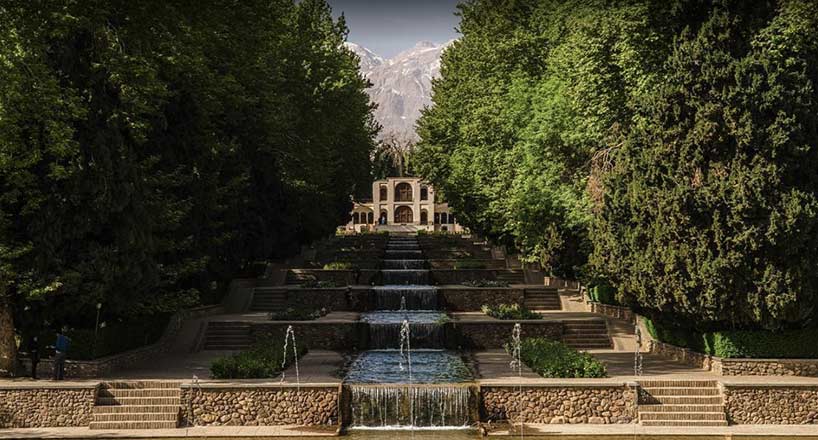
The Persian garden had three essential elements: water, trees, and enclosure. Water was the most important of all. In Iran’s hot and arid climate, water meant life—the sound of flowing water, its coolness, and the way it reflected light. Water in the garden was not stagnant; it was constantly flowing. It moved through narrow, tiled channels and passed through large pools. Sometimes it cascaded down a small slope, creating the soothing sound of a waterfall. There were fountains as well, but traditional fountains operated without pumps, using differences in elevation to create water pressure. The water came from a qanat or a river, rather than from an urban water supply. In other words, the garden was built in close connection with a natural or traditional source of water.
Trees were the second essential element. Without trees, there was no garden. Cypress, pine, plane, and poplar trees stood alongside fruit trees such as apples, pears, apricots, cherries, pomegranates, and citrus. The trees were planted in orderly rows, their shade falling across the water channels, while their fruit was harvested in its proper season. Some gardens also featured flowers: roses, jasmine, narcissus, and tulips. The fragrance of the flowers in the cool morning and evening air was an essential part of the garden experience. In the Shazdeh Garden in Mahan, Kerman, the cypress trees are so tall that when you walk beneath them, you can barely see the sky. All you see is shade, and all you feel is the breeze.
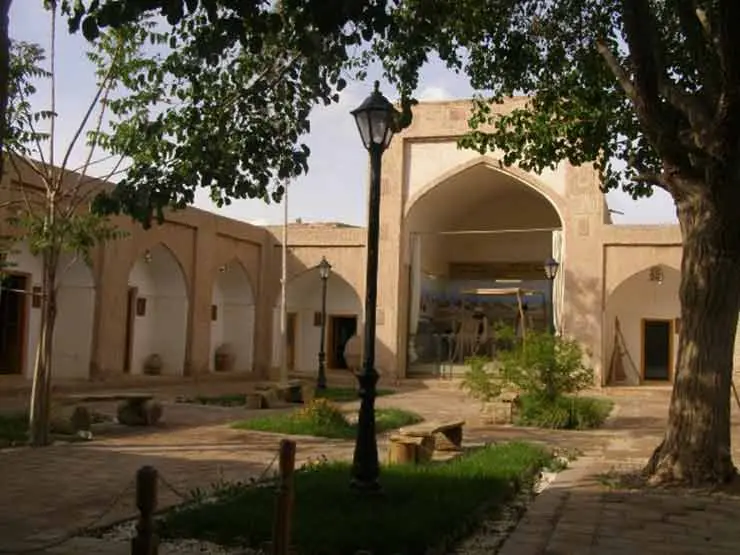
Enclosure was the third essential element. The garden was always enclosed by a high wall, or a hedge. This enclosure served two purposes. First, it protected the garden from animals and intruders. Second, it separated the garden from the outside world. When you walked through the garden, you were not supposed to see the city, the desert, or the houses around you. You saw only the garden, as if you had entered another world. The entrance to the garden was also usually marked by an ornate gateway and a short passageway that deliberately blocked the view of the interior. Until you passed through the entrance, you could see nothing of what lay beyond.
The kushk, or garden pavilion, was another important element of the Persian garden. It was typically a building placed at the center or at the highest point of the garden. It usually featured an iwan opening toward the main pool, halls behind it, and windcatchers to help keep the interior cool.
The kushk was a place for the garden owner to sit, receive guests, and, during the summer, even sleep. From its iwan, the entire garden could be seen: the orderly rows of trees, the paths of the water channels, and the large pool at the center. This sense of order and symmetry was calming to the eye. Everything had its place.
The garden was not merely something to admire; it was also a way of life. There were customs associated with visiting a garden: going early in the morning, when the air was cool, or in the evening, when the sun had lost its intensity. You would bring a small rug and something to eat, then spend hours sitting beneath the trees, talking, reciting poetry, and drinking tea. The garden was also a place for qeyluleh, a short afternoon nap after lunch. At times, gardens served as places for business deals, romantic meetings, or gatherings where poets recited their verses and kings listened. Fin Garden in Kashan, Eram Garden in Shiraz, Dowlatabad Garden in Yazd, and Chehel Sotoun Garden in Isfahan each have stories of this kind.
One of the most famous Persian gardens is Fin Garden in Kashan. Its water comes from the Soleymaniyeh Spring and flows through the garden under natural pressure . Water channels run throughout the garden, connecting large pools with low fountains, while ancient plane trees provide abundant shade. Summers in Kashan can be unbearably hot, yet temperatures inside Fin Garden are several degrees cooler. The garden has been restored and renovated several times, particularly during the Safavid, Zand, and Qajar periods. For anyone visiting Kashan, it is an essential stop. But Fin Garden is not only beautiful; it also carries a tragic history. It was here that Amir Kabir, the chief minister of Naser al-Din Shah Qajar, was killed. He was killed in the Fin Bathhouse, where his veins were opened. The garden, once a place of beauty, tranquility, and contemplation, was also a witness to violence.
Let’s take a look at Dowlatabad Garden in Yazd. Its famous windcatcher, the tallest earthen-brick windcatcher in the world, rises more than 30 meters high. It captured the wind and directed it into the pavilion, and from there into the howz-khaneh and the basement. Even in Yazd’s 40-degree heat, you could sit inside the pavilion without air conditioning. The windcatcher was highly practical, but it was also visually striking—tall and octagonal, with beautiful brickwork. Dowlatabad Garden shows how the Persian garden adapted to and adapted to its harsh climate —not by fighting against it, but by working in harmony with it.
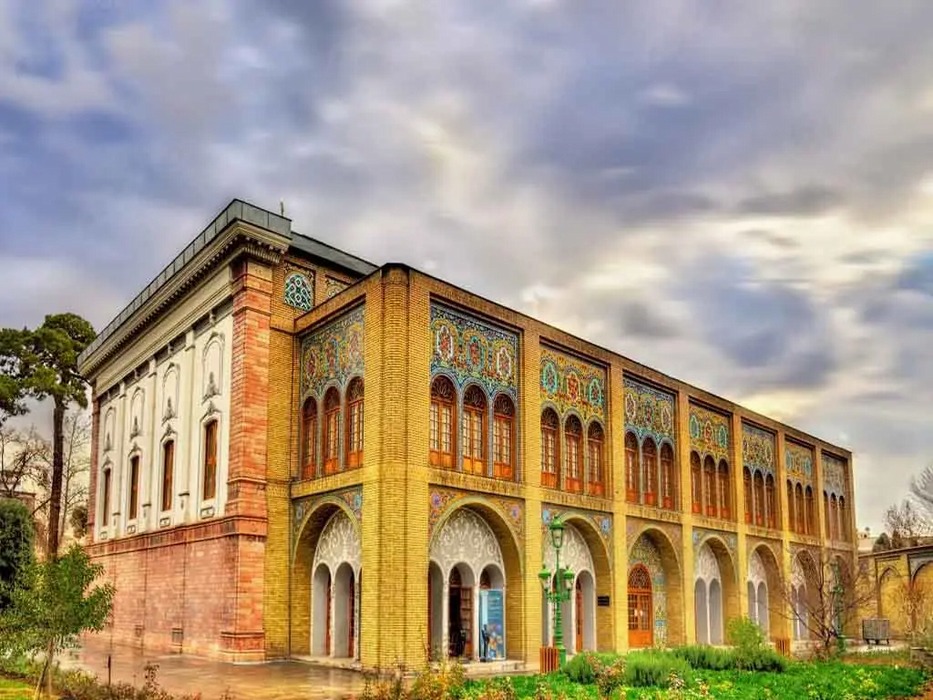
Eram Garden in Shiraz, however, is a different story. Its pavilion dates back to the Qajar period and blends European and Persian architectural elements. Tall cypress trees, colorful flowers, and flowing water create an atmosphere that feels quintessentially Shiraz—a city of poetry, flowers, and nightingales. Hafez and Saadi never saw Eram Garden, but it captures the spirit of the Shiraz they knew. Today, Eram Garden belongs to the University of Shiraz and is open to the public. Students study beneath the trees, tourists take photographs, and elderly men sit on the benches, sharing memories.
Today, Persian gardens are inscribed on the UNESCO World Heritage List—not simply as gardens, but as an idea. The idea of the Persian garden has influenced gardens across the world: the Mughal gardens of India, the gardens of Andalusia in Spain, and the formal gardens of France and Italy. Perhaps wherever people have placed a pool amid green lawns, they have unknowingly echoed the Persian garden.
, they have unknowingly echoed the Persian garden. Its roots can be traced back to this dry plateau, where water was precious and shade was invaluable. And to escape the heat, the dryness, and the loneliness of the desert, people created gardens—and called them paradise. The gardens of Iran are narratives of tranquility. They tell the story of how people, even under the harshest conditions, created some of the most beautiful things—not for display, but simply to breathe.
When you look at a garden, you can see what its creator had in mind: water, shade, symmetry, and the opportunity to simply be surrounded by nature.
| Name | Gardens of Iran |
| Country | Iran |
_3.jpg)
_2.jpg)
_3.jpg)
_2.jpg)
_2.jpg)
_2.jpg)
_2.jpg)

_2.jpg)


.jpg)

_1_2.jpg)
Choose blindless
Red blindless Green blindless Blue blindless Red hard to see Green hard to see Blue hard to see Monochrome Special MonochromeFont size change:
Change word spacing:
Change line height:
Change mouse type: