

_1_2.jpg)
When we hear the word “palace,” what comes to mind? A magnificent mansion surrounded by gardens, pools, and fountains; grand halls; walls covered with paintings and mirrors; the residence of a king. Yet a palace was far more than simply a large house. It was a political statement. Everything within it—from its layout and decorations to its location and materials—carried a message.
And that message was usually this: “I am the king. My power surpasses that of all others, and this building stands as proof of it.”
The oldest palaces of Iran date back to the Achaemenid period. Consider Persepolis: it was not a single palace, but a vast complex containing several royal residences and ceremonial buildings. The Gate of All Nations, the Apadana Palace, the Tachara Palace, and the Hadish Palace each served a specific purpose: receiving delegations, royal audiences, private royal quarters, and storage.
Persepolis was built upon a massive stone platform, elevated above the surrounding ground. Anyone entering the complex had to ascend its grand staircases, creating a symbolic movement from a lower position toward the elevated presence of the king. This height itself expressed the relationship between ruler and subject.
The towering columns, animal-shaped capitals, and the reliefs carved into the walls—depicting various nations bringing their tributes—were all carefully designed to create a particular impression. A visitor, often a representative of a foreign people, was meant to feel that they had entered the domain of a power greater than themselves.
Was Persepolis created by the harsh climate or the desert? No. It was built by Darius the Great and Xerxes. It was not designed for everyday life, but for ceremony, diplomacy, and the public display of imperial power.
If we move beyond the Achaemenids, we come to the Sasanians. The palace of Ardashir Babakan in Firuzabad, the palace of Sarvestan, and the Taq Kasra in Ctesiphon (modern-day Iraq). You may have seen the Taq Kasra in photographs: a vast arch with no supporting columns, its span over 25 meters. Sasanian architects had mastered the art of creating large arches with brick, without them collapsing. Sasanian palaces typically featured a tall porch facing the courtyard, and a domed hall behind it. This pattern later found its way into Iran’s mosques. In other words, the palace in Iranian architecture sometimes preceded the mosque as a source of inspiration.
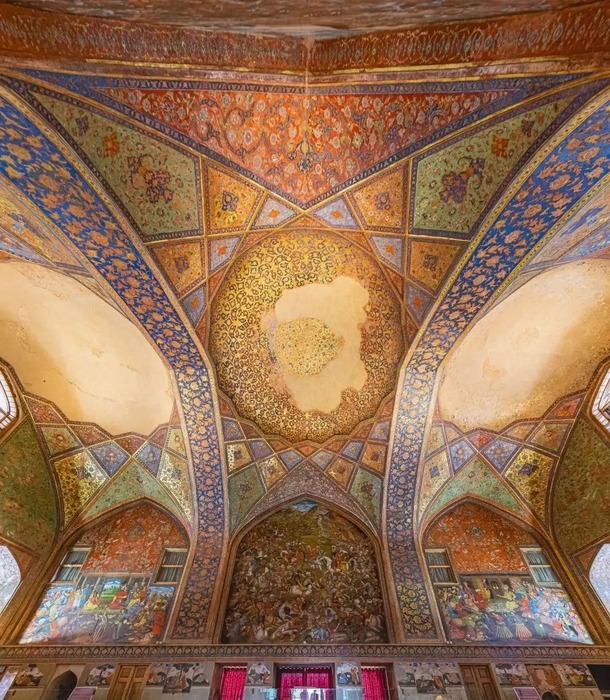
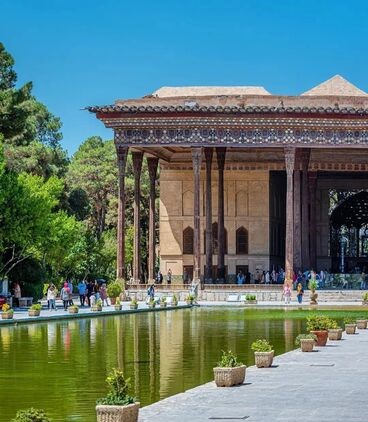
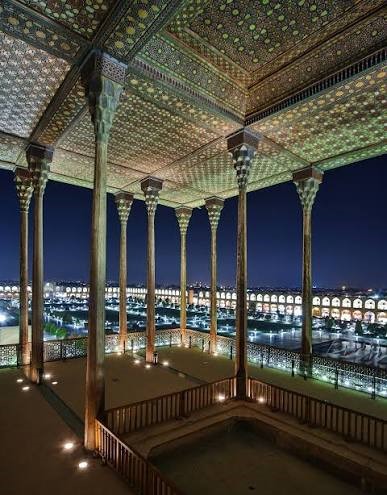
But what we see and recognize more today are the palaces of the Safavid and Qajar periods—Isfahan, Shiraz, Tehran. The Chehel Sotoun palace in Isfahan. Its name is "Chehel Sotoun," but it actually has only twenty columns. Twenty tall wooden columns in the porch, reflected in the water of the pool in front of the palace, so they appear as forty. This playful trick in architecture is the work of the Safavids. The mirrored hall, adorned with wall paintings depicting scenes of battle, feasts, and receptions of foreign guests. In Chehel Sotoun, the king did not sit on a high throne nor hide behind thick walls. He would sat in the porch, facing the pool and garden, so that his guests could see him. This was confidence—or perhaps it was that his power was so self-evident, it needed no show of force.
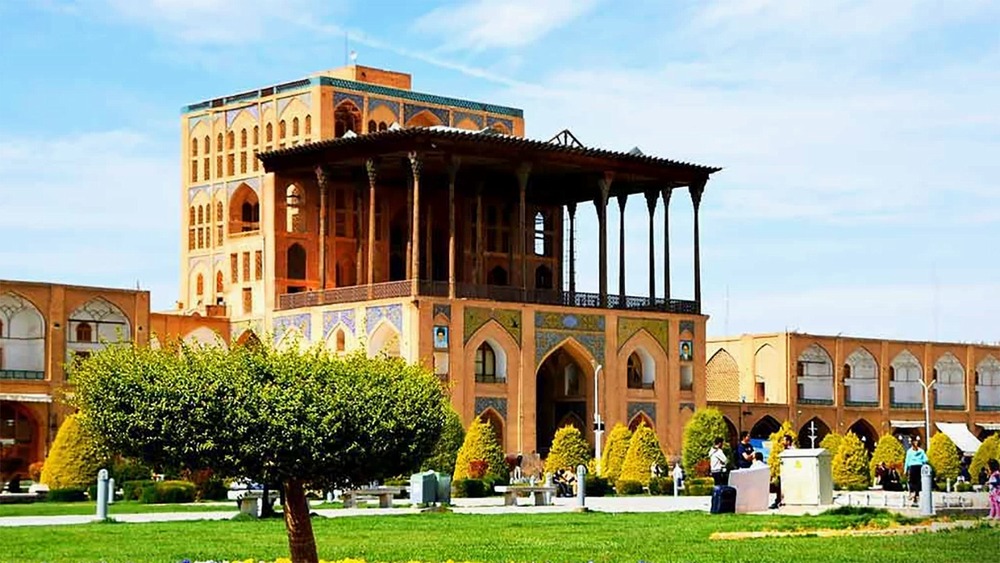
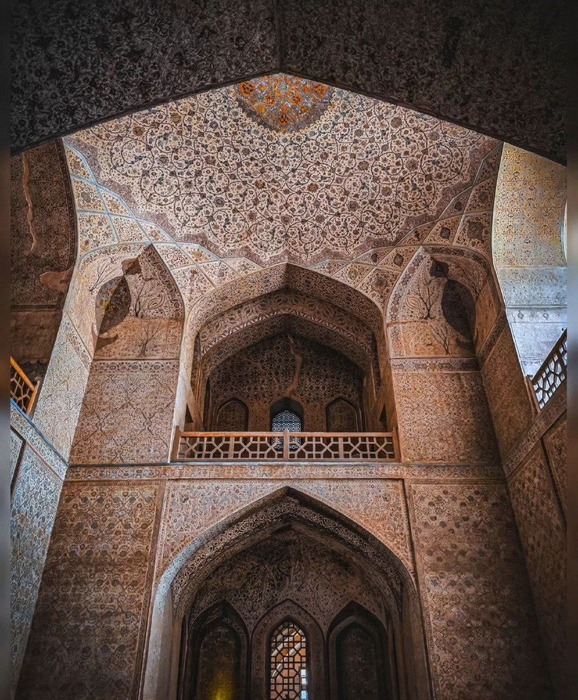
The Ali Qapu Palace, located nearby, was another remarkable example. It has six stories, with ceilings of varying heights. On the fifth floor lies the Music Hall. Its ceiling is covered with muqarnas plasterwork—forms resembling honeycomb cavities. These decorative elements helped reflect sound and improved the hall’s acoustics, creating a suitable environment for musical performances.
Behind the walls, there were also narrow corridors for servants. They could move around and carry out their duties without being seen. This was architecture designed in the service of ceremony and court life. The king at in the Music Hall, musicians performed on the lower levels, servants moved behind the scenes, and the guests saw only the final result: a flawless performance.
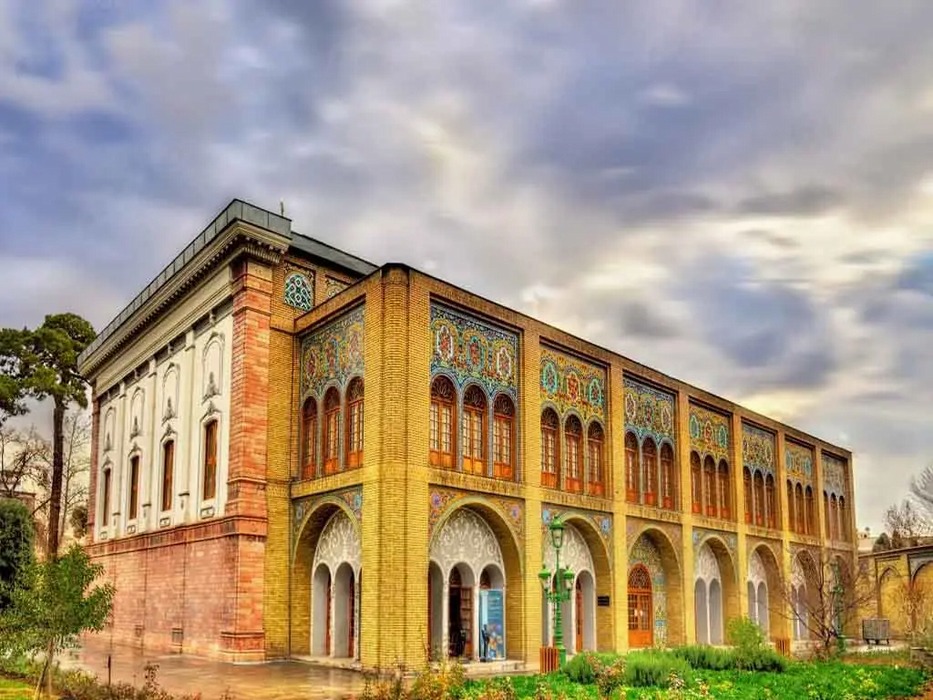
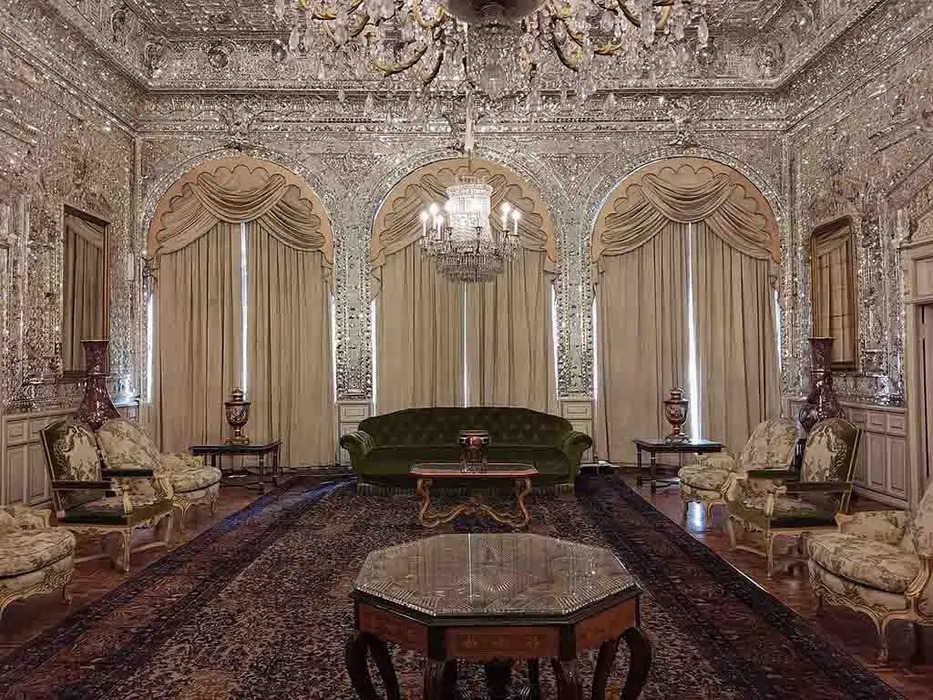
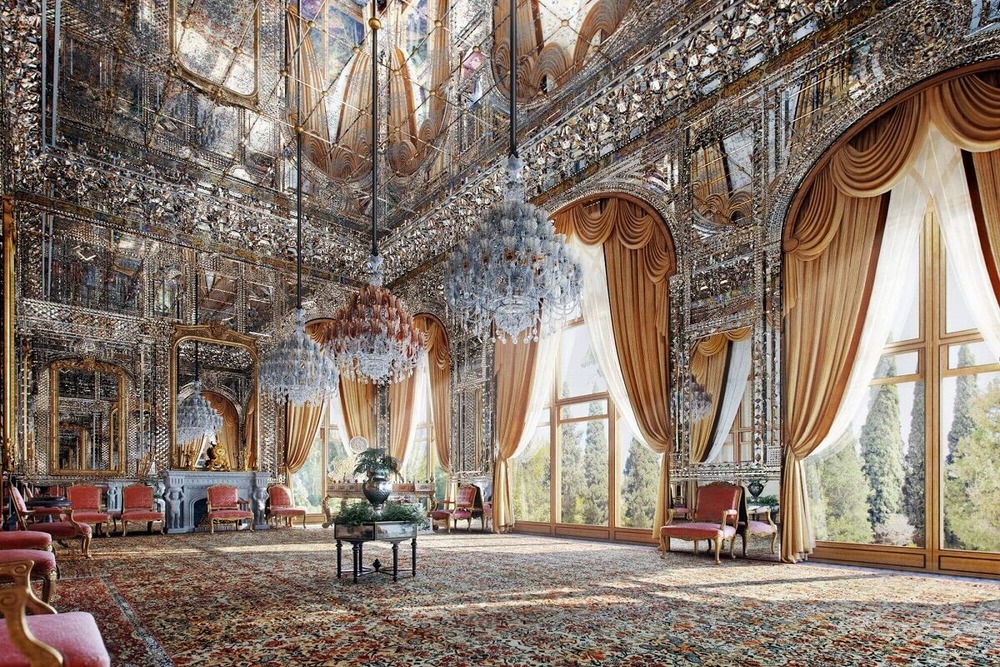
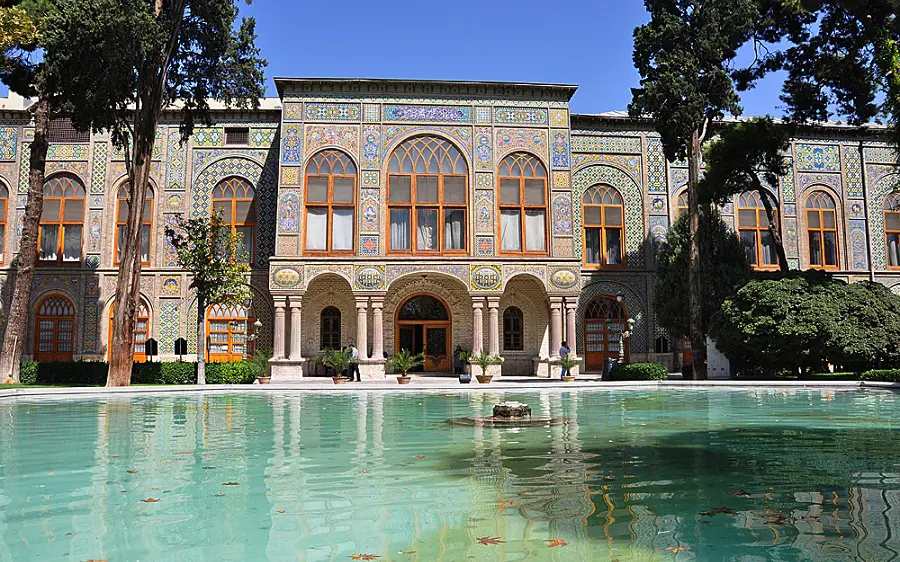
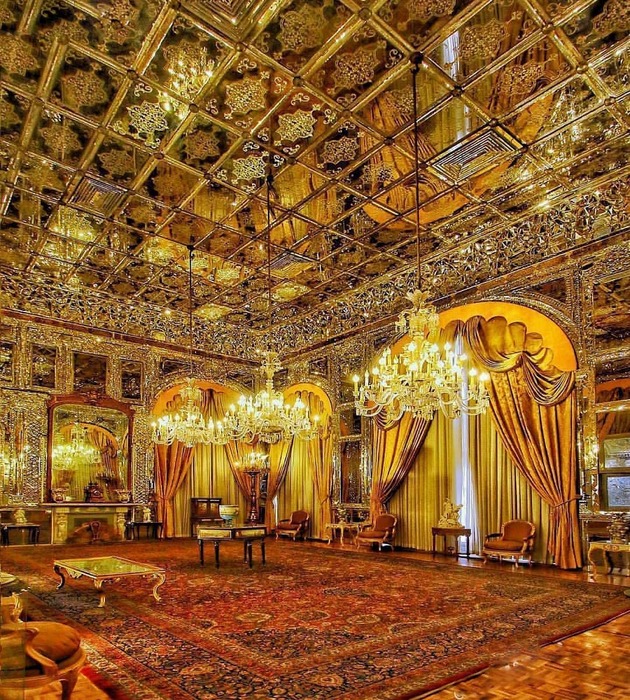
If we move beyond the Safavids, the Qajars arrived. The Golestan Palace in Tehran was built (and renovated) by Nasir al-Din Shah after his travels to Europe. It’s a fusion of traditional Iranian architecture and European elements: twisted columns, large windows, the Hall of Mirrors, and the pool house. When you see the Hall of Mirrors, it’s covered from top to bottom in mirrors—the walls, the ceiling, even behind the doors. Mirror work is a delicate craft: small pieces of mirror are cut and glued together to form geometric patterns and floral designs. When the candlelight touches all those mirrors, the space turns into a jewel box. Today, the Golestan Palace is a museum, but in its own time, it was the king’s office, a reception hall, and sometimes even a prison (the Diamond Room for special political prisoners). A building with multiple functions.
The Sa'dabad and Niavaran Palaces in northern Tehran belong to the Pahlavi era. They feature modern architecture, with European materials and styles, but an attempt to preserve traces of Iranian architecture. The Green Palace (Sa'dabad) with its green stones, the White Palace with its wide staircase and bronze statues—these palaces no longer have central courtyards, pools, or windcatchers. Instead, large windows face the mountains, rooms furnished in French style, long corridors with handwoven carpets. These were palaces for a modern royal family, not for public gatherings or displays of ancient power. Yet, still, they spoke: "We are modern, we are European, we have moved away from tradition, but we have not forgotten our roots."
But a palace is not just architecture. A palace was a place of life. Behind these walls, the king slept, ate, played with his children, argued, fell in love, and died. Persepolis was set on fire, the Sasanian palace was destroyed, Ali Qapu is cracked, Golestan Palace has been restored, Sa'dabad is now a museum. Of all the kings, ministers, and servants, only the walls remain. And today’s visitor passes through the Hall of Mirrors, stands beneath the muqarnas ceiling of Ali Qapu, and takes a photo on the stairs of Sa'dabad. Architecture speaks of power, wealth, and art, but it also speaks of death—that no one stays in these palaces. Only the building remains—stone, brick, and mirror—to tell the next generation that once, someone was here, and this is what they thought.
Today, Iran's historic palaces have mostly become museums. Persepolis (although not exactly a palace in the strict sense) attracts hundreds of thousands of foreign tourists each year. The Golestan, Sa'dabad, and Niavaran palaces in Tehran are full of visitors. Chehel Sotoun and Ali Qapu in Isfahan are among the top attractions. Some palaces are still in the hands of government institutions or have found other uses. They are fewer in number than mosques, bathhouses, or bazaars, but perhaps they are the most eloquent of Iranian structures. Because each palace is a statement—and statements, whether right or wrong, are always worth reading.
Iran's palaces are narratives of power. They tell the story of how those who held power wanted to show it to others—through height, through columns, through mirrors, through paintings, and through gardens. And in that process, they sometimes created beautiful things—things from which power has now faded, but beauty still remains.