

In the dry and desert plains of Gonabad, in the south of Razavi Khorasan Province, an extraordinary structure runs deep beneath the earth. The Qasabeh Qanat of Gonabad is one of the world’s oldest and deepest qanats. Dating back to the 3rd–4th centuries BCE, it is far more than an underground channel designed to transport water. It is an ancient engineering marvel, a technological masterpiece of Iranian civilization, and a living testament to the ingenuity, knowledge, and resilience of our ancestors.
Inscribed on the UNESCO World Heritage List as part of The Persian Qanat, the Qasabeh Qanat is one of the most remarkable underground water systems in the world. Its main mother well is approximately 200 meters deep, while the Doolab-e branch reaches a depth of about 300 meters.
To fully appreciate the scale of the Qasabeh Qanat of Gonabad, we must first imagine how, more than two millennia ago, people could excavate long underground passages—with no modern tools, excavation machinery, satellite surveying, or mechanical pumps. How did they achieve such precision in the alignment and grading of the tunnels that water could travel naturally through the underground system and emerge at the surface under the force of gravity?
The answer lies in the remarkable knowledge and expertise of ancient Iranian engineers and muqannis, the skilled qanat builders who mastered the art of underground water engineering.
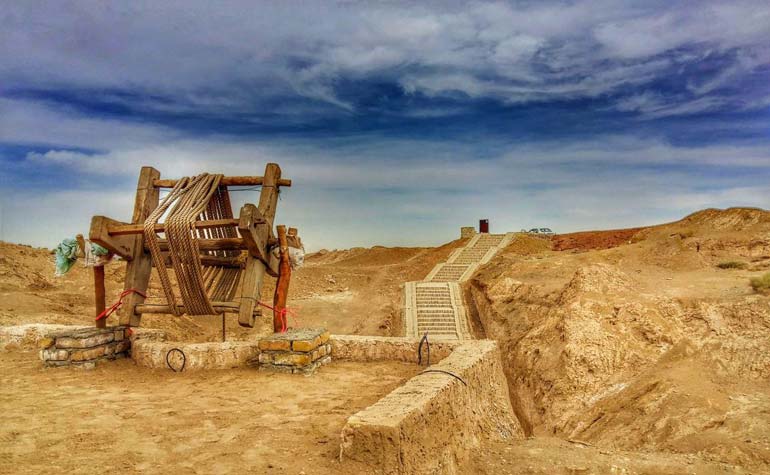
The Qasabeh Qanat consists of several main components. The mother well, the deepest access point to the underground water source, was excavated in the southern foothills of Gonabad, close to the aquifer. The main mother well reaches a depth of approximately 200 meters, while the Doolab-e branch reaches about 300 meters. Imagine the extraordinary effort required to excavate such shafts with the simple tools available to the qanat builders of the ancient world. The mother well accesses groundwater and connects it to the qanat’s underground tunnel system.
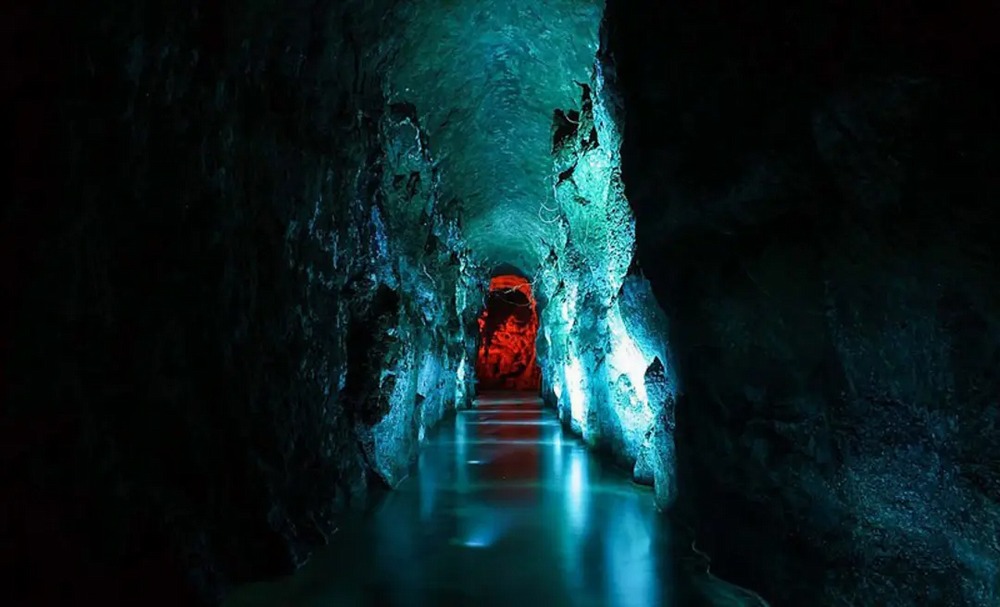
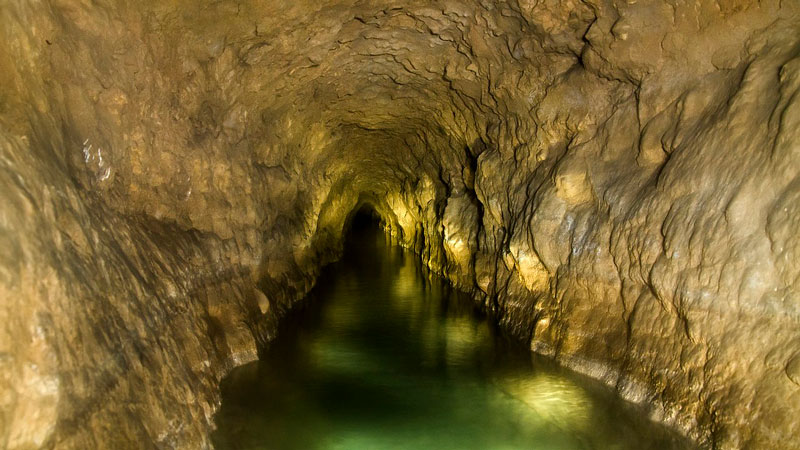
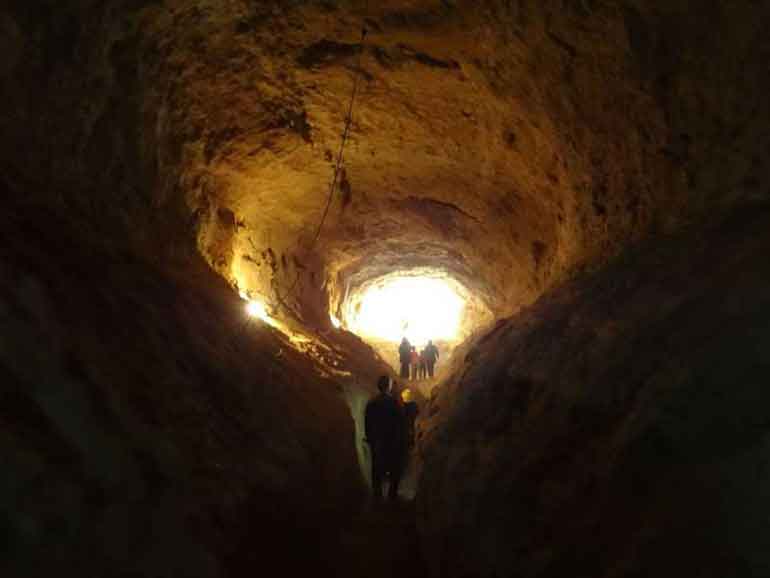
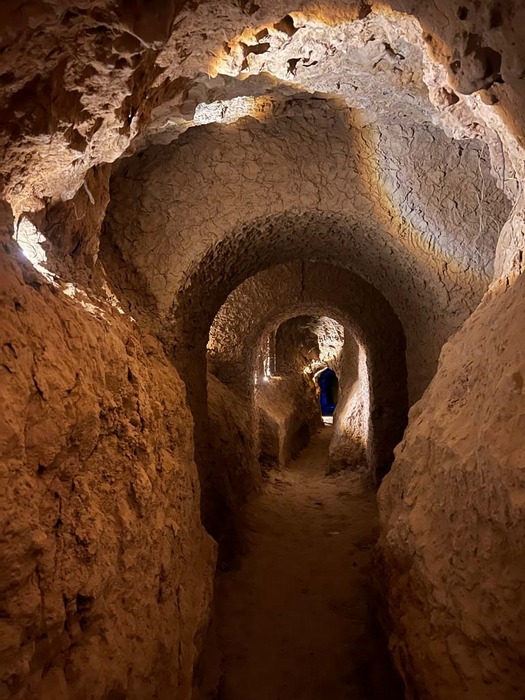
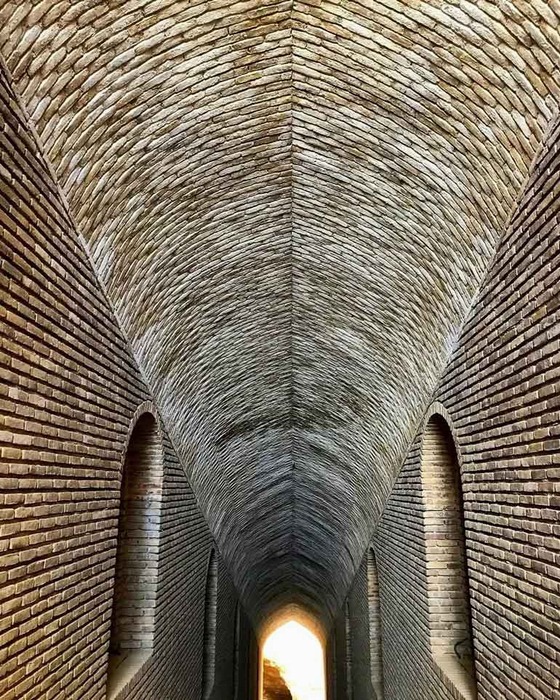
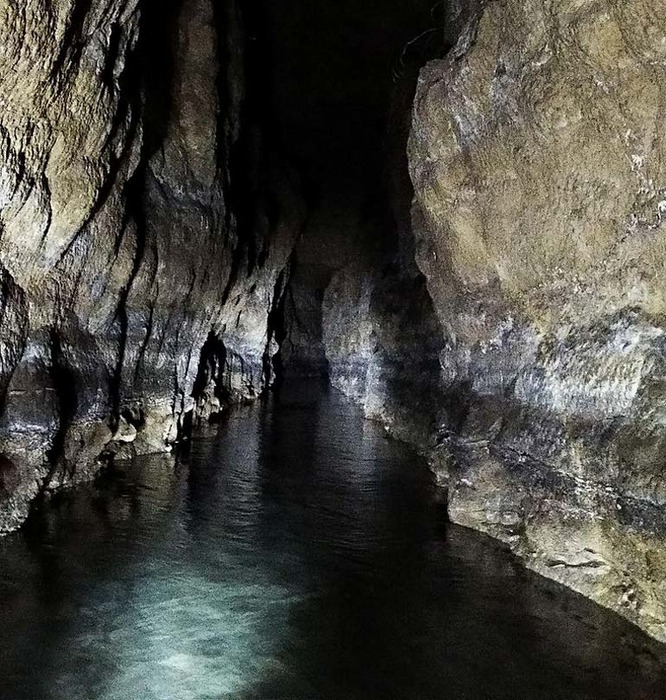
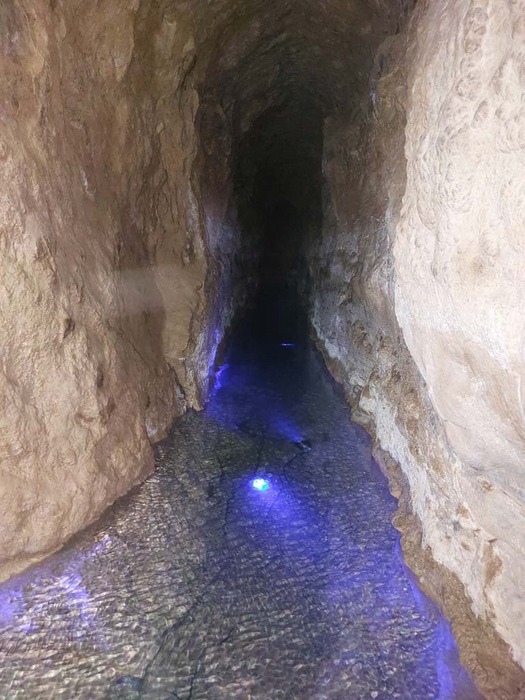
The underground tunnel, or koreh, is a narrow passage designed to carry water from the groundwater source toward the qanat outlet, or mazhar. The tunnel was constructed with an extremely gentle and carefully calculated gradient, allowing the water to flow naturally under the force of gravity. This precise grading prevented the flow from becoming excessively rapid and helped protect the tunnel from erosion.
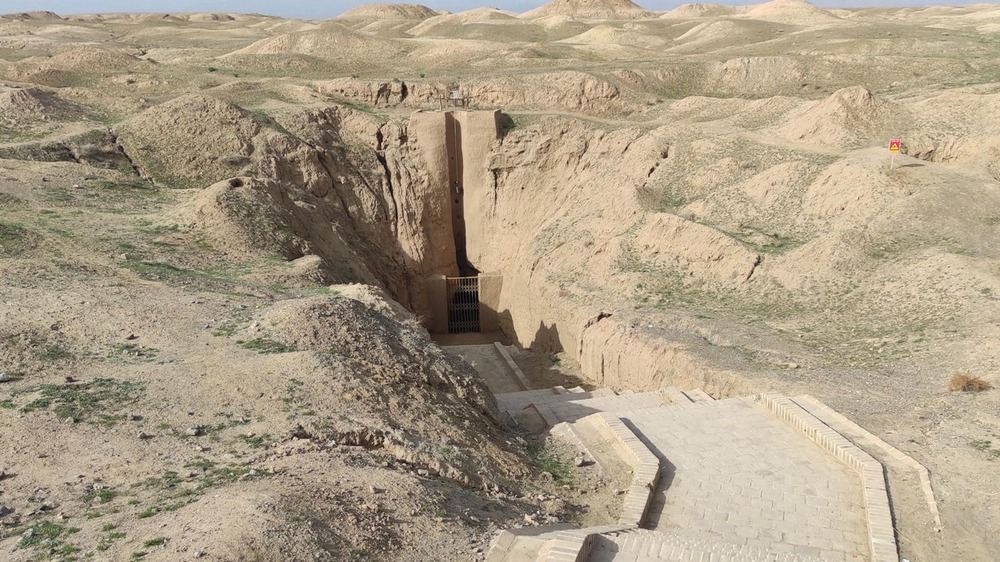
The vertical shafts were excavated at intervals along the tunnel. They provided ventilation for the underground passage, allowed the muqannis to access the tunnel, and served as routes for removing excavated soil and rock during construction. Today, these shafts appear on the surface as a series of regularly spaced openings. Seen from above, they create a striking and almost otherworldly landscape—a remarkable reminder of the vast underground system hidden beneath the desert.
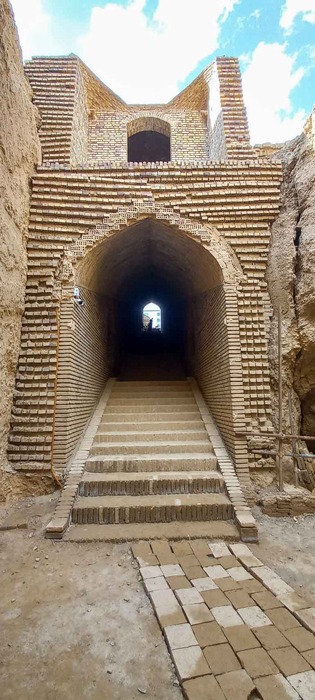
The qanat outlet, or mazhar, is located south of Gonabad, in the Qasabeh neighborhood. After traveling through the underground system, the water emerges at this point and reaches the surface. The water emerging from the Qasabeh Qanat is cool and clear, and historically, the qanat played an important role in supplying water for drinking and irrigation in Gonabad and its surrounding settlements.
But the central question remains: how, and in which period, was the Qasabeh Qanat constructed?
UNESCO dates the Qasabeh Qanat to the 3rd–4th centuries BCE. Some historical interpretations and researchers have traditionally associated its origins with the Achaemenid period, and some have attributed its construction to the reign of Darius the Great. However, the exact date and circumstances of its construction remain subjects of historical and archaeological discussion. Some researchers have also linked its development to major infrastructure projects associated with the Achaemenid period and the development of settlements in eastern Iran.
Regardless of the precise circumstances of its origin, the Qasabeh Qanat stands among the oldest surviving qanat systems in Iran and remains an extraordinary example of ancient underground water engineering.
One of the most remarkable aspects of the Qasabeh Qanat of Gonabad is its continued existence and operation over more than two millennia. Despite the many environmental and historical changes that have taken place over the centuries, the qanat continues to flow and supply water. Its present-day discharge is reported to be around 150 liters per second, although water yield can vary over time. This remarkable continuity reflects the quality of its construction, the sophistication of its engineering knowledge, and the extraordinary skill of its builders.
The Qasabeh Qanat was not merely a water-supply structure; it was also a social institution and a gathering place. Throughout its history, its water was managed and distributed according to traditional systems of water allocation. Water shares were divided among farmers, orchard owners, households, and other users according to established local practices. Historical records relating to water allocation provide valuable evidence of the complexity and precision of traditional water-management systems.
Throughout history, the outlet of the Qasabeh Qanat served not only as a source of water but also as a gathering place where people met, talked, and exchanged news. Payabs and pools around qanat outlets provided cool and pleasant spaces for people to rest during the hot summers of Gonabad. In this way, the qanat supported not only the city’s water supply, but also its social life.
Today, although the Qasabeh Qanat is still flowing, it faces challenges associated with groundwater depletion, changing patterns of water use, and the need for continued conservation and maintenance. As part of the UNESCO World Heritage property The Persian Qanat and Iran’s National Heritage, it is subject to conservation and management measures intended to safeguard this remarkable ancient water system.
The Qasabeh Qanat of Gonabad offers a practical and inspiring lesson in sustainable water-resource management, precision engineering and gradient control, the resilience of underground structures, and the importance of traditional knowledge and oral traditions.
It reminds us that more than two millennia ago, our ancestors created a sophisticated water system without modern technology—one that continues to function and support life in the heart of the desert.
The Qasabeh Qanat of Gonabad, this silent ancient survivor, continues to flow deep beneath the earth—a living testament to the ingenuity, patience, resilience, and enduring legacy of Iranian civilization.