

Iran Cultural Counsellor Meets Sri Lankan Sufi Leaders to Discuss Religious and Cultural Heritage
Representatives of Sri Lanka’s Qadiri and Shadhili Sufi orders met with Iran’s Cultural Counsellor in Colombo to discuss religious, cultural, and social issues concerning Sufi communities in Sri Lanka. The meeting highlighted shared Islamic heritage, the role of Persian language and literature in preserving Sufi and mystical traditions, and opportunities for greater cultural engagement. The participants also discussed the history and contemporary activities of Sufi orders in Sri Lanka, as well as support extended by members of the Sri Lankan Sufi community to Iranian sailors in Galle
.webp)
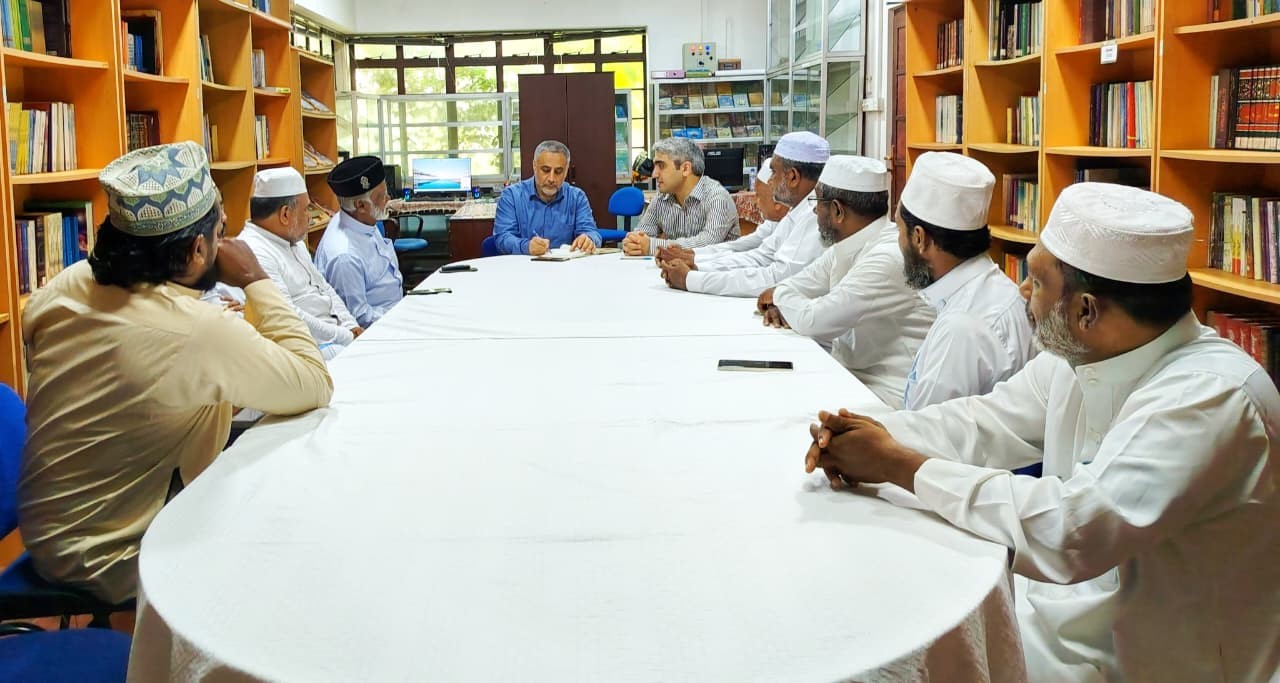
Maulavi Muhammad, Chairman of the Council of Ulama of Sri Lanka’s Sufi Orders, accompanied by representatives and followers of the Qadiri and Shadhili orders, met with Mr Ali Kebriaei Zadeh, Cultural Counsellor of the Embassy of the Islamic Republic of Iran in Sri Lanka, at the Iran Cultural Centre in Colombo on Thursday, 17 September 2026.
The meeting provided an opportunity to exchange views on a range of religious, cultural, and social issues concerning Sufi orders and communities in Sri Lanka, as well as their activities and role within the country’s Muslim community.
Addressing the gathering, Mr Ali Kebriaei Zadeh emphasized the importance of mutual understanding and highlighted the common ground shared by followers of different Sufi orders. He noted that although differences may exist in certain rituals, practices, and traditions, the ultimate spiritual objective and destination remain the same.
The Cultural Counsellor also referred to the important place of Sufism and Islamic mysticism in the broader heritage of Islam, emphasizing the significance of Persian language and literature in understanding this intellectual and spiritual legacy. He noted that a substantial part of the historical and spiritual heritage of Sufism has been preserved in Persian-language sources.
Mr Kebriaei Zadeh also expressed his appreciation for what he described as the assistance provided by members of the Sri Lankan Muslim community in Galle to Iranian sailors following an attack on Iranian naval vessels. He thanked the Sri Lankan Muslims who, according to the participants, had provided support and assistance to the Iranian sailors.
Maulavi Muhammad, Chairman of the Council of Ulama of Sri Lanka’s Sufi Orders, provided an overview of the structure and activities of various Sufi orders in the country. He explained that each order has its own centres, khanqahs or spiritual lodges, leaders, educational methods, and traditions, with followers observing their respective programmes and practices.
At the same time, he emphasized the close relations maintained among different Sufi orders in Sri Lanka. He noted that certain religious occasions and public programmes are jointly organized, bringing followers of different orders together. According to him, relations among these groups are characterized by brotherhood and equality, with members supporting one another on various religious and community occasions.
The participants also discussed the history and development of Sufism in Sri Lanka, the religious and educational activities of Sufi centres, and their role within the country’s Muslim community.
During the meeting, participants further highlighted the assistance provided by members of Sri Lanka’s Sufi community to Iranian sailors in Galle, describing it as an expression of solidarity and human support.
Held in a cordial and constructive atmosphere, the meeting provided an opportunity for broader dialogue on Sufism, Islamic mysticism, Persian literature, shared religious and cultural heritage, and ways to strengthen communication and cultural engagement between the Iran Cultural Centre and Sri Lanka’s Sufi community.

Write your comment.