
Report on the Intellectual Dialogue: The Roots of Iranian Resistance Against U.S. and Israeli Aggression
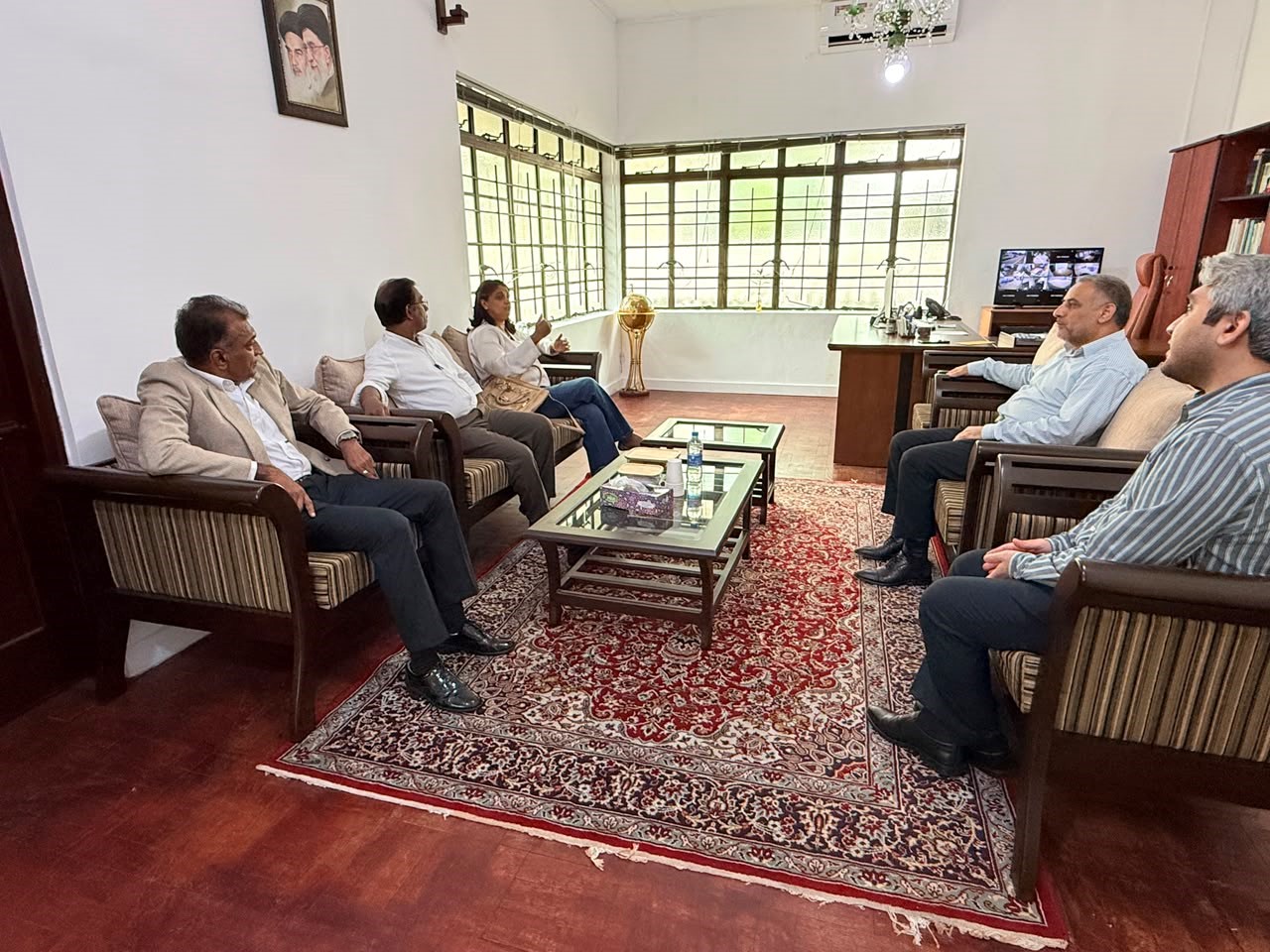
On 12 June 2026, Mr. Chandana Wijekoon, journalist, Dr. Pratap Tilakaratne, retired Major General, and Ms. Wanda Kotalawala, researcher and cultural activist, visited the Cultural Center of the Embassy of the Islamic Republic of Iran in Sri Lanka to participate in an intellectual dialogue on the cultural and historical roots of the Iranian people's resistance against U.S. and Israeli aggression.Mr. Ali Kebriaei-Zadeh, Cultural Counselor of the Embassy, welcomed the guests and provided an overview of the Cultural Center’s activities and programs. The discussion then focused on the crimes committed by the United States and Israel against the Iranian nation and the cultural foundations that have enabled the Iranian people to confront external threats and challenges.During the discussion, Ms. Wanda Kotalawala stated that the phenomenon of Donald Trump had revealed the true nature of American interventionism and aggression. Dr. Pratap Tilakaratne observed that history offers few examples of spiritual and humanitarian figures emerging from the dominant traditions of modern Western power, while numerous examples can be found of nations being subjected to exploitation and domination.
Participants exchanged views on a range of issues related to cultural interactions between Iran and Sri Lanka, with particular attention to the U.S. and Israeli attacks against Iran, the martyrdom of the late Supreme Leader of the Islamic Revolution, Ayatollah Ali Khamenei, and the remarkable resistance of the Iranian people, which ultimately led to the victory of the Islamic Republic of Iran against the United States and Israel. The participants also discussed the strategic vision of the martyred leader, his emphasis on political and cultural independence, and his influential role in shaping and guiding the discourse of resistance.Other major topics included the military actions carried out by the United States and Israel against the Islamic Republic of Iran, attacks on the city of Minab and its educational institutions, as well as strikes targeting scientific, academic, and cultural infrastructure. Participants examined the nature of these actions, the shortcomings of Western culture in understanding spiritual and human values, the geopolitical consequences of the attacks on Iran, and the courageous response of the Iranian nation.Referring to Iran’s approach of steadfastness and perseverance, deeply rooted in Iranian culture, religion, and civilization, the participants described Iranian resistance as part of a deeply rooted discourse based on national independence, cultural identity, and opposition to domination. In this context, resistance was viewed as a cultural component firmly embedded within various layers of Iranian society, manifesting itself in a unified and purposeful manner whenever the nation faces external pressure and threats. Participants noted that this enduring spirit of resistance continues to inspire admiration and serves as a defining characteristic of contemporary Iranian society.The meeting concluded with an emphasis on the importance of strengthening cultural dialogue and mutual understanding between Iran and Sri Lanka, while recognizing the role of cultural heritage, national identity, and spiritual values in fostering resilience and solidarity among nations.


Write your comment.