

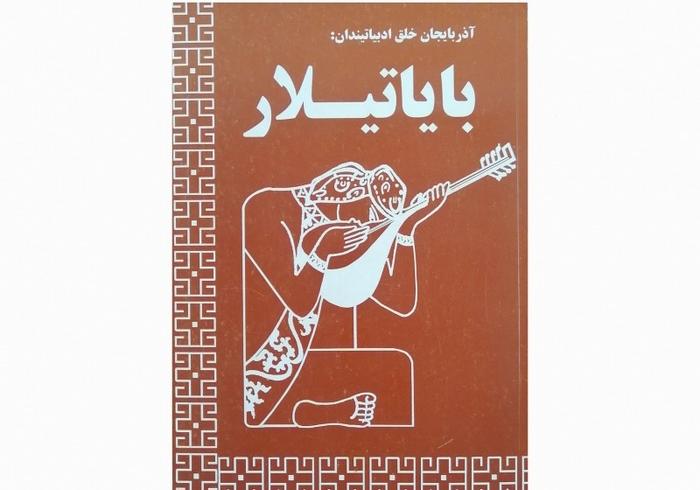
The oral traditions of every nation and society form one of the most fruitful parts of their culture. Since these traditions usually take shape over several centuries, and their main elements have been ordinary people, their diversity is very high. Throughout the formation of these traditions, different people have added to them according to their own talent and the conditions of the times, and gradually, the parts that have gained more popularity have been preserved.
These traditions are usually passed down orally, and in the modern era, due to the dominance of modernity over people's lives and the forgetting of past traditions, they are endangered. Therefore, recognizing and studying them is essential to preserve and maintain rich parts of each society's culture.
Among the people of Azerbaijan, there are also many oral traditions, the historical roots of some of which cannot be accurately estimated due to their great age and background. The Ashiq tradition, as one of the most important cultural traditions of the Azerbaijan region, is a rainbow of narration and artistry and is considered the identity of its culture. Alongside it, some other cultural elements have also grown and become enriched, including poems that have become popular among the people in the form of couplets and are known as "Bayati-lar." Bayati-lar are, in fact, popular Azerbaijani couplets.
Bayati-lar and Their Themes
The folk couplets of the people of Azerbaijan, known as Bayati-lar, have been transmitted from generation to generation, reaching the present day. In this process, many narrators, guided by their taste and creativity, have modified these couplets to align with various events and aspects of Azerbaijani life. As a result, Bayati-lar have become intertwined with different facets of daily life, accompanying both joys and sorrows, and playing a significant role in all customs and traditions.
Bayati-lar are present in weddings, newborn celebrations, funeral ceremonies, moments of solitude, private romantic gatherings, and as words of advice among the people of Azerbaijan. Azerbaijani girls express their wishes through Bayati-lar, while lovers convey their affection to their beloved in these couplets. Shepherds recite them in isolation while tending their flocks in the mountains and plains, and epic storytellers use them to celebrate bravery and freedom. Women mourning the loss of loved ones perform Bayati-lar with lamentation and sorrow, a practice known as Okhshma (weeping). In this way, Bayati-lar can be considered poetry that flows through the spirit and life of the Azerbaijani people.
The poets of Bayati-lar are usually anonymous, yet the variations in expression and style indicate that this oral tradition developed over many years and involved the contributions of different individuals and groups. Azerbaijani speakers, especially the elderly, know numerous Bayati-lar by heart and recite them according to circumstances and events. The lyrical quality of these couplets has also led to their performance as songs, sometimes sung collectively.
Form and Structure of Bayati-lar
Bayati-lar consist of four lines, with each line made up of seven syllables. Typically, in the structure of Bayati-lar, the first and second lines serve as an introduction, while the poet’s main message is conveyed in the third and fourth lines. Below are several examples of Bayati-lar, each reflecting a specific theme:
What need has one for an eyebrow-marked beauty?
He who has a beloved like you,
What care has he for the wealth of the world?
Brothers… O brothers,
Rain is falling, snow begins to fall.
If death must come, let the sisters die—
May it never take the brothers!
My patience was torn apart.
May my right eye be sacrificed for you—
Truly, my left eye alone is enough for me.
National Registration of Bayati-lar
The rich tradition of Bayati-lar, prevalent among Azerbaijani-speaking communities in East Azerbaijan, West Azerbaijan, Ardabil, Zanjan, and the Turkish-speaking areas of Markazi Province, was officially registered in 2024 in the list of Iran’s intangible cultural heritage.