
Ahmad Tamimdari: From Mathematics to Persian Literature
The fact that Ahmad Tamimdari, now a Full Professor of Persian Language and Literature at Allameh Tabataba'i University, began his academic journey in mathematics is one of the remarkable ironies of modern Iranian education. Among Iranian students, the highest-achieving pupils have traditionally been encouraged to pursue mathematics and the natural sciences. As Tamimdari observes, this approach has often implied that society values little beyond doctors and engineers. He traces the roots of this mindset to the establishment of Dar al-Fonun, where academic streams were largely determined by grades: top-performing students were directed toward mathematics, average students toward the natural sciences, and weaker students toward the humanities.
Despite beginning in mathematics, Tamimdari changed direction upon entering university and pursued social sciences and sociology. His academic journey at the University of Tehran lasted eleven years. After completing his undergraduate studies, he enrolled in the Higher School of Literature and later returned to the University of Tehran to study Persian Language and Literature. This path ultimately transformed him into one of Iran’s most respected literary scholars, linguists, and researchers of Persian culture.
History of Persian Literature
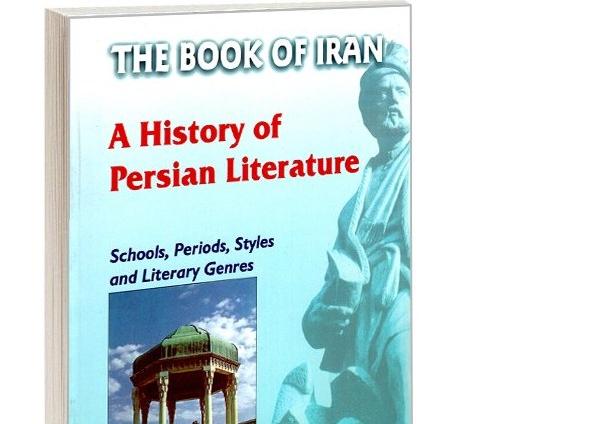
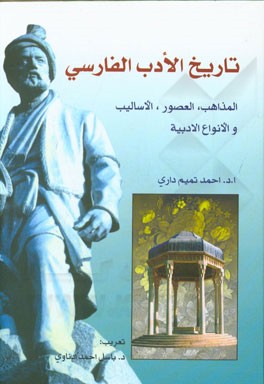
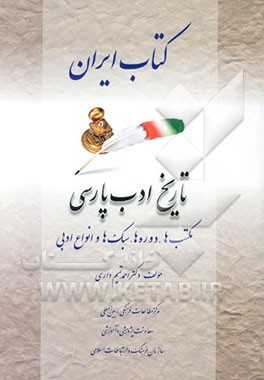
History of Persian Literature: Schools, Periods, Styles, and Literary Genres is widely regarded as Ahmad Tamimdari’s most important and influential work. In this book, Tamimdari examines Persian literary history through the framework of literary schools, styles, and genres. Rather than organizing literary history according to political dynasties, he presents it through the intellectual and cultural movements that shaped Persian literature. The result is a clear, systematic, and accessible survey of Persian literary development. The book classifies Persian poetry into several major stylistic periods, including: Khorasani Style, Transitional (Middle) Style, Iraqi Style, Voqouʿ (Occurrence) Style, Indian Style, Bazgasht-e Adabi (Literary Return) Style, Constitutional Style, Contemporary Style, Persian prose is similarly divided into six major periods, each examined independently and in detail.
Tamimdari argues that philosophical and theological schools of thought provide the intellectual foundation of culture and serve as the sustaining force behind literary creativity. His attention to these underlying intellectual traditions distinguishes the book from many earlier literary histories. The work has also been published in English and serves as a valuable reference for international scholars and students of Persian literature.
A New Approach to Literary History
Scholars regard the compilation of a comprehensive history of Persian literature as an exceptionally demanding task. The field encompasses more than three thousand years of cultural and literary heritage, requiring extensive research, theoretical planning, travel, interviews, and consultation with specialists. For this project, Tamimdari drew upon the writings of both Iranian and non-Iranian scholars and literary figures. One of the book’s most innovative features is its examination of philosophical and theological traditions as cultural foundations for literary works and stylistic developments.
As a result, History of Persian Literature has become an important reference source in the field. Tamimdari devoted an entire year to preparing the volume. He attributes its success not only to the comprehensive collection and organization of materials but also to its deliberate avoidance of political controversies. Before the publication of this work, Persian literary and cultural history was often presented primarily through the lens of political dynasties. Tamimdari shifted attention toward literary movements, intellectual traditions, and cultural developments, offering a richer and more nuanced understanding of Persian literary history.
Executive Activities and Academic Service
In addition to his scholarly work, Ahmad Tamimdari has held numerous academic and administrative positions. His professional responsibilities have included:
- Faculty member, Faculty of Persian Language and Literature, Allameh Tabataba'i University
- Director, Persian Studies Center, Allameh Tabataba'i University
- Director, Iran–Pakistan Persian Research Center
- Vice Chancellor for Cultural Affairs, Faculty of Persian Language and Literature, Shahid Beheshti University
- Member of the Council for the Promotion of Persian Language and Literature
- Editor-in-Chief of the biannual journal Sokhan-e Eshgh (The Voice of Love)
Tamimdari joined Iran’s Ministry of Education in 1974, where he taught mathematics, Persian literature, and Arabic. He studied under several distinguished scholars, including Sharif Rezaei, Seyed Ali Shahcheraghi, Seyed Ja'far Shahidi, and Ahmad Mahdavi Damghani.
Major Publications and Translations
Among Tamimdari’s notable books are: Mysticism and Literature in the Safavid Era, Iranian Stories, Folklore, An Ode to Shi‘a Beliefs. He has also translated several important scholarly works, including: An Introduction to Literature, Criticism and Theory (Andrew Bennett), The Scope of Persian Poetry in England and America, The Organizations of the Islamic Empire. In addition, a collection of his essays has been published under the title Jor'eh-ye Jam (A Sip from the Chalice).
Persian Literature as a Cultural Bridge
In recent years, Tamimdari’s intellectual focus has increasingly centered on Iranian literature and cultural identity. He believes that the various regional forms and dialects of Iranian literature—including Gilaki, Mazandarani, Balochi, Luri, Kurdish, and others—deserve formal recognition and instruction within university literature departments. He has also emphasized the need to establish centers for the study of both Western and Eastern languages, arguing that such institutions are essential for strengthening cultural dialogue and mutual understanding.
According to Tamimdari, culture constitutes one of the greatest strengths of the Islamic Republic of Iran. While religious differences may sometimes make consensus difficult, cultural commonalities provide a powerful basis for unity and cooperation. He argues that language and literature can serve as bridges between peoples and nations. Tamimdari further stresses the importance of expanding cultural and literary exchanges among regional countries. Such initiatives, he believes, can foster friendship, strengthen regional ties, and promote mutual understanding. He warns that if Iran fails to invest adequately in the study and preservation of its literary heritage, foreign institutions may eventually assume that role and interpret these traditions according to their own interests and priorities.