

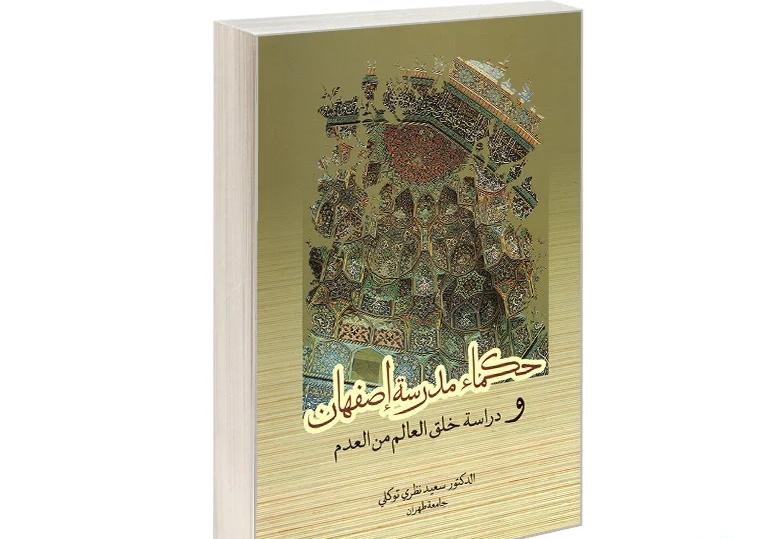
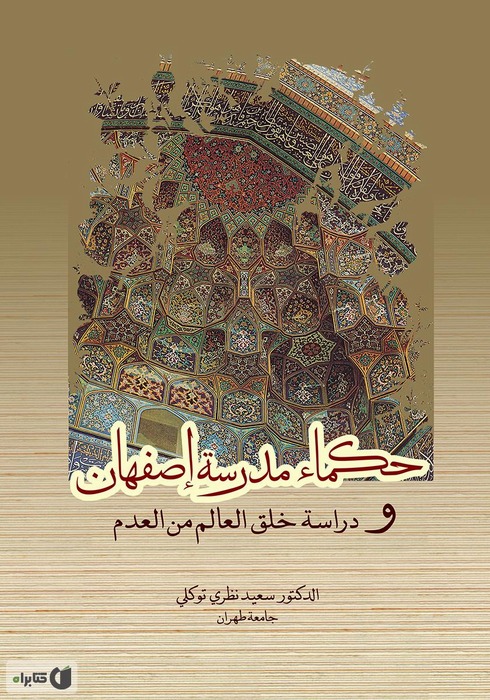
Dr. Saeid Nazari Tavakoli is a Full Professor at the Faculty of Theology and Islamic Studies at the University of Tehran. He is regarded as one of the distinguished students of Grand Ayatollah Mirza Ali-Aqa Falsafi. Among Dr. Nazari Tavakoli's most acclaimed works is the book Hukama' Madrase Isfahan wa Dirasat Khalq al-Alam men al-Adam (The Sages of the School of Isfahan and the Study of Creation ex Nihilo / Creation of the World from Nothingness). Published in Arabic, this book explores the origin of the universe—a highly contentious issue in both religious and philosophical texts that has long challenged and engaged thinkers across philosophy and theology (Kalam). Dr. Tavakoli's examination of the universe's origin is deeply informed by the works of the thinkers belonging to the philosophical and intellectual School of Isfahan. Established during the Safavid era, this school produced immensely valuable contributions to Islamic philosophy. However, its flourishment came to a bitter end and fell into obscurity following the occupation of Isfahan by invading Afghan forces.
The establishment of the Islamic Seminary (Hauza) of Isfahan dates back to the Safavid era. This pivotal period witnessed both the declaration of Shi'ism as the official state religion of Iran and the selection of Isfahan as the nation's capital. Philosophy was among the primary sciences that flourished within the Isfahan Seminary, becoming a standard pursuit for its scholars. The presence of monumental figures such as Mirdamad (Seyed al-Falasifa / The Prince of Philosophers), Mirza Abul-Qasim Mir Fendereski, and Sadr al-Din Shirazi (Mulla Sadra)—alongside the seminal texts they authored and the numerous commentaries and glosses written during this era on the works of preceding philosophers—clearly demonstrates the Isfahan Seminary's unique dedication to philosophy. In fact, the Illuminationist (Ishraqi) interpretation of Avicenna's (Ibn Sina) philosophy, which had been initiated earlier by thinkers like Suhrawardi and Ghiyath al-Din Mansur, reached its zenith in Isfahan through the dedicated efforts of masters like Mirdamad and Mulla Sadra, becoming a defining characteristic of Safavid-era philosophy. The grand task of founding the philosophical School of Isfahan was carried out by three renowned figures of philosophy: Mirdamad, Sheikh Bahai, and Mir Fendereski. These three are widely revered as the foundational pillars holding up the tent of this intellectual movement.
Seyyed Hossein Nasr, the Iranian philosopher and Professor of Islamic Studies at George Washington University in the United States, has published comprehensive research on the philosophical School of Isfahan. In fact, it was Seyyed Hossein Nasr who coined and popularized the term "The School of Isfahan." According to him, the remarkable revival and vitality of Islamic philosophy during the early Safavid period (the 16th century CE)—centered around Mirdamad and his students—is uniquely defined by the works of this school. This intellectual tradition nurtured countless philosophers, the most prominent of whom was Mulla Sadra. Alongside Mulla Sadra, its most celebrated masters were Mirdamad and Mir Fendereski. The tradition was further carried on by Mulla Sadra's own prominent disciples, including: Mulla Mohsen Fayz Kashani, Mulla Rajab Ali Tabrizi, Mulla Shamsa Gilani, Aqa Jamal Khwansari, Seyyed Ahmad Alawi, Qazi Sa'id Qummi.
Mulla Sadra's Philosophical RevolutionsMulla Sadra developed a groundbreaking philosophical framework known as Hikmat al-Muta'aliyah (Transcendent Theosophy / Transcendent Wisdom). His most vital philosophical innovation was the Primacy of Existence (Asalat al-Wojud), which is considered a revolutionary perspective in Islamic philosophy. According to this view, it is existence (wojud) that constitutes ultimate reality and essence, rather than quiddity or essence (mahiyah). Another major transformation Mulla Sadra introduced to the traditional Aristotelian philosophical system was the concept of Substantial Motion (Harakat-e Jawhari). However, the School of Isfahan was not monolithic; philosophers such as Rajab Ali Tabrizi openly disagreed with the concepts of the primacy of existence and the unity of existence (wahdat al-wojud) that Mulla Sadra had passionately sought to prove through rational philosophy
As Seyyed Hossein Nasr has written, during the late Safavid period (the 17th century CE), an anti-philosophical religious climate led to the decline of the School of Isfahan. From this point onward, philosophical education in Isfahan ground to a halt, and the prominent scholars of this school migrated to other cities. Nevertheless, the intellectual achievements of the School of Isfahan—particularly Hikmat al-Muta'aliyah (Transcendent Theosophy)—left an enduring impact on philosophy in Iran. This ultimately led to a major paradigm shift from Peripatetic (Mashsha'i) philosophy to Sadrian (Sadra'i) philosophy, especially from the 19th century CE onward.
The tradition of teaching philosophy in Isfahan persisted well into the contemporary era, with prominent scholars such as Haj Aqa Rahim Arbab dedicating themselves to the instruction of this discipline. In his Arabic-language book, Hukama' Madrasat Isfahan wa Dirasat Khalq al-Alam min al-Adam, Dr. Nazari Tavakoli likewise seeks to elucidate the profound question of the universe's origin specifically through the lens and writings of the thinkers from this Isfahan intellectual and philosophical school. For readers interested in gaining a deeper understanding of this philosophical movement, a book titled The Philosophical School of Isfahan (Maktab-e Falsafi-ye Isfahan), authored by Seyed Mohammad Ali Modarres Motlaq, serves as an excellent resource. Modarres Motlaq dedicates the first four chapters of the book's first section to the background of the School of Isfahan and the biographies of its primary founders: Mirdamad, Sheikh Bahai, Mir Fendereski, and ultimately, Mulla Rajab Ali Tabrizi. The second section, titled "The Maturation Era of the School of Isfahan," provides a detailed explanation of the intellectual currents surrounding the three main pillars that held up the School of Isfahan.