

Sayyid Muhammad Husayn Tabataba'i
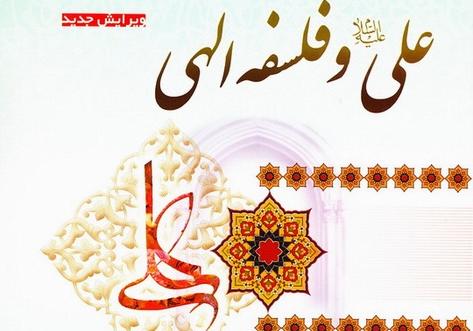
Allameh Tabataba'i was a renowned commentator, philosopher, jurist, and mystic. He was among the most influential Shia scholars in the intellectual and religious landscape of 14th-century (AH) Iran. His most famous works include Tafsir al-Mizan, Shi'a in Islam, and his philosophical texts Bidayat al-Hikmah, Nihayat al-Hikmah, and The Principles of Philosophy and the Method of Realism. In his book Ali (AS) and Divine Philosophy, written during his youth, Allameh Tabataba'i seeks to articulate divine philosophy from the perspective of Imam Ali (AS). The book begins by defining and explaining philosophy and divine philosophy, then explores the relationship between religion and philosophy, and examines Islamic divine philosophy. Furthermore, it analyzes several of Imam Ali's sermons regarding divine subjects.
Islam and Philosophy
Across 13 chapters, Ali (AS) and Divine Philosophy clarifies the purpose of philosophy—specifically the subject of Divine Philosophy—aiming to create harmony and unity of vision between philosophy and religion. Allameh Tabataba'i argues that there is no clear intellectual evidence to justify a separation between the two; rather, all rational proofs serve to reinforce their shared objectives.
The book traces the evolution of philosophy from its primitive stages to its peak of perfection during the Islamic era. The discussions in this work offer three significant benefits, the first one is historical Evidence that proves to researchers and philosophers that Imam Ali (AS) was the first person in the Islamic Ummah to establish rational proofs and open the door to demonstration (burhan) in divine philosophy. The second benefit is evolution of Thought so that enthusiasts of the history of philosophy can clearly understand the process of its evolution and the pivotal role Islam played in its perfection, and the last one is refuting Misconceptions specifically It invalidates the belief that religion rejects philosophy or that the two have entirely separate paths and objectives.
Opening the Door to Innovation
In this work, Allameh Tabataba'i opened a new chapter of innovation in philosophy—the highlights of which are detailed by Ayatollah Javadi Amoli in the book Shams al-Wahy al-Tabrizi—by recognizing the religious and Qur'anic roots of rational thought and asserting that philosophical thinking is a path validated by the Holy Qur'an, while emphasizing that all true knowledge originates from Monotheism (Tawhid) and arguing that Shia Islam has been a driving force in the emergence and expansion of rational sciences, especially since the advent of Islam brought a fundamental transformation in concepts such as the Origin, the Resurrection, Man, Intellect, the Soul, and Creation; furthermore, Allameh distinguishes the characteristics of Islamic philosophy from its Greek predecessor by framing the former as a unique intellectual achievement triggered by Islamic revelation, through which he strove to keep the light of philosophy burning while encouraging others to embrace rational contemplation and avoid superstition and fallacies
Divine Religion or Divine Philosophy?
The 108-page book published by the Qom Seminary Press addresses this theme in its introduction where it is stated that considering Divine Religion as separate from Divine Philosophy is truly a great injustice, especially when one considers whether the true happiness of man is anything other than reaching the truths of knowledge—as they truly are—through the God-given capital of intellect and then acting with justice and integrity in practical life, or whether man has any choice but to seek refuge in reasoning and proof to acquire this knowledge. Ultimately, Allameh Tabataba'i concludes the discussion by asserting that the path of the Prophets is a call to the explicit Truth and those divine insights that human beings, by their innate nature (Fitra), long to attain.