
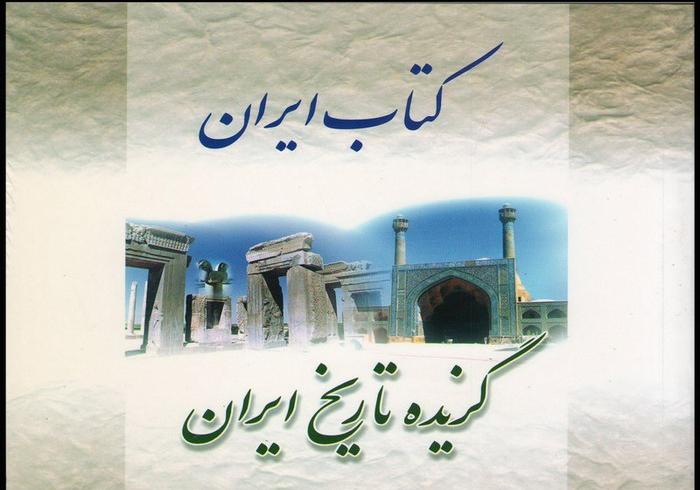
The Selected from the History of Iran a complete look at contemporary Iran.
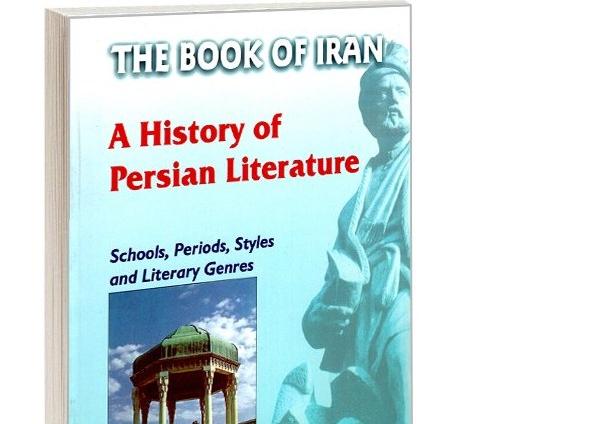
The book Iran or a Selection from the History of Iran is written by Reza Shabani. This work is a brief account of the events in Iran’s history, with its stated purpose being “to inform and familiarize a general international audience with Iranian-Islamic culture and civilization.” The book’s discussions begin with a brief overview of the pre-Islamic period and concisely recount the various dynasties and eras of Iranian history up to the advent of the Islamic Revolution. A smaller portion of the book deals with the pre-Islamic dynasties of Iran, from the Medes and Achaemenids to the successors of Alexander the Great, and the rise of the Parthians and Sassanids . In examining the major events of Iran’s post-Islamic history, and especially during the era of the minor and major contemporary dynasties —such as the Tahirids, Saffarids, Samanids, Alawites of Tabaristan, Ziyarids, and Buyids—as well as Turkic dynasties—including the Ghaznavids, Seljuks, and Khwarazmians—ruled over Iran, the book provides more details about the rise and fall of figures and the shifting of their centers of power. The tragic catastrophe of the Mongol invasion and the widespread massacre of the people is another event recounted in the book. In this section, the author describes the prominent events of these periods, covering the rise and decline of the Safavid dynasty, the emergence of Nader Shah, the Qajar era, and the Pahlavi dynasty. This book has been translated into Arabic by Dr. Saad Rostum.
"Iran, or A Selection from the History of Iran" is a book by Reza Shabani. This work provides a concise account of the events of Iran's history, with the stated aim of "informing and familiarizing general foreign audiences with Iranian-Islamic culture and civilization." The book begins with a brief overview of the pre-Islamic period and succinctly recounts the various dynasties and eras of Iranian history up to the advent of the Islamic Revolution. A smaller portion of the book is dedicated to the pre-Islamic dynasties of Iran, covering the Medes and Achaemenids through the successors of Alexander the Great, as well as the rise of the Parthians and Sassanids . In examining the major events of post-Islamic Iranian history—especially from the time when smaller and larger contemporary dynasties (the Tahirids, Saffarids, Samanids, Alawites of Tabaristan, Ziyarids, and Buyids) and Turkic dynasties (the Ghaznavids, Seljuks, and Khwarazmians) ruled over Iran—the book provides greater detail regarding the rise and fall of various figures and the shifting of their power centers. The tragic catastrophe of the Mongol invasion and the widespread massacre of the people is another event recounted in the book. In this section, the author describes the prominent events of these periods, covering the rise and decline of the Safavid dynasty, the emergence of Nader Shah, the Qajar era, and the Pahlavi dynasty. This book has been translated into Arabic by Dr. Saad Rostum.
Works of Dr. Shabani
In recent decades, numerous studies and research projects have been conducted on contemporary Iran, covering all its cultural and civilizational dimensions, including religion, history, geography, literature, art, economics, and politics. However, the lack of a single comprehensive book encompassing all these mentioned aspects has been one of the obstacles facing researchers and enthusiasts both domestically and abroad. The book Iran or a Selection from the History of Iran was written to address this need. Dr. Reza Shabani, the author of this book, throughout his prolific career of life, succeeded in writing more than 200 articles in Persian, French, and English, as well as authoring over 20 books. Most of his scholarly works are focused on the history of the Afsharid period. Dr. Shabani's writings can be divided into five categories: critical editions of texts, historical research on the Afsharid and Zand dynasties, the history of ancient Iran and the general history of Iran, monographs, and collections of articles on various topics. Among Dr. Shabani's works on the ancient past and general history of Iran, one can mention two books: A Brief Overview of the History of Iran: From the Beginning of the Median Era to the End of the Qajar Period and General History of Iran, which was written for foreign students of Persian language and literature. The book Iranians and National Identity is one of Dr. Shabani's significant works. Additionally, in his book Foundations of the Social History of Iran, he discusses, across five sections, the general characteristics of prehistorical Iranian society, its presence in history, the historical formation of Iranian communities, national resistances, and the characteristics of Iranian culture and civilization.
Permanent Figure of the Year 2010 (1389 Solar Hijri)
Dr. Reza Shabani served for many years as the department head of history at various universities in Iran and is considered one of the five leading researchers in the field of Afsharid and Zand dynastic history. Since January 2000 (Dey 1379), he has been the director of the Department of History of Civilization at the International Center for Dialogue Among Civilizations and the head of the Iran-Pakistan Persian Research Center in Islamabad. In 2010 (1389), Reza Shabani was recognized as a 'Lasting Figure' or 'Eternal Face' (Chehreh-ye Mandegar) of Iranian history. The "Lasting Figure" festival has so far been held in eight rounds, and the honorees of this event are regarded as pillars of Iran's national identity and cultural heritage. In an interview with Keyhan Farhangi, Dr. Shabani recounted his life story. He was born in 1938 (1317 Solar Hijri) in the village of Zamghabad, Taleqan. He completed his six years of primary school in the village and later moved to Tehran for further education. He studied history and geography at the Daneshsara-ye Ali (Higher Teachers' College) in Tehran, where he earned his bachelor's degree. In 1967 (1346), he went to France to pursue a PhD in history and studied at the Sorbonne University. This history researcher is a professor at Shahid Beheshti University and has also taught at the University of Isfahan and the University of Cambridge in England. He attributes all that he has achieved in life to his family and believes: "Despite all the changes it has seen to this day, the family remains the most important foundation for human upbringing. If we can preserve the stable position of the family in society and present the set of social, moral, and behavioral values within the family in such a way that our children and adolescents are drawn to it, then I can say that the family will deliver the most virtuous and healthiest individuals to society."
| Name | The Selected from the History of Iran a complete look at contemporary Iran. |
| Country | Iran |
| Author | Reza Shabani |

.jpg)




Choose blindless
Red blindless Green blindless Blue blindless Red hard to see Green hard to see Blue hard to see Monochrome Special MonochromeFont size change:
Change word spacing:
Change line height:
Change mouse type: