
The Birth of an Anti-Oppression Generation in the West
he head of the country's public diplomacy organization, referring to the latest Harvard–Harris Poll, which found that two-thirds of America's Generation Z prefer Hamas over Israel, discusses the significance of this development in the following commentary.
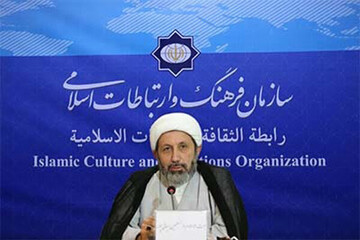
According to the Public Relations Office of the Islamic Culture and Relations Organization (ICRO), Hojjatoleslam Mohammad Mehdi Imanipour, President of the Islamic Culture and Relations Organization, wrote the following opinion piece, which was provided to the newspaper Hamshahri and published on the front page of its July 21, 2026 edition:
The publication of the latest Harvard–Harris Poll this month (July 2026) has delivered a new shock to Western and Zionist policymakers in the White House. According to the survey, nearly 60 percent of Americans under the age of 24 expressed support for the Palestinian resistance front in its confrontation with the Israeli regime. When these findings are considered alongside other public opinion surveys and field studies conducted across the West, they point to significant conclusions about the growing influence of a new generation on Western governance. Several points deserve attention.
First, one of the most important and hopeful developments in global public opinion over recent years has been the awakening of a new generation in the West to what it sees as the hidden realities of the international system. This generation has come to recognize what it regards as oppression, occupation, and brutality by the United States and the Israeli regime. It is no longer willing to view events such as the Gaza war, the Lebanon war, the Third Imposed War, and other conflicts solely through the lens of media outlets aligned with dominant powers or their one-sided narratives.
Amid an overwhelming environment of media campaigns, censorship, and double standards, this generation has gradually found its own path toward what it considers the truth. With a louder voice than before, it has spoken out against occupation, aggression, discrimination, and injustice. This awakening is not merely an emotional reaction or a passing trend; rather, it reflects a deeper transformation in the political and moral understanding of Western societies and serves as a prelude to moving beyond what the author describes as an oppression-based international order.
The second point is that, for decades, the international system has been built upon what the author characterizes as an organized inequality. In this order, major powers seek to justify their interests using the language of human rights, security, freedom, and democracy, while remaining silent about—or even contributing to—the suffering of oppressed peoples.
According to the author, military force and economic pressure alone have not sustained this system. Equally important has been the creation of extensive propaganda networks, control over public opinion, and the management of global narratives. Therefore, whenever public opinion escapes the control of official narratives, one of the central pillars of this order begins to shake.
In this regard, Western youth play a more significant role than ever before. With broad access to social media, independent media outlets, eyewitness accounts, and the lived experiences of other nations, they are less confined than previous generations to mainstream media narratives.
University students, social activists, independent journalists, and grassroots organizations in the West increasingly ask why, in today's world, some human lives are portrayed as more valuable than others. Why is occupation ignored in one place while resistance elsewhere is labeled terrorism? Why are aggression, blockades, mass killings, and forced displacement met with silence or justification when carried out by allies of the United States and Israel?
These questions are far from simple; they challenge the very foundations of the legitimacy of the existing Western order.
When a new generation in countries that present themselves as champions of freedom and justice takes to the streets in protest against occupation and aggression, stages sit-ins at universities, questions official narratives in the public sphere, and defends oppressed peoples around the world, it exposes the gap between slogans and reality. This is the point at which moral awakening becomes political action.
The final point concerns the impact that the awakening of young people in America and Europe could have on dismantling the Western order created by the West itself.
The author argues that this awakening contributes to change in several ways. First, it breaks the monopoly over public narratives. As long as major powers can shape public opinion through media, entertainment, and fear, they can continue pursuing policies of domination. But when younger generations no longer accept official narratives unquestioningly, the first cracks appear in the wall of legitimacy.
Second, this awakening increases public pressure on Western governments and political institutions. Although governments may ignore public opinion in the short term, they cannot indefinitely disregard profound changes within their own societies. Student protests, civil movements, grassroots campaigns, and growing public demands for accountability gradually compel policymakers to answer for discriminatory policies, support for occupation, and involvement in military conflicts.
More importantly, the new generation in the West is redefining the meaning of human solidarity. In a world where borders, media, and political interests seek to divide people, these young people have demonstrated that it is possible to transcend geography and stand with the oppressed on the basis of conscience, justice, and truth. This transnational solidarity, the author argues, is one of the greatest opportunities for building a more humane and just world.
Nevertheless, the author cautions against assuming that this path will be easy or without cost. According to the article, systems of domination do not willingly allow prevailing narratives to collapse. Character assassination of activists, restrictions on freedom of expression, pressure on universities, labeling protesters, and treating demands for justice as security threats are presented as natural responses by such systems. Yet history, the author contends, shows that when a movement is rooted in public conscience and the awareness of a new generation, it cannot be completely suppressed; instead, it re-emerges in new forms.
The author concludes that this phenomenon signals a gradual transition away from an era in which power alone determined legitimacy. A new generation is shaping a future in which truth is defined not by powerful institutions or policy think tanks, but by the awakened consciences of ordinary people.
The continued spread of this awareness through enduring networks of civic, intellectual, and media activism, the author argues, will be one of the most important factors in weakening what he describes as an oppression-based international order and laying the groundwork for a more just global system.
Put more plainly, the future of Western governance, according to the author, will not be determined solely in today's policy think tanks, but also in universities, on the streets, across social media platforms, and in the minds of young people who no longer wish to remain silent in the face of occupation and aggression. This awakening may still have a long road ahead, but, in the author's view, it is already one of the clearest signs that genuine change is underway.

Write your comment.