
News Mumbai
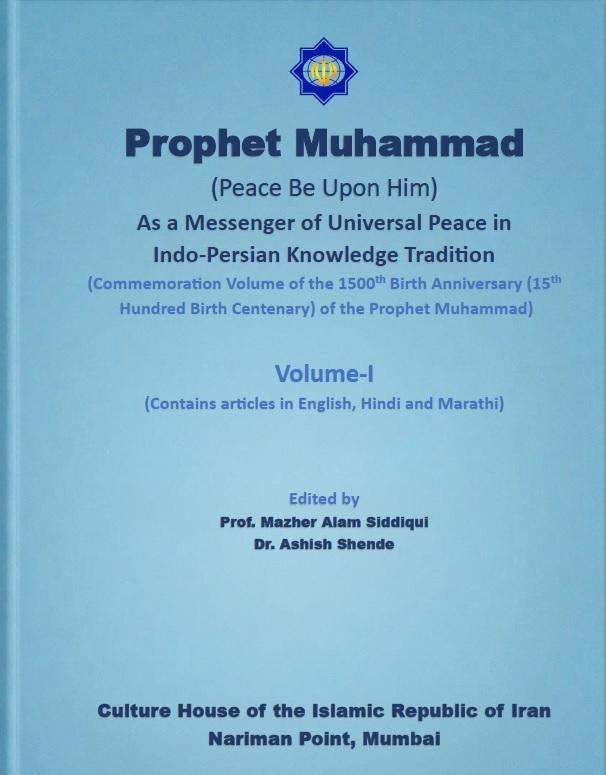
Publish Proceedings of the Seminar: Hz . Muhammad (PBUH), Messenger of Global Peace in the Indo-Iranian Intellectual and Knowledge Heritage
The first volume of the proceedings, Hazrat Muhammad (PBUH), Messenger of Global Peace in the Indo-Iranian Intellectual and Knowledge Heritage, has been published with the cooperation and support of the Cultural House of the Islamic Republic of Iran, Mumbai, and the Vasantrao Naik Government Institute of Arts and Social Sciences, Nagpur.
.jpeg)
Iran Culture House, Mumbai Director Visits “Haste Likhit” Exhibition at St. Xavier’s College
Mohammad Reza Fazel, Cultural Attaché of the Islamic Republic of Iran in Mumbai, visited the “Haste Likhit” Exhibition of Manuscripts and Ancient Coins at St. Xavier’s College, Mumbai, on September 10, 2026. The three-day exhibition, held from September 9 to 11, 2026, was organized in collaboration with the Department of Ancient Indian History, Culture and Archaeology and the institution’s research centre. The exhibition presented a diverse range of manuscripts, inscriptions, scripts and ancient coins, highlighting important aspects of India’s written, linguistic, historical and numismatic heritage. Students played an active role in preparing and presenting the exhibits under the academic guidance of Professor Dr. Anita Rane Kothare.
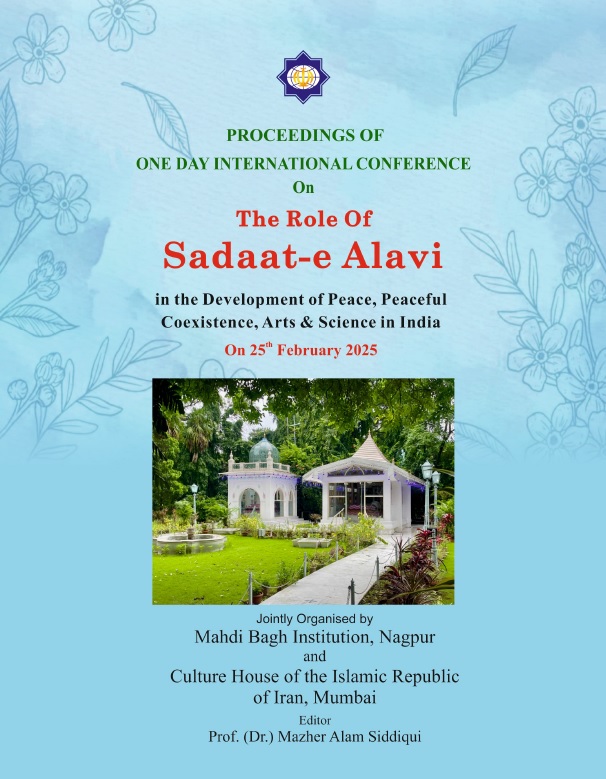
Publication of the Proceedings of the International Conference on “The Role of Alavi Sayyids in Promoting Peace, Peaceful Coexistence, Arts and Sciences in India”
The publication of the proceedings represents an important stage in completing the scholarly process initiated by the conference. A conference does not conclude with the presentation of papers; transforming presentations and research findings into a published work ensures that these scholarly contributions remain accessible to future generations of researchers. The present volume can serve as a useful resource for scholars working in the fields of Indian history, Islamic studies, the history of Sufism, Persian and Urdu language and literature, art history, manuscript studies and intercultural studies. The publication of such scholarly works also provides an opportunity for comparatively less-explored subjects to enter wider academic discourse and may encourage young researchers to undertake further studies in these areas.
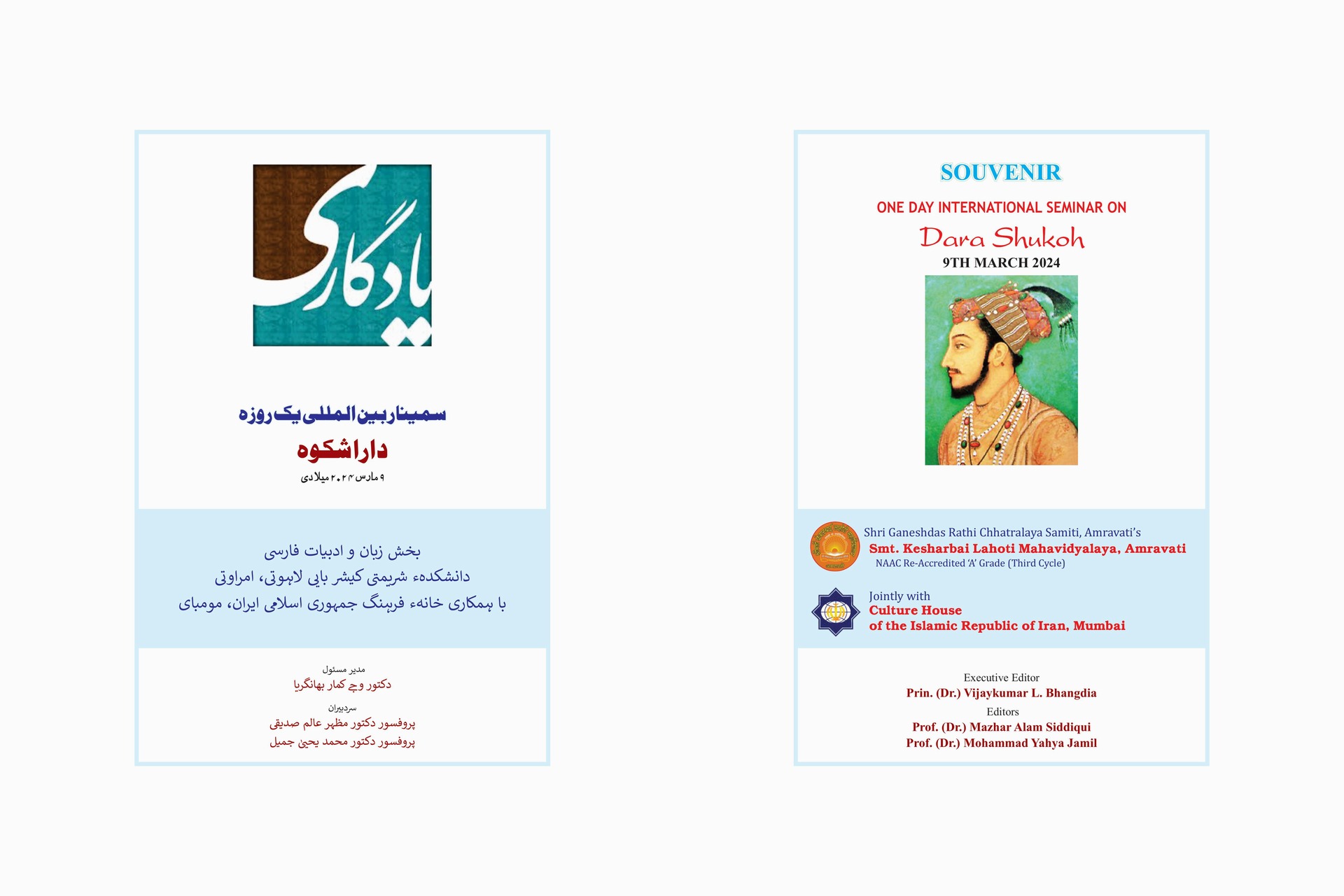
Iran Culture House, Mumbai and Lahoti Mahavidyalaya Publish Scholarly Volume on Dara Shikoh
The Iran Culture House, Mumbai, in collaboration with Smt. Kesharbai Lahoti Mahavidyalaya, Amravati, is pleased to present the Souvenir Volume of the One-Day International Seminar on Dara Shikoh, held in Amravati in 2024. The publication brings together 33 scholarly research papers in English, Persian and Urdu, exploring the life, thought, literary works, spiritual interests and artistic heritage of Prince Dara Shikoh, the renowned Mughal scholar and intellectual.
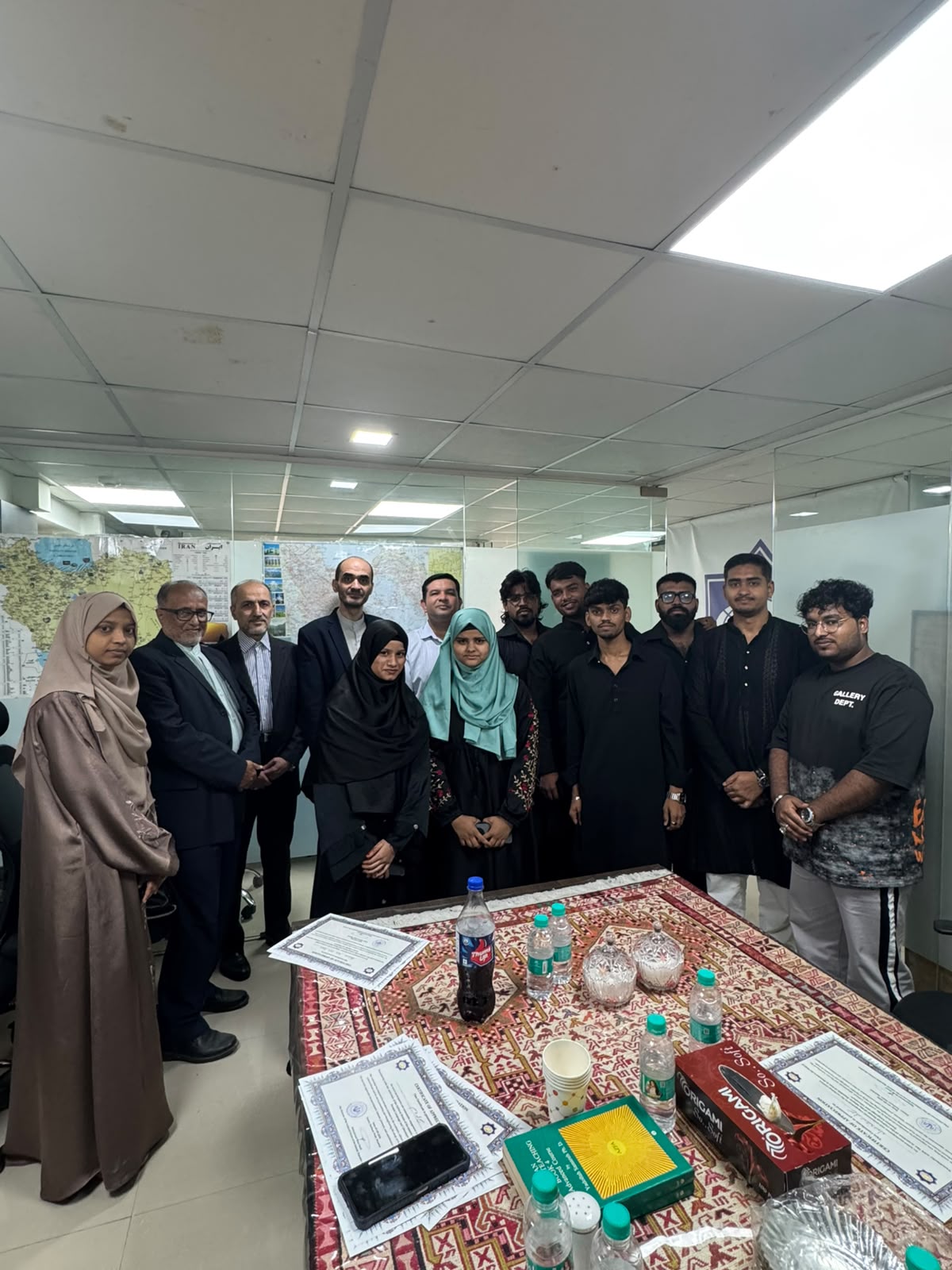
Persian Language Students of Ismail Yusuf College Visit Iran Culture House, Mumbai
On the occasion of the forthcoming National Day of Persian Poetry and Literature, a group of students of Persian Language and Literature from Ismail Yusuf College, Mumbai, accompanied by their faculty members Mr. Syed Ashfaq Murtazavi and Ms. Shabnoor, visited the Iran Culture House, Mumbai, on Monday, 7 September 2026. An educational workshop entitled “Introduction to the Iran Culture House and the Scientific, Cultural and Social Achievements of Contemporary Iran” was organized during the visit. The programme was attended by H.E. Mr. Saeed Reza Mosib-Motlagh, Consul General of the Islamic Republic of Iran in Mumbai, and Mr. Mohammad Reza Fazel, Cultural Counsellor and Director of the Iran Culture House, Mumbai.
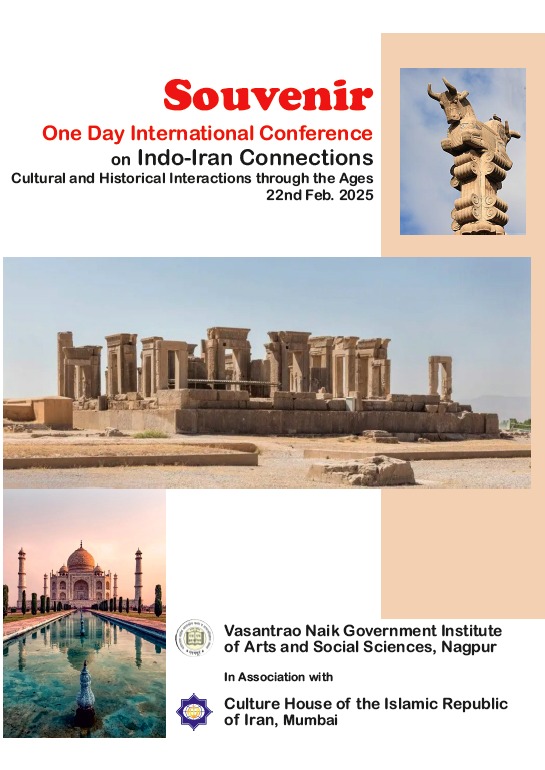
Publication of the Souvenir Volume of the International Conference on Iran–India Connections
The Iran Culture House, Mumbai, in collaboration with the Vasantrao Naik Government Institute of Arts and Social Sciences, Nagpur, is pleased to announce the publication of the scholarly Souvenir Volume of the International Conference on Iran–India Connections: Cultural and Historical Interactions Through the Ages.
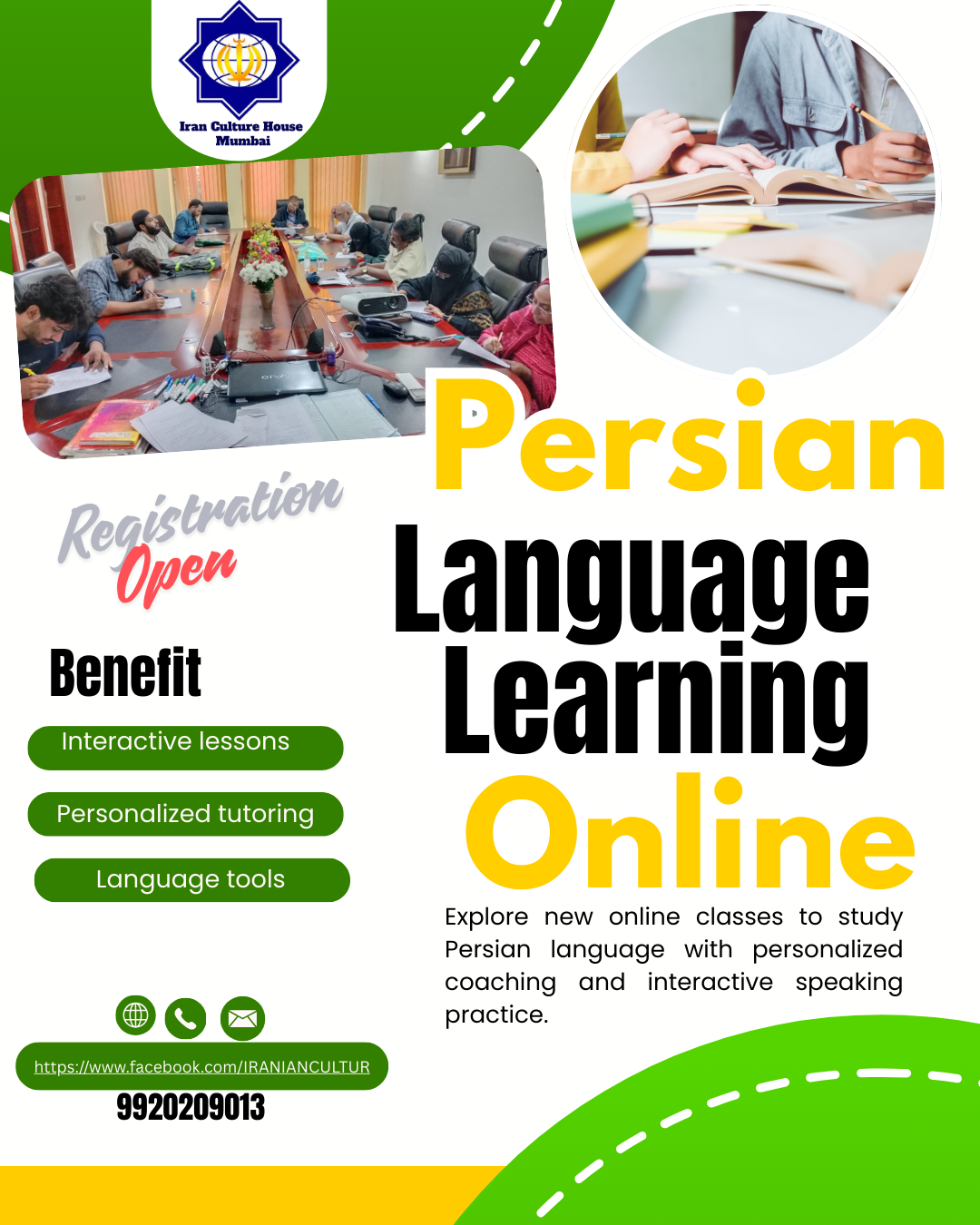
Launch of Online Elementary and Intermediate Persian Language and Literature Courses at the Iran Culture House in Mumbai with the Support of Saadi Foundation
The Iran Culture House in Mumbai, the first cultural center of the Islamic Republic of Iran established outside the country, is among the oldest official institutions dedicated to teaching and promoting the Persian language worldwide. Founded in 1956, it has played a significant role for nearly seventy years in introducing the Persian language, literature, art, culture, and civilization throughout western and southern India, while serving as one of Iran's most important academic and cultural centers in the Indian subcontinent. Over the decades, the Iran Culture House has organized Persian-language courses, academic conferences, scholarly seminars, cultural exhibitions, commemorative programs dedicated to renowned Iranian poets and scholars, and collaborative initiatives with leading Indian universities.
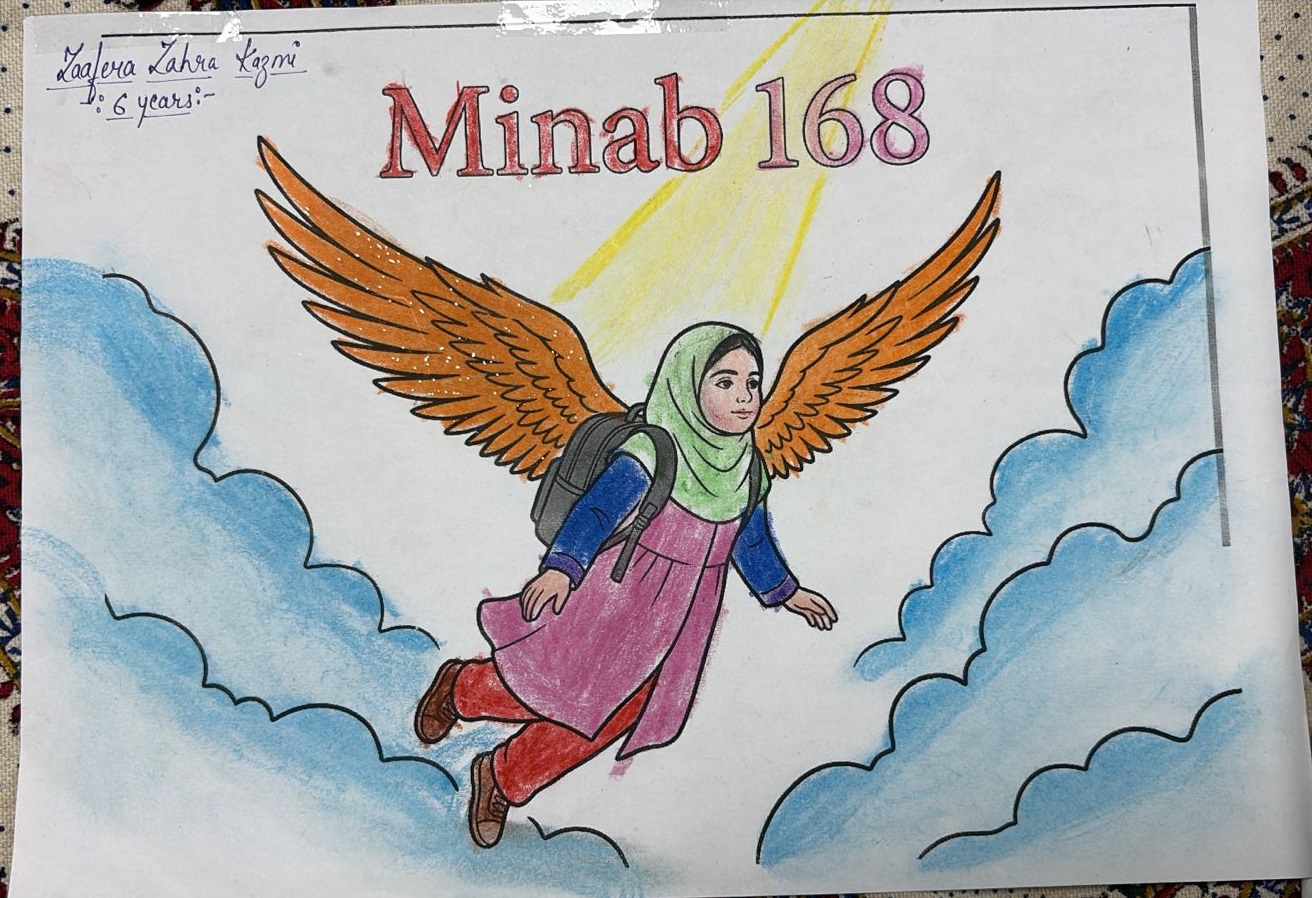
Indian Schoolchildren Express Solidarity with Minab Victims Through Art Exhibition in Mumbai
The event, titled "Solidarity with Minab: Children Beyond Geopolitics," was organized by Qalamkar Parishad (Mumbai Chapter) under the coordination of Engineer Syed Zia Azmi. It brought together students, educators, cultural figures, and members of the Indian and Iranian communities to promote peace, compassion, and humanitarian values. A highlight of the program was an exhibition showcasing artwork created by children on the themes of peace, friendship, coexistence, and hope. Organizers said a total of 71 submissions were received, including 58 paintings and 13 letters and personal messages.
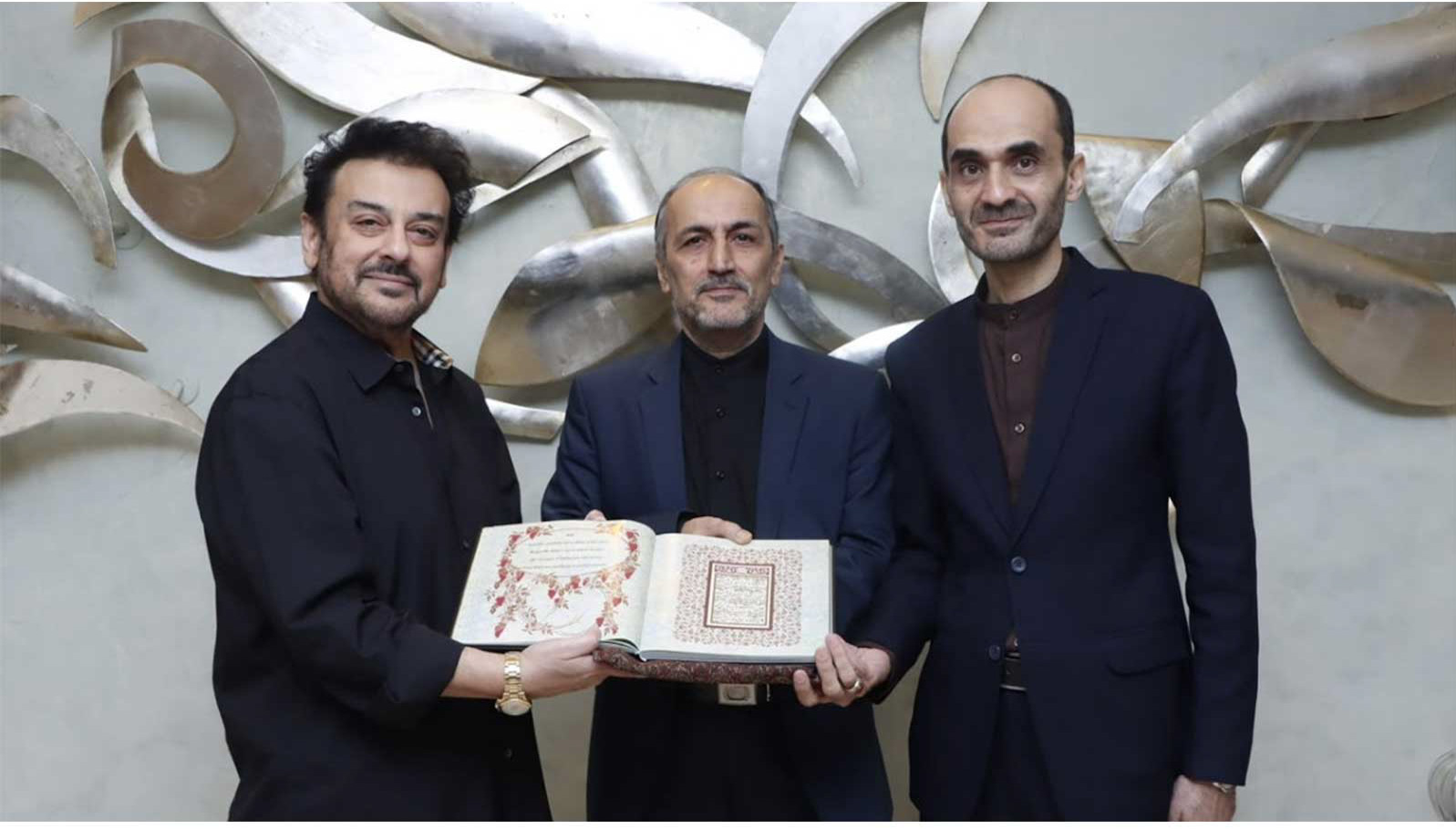
Adnan Sami’s Musical Tribute Strengthens Indo-Iranian Cultural Bonds
In a significant cultural exchange, H.E. Saeid Reza MosayebMotlagh, Consul General of the Islamic Republic of Iran in Mumbai, along with Mr. Mohammad Reza Fazel, Director of the Culture House of Iran, Mumbai, met Adnan Sami to convey gratitude on behalf of the Iranian people. The Iranian officials praised the composition for its profound emotional depth, artistic sensitivity, and respectful portrayal of shared humanitarian values. They described the tribute as a touching symbol of cultural respect and solidarity between the two nations.