

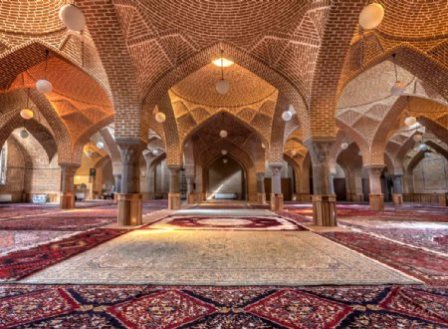
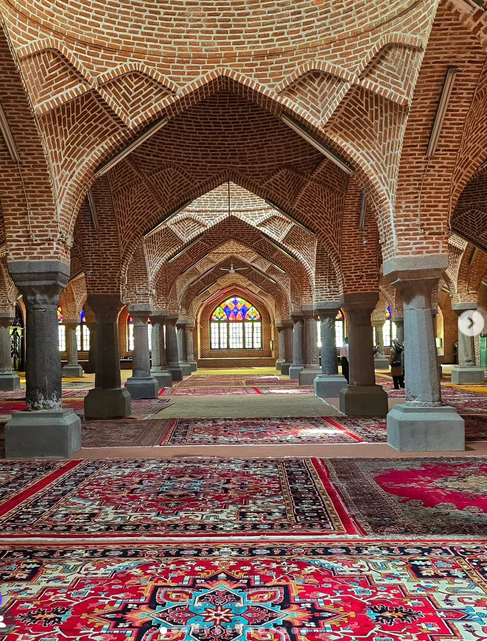
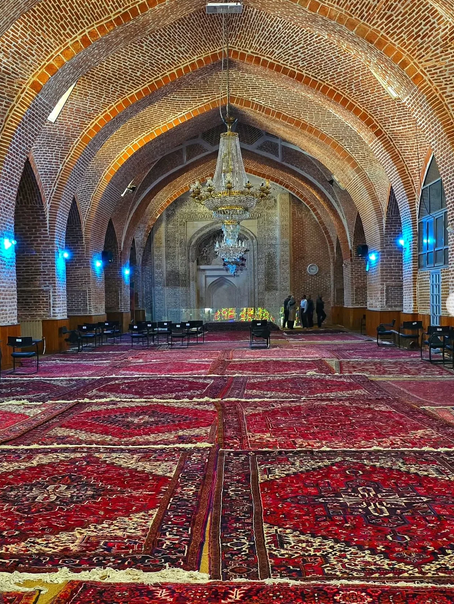
The construction of the Jame’ (Grand) Mosque of Tabriz (East Azarbaijan province) dates back to the Seljuk period up to the Qajar period.
The Jame’ Mosque of Tabriz, also known as the “Friday Mosque”, which is also referred to in historical books as the “Kabiri Jame’”, is located in the middle of Tabriz Bazaar. This historical, rectangular mosque has two entrances and a large shabestan and its arches and domes are placed on octagonal brick columns decorated with delicate and artistic plaster works.
The mehrab or niche of the mosque is high and decorated with plaster works and its high dome is decorated with various mosaic tiles. There are two inscriptions in this mosque one of which is the decree of the Safavid king, Shah Sultan Hossein, and the other one is the narration of a dream by Shah Tahmasb I. The basement of the mosque and the old prayer hall - and its niche - of this ancient building, contain traces of colored plaster works, which belong to the Seljuk and Ilkhanate eras.
The current building of the mosque, which was formerly of one porch and another one was added to it later on, is built entirely of brick and plaster. In fact, the current Jame’ Mosque consists of four interconnected mosques namely “The Great Hojjat al-Islam Mosque, The Small Hojjat al-Islam Mosque, The Ismail Khan Qoli Mosque, and The Alchaq Mosque, which together form the Jame’ Mosque.
Presently, part of the yard of the Jame’ Mosque has been turned into a library and rooms of seminary students and it is considered one of the centers for the religious sciences of the city.