

Molla Hadi Sabzevari was an Iranian scholar and thinker in the fields of humanities, philosophy, and poetry, born in 1797 CE (1176 SH) in Sabzevar, a city in northeastern Iran. He began his education in his hometown, studying the foundational sciences, and later moved to Mashhad, near Sabzevar, to further complete his studies.
Life and Works of Molla Hadi Sabzevari
During Molla Hadi’s time, Isfahan was the capital of the ruling government (the Safavid dynasty) and one of the main scientific and intellectual centers of the era. As a result, the city was a major destination for students seeking knowledge. After completing his studies in Mashhad, Molla Hadi traveled to Isfahan to study philosophy and mysticism. While in Isfahan, he benefited from the teachings of renowned scholars of the time, including Molla Hossein Sabzevari, Sheikh Mohammad Taqi Razi, Mohammad Ebrahim Kalbasi, Molla Ali Mazandarani, and Molla Esmail Koushki.
Afterward, Molla Hadi spent some time in Kerman and eventually returned to Mashhad in 1827 CE (1206 SH), where he taught for five years at a school called Haj Hassan School. He later returned to his hometown of Sabzevar, where he continued teaching until the end of his life.
Works and Contributions of Molla Hadi Sabzevari
Molla Hadi Sabzevari was also skilled in composing mystical and philosophical ghazals, and in his poetry, he used the pen name “Asrar” (a takhallus, or pseudonym that poets use, usually in one of the final couplets to sign their work).
Several books by Molla Hadi Sabzevari have survived, the most important of which include:
-
Asrar al-Hekmah fi al-Muftatah al-Mughtanam
-
Al-Nibras fi Asrar al-Asas
-
Divan of Poems
-
Rah Qarah and Rahiq on the science of Badi‘ (rhetoric and literary style)
-
Miftah al-Falah and Misbah al-Najah
-
Rasa’il Hakim Sabzevari
Molla Hadi Sabzevari passed away at the age of 77 in 1873 CE (1250 SH) and was buried on his private property in Sabzevar. A year after his death, Mirza Yusuf Mostofi-al-Mamalek, a prominent official of the Qajar government, built a mausoleum in his honor.
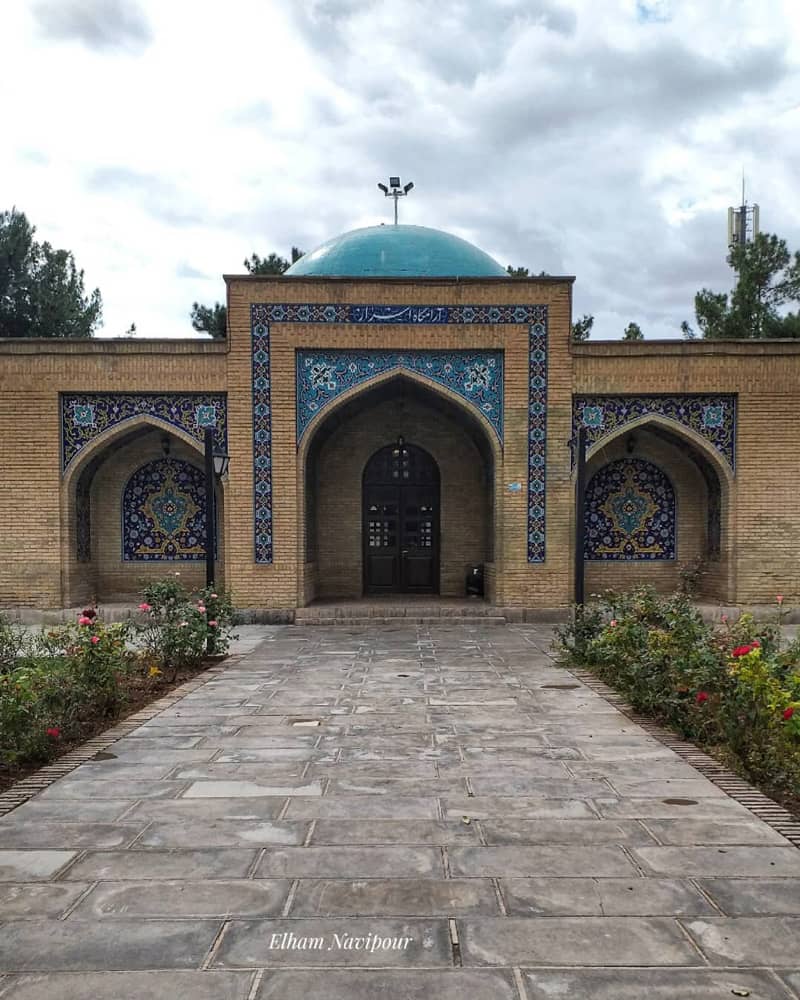
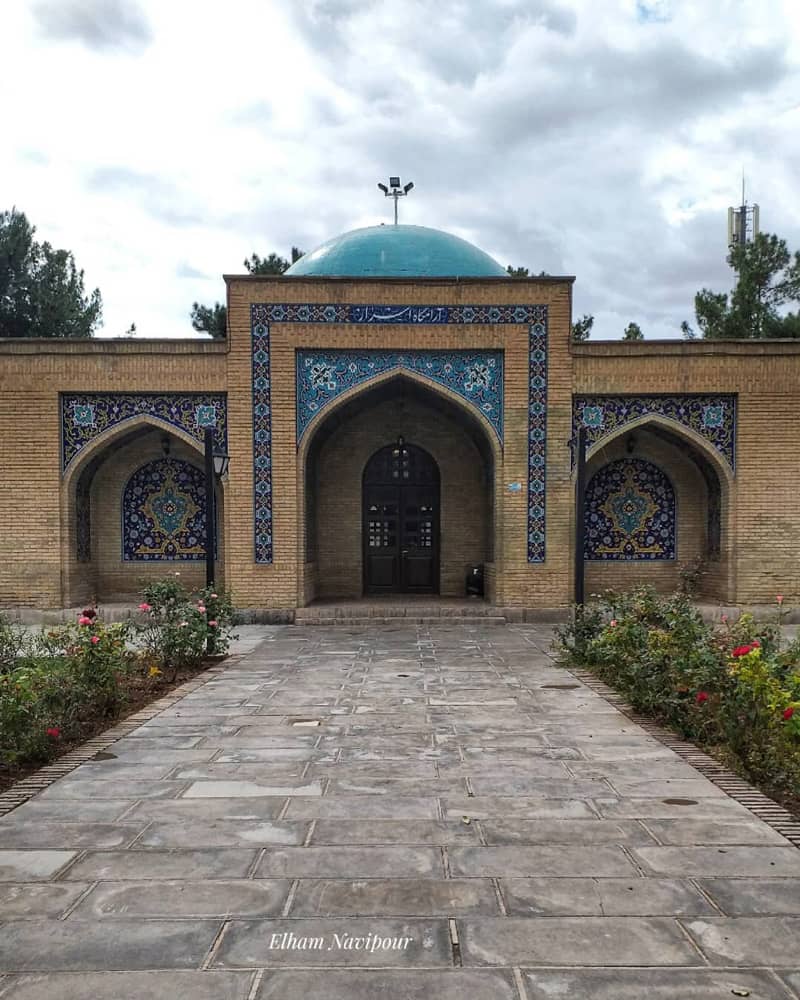
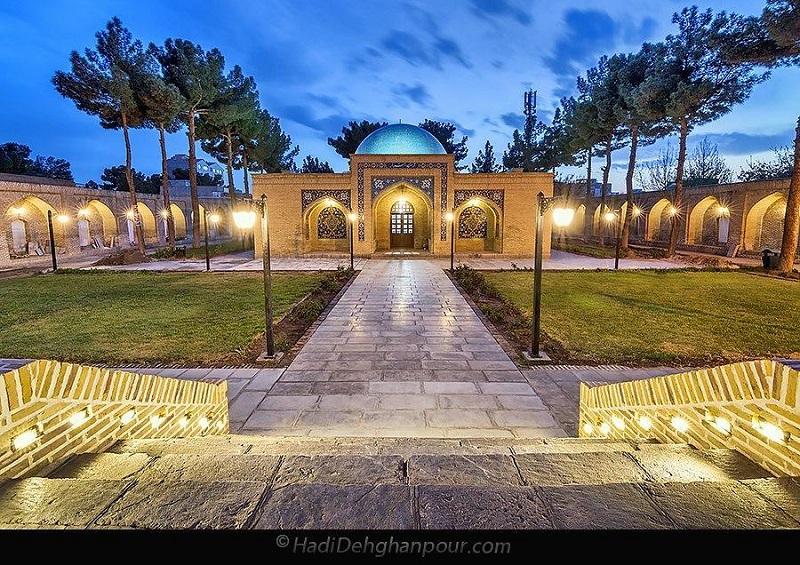
The Mausoleum of Molla Hadi Sabzevari in Sabzevar
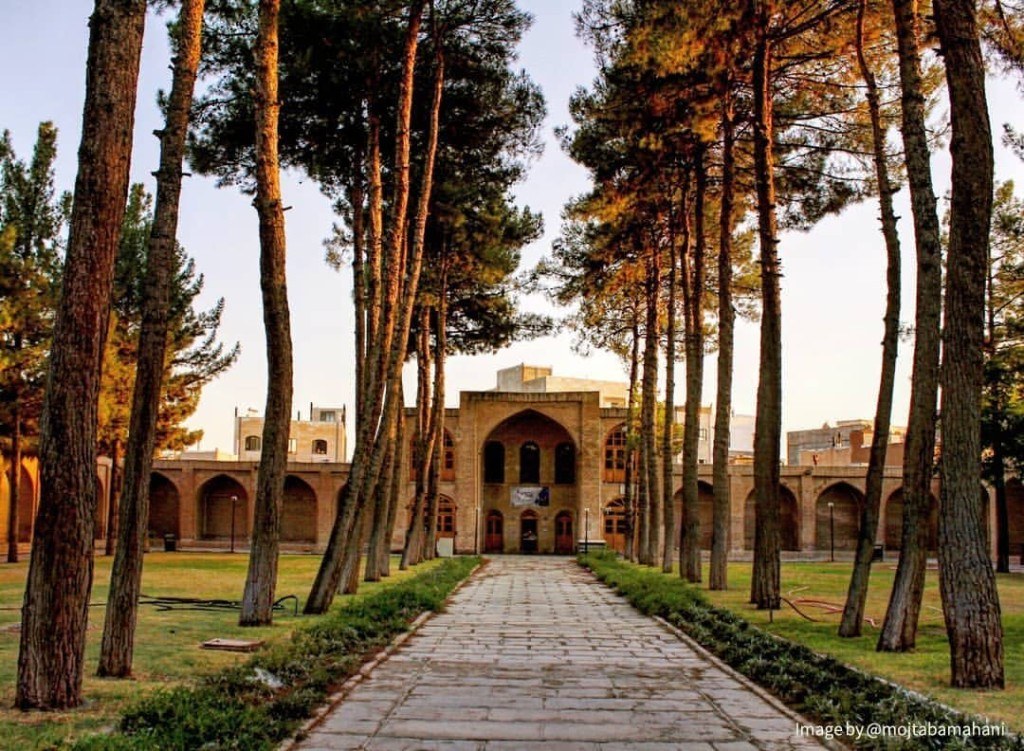
Mirza Yusuf intended to establish a school next to the mausoleum so that Molla Hadi’s eldest son, Molla Mohammad, could teach there. However, due to Molla Mohammad’s death, the construction of the school was left unfinished, with only a few rooms completed.
The Mausoleum of Molla Hadi has been restored in recent years, which has helped prevent its destruction. In 1961 (1340 AH), decorative elements were added, enhancing its grandeur and beauty. Its inclusion in the National Heritage List of Iran in 1976 (1355 AH) reflects its historical significance.
The Mausoleum of Molla Hadi Sabzevari is popularly known among the people of Sabzevar as the Mausoleum of Asrar, named after his pen name (takhallus), Asrar.
The building consists of a main hall and four iwans and is entirely constructed with bricks and gypsum mortar. A brick dome adorned with blue tiles sits atop the mausoleum. Unlike typical Iranian architecture, the dome of Molla Hadi Sabzevari’s mausoleum is composed of several semicircular sections. For this reason, the lapis-colored dome is more vulnerable to natural disasters, and cracks have formed on its plaster surface.
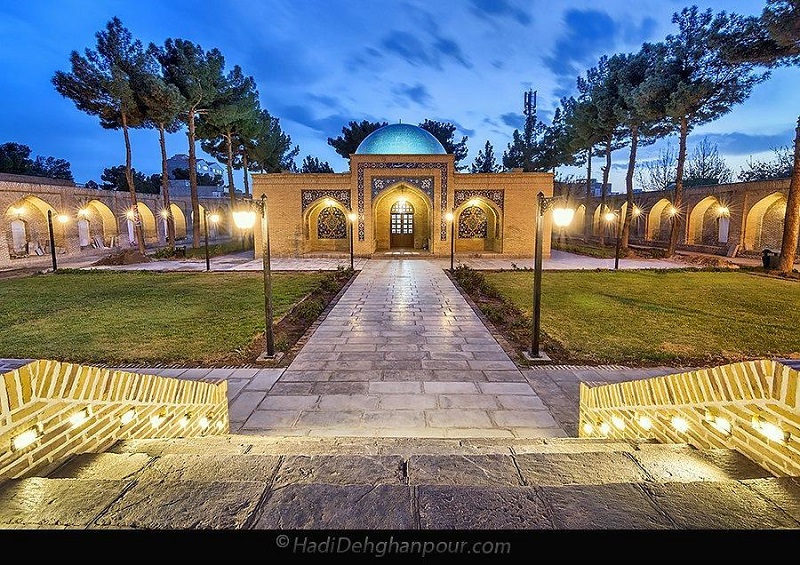
At the northeast entrance of the mausoleum, mirror-work decorations can be seen on the ceilings of the main hall and the iwans, creating a visually stunning effect. The eastern and western iwans of the main hall each have three skylights, which provide natural lighting to the interior.
The overall structure of the mausoleum is based on the Chalipa design. Chalipa, or the Iranian cross, is a cross-shaped architectural plan that has been observed in Iranian architecture since the millennium before Christ. Notable examples of this design include the massive walls of Naqsh-e Rustam.
In the center of the main hall, there is a large marble tombstone belonging to Molla Hadi Sabzevari. Apparently, the original tombstone was made of plaster, over which a wooden chest was once placed.
The grounds of the mausoleum are also very attractive, featuring four gardens—two located in front of the main hall and two on its eastern and western sides. Additionally, the building includes two small chambers and two porches.
National Registration of Molla Hadi Sabzevari Mausoleum
This monument was registered on July 31, 1976 (9th of Mordad 1355 in the Iranian calendar) with registration number 1344 on the list of Iran’s National Heritage Sites.