

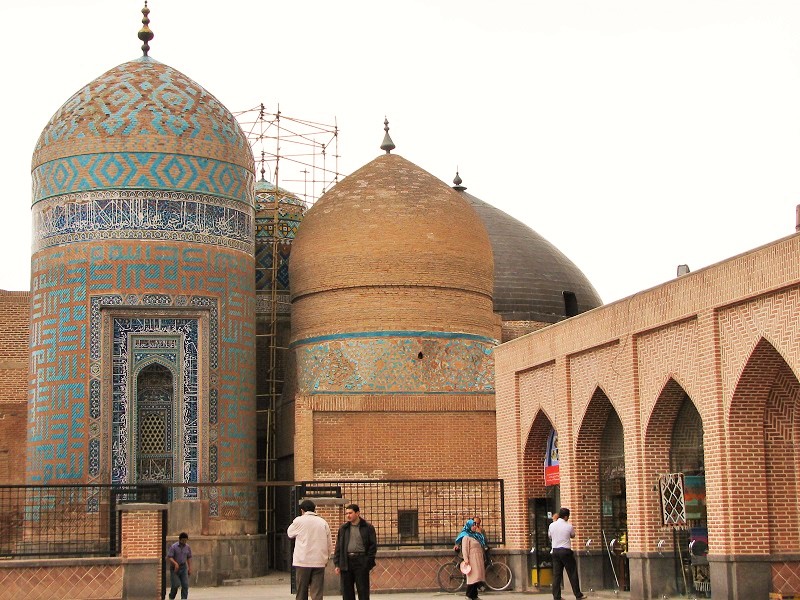
Sheikh Safi al-Din Ardabili (born 1252 or 1253 CE – died 1334 CE / 650–735 AH) is one of the most significant figures in Iranian history — a man who founded an influential intellectual and spiritual school during a time when Europe was still immersed in the darkness of the Middle Ages. His teachings left a profound impact not only on his own era but also on the centuries that followed. He was the ancestor of the Safavid dynasty, which went on to rule Iran during one of the most brilliant periods in the nation’s history. Today, however, Sheikh Safi al-Din Ardabili is perhaps best known for his monumental khanqah (Sufi lodge) and mausoleum, a masterpiece of Iranian-Islamic architecture that has been inscribed on UNESCO’s World Heritage List. This remarkable complex, located in Ala Qapu Square (Ala Qapi) in the city of Ardabil, stands as a lasting symbol of his spiritual and cultural legacy.
Sheikh Safi al-Din Ardabili: The Spiritual Forefather of the Safavid Dynasty
Sheikh Safi al-Din Ardabili passed away three centuries before Shah Ismail I united Iran and founded the Safavid dynasty in 1501 CE, yet he is regarded as one of the most influential figures in its formation. Shah Ismail and his successors considered themselves followers of their great ancestor, revering him for his spiritual authority and the widespread respect he commanded among the people of his time. Sheikh Safi al-Din was a disciple of Sheikh Zahed Gilani, a renowned Sufi master with many followers. Safi al-Din later transformed his teacher’s worldview and established a new Sufi order (tariqa) that gained considerable influence in the following centuries. This growing movement helped the Safavid family attract a large base of loyal followers. It is said that Shah Ismail, who was raised in a deeply mystical environment under his father’s guidance, was declared the “Supreme Sufi” (Sufi Aʿzam) at the age of six and, by the time he visited Sheikh Safi’s shrine in Ardabil at age thirteen, had already gathered around seven thousand disciples. Whether or not this account is entirely factual, it reflects the genius of Shah Ismail and the enduring impact of Sheikh Safi al-Din’s spiritual teachings — two forces that together paved the way for the rise of the Safavid Empire and ushered in one of the most brilliant eras in Iranian history.
The Sheikh Safi al-Din Ardabili Complex
The site, today recognized by UNESCO as one of Iran’s World Heritage properties, includes a mosque, mausoleum, library, hospital, cistern, bakery, several offices, and a kitchen, though it is generally known as the Shrine of Sheikh Safi al-Din Ardabili. Parts of the complex were built during Sheikh Safi al-Din’s lifetime and originally served as his residence and khanqah (Sufi lodge) — a place for spiritual retreat and seclusion. According to the Sheikh’s will, he was buried here, and over time, the site gained sanctity and reverence among followers. In subsequent centuries, the mausoleum became a pilgrimage center for Sufis. The remains of Shah Ismail I, the founder of the Safavid dynasty, as well as several martyrs of major battles such as Chaldiran (1514) and Shirvan (1547), are also interred here. The complex underwent major expansion during the reign of Shah Tahmasp I (1514–1576) and continued to evolve throughout the Safavid period. As such, the Sheikh Safi al-Din Ardabili complex can be regarded as one of the masterpieces of Iranian architecture and art, serving as a model for later mausoleums and religious structures. Several prominent sections of the complex can be highlighted:
Entrance and Main Courtyard
To the west of the Aali Qapu Square, a double wooden door provides access to the courtyard of the complex. The courtyard is spacious and verdant, featuring two pools that were likely constructed during the Safavid era. The arches and niches along the courtyard walls form its main decorative elements. A section of the complex known as the Chellehkhaneh now lies abandoned, but as its name suggests, it once served as a retreat for Sufi ascetics during their periods of spiritual seclusion (cheleh-nishini).
The Qandil Khaneh (Hall of chandelier)
The main courtyard of the complex, also known as the Courtyard of the Qandilkhaneh , is paved with polished stones. At its center lies a twelve-sided pool, which some interpret as a reference to the Twelve Imams of Shi‘ism, while others believe it symbolizes the twelve Qizilbash tribes. The Qizilbash were a group that played a crucial role in the establishment and survival of the Safavid dynasty.
The Exquisite Sheikh Safi Carpet (The Ardabil Carpet)
The Qandil Khaneh (Hall of chandelier)
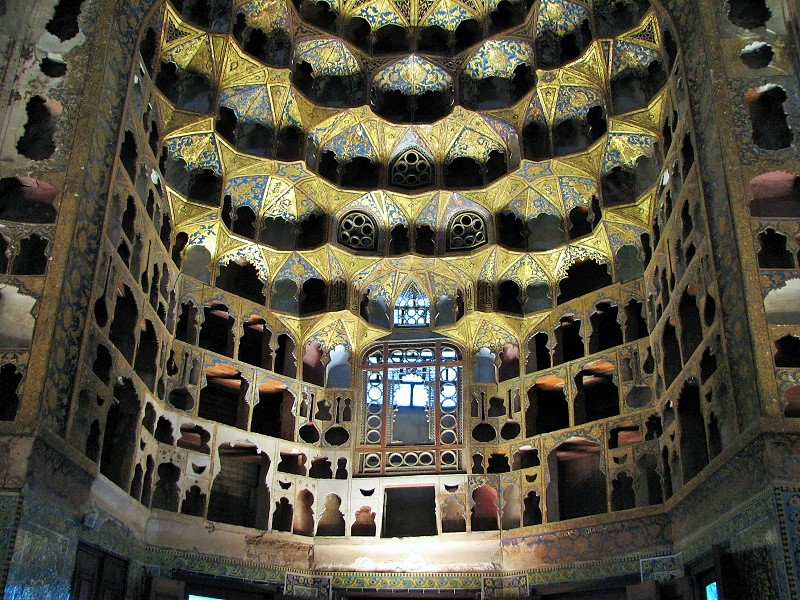
The Qandil Khaneh, or “Hall of chandelier,” is considered the main section of the khanqah (Sufi lodge). It was the gathering place where Sufis came together to recite and interpret the Qur’an. The name Qandil Khaneh derives from the numerous oil lamps (qandil) that once illuminated the space.
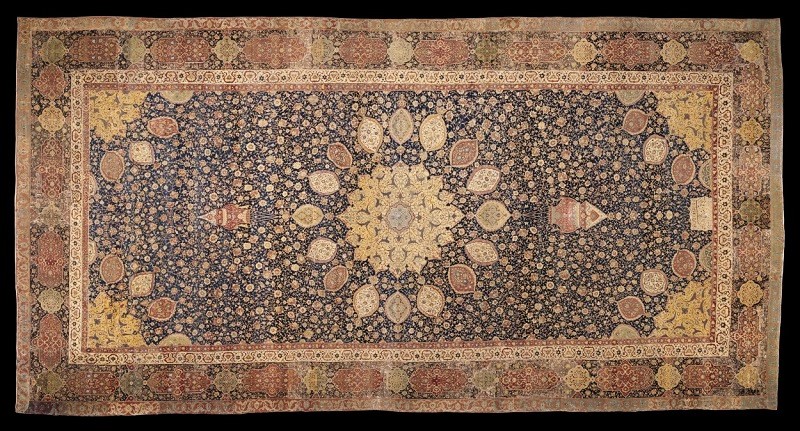
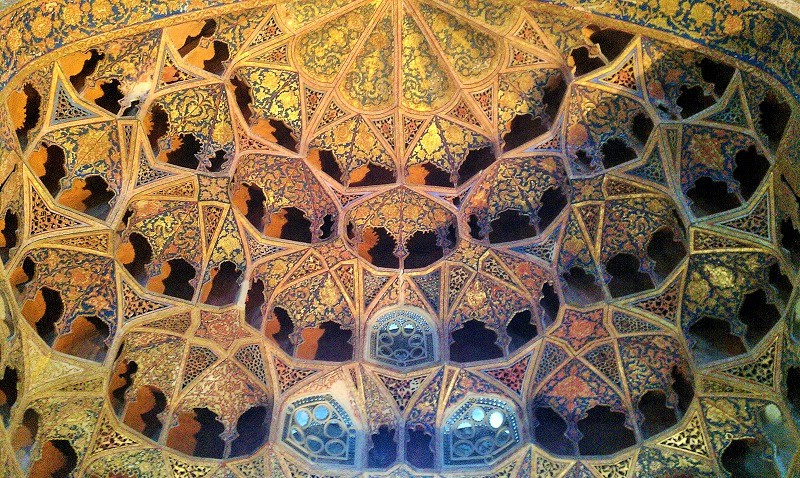
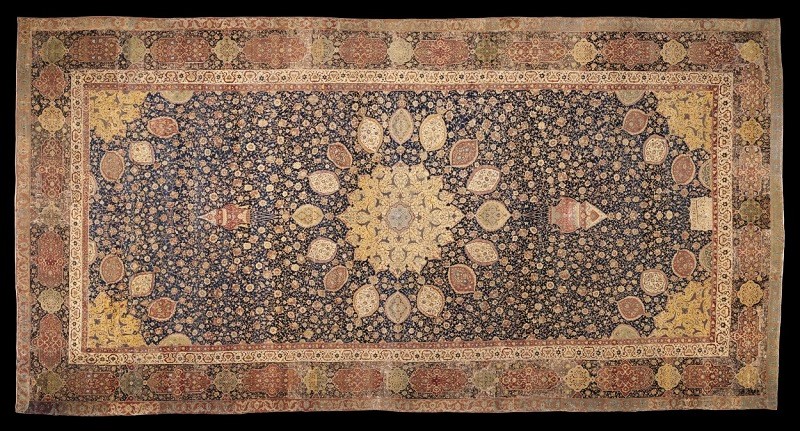
The current ceiling of the hall dates back to the Qajar era (19th century CE), when the original roof was replaced after being destroyed. In the past, a famous carpet known as the Sheikh Safi Carpet covered the floor of this chamber. The reflection of its intricate design on the gilded ceiling was said to create an enchanting atmosphere. The carpet is believed to have been woven in Tabriz. An artisan named Maqsud Kashani restored it in 946 AH (1539 CE) and inscribed his name and the date in one corner. This masterpiece was taken out of Iran in 1893 CE (1272 SH) and is now preserved in the Victoria and Albert Museum in London.
The Jannat Sara Mosque
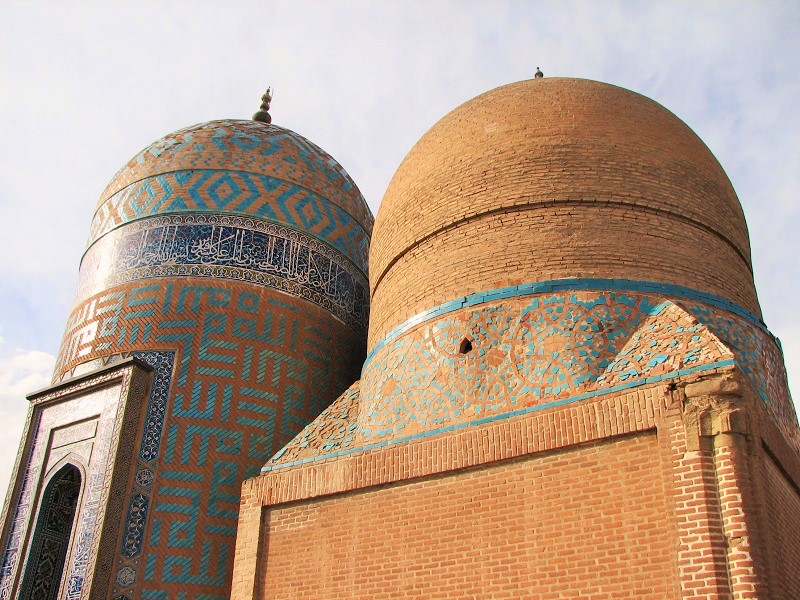
The Jannat Sara Mosque is located on the northern side of the main courtyard. The mosque has an octagonal layout and notably lacks a mihrab, suggesting that it was originally used as a gathering space for dervishes rather than for formal prayers. Some researchers believe that this section was once an open courtyard that was later roofed during the reign of Shah Abbas I of the Safavid dynasty. Today, the largest dome in the entire complex belongs to this mosque.
The Chinikhaneh
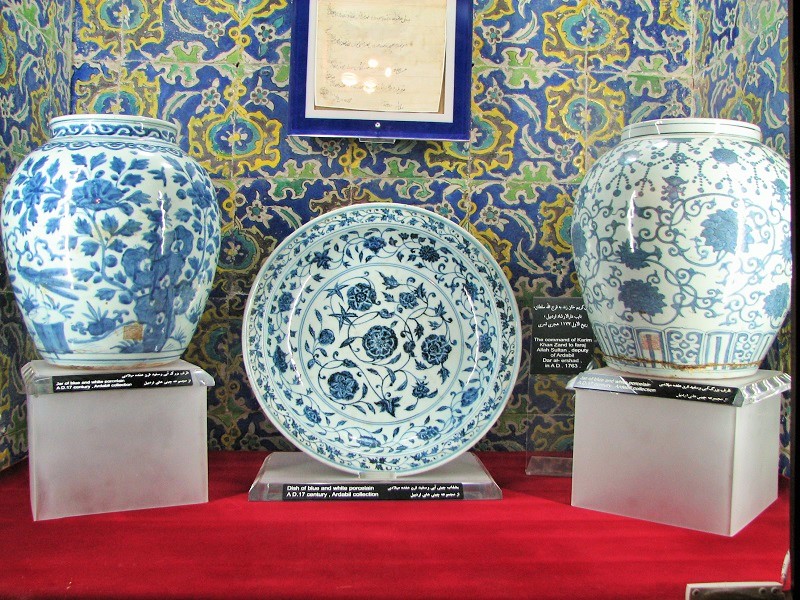
The Chinikhaneh is believed to be the oldest part of the Sheikh Safi al-Din Ardabili complex—older even than the Qandilkhaneh and Jannat Sara sections. It is thought that this hall originally served as a gathering place for dervishes. However, during the reign of Shah Abbas I, it was repurposed to house valuable books and exquisite Chinese porcelain. All the ancient porcelain pieces found here bear the inscription: “Endowed to the shrine of Sheikh Safi by the servant of the King of Guardianship, Abbas.” What is currently on display represents only a small portion of the Chinikhaneh’s treasures; the majority of its artifacts are preserved today in the National Museum of Iran and the Hermitage Museum in Saint Petersburg.
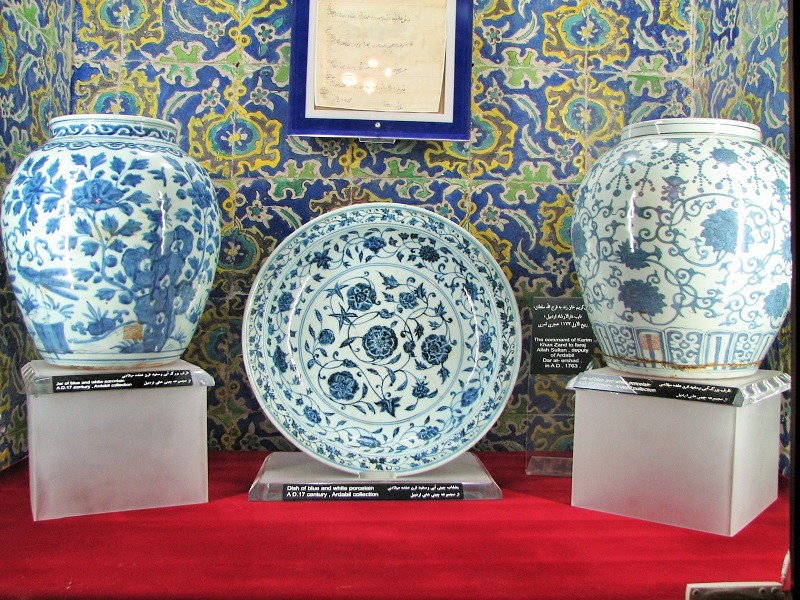
Exquisite Chinese Porcelain of the Chinikhaneh
The Mausoleum of Shah Ismail
The founder and one of the most powerful rulers of the Safavid dynasty is buried in a small chamber measuring 2.5 by 3.5 meters. The room is topped with a small dome and adorned with golden decorations. A finely crafted wooden cenotaph rests upon Shah Ismail’s tomb, reflecting the elegance and reverence of the site.
The “Allah Allah” Dome
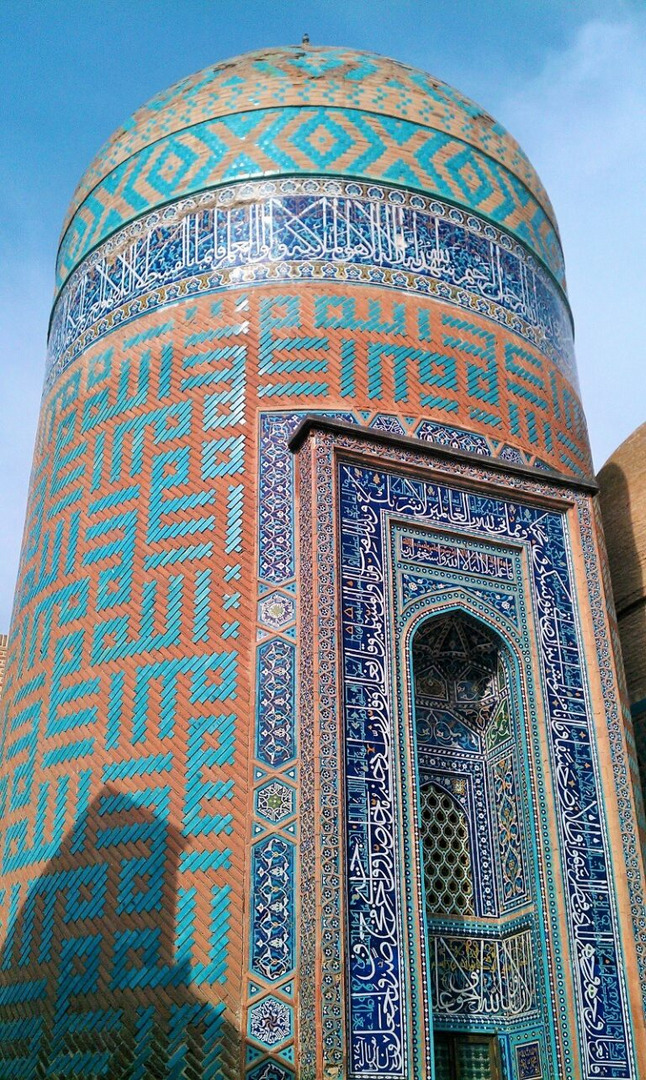
This dome derives its name from the repeated inscription of the divine word “Allah” on its exterior surface. It is built directly above the tomb of Sheikh Safi al-Din. Since constructing domes over burial sites was not customary at the time of Sheikh Safi’s death, it is believed that this dome was added later, during the Safavid era. The interior of the mausoleum is octagonal in shape, with Sheikh Safi al-Din’s tomb placed at its center. The tombs of Sheikh Haydar — Sheikh Safi’s father — and several other prominent Sufi figures are also located within this sacred space.
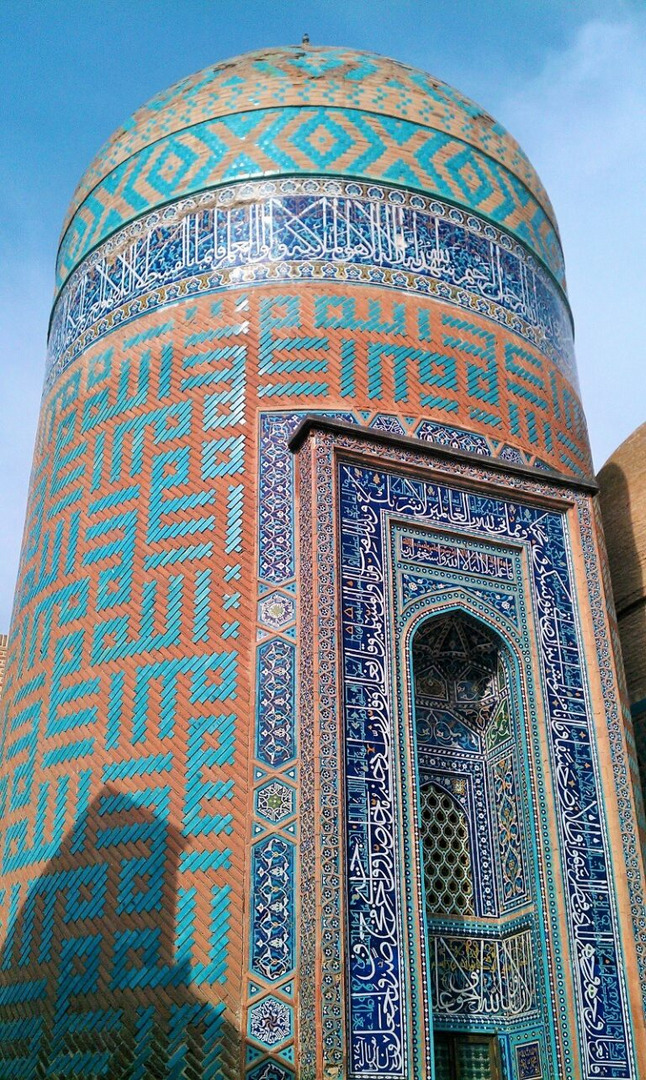
The “Allah Allah” Dome
The Haremkhaneh (Women’s Quarters)
This section of the complex was built by Sheikh Safi al-Din himself as a burial place for his wife and the women of his family. There are ten graves located in this area.
National and World Heritage Registration of the Sheikh Safi al-Din Ardabili Complex
The Sheikh Safi al-Din Ardabili Shrine Complex was inscribed on the UNESCO World Heritage List in 2010 CE (1389 SH). It had already been registered as a national monument of Iran in the early days of 1932 CE (1310 SH).