

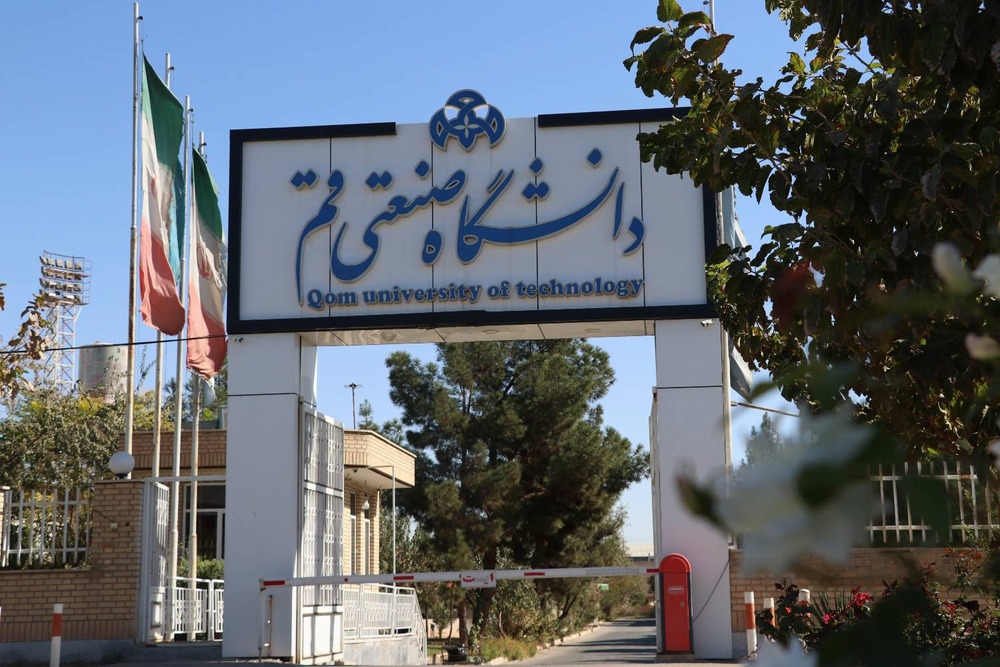
Studying at Qom University of Technology: Connecting Engineering Education, Research, and Industrial Development in Qom Province
Qom University of Technology was established in 2008 with the aim of developing a skilled and specialized workforce, advancing scientific research, and fostering technological expertise and entrepreneurial skills. With a focus on engineering and technology education, the university strives to foster an innovative environment for educating future engineers and meeting the country’s scientific and industrial needs. It provides a dynamic, specialized academic environment for students’ academic, research, and professional development. Drawing on its faculty members, administrative staff, and creative students, Qom University of Technology seeks to contribute to scientific and technological advancement in the province and across the country.
History and Location
Qom University of Technology is located in the holy city of Qom, a major center for religious scholarship in Iran and around the world. At the same time, its location along a major transportation corridor serving Iran’s industrial regions, together with the presence of seven industrial parks and four industrial zones, contributes to Qom’s growing industrial significance. This strategic location offers students unique opportunities to gain direct exposure to industry and advanced technologies.
Qom University of Technology at a Glance
General Information
-
Type: Specialized University of Technology
-
Affiliation: Ministry of Science, Research and Technology
-
Approach: Engineering education, applied research, and industrial development
-
Academic Focus: Electrical Engineering, Mechanical Engineering, Civil Engineering, Industrial Engineering, Polymer Engineering, and Advanced Technologies
-
Target Audience: Domestic students and industrial researchers
Academic Focus and Educational Approach
-
Focus on engineering and technology education aligned with industrial needs
-
Advancement of applied research and solutions to industrial challenges
-
Development of professional skills, innovation, and entrepreneurship
-
Progress toward a new-generation university model with a technology-driven and industry-oriented approach
Faculties and Academic Programs
Faculty of Electrical and Computer Engineering
-
Bachelor’s Programs: Electrical Engineering and Computer Engineering
-
Master’s Programs in Electrical Engineering: Power Electronics and Electrical Machines, Power Systems, Control Engineering, Field and Wave Engineering, Telecommunication Systems, and Integrated Electronic Circuits
-
Master’s Program in Computer Engineering: Software Engineering
Faculty of Mechanical Engineering
-
Bachelor’s Programs: Mechanical Engineering, Engineering Physics, Energy Engineering, and Metallurgical Engineering
-
Master’s Programs: Manufacturing Engineering, Applied Design, Energy Conversion, and Nanotechnology (Nanoelectronics)
-
Doctoral Program: Mechanical Engineering – Applied Design
Faculty of Engineering
-
Bachelor’s Programs: Civil Engineering, Industrial Engineering, and Polymer Engineering
-
Master’s Programs: Geotechnical Engineering and Environmental Engineering (Civil Engineering); Systems Optimization (Industrial Engineering); Polymer Processing (Polymer Engineering); Organic Chemistry; and Applied Mathematics
-
Doctoral Program: Systems Optimization (Industrial Engineering)
Note: The English names of faculties, degree programs, and specializations should be verified against the university’s official academic catalog before publication.
Strategic Objectives of Qom University of Technology
-
Meeting the country’s scientific and industrial needs
-
Contributing to knowledge production and the advancement of advanced technologies
-
Aligning educational priorities with industrial developments
-
Developing up-to-date engineering education in line with international standards
-
Educating professional engineers with skills in analysis, design, research, innovation, and entrepreneurship
-
Providing graduates with opportunities to pursue further studies at higher academic levels
-
Nurturing outstanding scientific talent in the province and across the country
-
Advancing science and technology in the province and nationwide
-
Strengthening confidence in solving industrial problems and fostering independent thinking
-
Attracting and supporting outstanding students, faculty members, and staff
-
Developing a skilled workforce with the necessary technical and managerial expertise
-
Contributing to strategic decision-making in science and technology in the province and helping address industrial challenges
-
Undertaking graduation projects in modern and advanced industries
Future Vision
-
Becoming a leading university of technology at the national and regional levels
-
Expanding applied research and advanced technology centers
-
Offering an innovative model of education, research, and industrial skills development
-
Playing an effective role in the scientific, industrial, and technological development of Qom Province and Iran
Admission to Iranian Universities
One option for applying to Iranian universities is to use the services of authorized student recruitment agencies, provided that their authorization by Iran’s Ministry of Science, Research and Technology has been verified.
The online platform iranian.university provides information about Iranian universities that accept international applicants, along with the academic programs open to international students at each institution. The platform states that it operates with official authorization from the Ministry of Science, Research and Technology. This claim should be independently verified before being presented as confirmed fact.
Applicants can explore university options based on their preferred city, field of study, tuition fees, and other criteria to easily identify and select a suitable university and academic program.