

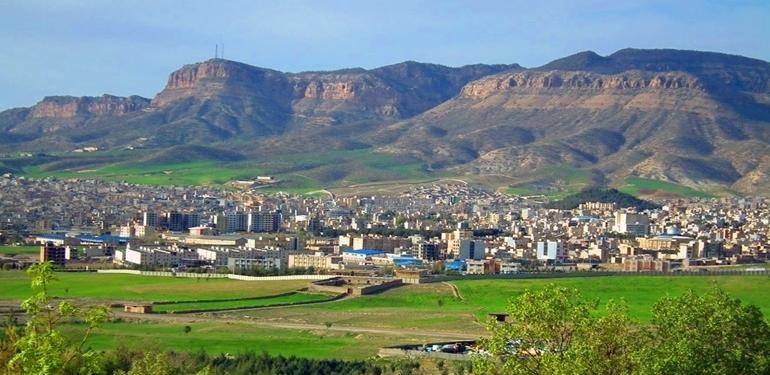

At the western reaches of Iran, amid the verdant slopes and snow-capped peaks of the Zagros Mountains, lies a city whose name evokes one of the oldest civilizations of the Iranian Plateau. Ilam, the capital of Ilam Province, is nestled among the towering mountains and deep valleys of the Zagros, where its architecture has evolved in response to the surrounding natural environment through the use of stone, timber, and earth. Ilam may aptly be called the “City Embraced by the Zagros”—a place where traditional stone-built architecture harmonizes with steep mountain slopes, flowing springs, and dense oak forests, offering a remarkable story of the enduring relationship between people and nature.
The story of Ilam begins with its name, adopted in 1936 in reference to the ancient Elamite civilization, one of the earliest civilizations of the Iranian Plateau. Parts of present-day Ilam Province were historically associated with the territory of Elam, a civilization whose origins can be traced to the third millennium BCE, with cultural antecedents extending into the fourth millennium BCE, and whose political history continued into the sixth century BCE. Susa, one of its principal political and cultural centers, was located in what is now the neighboring province of Khuzestan. Although the modern city of Ilam is relatively recent, having taken shape during the Qajar period and developed further under the Pahlavi dynasty, the surrounding area is rich in archaeological remains dating back to the Elamite, Achaemenid, Parthian, and Sasanian periods. Throughout history, Ilam’s mountainous and rugged terrain, together with its location among the towering ranges of the Zagros Mountains, made it a relatively isolated and inaccessible region. This geographical isolation played a significant role in preserving its indigenous traditions, nomadic culture, local languages, and vernacular architecture, making Ilam a region in which distinctive aspects of Iran’s cultural and architectural heritage have endured.
The architecture of Ilam is, above all, characterized by the extensive use of stone. In this region, the abundance of locally available stone in the Zagros Mountains, combined with the historically limited availability of manufactured building materials such as fired bricks in certain rural and mountainous areas, made stone a principal material used in traditional construction. Stone-built houses with thick load-bearing walls and timber-beam roofs, locally known as tirpoosh (timber-beam roofing), are among the defining features of Ilam’s vernacular architecture. Commonly found in foothill and mountainous settlements, these dwellings are traditionally constructed using roughly dressed stones gathered from nearby mountain slopes and laid in mud mortar. The thick stone walls, sometimes more than 80 centimeters thick, provide substantial thermal mass, helping to moderate indoor temperature fluctuations during the cold winters and hot summers of the Zagros region. The timber roofs, constructed using oak beams obtained from surrounding forests and covered with layers of branches, leaves, and earthen materials, reflect traditional building techniques and the use of locally available resources. Their structural performance, particularly under seismic loading, depends on the weight of the roof covering, the quality of timber connections, and the overall integrity of the building. This traditional construction method reflects a close adaptation to the mountainous climate and the natural resources available locally.
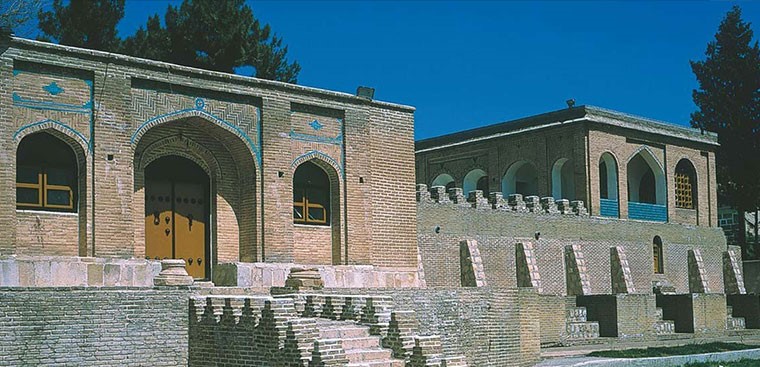
One of the most prominent historical monuments in Ilam is Vali Castle, a significant example of Qajar-period architecture. Built during the late Qajar period on the orders of Gholamreza Khan Vali, the influential governor of Posht-e Kuh (present-day Ilam), the castle stands atop Chega Mirak Hill, overlooking the city and the surrounding valley, and offering panoramic views of the Zagros Mountains.
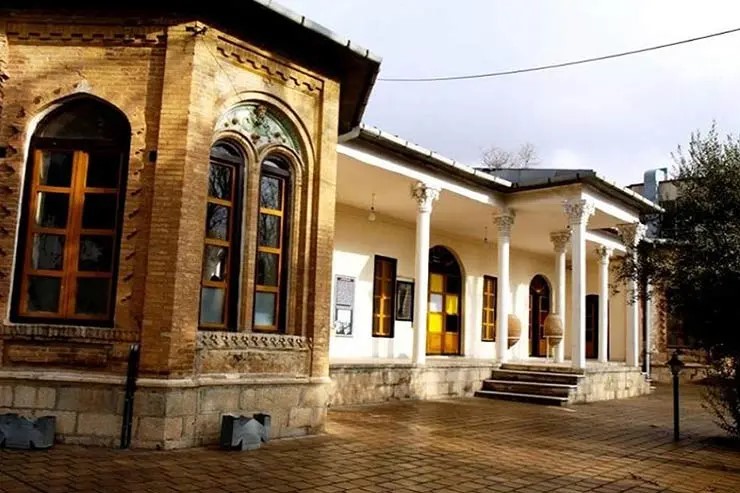
With its enclosed courtyard, two semicircular watchtowers, interconnected residential chambers, and decorative iwans, Vali Castle forms a residential complex incorporating ceremonial and defensive architectural features. Constructed primarily of brick, with stone elements and traditional plaster-based mortars, the castle features halls adorned with intricate stucco work, ornamental mirrorwork, colored tiles, and stained-glass windows. These artistic elements clearly reflect the influence of Qajar architectural traditions. Today, Vali Castle houses the Ilam Museum of Anthropology. It stands as a symbol of the historical authority and architectural patronage of the governors of Posht-e Kuh and represents a synthesis of Iran’s formal and courtly architectural traditions with the region’s indigenous and local building practices.
Another significant historical monument in Ilam Province is the Siahgol Fire Temple, also known as the Siahgol Chahartaq. Located in Eyvan County, near the Gangir River and the village of Sartang, this stone structure is commonly attributed to the Sasanian period. The chahartaq consists of four principal masonry supports connected by arches and surmounted by a domed roofing system, reflecting a characteristic architectural form associated with pre-Islamic Iranian religious buildings. It is generally believed to have served as a Zoroastrian fire temple. Constructed using locally available stone and traditional mortars, including gypsum-based materials, its geometric configuration and structural arrangement demonstrate the architectural and construction expertise associated with the Sasanian period. Situated within the mountainous landscape of the Zagros, the Siahgol Chahartaq retains a distinctive historical and spatial character, reflecting the relationship between religious architecture and its surrounding natural environment.
The Ilam region is also rich in ancient inscriptions and rock reliefs. The Shikaft-e Golgol Inscription, located in Malekshahi County near the city of Ilam, is a Neo-Assyrian rock relief accompanied by a cuneiform inscription that provides valuable evidence of Assyrian political and military activity in the western Zagros region. The monument features the representation of an Assyrian ruler alongside an inscription in Akkadian, reflecting the political authority and commemorative traditions of the Neo-Assyrian Empire. As an important example of ancient rock-cut art and epigraphy, the Shikaft-e Golgol Inscription contributes to an understanding of the region’s historical connections with the major civilizations of the ancient Near East.
The rural and nomadic settlements of Ilam also form an essential part of the region’s architectural identity. The black tents of Ilam’s nomadic communities, woven from goat hair, are examples of lightweight, transportable architecture adapted to local environmental conditions and the rhythms of seasonal migration. Nomadic communities in Ilam traditionally move between warmer winter pastures and cooler summer highlands in response to seasonal climatic changes. By setting up their black tents across plains and mountain foothills, they create seasonal settlements and a form of mobile architecture that harmonizes with the natural landscape and the changing seasons.
For contemporary architects and urban planners, Ilam offers valuable lessons in vernacular architecture adapted to mountainous environments, the resource-efficient use of locally available materials such as stone and timber, climate-responsive design for cold and mountainous regions, and the importance of preserving nomadic and rural architectural traditions. The region demonstrates how, even amid the rugged and challenging terrain of the Zagros Mountains, local knowledge and indigenous materials can be used to create environmentally responsive living spaces in harmony with nature.
Ilam, this city embraced by the Zagros Mountains, continues to reflect the grandeur, cultural identity, and enduring legacy of western Iran’s historical and architectural traditions, in the shadow of Vali Castle and amid the refreshing coolness of its natural springs.