

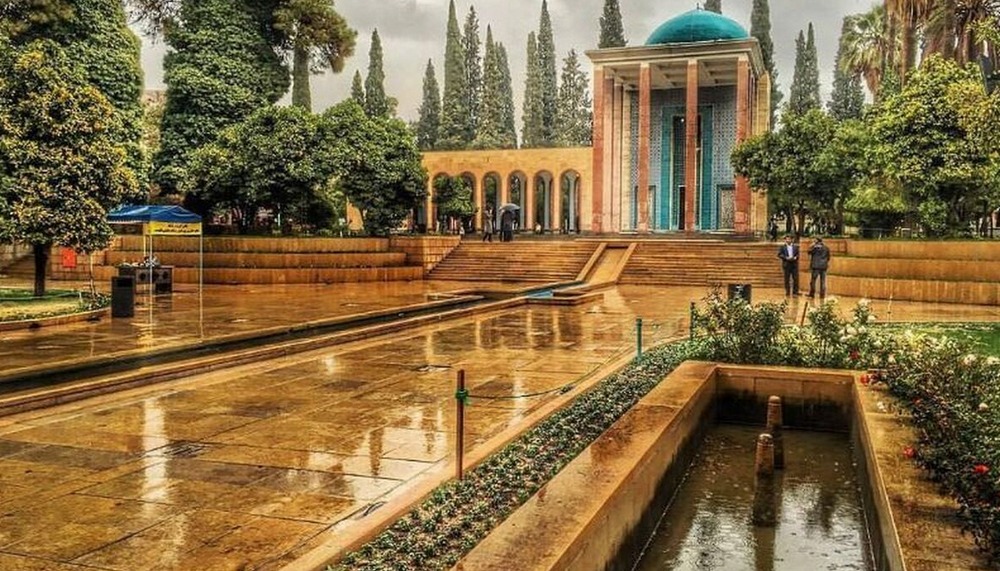
To understand the architecture of Shiraz, one must momentarily set aside maps and rulers and instead open the Divan of Hafez. This is a city best understood not through the rigid logic of engineering, but through the language of poetry. While architecture in many parts of the world tells stories of royal power, imperial grandeur, and imposing fortresses, the architecture of Shiraz whispers a different tale: the story of a garden that brought paradise down to earth, a mausoleum transformed into a sanctuary of love and contemplation, and spaces that dissolve the boundary between earth and sky so completely that both pilgrims and travelers are left with a profound sense of serenity and transcendence.
Shiraz, the city of poetry, wine (in the realm of literature), and cypress trees, has long been celebrated not for politics or military conquest, but for its legacy of thought, literature, and art. This spirit is reflected with remarkable clarity in its architecture. Unlike the imposing and austere monuments of political power, the architecture of Shiraz embodies gentle inwardness, the beauty of transitional spaces, and an invitation to pause and reflect. Here, architecture was not created to overwhelm or intimidate the viewer, but to embrace them with warmth, serenity, and quiet grace.
The Persian Garden: Paradise Enclosed on Earth
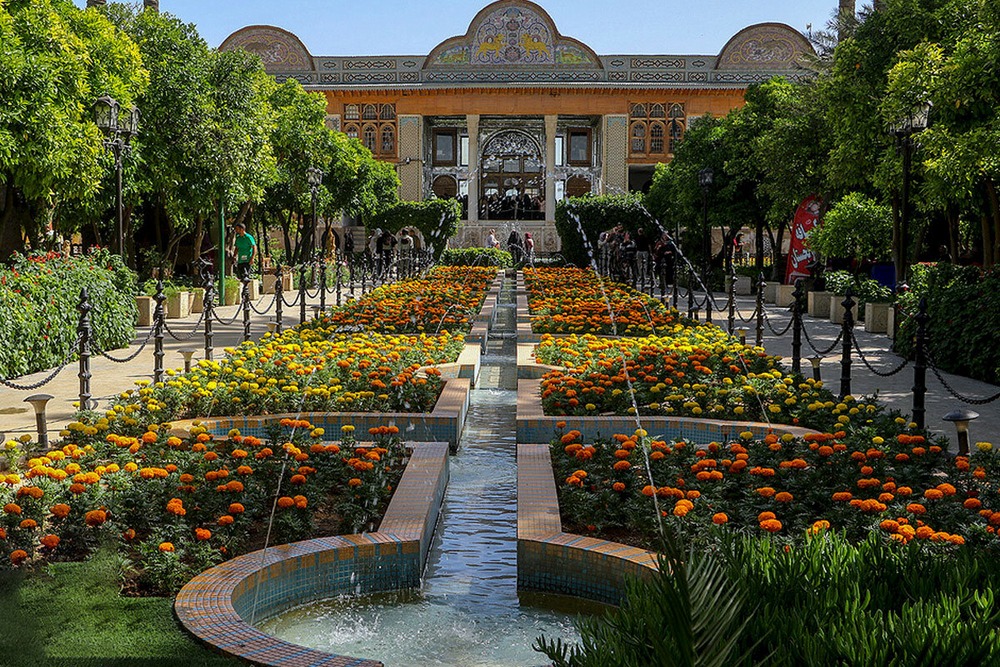
To begin the story of Shiraz’s architecture, one must begin with the garden—not as a verdant backdrop to a building, but as the very essence of the architectural idea itself. The Persian garden, recognized by UNESCO as part of the World Heritage property "The Persian Garden," reaches one of its most refined conceptual and spatial expressions in Shiraz. Eram Garden, Jahan Nama Garden, Delgosha Garden—these names are more than poetic titles; they are architectural manifestos, each expressing the intended spatial experience and spirit of the place.
The Persian garden follows a precise geometric order born from a profound metaphysical worldview. Its four quadrants—divided by two intersecting water channels in the classic chahar bagh (four-part garden) layout and converging at a central pool—are far more than an elegant horticultural design. They represent a terrestrial vision of the Qur'anic paradise: “Gardens beneath which rivers flow.” By laying out these flowing waterways and planting cypress trees alongside fruit-bearing trees, the Persian architect sought to frame a fragment of heaven upon the earth.
What distinguishes the Persian garden from a modern park is its principle of enclosure. High earthen walls separate it from the surrounding desert and the disorder of the outside world. Passing through the garden gate feels like stepping beyond a veil into another realm. This dialogue between inside and outside lies at the heart of the Shirazi garden experience: outside are dust, heat, and the bustle of the city; inside are silence, cool shade, the fragrance of orange blossoms, and the gentle sound of flowing water.
The kushk—the principal pavilion, positioned either at the center or at the end of the chahar bagh axis—is not a massive or domineering structure. Instead, it opens gracefully onto the garden through a lofty iwan supported by tall, slender columns that seem almost to suspend the roof in midair. The pavilion of Eram Garden, with its grand portico and richly painted walls, is not a closed architectural mass but a semi-open living space—a threshold where its occupants can sit, neither entirely within nature nor apart from it, but in quiet harmony with the surrounding landscape. This architecture of the threshold, where built form and nature seamlessly meet, remains one of Shiraz's most enduring lessons for contemporary architecture..
Hafezieh: Where a Mausoleum Becomes a Place of Pilgrimage
If we were to choose a single monument that most completely embodies the spirit of Shiraz's architecture, it would undoubtedly be the Tomb of Hafez, known as Hafezieh. The story of this site is the story of how a simple grave was transformed into a secular sanctuary dedicated to love, poetry, and intellectual freedom—a phenomenon that is, if not entirely unique, certainly exceedingly rare in the Islamic world.
Hafez, the celebrated fourteenth-century Persian poet, gradually came to occupy the status of a prophet of love, wisdom, and spiritual freedom in Iranian culture. His Divan is found alongside the Qur'an in countless Iranian homes, and the practice of seeking guidance by opening it at random (fal-e Hafez) remains a cherished daily tradition. The architecture of Hafezieh is a remarkable reflection of this singular cultural position. The present-day monument, largely redesigned during the early Pahlavi era by the French architect and archaeologist André Godard, draws deeply upon the principles of Persian architecture while expressing them through a refined modern sensibility.
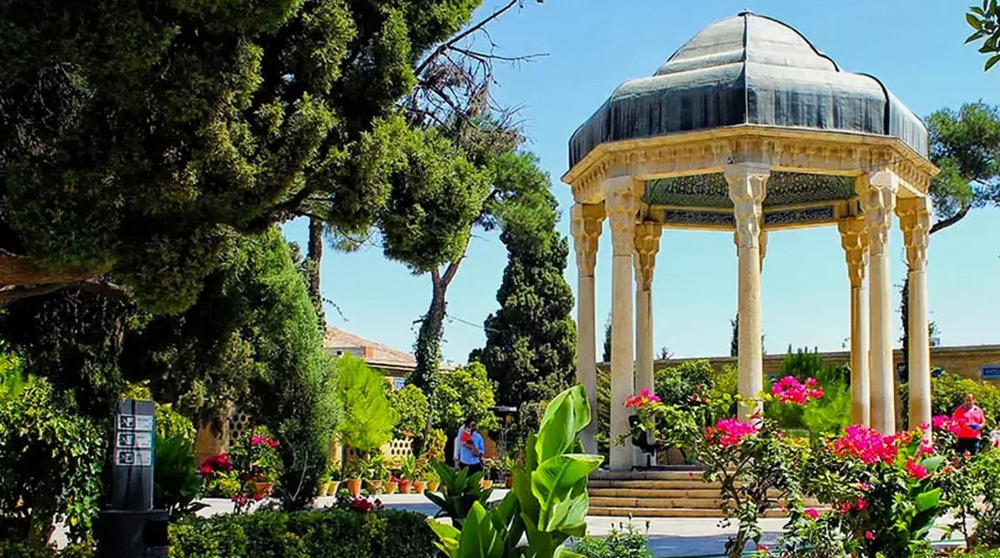
As you enter the complex, you first pass through an outer courtyard centered around a large reflecting pool. This space serves as a threshold of preparation, gently separating visitors from the rhythm of everyday life. A short flight of steps then leads to the elevated terrace where the poet's tomb rests beneath its iconic pavilion. Here, the architecture introduces a deliberate vertical progression: to reach Hafez, one must ascend. This physical movement upward becomes a metaphor for spiritual elevation and inner reflection.
The pavilion's tall, unadorned stone columns stand in striking contrast to the richly ornamented columns of royal palaces. Slender, restrained, and graceful, they seem to direct the eye effortlessly upward, drawing the visitor's gaze toward the turquoise dome that shelters the poet's resting place and symbolically connects earth with the heavens.
The dome of Hafezieh is one of the most striking architectural elements of the complex. Known as the Kolah Farangi ("European-style pavilion"), it differs profoundly from the monumental domes of Persian mosques. Rather than overwhelming the visitor with sheer scale, it is modest, elegant, and delicately proportioned. Its turquoise color symbolizes paradise, while its ribbed, star-shaped form evokes the night sky above Shiraz. Instead of creating a heavy, enclosed structure anchored to the earth, the architect conceived a light, semi-open pavilion that seems to float effortlessly within the garden.
At the center of this open pavilion lies Hafez's marble tombstone, bathed in sunlight throughout the day and illuminated by moonlight at night. Here, no walls separate the poet from the heavens. In a remarkable architectural transformation, Hafezieh redefines the very idea of a mausoleum: it is no longer a dark, enclosed chamber of mourning, but an open, poetic garden-tomb where nature, architecture, and memory exist in harmony.
Visitors gather around the tomb with copies of Hafez's Divan in hand, reciting his verses and practicing the cherished tradition of fal-e Hafez—seeking guidance through the random opening of his poetry. Though it is a place of burial, the atmosphere is filled not with silence and grief, but with life, quiet conversation, reflection, and hope. Here, architecture does more than shelter a grave; it provides the setting for a living cultural ritual that continues to unite generations of Iranians and visitors from around the world.
The Houses of Shiraz: In Search of a Lost Sense of Space
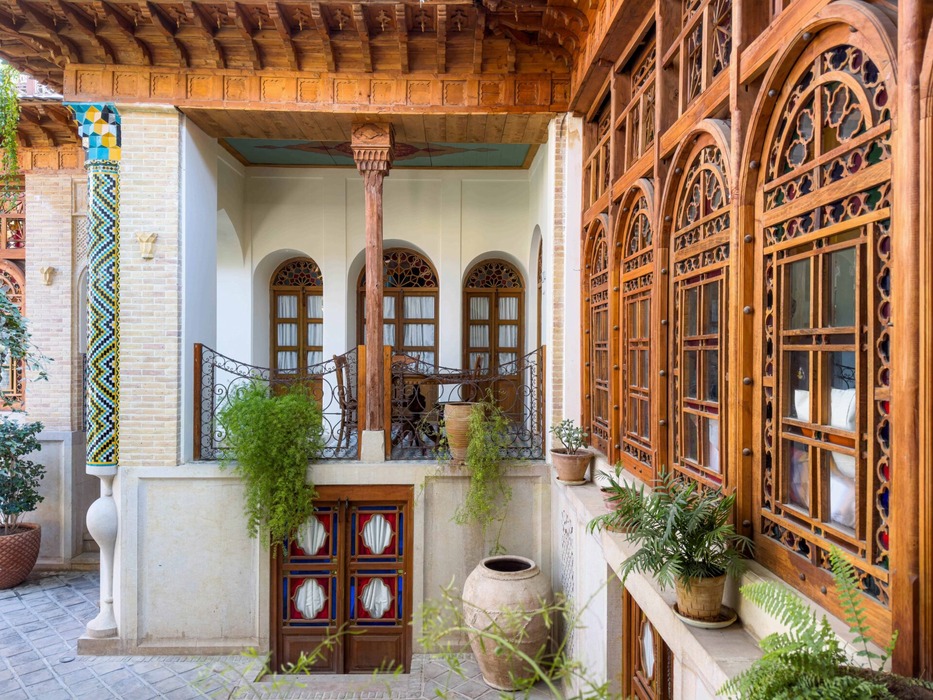
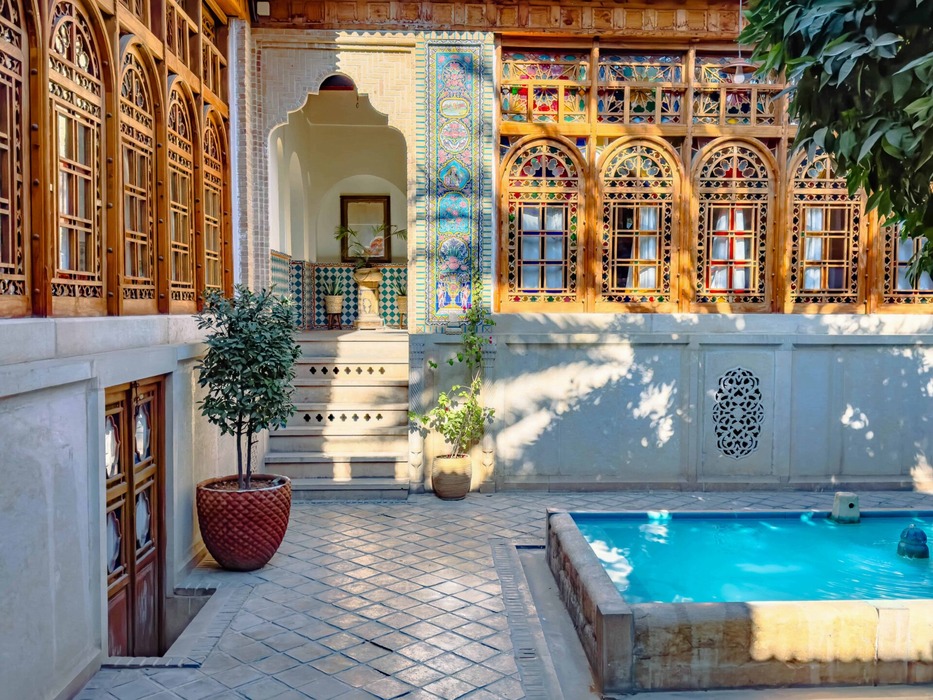
To complete this architectural journey, one must leave behind the royal gardens and monumental mausoleums and step into the historic residential quarters of Shiraz. Traditional houses such as the Zinat al-Molk House and the Forough al-Molk House are outstanding examples of Iran's inward-looking domestic architecture, executed with remarkable refinement. Yet even here, the unique spirit of Shiraz reveals itself: central courtyards adorned with flowerbeds of geraniums and fragrant orange trees, reflecting pools that draw the sky into the heart of the home, and graceful iwans supported by slender wooden columns that open generously toward the courtyard.
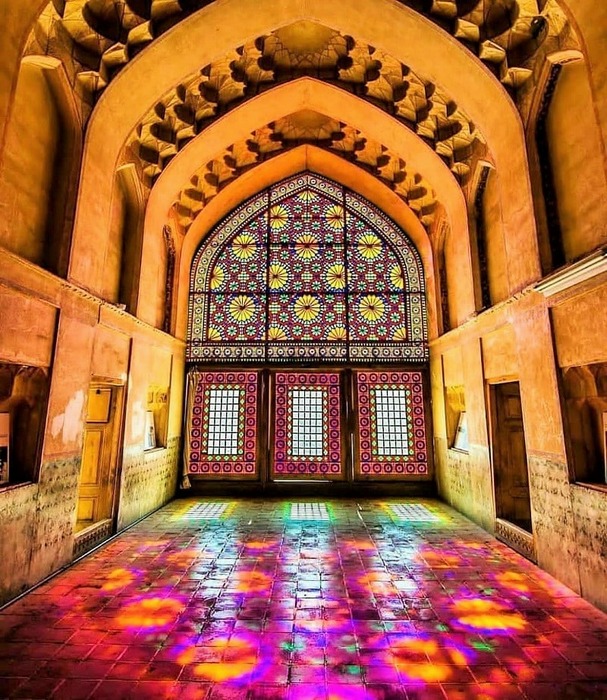
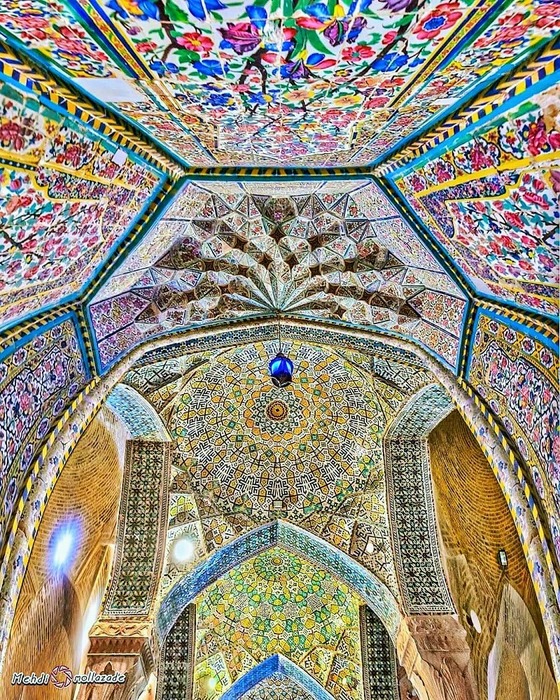
Unlike the houses of Iran's desert regions, with their massive walls and narrow openings designed to shield against the harsh climate, the historic houses of Shiraz feature expansive orsi windows filled with vibrant stained glass, transforming sunlight into a mesmerizing play of color and shadow. Reception halls embellished with intricate mirrorwork and finely carved wooden ceilings reflect a cultural outlook that sought beauty not in overwhelming grandeur, but in elegance, craftsmanship, and the perfection of detail.
.Ultimately, what does the architecture of Shiraz tell us? It quietly reminds us that the spaces we create need not be monuments to power and wealth; they can instead become reflections of the gentle spirit of a civilization. The gardens of Shiraz reconcile architecture with nature. Hafezieh transforms the idea of a mausoleum from a cold and silent memorial into a vibrant civic space where lovers of poetry gather, reflect, and celebrate life. Shiraz teaches today's architects and urban planners that a place endures not because of its size or grandeur, but because people are able to form an emotional bond with it—to read poetry within it, to fall in love, to contemplate, and to gaze toward the sky. In Shiraz, architecture is not an end in itself, but the beginning of a poetic dialogue between humanity, nature, and space.
.