

In the heart of Tabriz, amid the bustle of modern streets and the flow of traffic, lies an intricate network of covered passageways, timchehs, serais, and caravanserais—forming one of the world’s largest interconnected brick-built complexes. Covering nearly one square kilometer, the Tabriz Bazaar encompasses more than 6,500 shops, 40 rows, 35 serais, 25 timchehs, 30 mosques, 20 passageways, and 12 schools. It is far more than a marketplace; it is a “complete city” within the city. Inscribed on the UNESCO World Heritage List, the bazaar remains a living, breathing organism. After centuries of growth and transformation, the economic, social, and cultural heartbeat of Tabriz still pulses through its historic corridors.
To understand the grandeur of Tabriz Bazaar, one must first understand the city’s strategic position throughout history. For centuries, Tabriz stood along a vital artery of the Silk Road, the network of routes that connected East Asia with Europe. Caravans carrying spices, silk, carpets, jewelry, and precious metals from China, India, Persia, the Ottoman Empire, and Venice converged in Tabriz, where goods were exchanged and trade flourished. In the 13th century, the renowned Venetian traveler Marco Polo visited Tabriz and was astonished by the immense scale of commercial activity taking place there. This strategic position elevated Tabriz Bazaar far beyond a local or national marketplace, turning it into an international economic hub where merchants from across the known world came together.
The origins of the bazaar date back to the early centuries of the Islamic era, but its golden age came during the Ilkhanid, Safavid, and especially Qajar periods. During the Qajar era, Tabriz emerged as the “Gateway to Modernity in Iran” and gained even greater importance as Iran’s foremost center of trade and communication with Russia, the Ottoman Empire, and Europe. Its bazaar consequently became one of the most important commercial centers in the Middle East. Tabrizi merchants established an extensive network of caravanserais, money-changing houses, and commercial offices, placing the city at the heart of regional trade. The bazaar was the beating heart of this thriving commercial world.
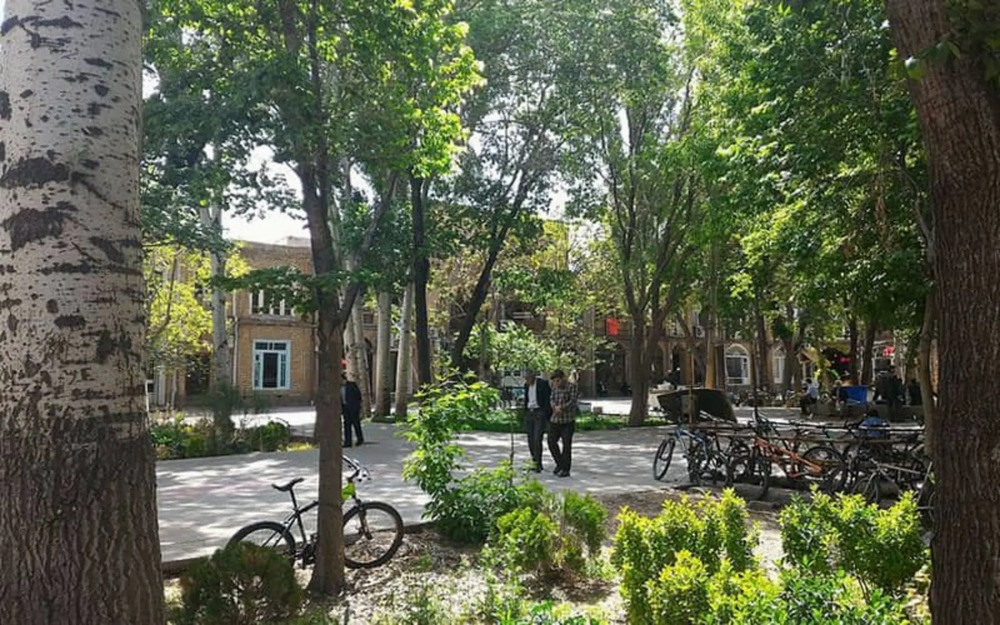
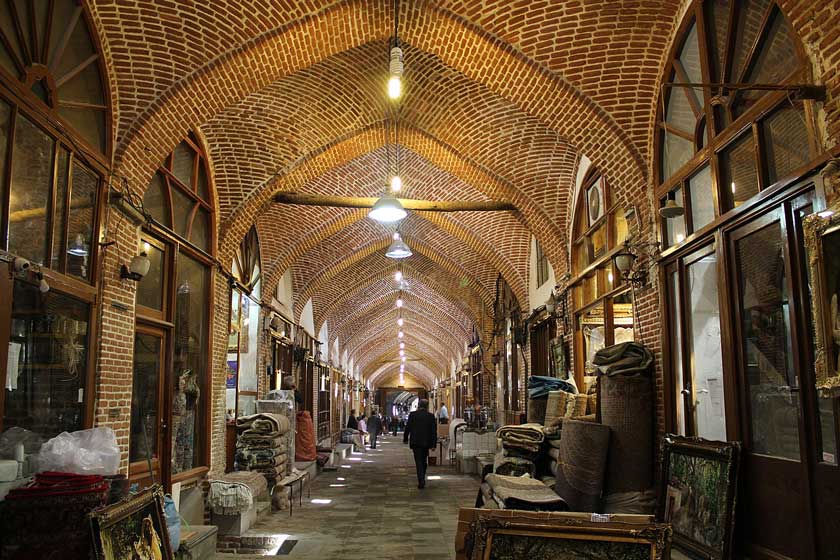
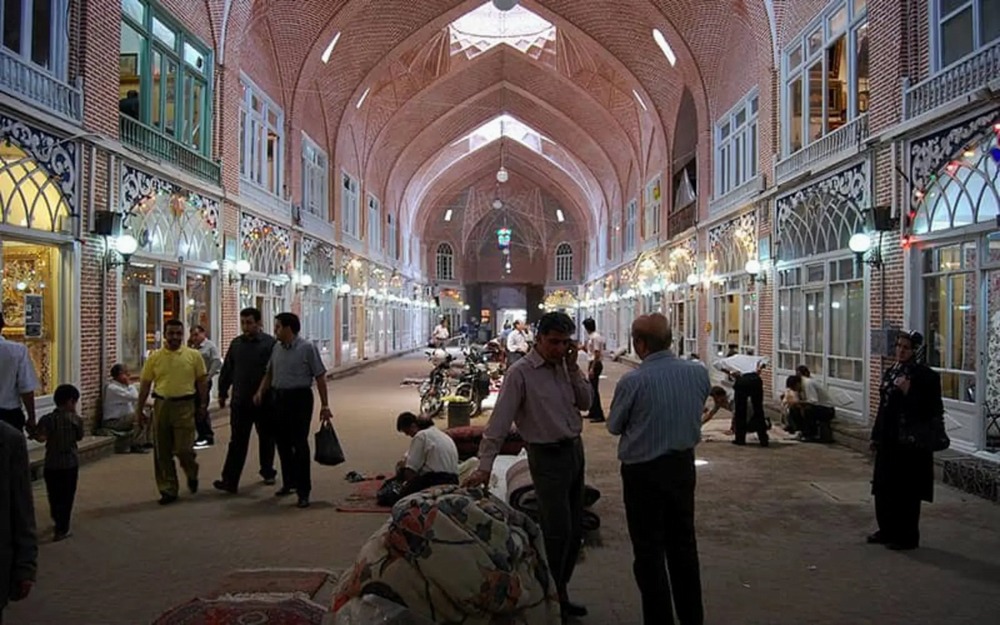
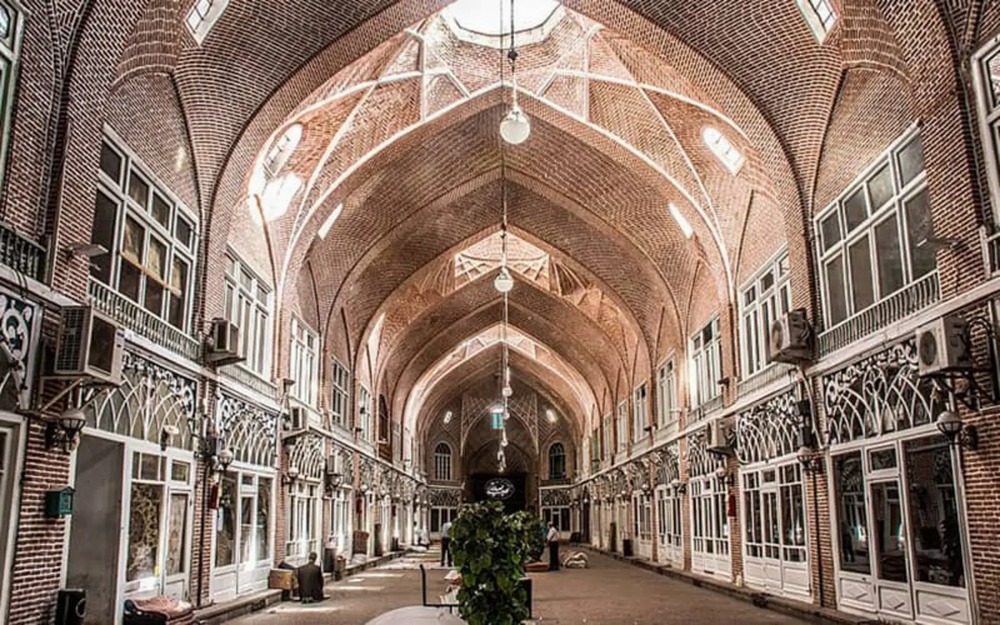
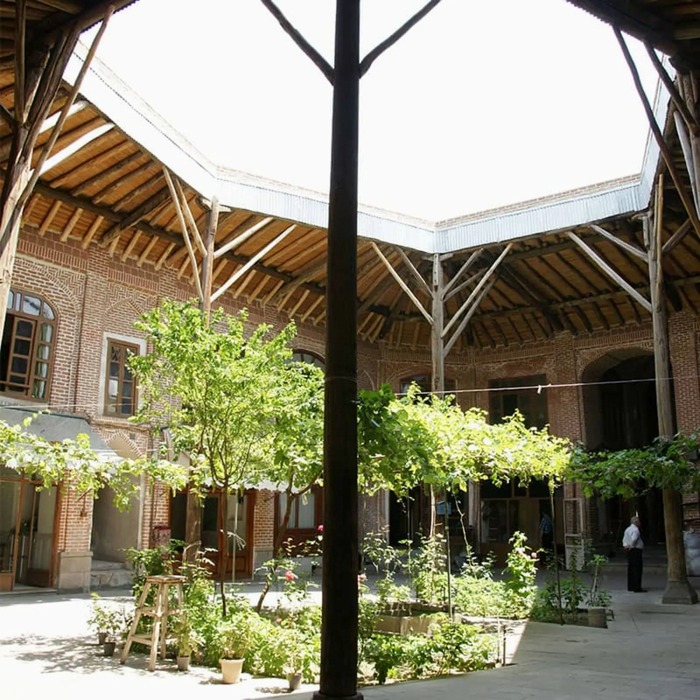
At first glance, the spatial structure of Tabriz Bazaar may appear to be a complex and seemingly labyrinthine network: narrow, winding passages, a succession of brick-vaulted corridors, and spaces that seem to stretch endlessly. Yet this apparent disorder conceals a “hidden order” and a carefully defined spatial hierarchy. The bazaar was designed according to a hierarchical organization. The main rastahs, or principal commercial corridors, are long, relatively straight passages that form the backbone of the bazaar and are generally dedicated to specific trades, such as the carpet sellers’ row, the goldsmiths’ row, the herbalists’ row, the coppersmiths’ row, and the shoemakers’ row. Timchehs are grand, domed spaces located at the intersections of the main passages or within the saras, where more valuable goods such as fine carpets, jewelry, and brocade fabrics were traditionally traded. Serais are urban caravanserais, often organized around central courtyards, providing spaces where merchants could stay and where goods could be stored. Dalans are secondary passageways that connect different parts of the bazaar, while hojrehs are the small shops of individual retailers. This spatial hierarchy not only facilitated the efficient movement of goods and customers but also gave the bazaar an extraordinary diversity and richness of spatial experiences.
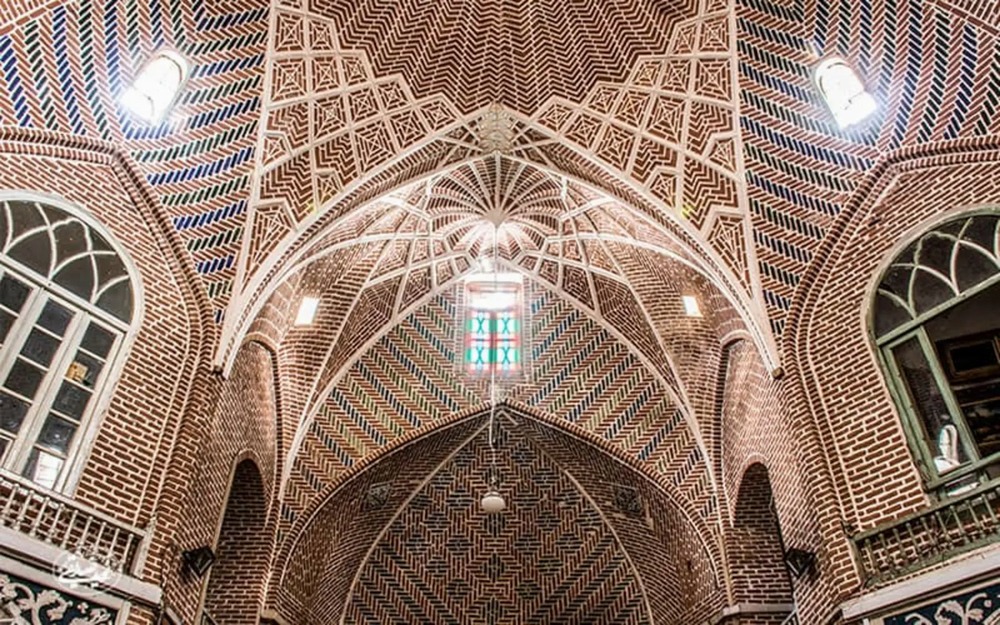
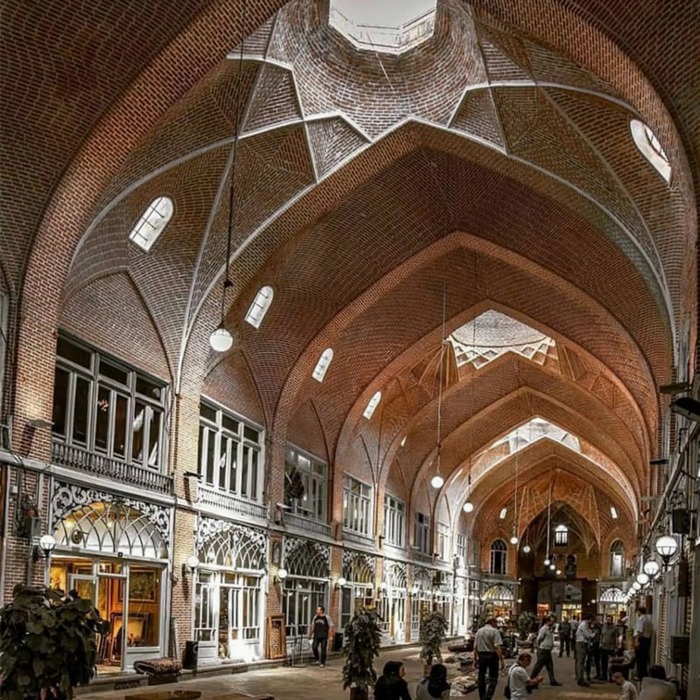
The architectural gems of Tabriz Bazaar are its timchehs—magnificent domed commercial spaces that rank among the bazaar’s most remarkable features. The Timcheh-ye Mozaffariyeh, the most famous and majestic of the bazaar’s timchehs, features a soaring dome, ingeniously designed skylights, and exquisite brickwork and tile decoration. Together, these elements create a space where commerce seems to transcend mere economic activity and take on the character of a grand and almost ceremonial experience. As daylight filters through the openings in the domed ceiling, the interplay of light, brick, and shadow creates an atmosphere that is both dramatic and remarkably intimate. Timcheh-ye Amir, Timcheh-ye Haj Sheikh, and Timcheh-ye Shazdeh are likewise celebrated for their distinctive designs, each representing another remarkable achievement of commercial architecture within this historic bazaar.
One of the most fascinating aspects of Tabriz Bazaar is its natural ventilation system, designed centuries before the invention of electricity and air conditioning. Its high vaulted ceilings and roof openings create a natural “stack effect”: warm air rises and escapes through the upper openings, while cooler air is drawn in through the lower entrances. This continuous, natural airflow helps keep the bazaar cool and comfortable during the hot summers of Tabriz. In the cold winters, the high thermal mass of the thick brick walls slowly releases the heat absorbed during the day, helping to keep the interior relatively warm at night. The bazaar is primarily constructed from brick and traditional gypsum- and lime-based mortars, materials that provide not only durability and structural strength but also excellent thermal and acoustic insulation. Its brick barrel vaults, constructed through highly skilled bricklaying techniques, are remarkable feats of structural engineering. They allow wide spaces to be covered without relying on wooden or metal beams. This form of sustainable architecture, providing maximum comfort with minimal energy consumption, offers a valuable lesson for the design of commercial spaces today.
Tabriz Bazaar was not merely a commercial center; it was a complex and influential “social institution.” Within the bazaar, numerous mosques were built for merchants and customers to perform their prayers. Religious schools, public bathhouses, zurkhanehs (traditional Iranian athletic houses), coffeehouses, and even hospitals were also part of this vast complex. The bazaar was essentially a “city within a city,” where merchants, craftsmen, laborers, brokers, and their families could meet many of their everyday, educational, religious, and social needs within the complex. The bazaar was also a powerful “political institution.” Its merchants and guilds held considerable economic and social influence and played key roles in many major events in Iran’s modern history, including the Constitutional Revolution and the nationalization of Iran’s oil industry. With its tightly interconnected network, Tabriz Bazaar could quickly become a “center of protest.” A widespread merchants’ strike could become one of the most powerful forms of political pressure against authoritarian governments, capable of bringing economic activity to a standstill.
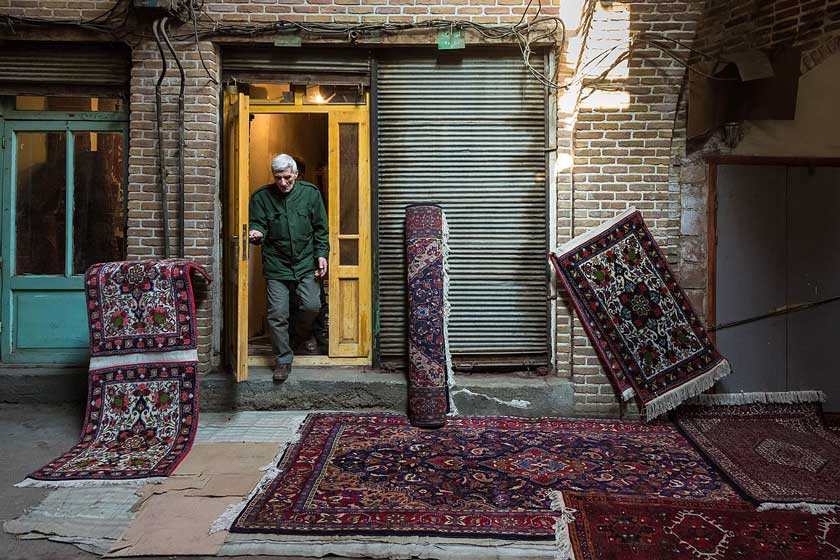
Today, after centuries of growth and transformation, Tabriz Bazaar remains active, vibrant, and full of life. Its shops offer exquisite handwoven carpets, including renowned regional designs such as Heris carpets, colorful and aromatic spices, jewelry and goldwork, leather handicrafts, and traditional sweets such as qorabieh, baklava, and nougat. Unlike many historic bazaars that have been transformed into lifeless museums or purely tourist-oriented spaces, Tabriz Bazaar remains deeply woven into the everyday life of the people of Tabriz, where the pulse of the city’s economy and culture continues to beat.
For contemporary architects and urban planners, Tabriz Bazaar is a complete textbook in itself. The first lesson is “integrating functions.” At a time when modern shopping centers are often reduced to sterile, single-purpose spaces disconnected from their urban surroundings, Tabriz Bazaar demonstrates that a successful commercial space should be integrated with religious, educational, recreational, healthcare, and social functions, transforming it into a “neighborhood center” or the “heart of the city.” The second lesson is “sustainable climate-responsive design.” Through the use of local materials, barrel vaults, and strategically designed skylights, Tabriz Bazaar incorporates a natural, low-energy ventilation system that continues to function centuries later. And the third lesson is the “social and political dimension of commercial spaces.” Tabriz Bazaar proves that a marketplace can become far more than an economic space: it can serve as the backbone of the local economy, the beating heart of social life, and even an influential political institution.