

_2.jpg)
_2.jpg)
_1.jpg)
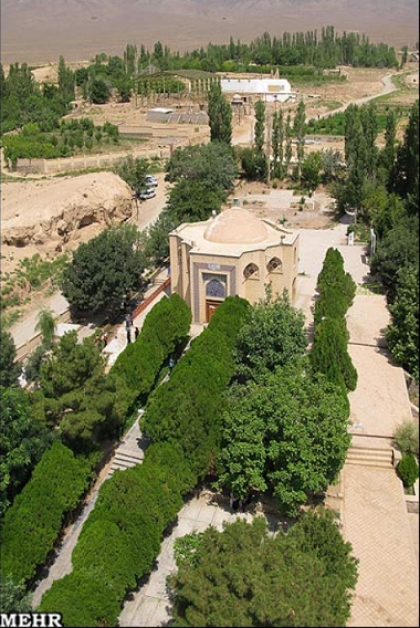
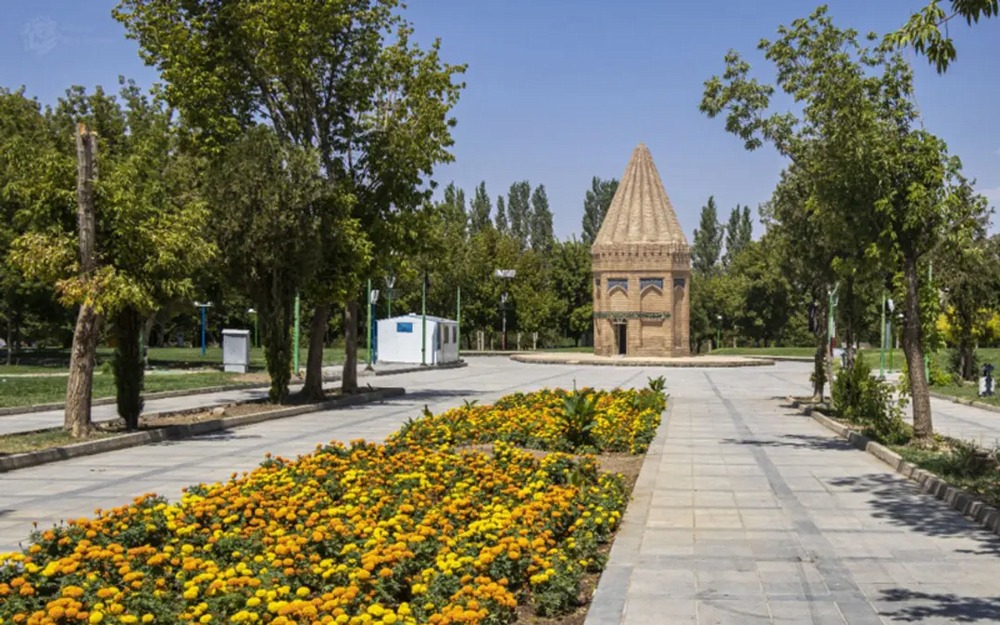
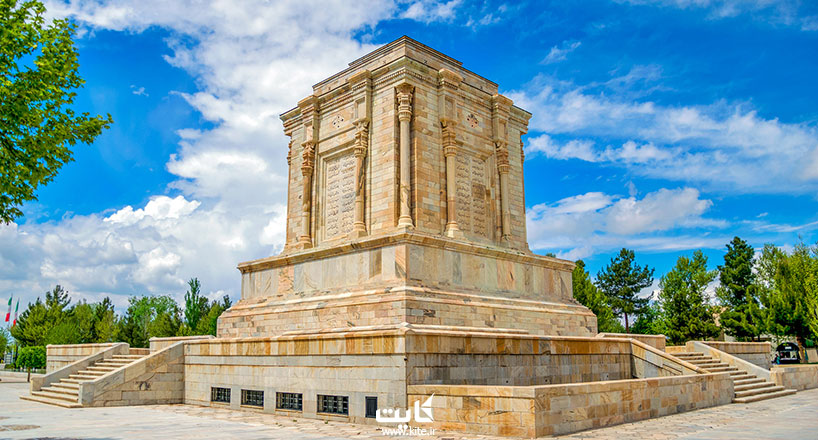
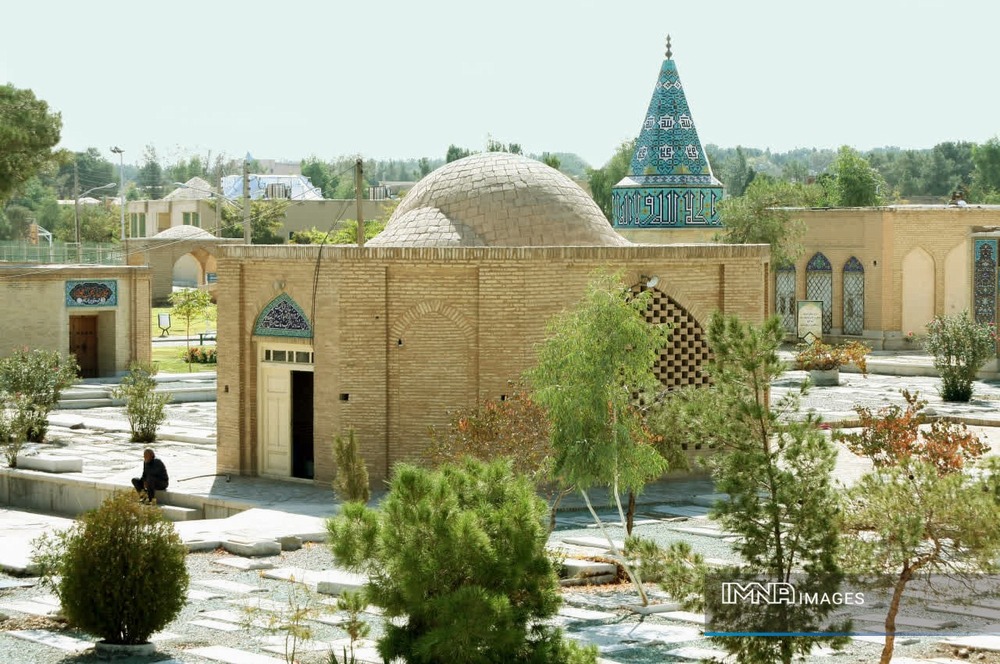
Death has acquired different meanings—and inspired different forms of architecture—across cultures. In the West, tombs have often taken the form of cold and formal cemeteries or monumental churches with underground crypts. In ancient Egypt, the pyramids were monumental stone structures built to preserve and protect the pharaoh’s body for eternity. In Iran, however, the tomb took on a different form: the “garden.” Iranians did not necessarily view death as a tragic end, but as a “return to paradise,” and thus transformed places of burial into gardens where life and death, nature and architecture, and earth and sky are intertwined. From the Tomb of Cyrus at Pasargadae to Hafezieh in Shiraz and the Mausoleum of Omar Khayyam in Nishapur, Iran’s tomb gardens represent a distinctive tradition in world architecture, where “commemoration” is reconciled with “everyday life,” and “grief” with “beauty.”
To understand the Iranian tomb garden, we must return to the ancient roots of this idea. The word “paradise,” which entered Greek from Old Persian and later passed into English, originally referred to an “enclosed garden.” The ancient Iranians envisioned paradise not as an abstract realm in the heavens, but as a real garden on earth: a garden of evergreen trees, flowing streams, colorful flowers, and cool shade beneath the scorching sun. This vision, reflected in Persian carpets through the “chaharbagh,” or four-part garden, also influenced the design of tombs and mausoleums. If paradise is a garden, then a tomb, too, could become a garden where the deceased might symbolically experience a glimpse of eternity. This ancient belief endured through the centuries and, across different historical periods, gave rise to tomb gardens, each a remarkable synthesis of architecture, landscape, and meaning.
The Tomb of Cyrus the Great at Pasargadae, dating to the sixth century BCE, is among the earliest and most influential examples of this tradition. The tomb is a simple yet monumental stone structure set atop a six-stepped platform and was once surrounded by an extensive enclosed garden. Cyrus, the founder of the Achaemenid Empire, was not laid to rest in a colossal pyramid, but in a modest and well-proportioned structure set within a tranquil garden. This choice can be understood as a philosophical statement: death, even for the greatest earthly powers, represents a humble return to nature and paradise. With its simplicity and dignity, the Tomb of Cyrus became an influential model for later tomb architecture in Iran.
Yet perhaps the most complete and poetic expression of the Iranian tomb garden can be found in the Tomb of Hafez in Shiraz. Hafez, the fourteenth-century poet, has over the centuries come to occupy a unique place in Iranian culture as a cultural figure associated with love and spiritual freedom. His Divan is kept alongside the Qur’an in many Iranian homes, and consulting it through the practice of fal-e Hafez remains a familiar cultural tradition. In keeping with this status, his tomb has evolved from a simple grave into a kind of “secular shrine” for lovers of poetry and freedom.
The Hafezieh complex, whose present design was largely created during the reign of Reza Shah Pahlavi by the French architect André Godard, is a fully developed garden-tomb complex. Visitors enter through an outer courtyard centered around a large pool. From there, they ascend several steps to reach a portico beneath which the tomb is located. This “physical ascent” toward the poet can be understood as a metaphor for spiritual elevation. The tombstone, positioned at the center of this semi-open space, is not enclosed within a chamber, but rests beneath the open sky and amid a garden of orange and cypress trees. The turquoise dome, with its kolah farangi design, rises above the tomb, evoking the night sky of Shiraz, while the tall, simple columns surrounding it create a serene and spiritual atmosphere. At Hafezieh, visitors encounter not the grief and heavy silence of a cemetery, but life, poetry, and hope.
Yet if Hafezieh represents the poetic expression of the Iranian tomb garden, the Mausoleum of Omar Khayyam in Nishapur embodies “geometry and philosophy” in memorial architecture. Omar Khayyam of Nishapur, the renowned philosopher, mathematician, astronomer, and poet of the fifth and sixth centuries AH (11th–12th centuries CE), was a multifaceted figure whose diverse intellectual pursuits are reflected in the design of his tomb.
The present mausoleum, inaugurated in 1962 (1341 SH) and designed by the Iranian architect Hooshang Seyhoun, is a masterpiece of modern architecture inspired by Khayyam’s life and works. In designing the structure, Seyhoun drew inspiration from three central aspects of Khayyam’s intellectual legacy: mathematics and geometry, astronomy and the stars, and poetry, particularly the Rubaiyat. The mausoleum consists of a square platform. Ten tall, slender concrete columns rise from the platform and intersect to form an intricate, star-like geometric structure. Clad in turquoise and lapis-lazuli tiles, this lattice-like framework evokes a star-filled sky. The columns and surrounding surfaces are adorned with verses attributed to Khayyam, rendered in Persian calligraphy and integrated into intricate mosaic-tile designs. The Mausoleum of Omar Khayyam stands within an expansive, lush garden of pine and cypress trees, creating a tranquil and contemplative setting for reflection. Unlike Hafezieh, which remains closely connected to traditional Iranian architectural forms through its dome and portico, the Mausoleum of Khayyam is a distinctly modern work that nevertheless preserves a strong sense of Iranian identity and cultural heritage.
Beyond these celebrated examples, Iranian tomb gardens are scattered throughout the country. From the Mausoleum of Avicenna in Hamedan, designed by Hooshang Seyhoun and inspired by the Gonbad-e Qabus Tower, to the Tomb of Baba Taher in the same city, and from the Sheikh Safi al-Din Khanegah and Shrine Ensemble in Ardabil to the Tomb of Nader Shah Afshar in Mashhad, these monuments all represent examples of this enduring Iranian tradition, in which a tomb is not a closed and somber structure, but an open, luminous space intimately connected with nature.
What message do Iranian tomb gardens have for the modern world? In an age when death in modern culture has often become hidden, sanitized, and detached from everyday life, Iranian tomb gardens remind us that a tomb can—and should—remain a living part of the urban fabric and the lives of its people. These spaces demonstrate that a memorial site does not necessarily have to be cold, austere, and somber. Through trees, water, light, poetry, geometry, and philosophy, it is possible to create a space in which visitors encounter not the sorrow of death, but a celebration of life, philosophical reflection, and the pleasure of beauty. Iranian tomb gardens reconcile the “architecture of memory” with the “architecture of everyday life.” These are not merely burial grounds; they are gardens where the dead, surrounded by trees and flowers, rest eternally alongside the living. This poetic and thoughtful integration offers a profound lesson for the design of contemporary memorial spaces.