

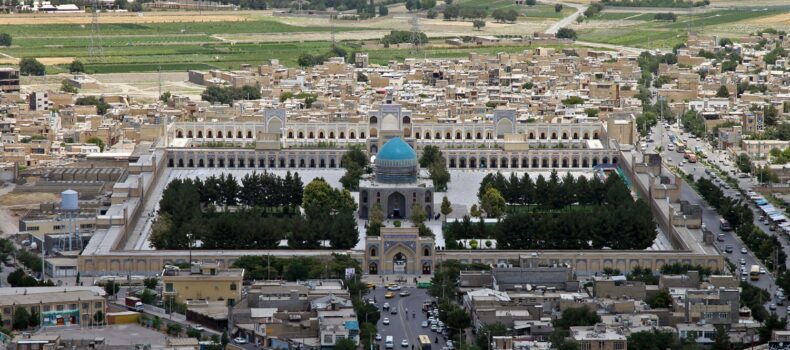
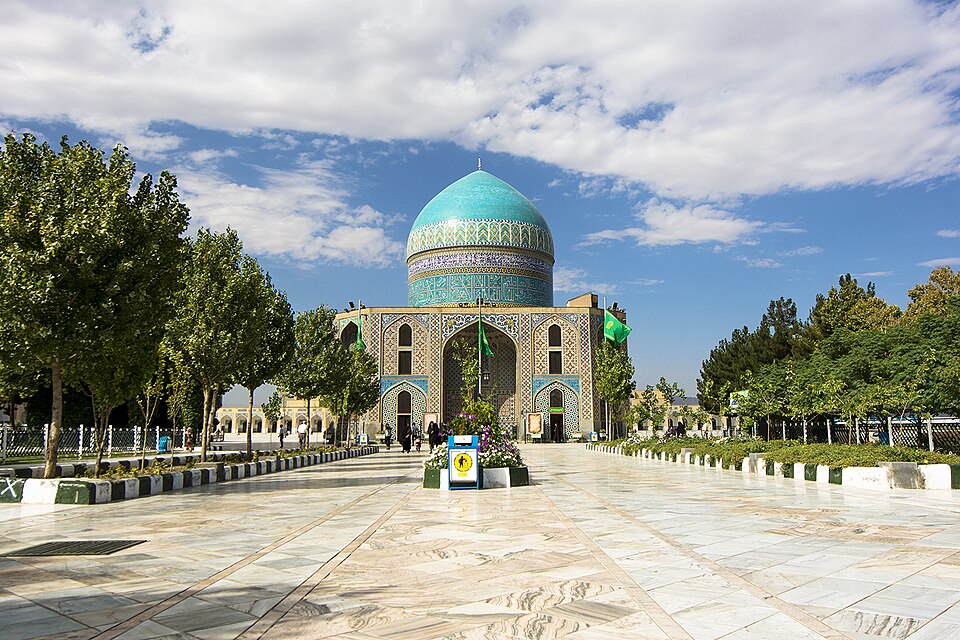
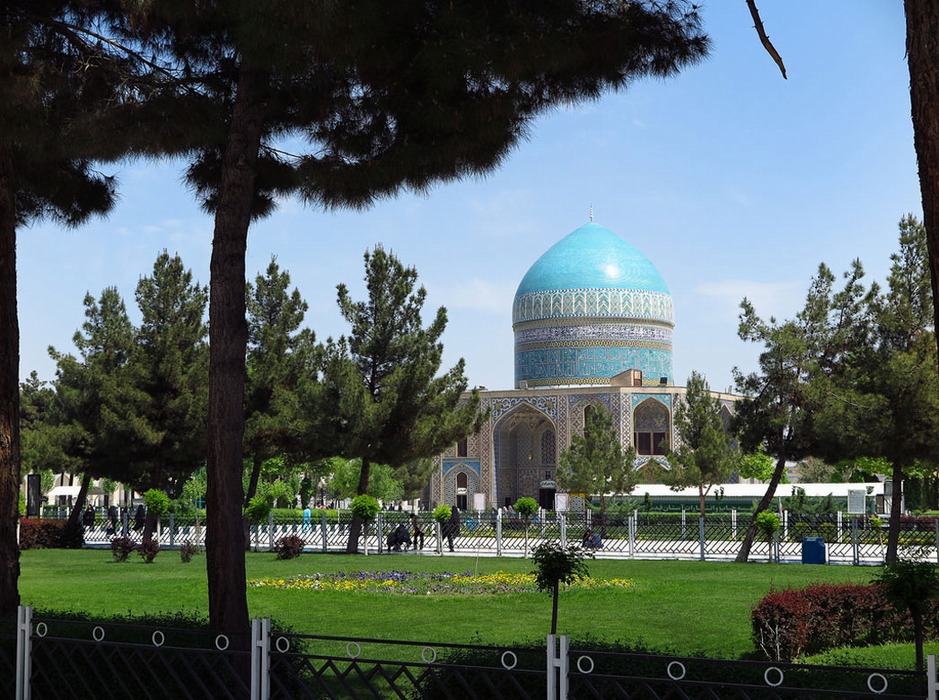
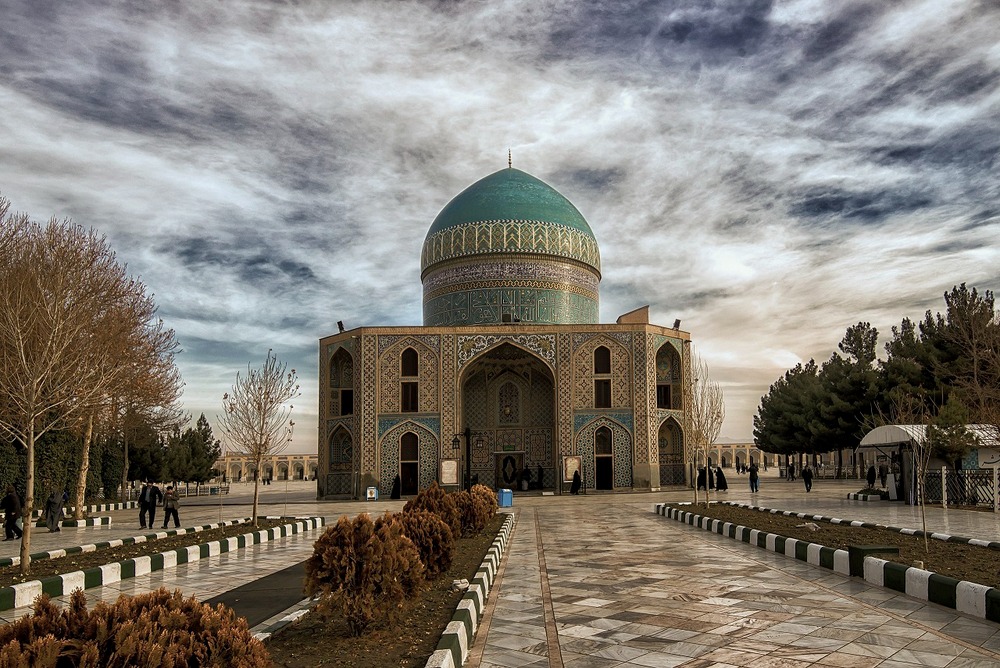
On the northwestern outskirts of Mashhad, nestled within a vast, verdant garden of ancient trees and flowing streams, stands a monument that ranks among the finest examples of Safavid funerary architecture and one of Iran’s most beautiful garden mausoleums. The Mausoleum of Khajeh Rabi, this “turquoise jewel of the Safavid era,” features a distinctive octagonal plan, a magnificent turquoise dome, exquisite tilework, and fine wall paintings. It is not merely a tomb but a masterpiece of geometry and art, representing an outstanding fusion of monumental architecture and the Persian garden. The Mausoleum of Khajeh Rabi can aptly be described as a “fusion of geometry, garden design, and mysticism,” where precise mathematical proportions, the splendor and refinement of Safavid art, and the profound tranquility of a Persian garden are interwoven to create a spiritual, unforgettable, and deeply contemplative setting for pilgrims and visitors.
Khajeh Rabi ibn Khuthaym was a loyal companion and associate of Imam Ali and a respected figure in the early Islamic period. Renowned for his asceticism, piety, frequent worship, and detachment from worldly pursuits, he has held a distinguished position among both Shiite and Sunni Muslims. Known as Khajeh Rabi, he belonged to the Tabi'un—the generation of Muslims who met the Prophet Muhammad’s Companions but did not meet the Prophet himself. He is also said to have fought alongside Imam Ali at the Battle of Siffin. According to historical accounts, Imam Ali appointed him to command part of his army, and Khajeh Rabi took part in this historic battle with courage and faith. Khajeh Rabi died in 63 AH, and according to historical accounts, he was buried at this site on the outskirts of Tus, near present-day Mashhad. The magnificent mausoleum that stands here today, however, was built in the early eleventh century AH, during the reign of Shah Abbas I of the Safavid dynasty. It was commissioned by Allahverdi Khan, a prominent and powerful Safavid commander, and constructed by distinguished architects and artisans from Isfahan. A loyal, capable, and benevolent commander under Shah Abbas, Allahverdi Khan also left behind other enduring monuments, including Isfahan’s magnificent Si-o-se-pol Bridge.
The first and most distinctive feature of the Mausoleum of Khajeh Rabi is its octagonal plan. Unlike many Iranian mausoleums built on square or rectangular plans, this monument is based on a regular octagon, with each side measuring approximately seven meters. This thoughtful and somewhat unusual design offers several advantages. First, it lends visual variety and dynamism to the exterior, preventing the façade from appearing monotonous. Second, it facilitates the transition from the square base to the circular dome, as an octagon more closely approximates a circle, allowing for a smoother architectural transition. Third, it creates eight iwans or recessed arched bays around the building, each offering a different and appealing view of the surrounding garden while allowing light and breezes to enter from various directions. The octagonal plan has also been interpreted as symbolizing the “eight gates of Paradise” in Islamic tradition, according to which Paradise has eight gates through which believers may enter.
Rising above the octagonal structure, the mausoleum’s turquoise dome is approximately 18 meters high and is considered one of the most beautiful and well-proportioned domes of the Safavid period. It is described as a double-shell dome, consisting of two separate layers with an intervening space. This gap reduces the dome’s overall weight and can provide thermal insulation, helping moderate indoor temperatures during Mashhad’s hot summers and cold winters. The outer shell is covered with turquoise and lapis-blue tiles decorated with arabesque and geometric motifs. Under the sunlight, it gleams like a jewel set amid the garden. The inner shell is adorned with fine, colorful Safavid-era paintings depicting natural scenes, vibrant floral motifs, and arabesque designs.
The exterior façade is decorated with mosaic tilework and haft-rang (seven-color) tiles, featuring arabesques, floral and bird motifs, and inscriptions in Thuluth and Naskh scripts. These inscriptions include Quranic verses, sayings attributed to the Prophet Muhammad, and poetry in praise of Khajeh Rabi and the patrons of the mausoleum. Each of the building’s eight sides features pointed-arched recesses framed with turquoise and lapis-blue tiles, lending rhythm and depth to the façade.
The mausoleum’s interior is adorned with magnificent Safavid-era wall paintings. The ceilings and walls feature arabesques, colorful floral designs, and scenes of nature and hunting. Executed in warm, vivid colors, these paintings are presented as fine examples of Safavid miniature art. Khajeh Rabi’s tombstone stands at the center of the interior and is decorated with mosaic tiles and Quranic inscriptions.
What transforms the Mausoleum of Khajeh Rabi into a true garden mausoleum is the expansive, verdant garden that surrounds it. With its ancient plane trees, pines, and cypresses, flowing streams, and pools of water, the garden provides a peaceful and spiritual setting for pilgrims and visitors. Visitors can stroll through the grounds, sit on stone platforms, and enjoy the tranquility and beauty of the surroundings.
For contemporary architects and designers, the Mausoleum of Khajeh Rabi offers valuable lessons in the design of unconventional geometric plans, the thoughtful integration of gardens and mausoleums, the role of ornamentation and wall paintings in monumental architecture, and the creation of spiritual spaces through light and color. The monument demonstrates how geometry, color, and nature can be brought together to create a space that both commemorates a revered figure and offers a place for reflection and inner peace. This turquoise jewel of the Safavid era continues to shine on the outskirts of Mashhad, quietly telling the story of the splendor, artistry, and spirituality of the Safavid period.