

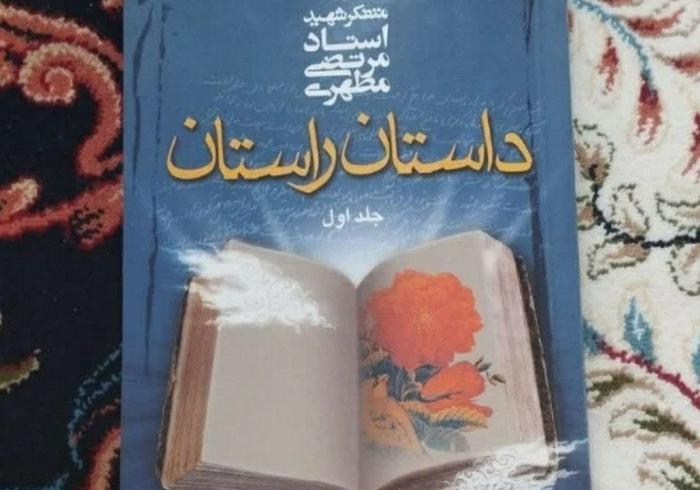
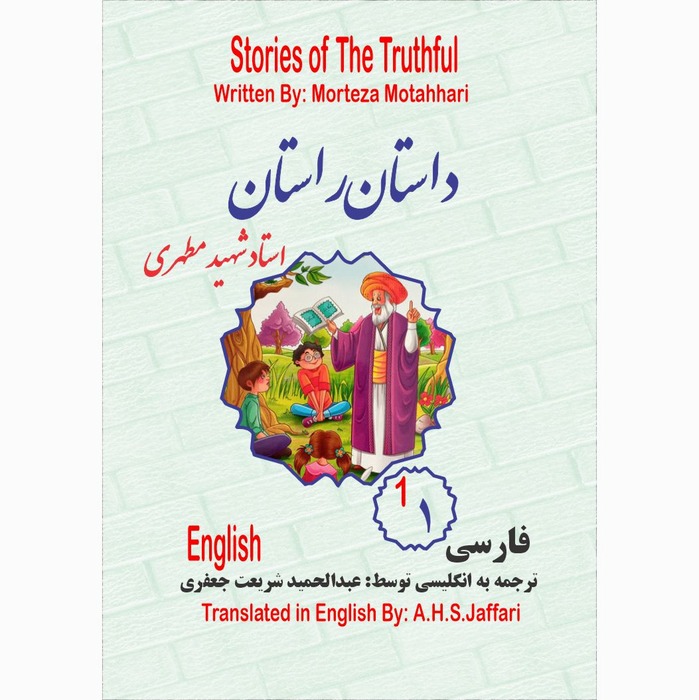
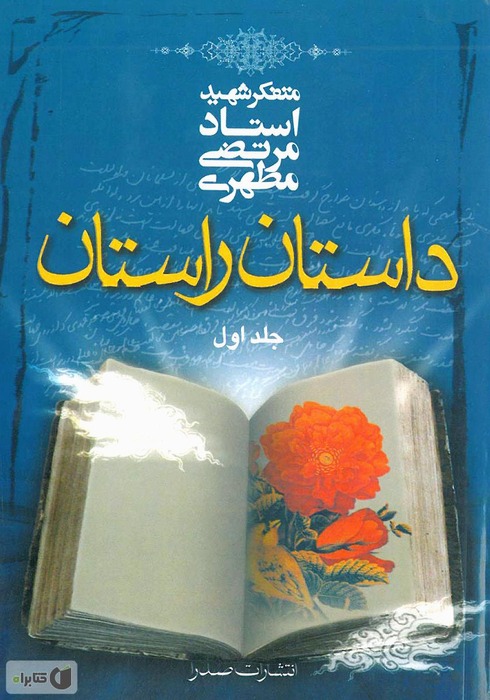
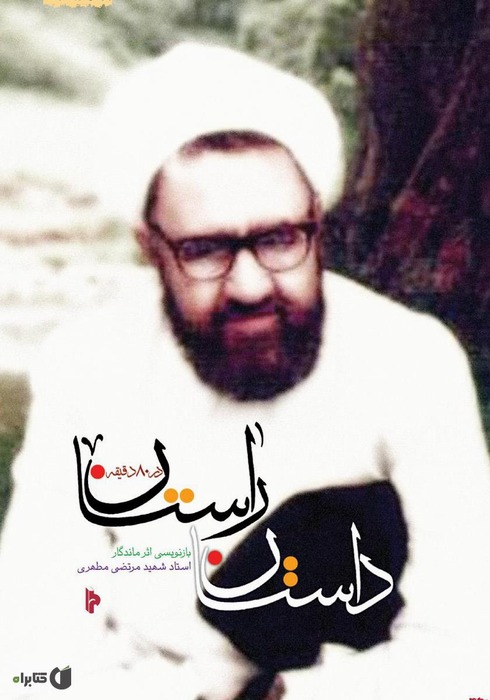
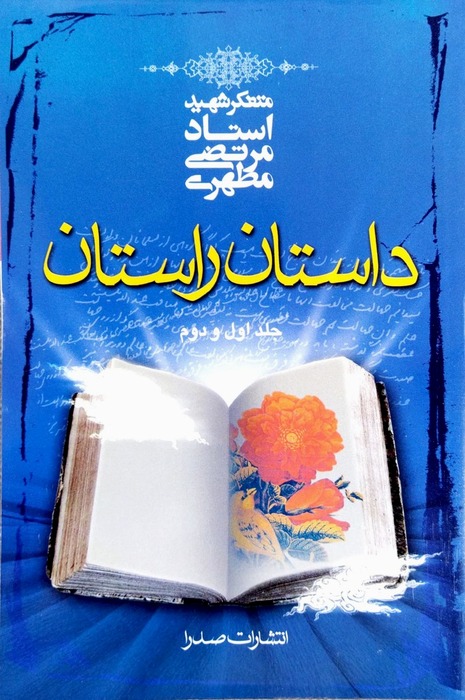
Dastan-e Rastan (The Epic of the Righteous) has been published in two volumes. Drawing upon religious and historical texts, Ayatollah Motahhari compiled anecdotes and narratives of events from the early days of Islam for the younger generation of society. The purpose of collecting these stories is to convey moral and educational points in simple language for the youth. In the preface to the first volume, Martyr Motahhari writes: "Until now, no book has been written in which the author, with the purpose of guiding, mentoring, and refining public morals, has extracted useful, true stories from books of history and Hadith to make them accessible to the general public." Dastan-e Rastan is a response to the absence of this approach, written during the 1960s and 1970s (the 1340s and 1350s SH) despite the Pahlavi regime's strict regulations regarding religious matters. The book Dastan-e Rastan tells the stories of those who wish to walk the straight path—individuals referred to in the Holy Qur'an as the Siddiqin (the Truthful).
The first volume of Dastan-e Rastan consists of 75 stories. In the footnotes of each page, Ayatollah Motahhari has cited the sources of the stories for the readers' reference. Every effort was made to narrate each story exactly as it was recounted in the original sources and Hadiths. Martyr Motahhari writes: "The author has added nothing to the original story from his own imagination, nor has he omitted anything from it." The stories in the book are written in a fluent and universally understandable style, ensuring that the reader's full cognitive capacity can be engaged in comprehending and reflecting upon the concept and content of the story. Beyond serving as a useful moral and social guide for the youth, the stories in Dastan-e Rastan can act as a serious touchstone for the reader to evaluate the state of Islamic society—comparing what happens in their surrounding environment with what Islamic sources and books have prescribed. By reading Dastan-e Rastan, the reader becomes acquainted with the true spirit of Islamic teachings. They can measure themselves, their environment, and their society against these standards, and see to what extent the meaning and reality of Islam exist in the behavior and speech of people in a society where everyone considers themselves Muslim—and where some, perhaps, claim to champion Islam more than others.
The second volume of Dastan-e Rastan contains 50 stories and was published approximately four years after the first volume. Ayatollah Motahhari cited his busy workload as the reason for this delay, while explaining that his decision to write the second volume was driven by the public's warm reception of the first volume. Martyr Motahhari viewed the success of the first volume as a sign that people are ready to listen to and read quality religious material; it simply requires religious writers to take the initiative and present beneficial works to society. The 50 stories in the second volume are longer than those in the first. Furthermore, the narratives in this volume are not limited exclusively to Hadith accounts, as historical texts were also utilized in their compilation.
In the preface to the first volume, Martyr Motahhari responds with a serious critique of the mindset that criticized the writing of Dastan-e Rastan due to its simplicity. He writes that if this way of thinking belonged to just one or a few individuals, he would not have written anything about it: "Unfortunately, this mindset—which is nothing but a social malady and a major deviation from the sublime teachings of Islam—has become highly prevalent in our society. It is for this very reason that today we are exceedingly impoverished in terms of useful books, particularly beneficial religious and theological texts. As a result, what is essential and necessary remains unwritten, while redundant and useless materials are continuously authored and published. How beautifully Khwaja Nasir al-Din al-Tusi put it: Alas, all that I have won is meant to be lost / All that I have known is entirely unknowable. I have picked up everything that should have been left behind / And left behind everything that was meant to be gathered."
As Martyr Motahhari has written, while the stories in this book are also useful for the elite of society, Dastan-e Rastan was primarily written for the general public (the masses). This is because the desire for justice, fairness, and humility before truth and reality still thrives within the general public; if a truth is spoken, they are willing to adapt themselves to it. Martyr Motahhari hopes that by reading and practicing these stories, the general public will pave the way for goodness and public righteousness to spread from the bottom up. The author also demonstrated an open-minded approach in selecting the stories; he did not choose them based solely on Shia heroes and figures. Consequently, upon reading the book, the audience will encounter stories featuring other Islamic figures as well as prominent non-Muslim individuals. Furthermore, the vast majority of the stories in Dastan-e Rastan have a positive theme, with only two or three stories—such as "An Insult" and "The Sword of the Tongue"—focusing on a negative theme. By sharing these particular stories, the author seeks to address and correct a moral weakness through a gentle reminder.